Children’s Normal Vision by Age: What Every Parent in Seoul Should Know
From newborn to school age — vision milestones, amblyopia detection, myopia control, and when to book your child’s first eye exam. Available in English at Nunehim Eye Center.
📍 Yeongdeungpo · Guro · Gasan · Gwanak | 🗣 English Consultations | 🩺 Dr. Daniel Baik, Ophthalmologist
⚡ Quick Answer: What Is Normal Vision for My Child?
Children’s vision develops gradually — a newborn sees only light and large shapes, while adult-level acuity (1.0 / 20/20) is reached by age 7–8. A quick rule: minimum normal vision (decimal) ≈ age in years × 0.2 — e.g. age 3 → 0.6, age 4 → 0.8. Below this range? Book a full exam. School screenings miss amblyopia, anisometropia, and binocular vision problems. Nunehim Eye Center offers comprehensive pediatric eye exams in English and Korean with Dr. Daniel Baik.
Q. How does children’s vision actually develop?
Vision is not just about the eyes — the brain’s visual cortex must mature alongside them. At birth, the visual cortex is immature and strengthens through clear, continuous stimulation from both eyes during the sensitive period, which runs actively to around age 7–8. Missing this window can result in amblyopia that no glasses can correct.
- Clear retinal image — refractive errors (myopia, hyperopia, astigmatism) must be corrected so the retina receives a sharp image
- Proper eye alignment — strabismus disrupts binocular development
- Intact visual pathway — retina, optic nerve, and visual cortex must all function normally
Q. What is the normal vision range by age?
Based on Korean Ophthalmological Society and American Academy of Ophthalmology (AAO) guidelines. If your child’s result falls below these ranges, consult an ophthalmologist.
| Age | Normal Acuity (decimal) | Notes | Exam Frequency |
|---|---|---|---|
| Newborn–1 month | ~0.01–0.03 | Detects light and large shapes; pupil reflex critical | Immediately if any concern |
| 3–6 months | ~0.05–0.1 | Fixation and tracking develop; face recognition | Baseline at 6 months |
| 1 year | ~0.2 | Binocular fixation established | Annually |
| 2 years | ~0.3–0.4 | Depth perception developing | Annually |
| 3 years | ~0.5–0.6 | First testable with chart; prime amblyopia screening | Annually |
| 4 years | ~0.6–0.8 | ≥2-line difference between eyes = amblyopia suspected | Annually |
| 5–6 years | ~0.8–1.0 | Pre-school comprehensive exam strongly recommended | Annually |
| 7+ years | 1.0 (adult level) | Visual cortex maturation complete | Every 6–12 months |
💡 Quick formula: Minimum normal vision (decimal) ≈ child’s age × 0.2. This is a rough guide — always follow up with a full exam if results fall below this range.
Q. What is amblyopia (lazy eye) — and why must it be caught early?
Amblyopia (lazy eye) is reduced vision in one or both eyes that cannot be fully corrected with glasses — because the brain suppresses input from the weaker eye. It affects ~2–4% of Korean children and is the most common cause of monocular vision loss in children worldwide.
Children rarely complain. If one eye sees well, they compensate without noticing. By the time parents spot squinting or head tilting, significant amblyopia may already be established.
✅ Golden window: Found at ages 3–6, amblyopia is treatable in over 90% of cases with patching + refractive correction. After age 9, effectiveness drops sharply and may be permanent.
| Type | Cause |
|---|---|
| Anisometropic (most common) | Large prescription difference between eyes — brain favours the clearer eye |
| Strabismic | Eye turn causes brain to suppress the deviated eye to avoid double vision |
| Deprivation | Light blocked by congenital cataract, ptosis (droopy lid), or corneal opacity |
| Refractive | High bilateral hyperopia causes constant blur in both eyes |
Warning Signs by Age — What to Watch at Home
| Age | Warning Signs |
|---|---|
| 3 months | No eye contact; no blink to light; white or yellow pupil reflex (leukocoria) |
| 6 months | Eye consistently turns to one side; doesn’t track a moving object |
| 1–2 years | Frequently misjudges reach; trips on steps; poor depth perception |
| 3–5 years | Sits very close to TV; holds books to face; rubs eyes often; head tilting |
| School age | Can’t read the board; headaches after reading; loses place on the page |
Q. Why is childhood myopia increasing so fast in Korea — and what can be done?
Korea has one of the highest myopia rates globally. Over 96% of Korean 19-year-old males are myopic, and prevalence among primary school children already exceeds 40–50%. High myopia (above −6.0D) carries serious lifetime risks: glaucoma, retinal detachment, macular degeneration, and early cataracts.
Key drivers: increased near-work (smartphones, tablets, workbooks); reduced outdoor time; genetics (two myopic parents → ~6× higher child risk); and urban living with limited distance viewing.
| Method | How It Works | Evidence |
|---|---|---|
| Outdoor time (≥1–2 hrs/day) | Natural light stimulates retinal dopamine, slowing axial elongation | Strong — each extra hour/day reduces risk ~2% |
| OK lens (Orthokeratology / 드림렌즈) | Night-worn lens reshapes cornea; daytime spectacle-free vision | 30–50% slower progression (LORIC, ROMIO) |
| Low-dose atropine (0.01%) | Nightly eye drops; minimal side effects at low concentration | ~50–60% slower progression (LAMP study) |
| Myopia-control soft lenses | Multifocal design manages peripheral retinal focus | Moderate — FDA-approved MiSight |
| 20-20-20 rule | Every 20 min: look 20 feet away for 20 seconds | Reduces eye strain; modest myopia benefit |
Q. When and how often should my child have a comprehensive eye exam?
| Age / Milestone | Why It Matters |
|---|---|
| 6 months | Rule out congenital cataract, vitreous abnormalities, fixation problems |
| 3 years | First reliable chart test; prime window for amblyopia and refractive screening |
| Pre-school (age 5–6) | Final check before school entry — most impactful window for amblyopia treatment |
| School age (annually) | Monitor myopia onset and progression; adjust correction as needed |
| Any time symptoms appear | Act within days — delayed response determines prognosis |
⚠️ School screenings are NOT enough. They only check whether acuity reaches 0.7 in each eye — they miss refractive errors, anisometropia, amblyopia, strabismus, and binocular vision problems. A “pass” on a school screening does not replace an annual ophthalmology exam.
7 Daily Habits to Protect Your Child’s Vision
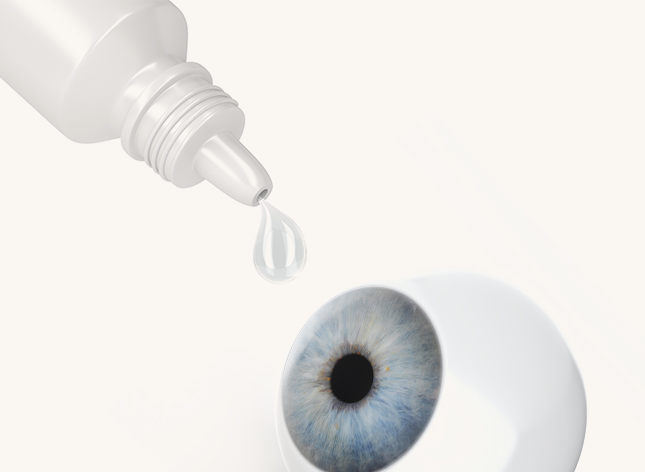
① 1–2 hours of outdoor time daily — natural light triggers retinal dopamine, the body’s own brake on myopia progression.
② 20-20-20 rule — every 20 minutes of near work, look at least 6m away for 20 seconds.
③ Maintain 30cm+ reading distance — proximity accelerates ciliary muscle fatigue and myopia stimulus.
④ No screens 1 hour before bedtime — blue light suppresses melatonin and compounds eye fatigue.
⑤ Good reading light (≥500 lux) — indirect lighting reduces strain. Dim reading causes fatigue, not myopia, but compounds discomfort.
⑥ Eye-healthy diet — lutein (spinach, kale), omega-3 (oily fish), vitamin A (carrots) support retinal health.
⑦ Annual eye exam — even with no symptoms — amblyopia and early myopia give no warning. A yearly check is the only reliable safeguard.
From Dr. Daniel Baik, Ophthalmologist
The most frustrating case in pediatric ophthalmology is meeting a 10-year-old whose amblyopia could have been fully treated at age 4 — but nobody caught it. School screenings miss it. Parents can’t see it. And the child doesn’t complain, because they’ve never known any different. This is why I encourage every parent to bring their child for a comprehensive eye exam at age 3, regardless of whether anything looks wrong. Vision is the primary sense through which children learn. Protecting it early is one of the most important investments a parent can make.
— Dr. Daniel Baik, Ophthalmologist & Director, Nunehim Eye Center, Seoul
📍 Yeongdeungpo-gu, Seoul | 🗣 English & Korean consultations
❓ Frequently Asked Questions
Q. My 3-year-old tested at 0.5 — is that amblyopia?
Not necessarily. The lower limit of normal at age 3 is approximately 0.5–0.6, so 0.5 alone is not diagnostic. What matters is the inter-eye difference, the presence of refractive error, and whether strabismus is present. A cycloplegic refraction (dilated exam) gives the complete picture — book one at Nunehim Eye Center.
Q. My child got 1.0 on the school screening — do they still need an eye exam?
Yes. School screenings only confirm whether each eye reaches 0.7 for distance — they miss inter-eye differences, near vision, binocular function, astigmatism, and early myopia. A normal school result does not substitute for an annual ophthalmology exam.
Q. How young is too young for an eye exam?
There is no lower limit. Newborns can be examined for pupil red reflex and congenital anomalies. At 6 months, fixation and tracking can be formally assessed. By age 3, a standard chart exam is usually possible. Dr. Baik uses age-appropriate techniques for every pediatric patient.
Q. My child has one amblyopic eye — what does treatment involve?
Standard treatment is patching (occluding) the stronger eye for a prescribed number of hours per day, forcing the brain to use the amblyopic eye. Duration and intensity depend on the child’s age and severity of amblyopia. Dr. Baik creates an individualised plan for each child and follows up closely.
Q. Can OK lenses (드림렌즈) slow my child’s myopia?
Yes — orthokeratology has among the strongest clinical evidence for myopia control, showing 30–50% slower axial elongation versus standard glasses (LORIC, ROMIO studies). Combined with outdoor time and low-dose atropine if needed, the effect is even greater. Nunehim Eye Center offers full OK lens fitting with corneal topography.
Q. What equipment is used for pediatric exams at Nunehim?
The clinic uses: cycloplegic autorefraction, stereoacuity testing, OCT for retinal and optic nerve analysis, corneal topography (required before OK lens fitting), axial length biometry (tracks myopia progression), and colour vision testing.
Q. How do I book a pediatric eye exam in English at Nunehim Eye Center?
Contact Nunehim Eye Center (눈에힘안과) via phone or nunehim.com. Located in Yeongdeungpo-gu, easily accessible from Guro, Gasan, Gwanak, and Dongjak. Mention when booking that you would prefer an English consultation — Dr. Daniel Baik conducts consultations in both English and Korean.

Don’t Wait for Symptoms — Book Your Child’s Eye Exam Today
Comprehensive pediatric eye exams at Nunehim Eye Center, Yeongdeungpo. English consultations available with Dr. Daniel Baik. Amblyopia, myopia, strabismus, OK lens fitting.
🌐 nunehim.com | 📍 Yeongdeungpo-gu, Seoul


Leave a comment