How Often Should You Get an Eye Exam? A Guide for Expats in Seoul
A clear, evidence-based guide to eye exam frequency for adults, children, and seniors — tailored for expats and Korean residents in Yeongdeungpo, Guro, Gasan, and across Seoul.
Q. How Often Should You Get an Eye Exam in Seoul?
Most healthy adults aged 18–39 with no risk factors should have a comprehensive eye exam every 2 years. Adults over 40 should be examined annually. Children need their first exam before age 1, again at age 3, and then every year once in school. If you have myopia, diabetes, or a family history of eye disease, more frequent exams — often every 6–12 months — are recommended. In Seoul, expats can access full-service English-language eye exams at Nunehim Eye Center in Yeongdeungpo without a referral.
Q. Why Are Regular Eye Exams in Seoul So Important?
Regular eye exams in Seoul are more than just a prescription update. A comprehensive exam checks for glaucoma, macular degeneration, diabetic retinopathy, cataracts, and other sight-threatening conditions — many of which cause no symptoms until significant damage has occurred. South Korea’s population faces some of the world’s highest rates of myopia (near-sightedness), with over 96% of young adults affected. In high-density urban areas like Yeongdeungpo, Guro, and Gasan, where screen time and near-work are intensely high, the risk of progressive myopia, dry eye, and retinal complications is especially elevated.
Q. What Is the Recommended Eye Exam Frequency by Age Group?
The optimal frequency of eye exams depends on your age, existing eye conditions, and overall health status. The following schedule is based on Korean Ophthalmological Society guidelines and international best-practice recommendations:
- Infants (under 1 year): One comprehensive eye exam before 12 months — vision development assessment
- Toddlers (age 3): Visual acuity and alignment check; early detection of amblyopia (lazy eye)
- School-age children (6–17): Annually — myopia is rapidly progressive in Korean school children
- Young adults (18–39, no risk factors): Every 2 years
- Adults 40–64: Annually — glaucoma, presbyopia, and early cataracts become relevant
- Seniors 65+: Every 6–12 months — macular degeneration, cataracts, and glaucoma risk increase substantially
- High-risk individuals (myopia, diabetes, family history): Every 6–12 months regardless of age
Q. What Are the Signs You Need an Eye Exam Sooner?
Do not wait for your scheduled visit if you notice any of the following. These symptoms may indicate a condition requiring prompt assessment at a clinic like Nunehim Eye Center in Yeongdeungpo. Expats in Guro, Gasan, and Gwanak are encouraged to come in without delay:
- Sudden blurring or distortion of vision in one or both eyes
- Flashes of light or new floaters (could indicate retinal tear)
- Loss of peripheral (side) vision
- Eye pain, pressure, or persistent redness
- Frequent headaches after screen use or reading
- Difficulty reading or seeing at night
- A child squinting, covering one eye, or sitting very close to screens
- Recent diagnosis of diabetes or hypertension — both can damage eye blood vessels
Korea’s Ministry of Health and Welfare recommends eye health screenings as part of the national health check-up programme for adults over 40. Despite this, many residents of Yeongdeungpo, Guro, and Gasan — particularly working-age adults — skip regular eye exams due to busy schedules. Expats in Seoul, unfamiliar with the local healthcare system, often wait even longer between exams. Nunehim Eye Center offers convenient English-language services to bridge this gap.
Q. What Happens During a Comprehensive Eye Exam in Seoul?
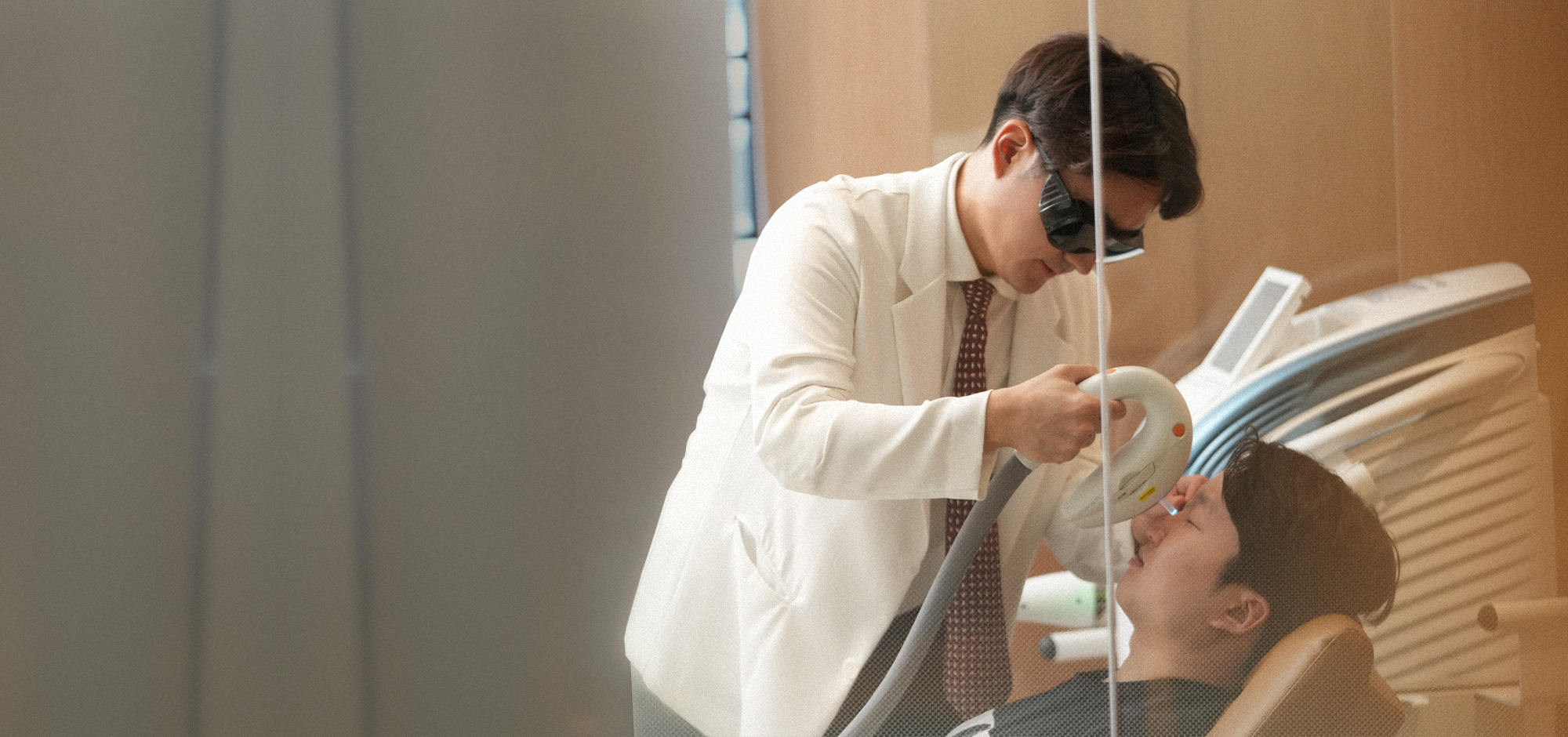
A comprehensive eye exam at Nunehim Eye Center in Yeongdeungpo goes well beyond reading an eye chart. Dr. Daniel Baik, board-certified ophthalmologist, performs a thorough evaluation that includes visual acuity testing, refraction (prescription check), slit-lamp biomicroscopy, intraocular pressure measurement, dilated fundus examination, OCT imaging where indicated, and — for children — binocular vision and amblyopia screening. The full exam typically takes 30–60 minutes, with consultations available in English.
Q. What Eye Conditions Can Be Detected at a Routine Eye Exam?
A routine eye exam how often Seoul patients ask about — can detect far more than vision problems. At Nunehim Eye Center, Dr. Daniel Baik screens for a full range of ocular and systemic conditions. Patients from Yeongdeungpo, Guro, Gasan, and Gwanak are regularly seen for:
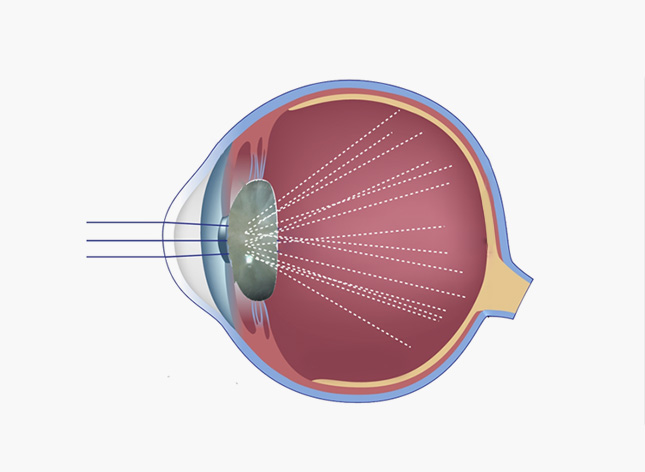
- Myopia progression: Korea has one of the world’s highest myopia prevalence rates — regular exams allow timely intervention with OK lens (orthokeratology) or TransPRK/2-Day LASEK when appropriate
- Glaucoma: Elevated IOP and optic nerve changes are detectable years before vision loss occurs
- Diabetic retinopathy: Essential annual screening for all diabetic patients
- Dry eye disease: Extremely prevalent among Seoul office workers due to air conditioning and screen use
- Cataracts: Lens clouding that begins subtly and is easily identified on slit-lamp exam
- Macular degeneration: OCT imaging enables early detection before central vision is affected
Q. When Should Expats in Seoul Schedule Their First Eye Exam?
If you have recently relocated to Seoul and have not had an eye exam in the past 12 months, schedule one as soon as possible — regardless of whether you have symptoms. The combination of high air pollution, intense screen demands, and the dry continental climate in Korea can accelerate dry eye and myopia progression in adults who were previously stable. Nunehim Eye Center in Yeongdeungpo offers seamless English-language consultations, making it a natural first stop for expats in Guro, Gasan, Gwanak, and across the city.
👶 Children
Before age 1 · Age 3 · Every year from age 6 · Myopia control (OK lens) available from age 6+ · Amblyopia must be treated before age 8 for best results
🧑 Adults
Ages 18–39 (no risk factors): every 2 years · Ages 40–64: annually · High myopia / diabetes / family history: every 6–12 months · After LASEK/TransPRK: follow-up schedule provided by Dr. Baik
👴 Seniors 65+
Every 6–12 months · Priority screening for glaucoma, AMD, and cataracts · Diabetic eye checks mandatory if on insulin or oral medications · Low vision assessment if needed
From Dr. Daniel Baik, Board-Certified Ophthalmologist
“As an ophthalmologist practising in Yeongdeungpo, one of the most common questions I hear from expats in Seoul is how often they should get an eye exam — and the honest answer is: more often than most people think. Korean guidelines recommend annual exams for adults over 40, but I also encourage younger adults with myopia, heavy screen use, or contact lens wear to come in every year. An eye exam takes less than an hour and can detect dozens of conditions before they cause permanent damage. At Nunehim Eye Center, I am committed to making that experience comfortable and clear — in both Korean and English.”
— Dr. Daniel Baik | Nunehim Eye Center (눈에힘안과) | Yeongdeungpo-gu, Seoul
❓ Frequently Asked Questions About Eye Exams in Seoul
Q. How much does an eye exam cost in Seoul?
The cost of a comprehensive eye exam in Seoul varies depending on the tests included. A basic vision check at a public health centre may be inexpensive, but a full ophthalmological evaluation including slit-lamp exam, IOP measurement, and fundus assessment at a private clinic like Nunehim Eye Center in Yeongdeungpo provides a much more thorough assessment. Many expats in Korea have private insurance that covers routine eye exams — check your policy before your visit.
Q. Can I get an eye exam in English in Seoul?
Yes. Dr. Daniel Baik at Nunehim Eye Center (눈에힘안과) in Yeongdeungpo provides full consultations in both English and Korean. This makes the clinic a preferred choice for expats living in Guro, Gasan, Gwanak, and wider Seoul who want to understand their diagnosis and treatment options without a language barrier.
Q. Is an annual eye exam necessary if my vision seems fine?
Yes — especially in Korea. Many serious eye conditions including glaucoma, diabetic retinopathy, and early macular degeneration cause no symptoms until significant and often irreversible damage has occurred. How often you should get an eye exam in Seoul should not be determined by whether you notice problems; it should follow age- and risk-based guidelines. Routine screening is the only reliable way to detect these conditions early.
Q. Do children really need eye exams every year in Seoul?
Yes, and it is especially critical in Korea where myopia rates among school-age children exceed 80%. Untreated myopia progresses rapidly and increases the lifetime risk of retinal detachment, glaucoma, and macular degeneration. At Nunehim Eye Center in Yeongdeungpo, Dr. Daniel Baik offers OK lens (orthokeratology) therapy for myopia control in children from age 6 — one of the most effective non-surgical interventions available.
Q. How often should contact lens wearers have eye exams?
Contact lens wearers should have a comprehensive eye exam at least once a year, regardless of age or prescription stability. Lenses can alter the corneal surface and increase infection risk. Dr. Daniel Baik at Nunehim Eye Center reviews lens fit, corneal health, and prescription at each contact lens follow-up. This is especially relevant for patients in Yeongdeungpo, Guro, and Gasan, where air quality can affect lens comfort.
Q. Can eye exams detect health problems beyond the eye?
Yes. A dilated fundoscopic exam can reveal signs of diabetes, hypertension, high cholesterol, autoimmune diseases, and even early signs of certain neurological conditions — all visible in the retinal blood vessels. This is one reason why ophthalmologists consider the annual eye exam a valuable component of overall preventive healthcare, not just vision care.
Q. How do I book an eye exam at Nunehim Eye Center in Yeongdeungpo?
Visit nunehim.com to learn more and book an appointment with Dr. Daniel Baik at Nunehim Eye Center (눈에힘안과). The clinic is located in Yeongdeungpo-gu, Seoul, conveniently accessible for residents of Yeongdeungpo, Guro, Gasan, and Gwanak. English consultations are available — no referral needed.

Book Your Comprehensive Eye Exam in Seoul Today
Nunehim Eye Center (눈에힘안과) provides thorough, English-language eye exams in Yeongdeungpo, Seoul. Dr. Daniel Baik, board-certified ophthalmologist, sees patients from Yeongdeungpo, Guro, Gasan, Gwanak, and all of Seoul. No referral needed.


Leave a comment