Strabismus (Crossed Eyes) in Children: Diagnosis & Treatment in Seoul
A complete guide for parents in Seoul — symptoms, causes, and where to get expert evaluation for your child’s eye alignment in Yeongdeungpo, Guro, and Gasan.
Q. What is strabismus, and can it be treated in Seoul?
Strabismus — commonly called crossed eyes or squint — is a condition in which both eyes do not point in the same direction at the same time. It affects approximately 2–4% of children worldwide. In Seoul, where access to pediatric ophthalmology is excellent, strabismus can be successfully managed with glasses, patching therapy, vision training, or surgery, depending on the type and severity. Early evaluation at a specialist eye clinic in Yeongdeungpo or Gasan gives children the best chance of full visual development.
Q. What exactly is strabismus and why does it affect children?
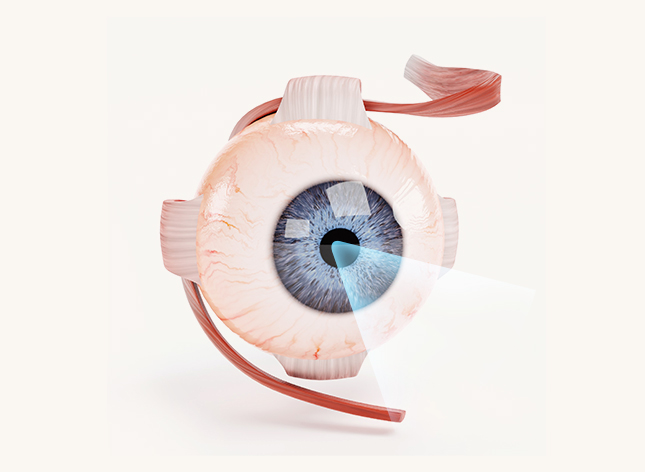
Strabismus is a misalignment of the eyes caused by an imbalance in the muscles that control eye movement, or by problems with the nerves or brain centres that coordinate eye movement. In young children, the visual system is still developing rapidly. When one eye turns in a different direction, the brain may begin to ignore the signals from that eye to avoid double vision — a process called suppression. If left untreated, this can lead to amblyopia (lazy eye), a permanent reduction in vision in the affected eye. In South Korea, studies estimate strabismus prevalence at 1.5–3% of the pediatric population, making it one of the most common reasons for referral to a pediatric ophthalmologist in areas like Yeongdeungpo, Guro, and Gwanak.
Q. What are the signs and symptoms of strabismus in children?
- One eye visibly turns inward (esotropia), outward (exotropia), upward, or downward
- Eyes that do not move together simultaneously
- Squinting or closing one eye in bright sunlight
- Tilting or turning the head to use one eye
- Complaints of double vision (more common in older children)
- Frequent eye rubbing or excessive blinking
- Poor depth perception — difficulty judging distances or catching balls
- A family history of strabismus or amblyopia (lazy eye)
Important: Strabismus is not always obvious. Intermittent exotropia — where one eye drifts outward only occasionally, especially when the child is tired or looking at distant objects — is the most common type seen in Korean children and is easy to miss without a full eye examination.
Q. How common is childhood eye misalignment in South Korea?
South Korea has one of the highest rates of myopia (nearsightedness) in the world — with near-100% prevalence among young adults in urban areas like Seoul. High myopia is itself a risk factor for certain types of strabismus. Korean school-age children are particularly prone to myopia-related accommodative esotropia, where over-focusing to see clearly causes one eye to turn inward. In Yeongdeungpo, Guro, and Gasan — densely populated districts with high screen-time exposure — pediatric eye problems including strabismus and amblyopia are increasingly detected during school vision screenings. Korean ophthalmology guidelines (Korean Ophthalmological Society) recommend a comprehensive eye examination for all children before starting school, ideally between ages 3 and 5, to catch strabismus early.
Q. What are the treatment options for strabismus children Seoul?
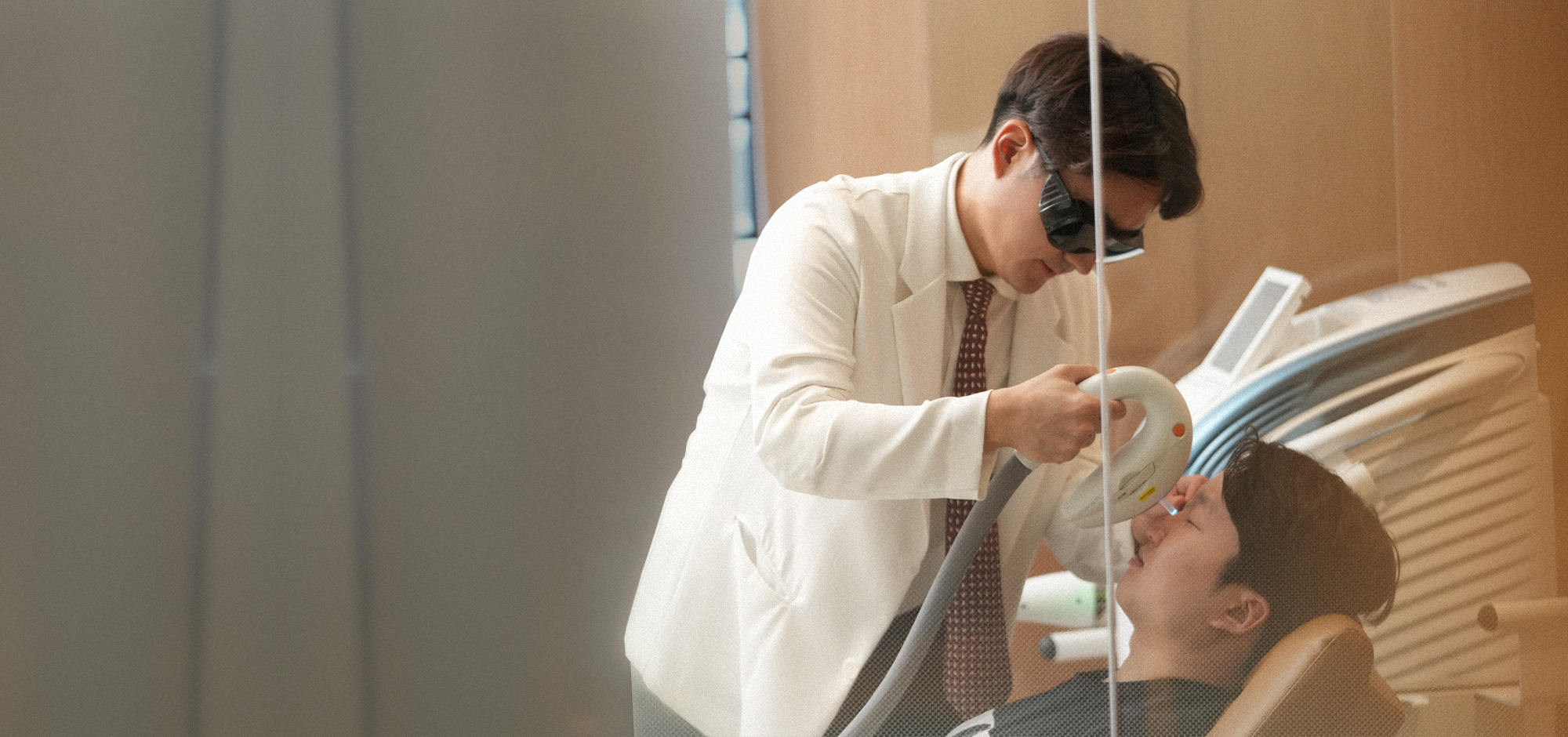
At Nunehim Eye Center in Yeongdeungpo, Dr. Daniel Baik, board-certified ophthalmologist, offers a comprehensive range of strabismus treatments tailored to each child’s age, eye alignment pattern, and visual development stage.
- Corrective glasses or contact lenses — Many cases of accommodative esotropia resolve completely with the right spectacle prescription, especially when treated early.
- Patching therapy (occlusion) — Covering the stronger eye to force the weaker eye to work, treating amblyopia alongside strabismus.
- Orthoptic exercises / vision therapy — Exercises to train binocular vision and strengthen eye-muscle coordination.
- Botulinum toxin (Botox) injection — A non-surgical option to temporarily weaken an overactive eye muscle.
- Strabismus surgery — When non-surgical methods are insufficient, surgery to reposition the eye muscles provides excellent results and is routinely performed in Seoul.
For families in Guro, Gasan, and Gwanak looking for expert pediatric eye care, Nunehim Eye Center offers Korean and English consultations. Visit nunehim.com to learn more.
Q. When should I take my child to an eye doctor in Seoul?
You should bring your child in for a professional eye examination if:
- You notice one eye turning in any direction — even occasionally
- Your child fails a school vision screening in Yeongdeungpo, Guro, or Gasan district
- Your child complains of seeing double or has frequent headaches
- Your child was premature, or has a family history of strabismus or amblyopia
- Your child’s eyes seem misaligned in photos (especially the light reflection in the eyes is asymmetric)
- Your paediatrician refers you to an ophthalmologist
The critical window for treatment is before age 7–8, when the visual cortex is still highly adaptable. Delaying treatment beyond this period makes amblyopia significantly harder to reverse. Same-day and walk-in appointments are available at Nunehim Eye Center, serving the Yeongdeungpo and wider Seoul area.
Q. What are the main types of strabismus in children?
👁 Esotropia (Inward Turn)
The most common type in Korean children. One eye turns inward (“crossed eyes”). Accommodative esotropia is often corrected with glasses alone. Infantile esotropia requires surgery for the best outcomes.
👁 Exotropia (Outward Turn)
One eye drifts outward, often intermittently. Intermittent exotropia is frequently first noticed when the child is daydreaming or in bright sunlight. Common in Seoul school-age children aged 5–12.
👁 Vertical Strabismus
One eye deviates upward (hypertropia) or downward (hypotropia). Often caused by a palsy of the fourth cranial nerve, and may require surgical correction to restore comfortable binocular vision.
A Word from Dr. Daniel Baik
“In my clinic in Yeongdeungpo, I see children with strabismus at all stages — from newborns with infantile esotropia to teenagers with intermittent exotropia that has been quietly worsening for years. The most important message I give every parent is this: the earlier we treat, the better the vision outcome. A child’s visual system is remarkably plastic in the first seven years of life, and with the right intervention — whether glasses, patching, or surgery — most children achieve excellent alignment and visual function. If you have any doubt about your child’s eye alignment, please don’t wait.”
— Dr. Daniel Baik, Board-Certified Ophthalmologist, Nunehim Eye Center, Yeongdeungpo, Seoul
❓ Frequently Asked Questions: Strabismus in Children, Seoul
Q. Will my child outgrow strabismus on their own?
No — true strabismus does not resolve on its own and requires treatment. Pseudostrabismus (the false appearance of crossed eyes due to a wide nasal bridge in Asian infants) does improve with age, but a real misalignment needs professional evaluation. An ophthalmologist can distinguish between the two with a simple light-reflex test.
Q. Is strabismus surgery safe for children?
Yes. Strabismus surgery is one of the most commonly performed pediatric eye surgeries in South Korea and is considered very safe. It is performed under general anaesthesia, takes 30–60 minutes, and most children go home the same day. Recovery is rapid, with return to school typically within a week.
Q. Can glasses alone fix crossed eyes?
In cases of accommodative esotropia — where the crossing is caused by uncorrected farsightedness — glasses can completely correct the alignment. For other types of strabismus, glasses reduce the degree of misalignment but surgery may still be required for full correction.
Q. What is amblyopia, and how is it related to strabismus?
Amblyopia (lazy eye) occurs when the brain suppresses the image from a misaligned or blurry eye, leading to permanently reduced vision in that eye. Strabismus is the leading cause of amblyopia in Korean children. Patching the stronger eye and correcting the alignment are the mainstays of amblyopia treatment.
Q. How many sessions of patching therapy are needed?
Patching duration varies by the degree of amblyopia and how early treatment starts. Mild cases may need 2–4 hours of patching per day for a few weeks; severe cases may require full-time patching for several months. Dr. Baik tailors the patching regimen to each child’s needs and monitors progress at each follow-up visit.
Q. Can adults develop strabismus too?
Yes. Strabismus can develop in adults after stroke, brain injury, diabetes, or thyroid eye disease. Adult strabismus causes double vision rather than amblyopia (since the adult brain cannot suppress). Surgery and prism glasses are effective treatments. Nunehim Eye Center in Yeongdeungpo sees adult patients as well as children.
Q. How do I book a strabismus evaluation in Yeongdeungpo / Guro / Gasan?
You can visit Nunehim Eye Center (눈에힘안과) in Yeongdeungpo, which is convenient for families from Guro, Gasan, and Gwanak. Dr. Daniel Baik provides consultations in both Korean and English. Walk-in appointments are welcome. Visit nunehim.com for directions and clinic hours.
Our Clinic — Nunehim Eye Center, Yeongdeungpo

Book a Strabismus Consultation in Seoul
Serving Yeongdeungpo · Guro · Gasan · Gwanak | Korean & English consultations available


Leave a comment