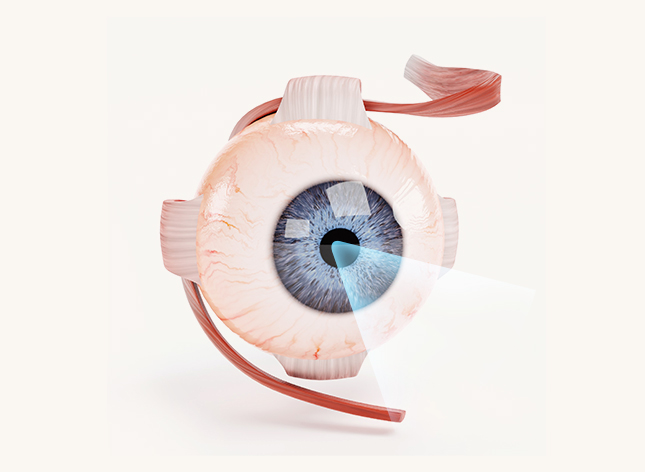
Watery Eyes (Epiphora):
Causes & Treatment in Seoul
— Nunehim Eye Center · Yeongdeungpo-gu, Seoul —
Q. Why are my eyes constantly watering?
Watery eyes (epiphora) are caused by either overproduction of tears or blocked tear drainage. Paradoxically, dry eye syndrome is the most common cause — the eye overproduces tears in response to irritation. Other causes include allergies, blocked tear ducts, eyelid problems, or infections. At Nunehim Eye Center in Yeongdeungpo, Seoul, Dr. Daniel Baik uses slit-lamp examination and nasolacrimal irrigation to pinpoint the exact cause and provide targeted treatment.
Q. What Is Epiphora (Watery Eye Syndrome)?
Epiphora is the medical term for excessive tearing — tears overflowing onto the cheek rather than draining properly through the nasolacrimal system. The nasolacrimal duct, a tiny tube connecting the inner corner of your eye to the inside of your nose, can become narrowed or blocked over time. When drainage fails, even normal tear production causes overflow.
📊 Epiphora in Korea: Key Facts
▸ Epiphora affects approximately 6–7% of adults over age 50 in Korea
▸ Dry eye is the #1 cause — affecting 33% of Korean adults
▸ 80%+ of cases resolve with targeted treatment within 4–8 weeks
▸ Untreated blocked ducts can lead to chronic dacryocystitis (lacrimal sac infection)
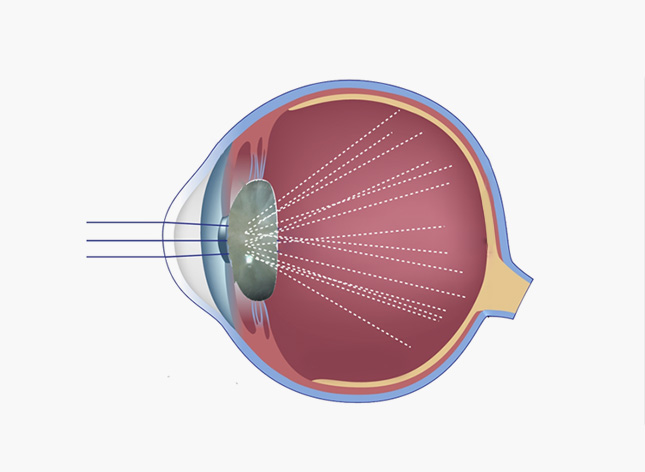
Q. What Are the Most Common Causes of Watery Eyes?
- Dry Eye Syndrome — reflex tearing from ocular surface irritation
- Allergic conjunctivitis — seasonal pollen, dust mites, pet dander
- Nasolacrimal duct obstruction — partial or complete blockage of tear drainage
- Ectropion / Entropion — eyelid turning outward or inward
- Blepharitis — eyelid margin inflammation causing overflow
- Foreign body / Corneal abrasion — sudden onset watering
- Viral conjunctivitis — common in Seoul office workers and schoolchildren
Q. How Is the Cause of Watery Eyes Diagnosed?
🔬 Slit-Lamp Exam
Examines cornea, conjunctiva, eyelids and meibomian glands. Identifies dry eye, blepharitis, and foreign bodies.
💧 Nasolacrimal Irrigation
Gentle saline wash through the tear duct to test drainage. Distinguishes partial from complete obstruction.
🌿 Allergy Testing
Skin-prick or serum IgE testing identifies specific allergens like cedar pollen (peak in Seoul March–April).
Q. How Are Watery Eyes Treated in Seoul?
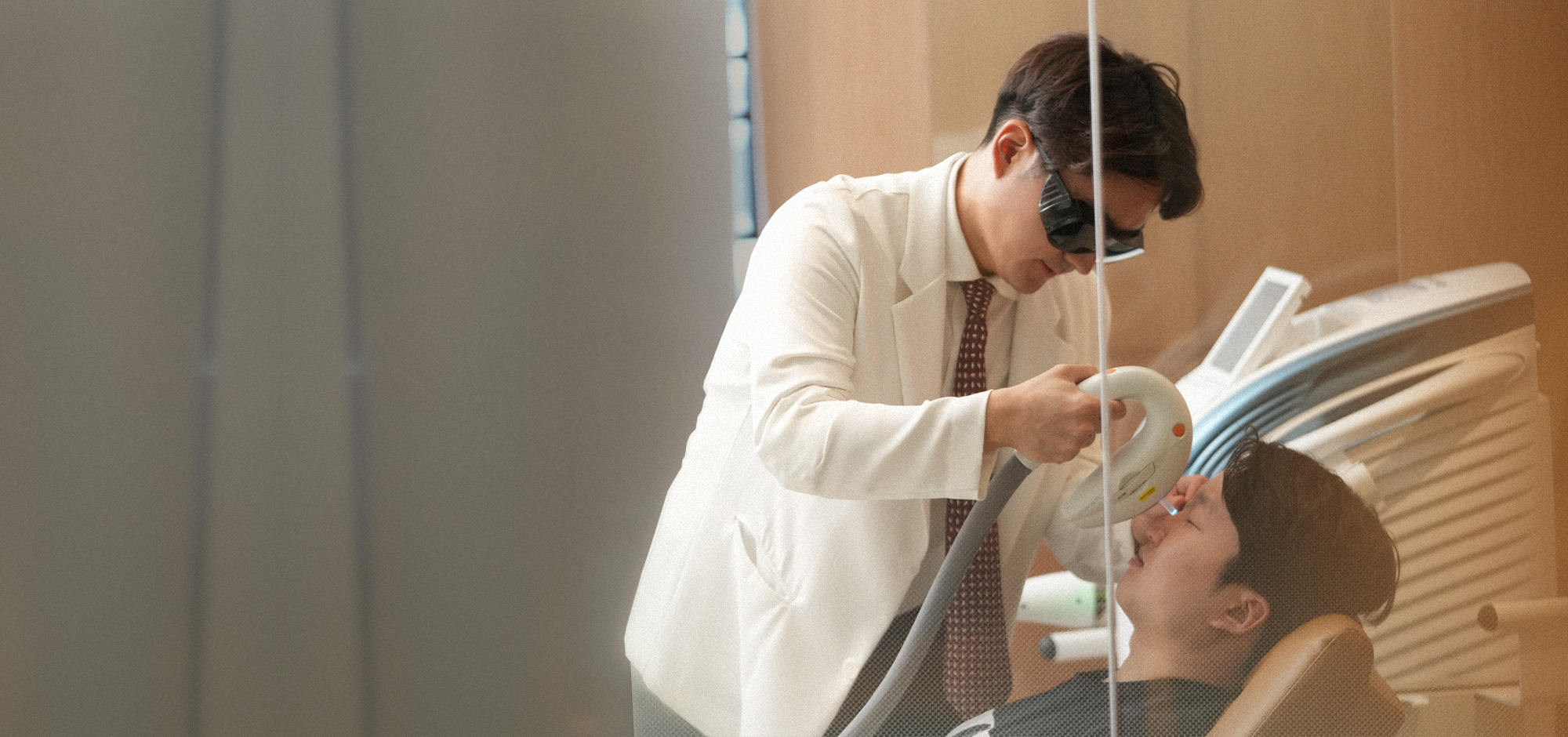
Treatment depends entirely on the underlying cause. Dry-eye-related tearing responds well to preservative-free artificial tears, warm lid compresses, and meibomian gland therapy (e.g., IPL at our Oasis M22 unit). Allergic tearing is managed with antihistamine drops and allergen avoidance.
Blocked nasolacrimal duct: First-line treatment is gentle probing and irrigation. Recurrent blockages may need dacryocystorhinostomy (DCR) surgery — typically done under local anesthesia, day-procedure. Patients from Guro and Gasan can usually return to normal activities within a week.
Q. When Should You See a Doctor Urgently for Watery Eyes?
Most watery eyes are benign, but seek same-day or next-day care at Nunehim Eye Center if you notice:
- Sudden onset with eye pain or redness → possible corneal abrasion or keratitis
- Pus or discharge → bacterial conjunctivitis, needs antibiotic drops
- Painful swelling at the inner corner of the eye → dacryocystitis (lacrimal sac abscess)
- Tearing after trauma or chemical splash → emergency evaluation
- New tearing in only one eye over age 60 → rare but must rule out lacrimal sac tumor
👨⚕️ From Dr. Daniel Baik, Nunehim Eye Center
“The most surprising thing I see in my Yeongdeungpo clinic is patients coming in for watery eyes who actually have severe dry eye. The eye produces reflex tears to compensate for the dryness — it’s counterintuitive. Treating the dryness with proper meibomian gland therapy stops the watering completely in most cases.”
— Dr. Daniel Baik, Board-Certified Ophthalmologist | Nunehim Eye Center, Yeongdeungpo, Seoul
❓ FAQ: Watery Eyes Treatment in Seoul
Q. Can dry eye really cause watery eyes?
Yes — this is called reflex epiphora. The ocular surface sends a distress signal to the lacrimal gland, which floods the eye with watery tears. These tears don’t lubricate well because they lack the oily layer. The paradox is common, especially in Guro and Yeongdeungpo office workers who spend long hours at screens.
Q. How long does a blocked tear duct take to heal?
Mild partial obstructions often respond to saline irrigation and massage of the lacrimal sac over 2–4 weeks. Complete obstructions typically require probing (a 5-minute procedure under local anesthesia) or, in persistent cases, DCR surgery with a 95% success rate.
Q. Are antihistamine eye drops safe long-term?
Yes, modern antihistamine drops like olopatadine are safe for long-term use and are effective for most patients with allergic conjunctivitis in Seoul, where tree pollen peaks in March–May.
Q. Can babies have watery eyes?
Yes — congenital nasolacrimal duct obstruction affects up to 5% of newborns. Most resolve spontaneously by age 1 with nasolacrimal massage. Persistent cases may need probing at Nunehim Eye Center in Gasan.
Q. Does IPL (Oasis M22) help watery eyes?
IPL targets dysfunctional meibomian glands, improving the oily layer of the tear film and reducing reflex tearing from dry eye. Most patients need 3–4 sessions spaced 4 weeks apart.
Q. Is DCR surgery painful?
DCR (dacryocystorhinostomy) is performed under local anesthesia with sedation. There is minimal pain during the procedure; mild bruising around the nose for 1–2 weeks post-op. Most Gwanak and Dongjak patients return to work within 5–7 days.
Q. Can I get a consultation in English at Nunehim?
Absolutely. Dr. Daniel Baik provides consultations in both Korean and English. International patients or English-speaking residents in Seoul are welcome to book via nunehim.com.

Stop Living with Watery Eyes — Book a Consultation
Nunehim Eye Center · Yeongdeungpo-gu, Seoul | Serving Guro · Gasan · Gwanak · Dongjak


Leave a comment