Computer Vision Syndrome: The IT Worker’s Eye Health Guide for Seoul
Eye strain, dry eyes, blurred vision, headaches — Dr. Daniel Baik at Nunehim Eye Center, Guro, Seoul explains how to protect your eyes in Korea’s screen-heavy work culture.
Q. What Is Computer Vision Syndrome (CVS) and Is It Serious?
Computer Vision Syndrome — also called Digital Eye Strain — is a group of eye and vision problems caused by prolonged use of digital screens. It affects an estimated 50–90% of heavy computer users. While CVS is rarely sight-threatening on its own, untreated strain accelerates dry eye disease, worsens existing refractive errors, and in Seoul’s high-myopia environment, may contribute to myopia progression in younger workers. Early intervention and the right habits make a significant difference.
Q. Why Are IT Workers in Seoul Especially at Risk?
Seoul’s Guro Digital Complex, one of Korea’s largest tech districts, is home to thousands of IT professionals spending 8–12 hours a day on screens. Korea ranks among the world’s most digitally connected nations — the average Korean adult logs over 9 hours of screen time daily across work and leisure.
This prolonged exposure, combined with Korea’s fine-dust environment (미세먼지 reduces tear film stability), dry heated/air-conditioned offices, and a culture that discourages taking breaks, creates a perfect storm for eye strain. At Nunehim Eye Center in Guro, Seoul, Dr. Daniel Baik sees a significant number of IT and office workers from Guro Digital Complex and the surrounding Gasan, Yeongdeungpo, and Gwanak areas presenting with CVS symptoms.
CVS in Korea: Eye-Opening Statistics
- ▸ 90% of Koreans who use computers more than 3 hours daily report at least one CVS symptom (Korean Ophthalmological Society)
- ▸ The average Korean adult blinks only 5–7 times per minute when using a screen vs. 15–20 times normally — drastically reducing tear film coverage
- ▸ Screen time increased by 40% among Korean office workers during the remote-work era and has not returned to pre-pandemic levels
- ▸ CVS-related dry eye is now the most common reason for ophthalmology consultation among adults under 45 in Seoul
Q. What Are the Symptoms of Computer Vision Syndrome?
CVS produces a characteristic cluster of symptoms that typically worsen as the day progresses:
Visual symptoms: blurred vision (especially when switching focus between screen and distance), double vision, and difficulty refocusing after sustained near work.
Ocular surface symptoms: dry, gritty, burning, or watering eyes — paradoxically, the reflex tearing from dry eye is one of the most common complaints.
Musculoskeletal symptoms: headaches — typically frontal or behind the eyes — neck stiffness, and shoulder tension from poor monitor positioning.
Sensitivity symptoms: increased sensitivity to light (photophobia) and difficulty with fluorescent office lighting.
If you recognise more than three of these symptoms and work long hours at a screen in Guro, Gasan, or the wider Seoul area, a comprehensive eye examination at Nunehim Eye Center is strongly recommended.
Q. How Is Computer Vision Syndrome Treated?
Treatment depends on the underlying cause identified during a comprehensive eye exam. Common approaches include:
Updated spectacle or contact lens prescription — even a small uncorrected refractive error (0.25D) forces the eye’s focusing muscle to work continuously, causing fatigue. A dedicated “computer distance” prescription can reduce strain significantly.
Anti-fatigue or blue-light lenses — though evidence for blue light specifically is mixed, enhanced anti-reflective coatings reduce glare and improve contrast, which helps.
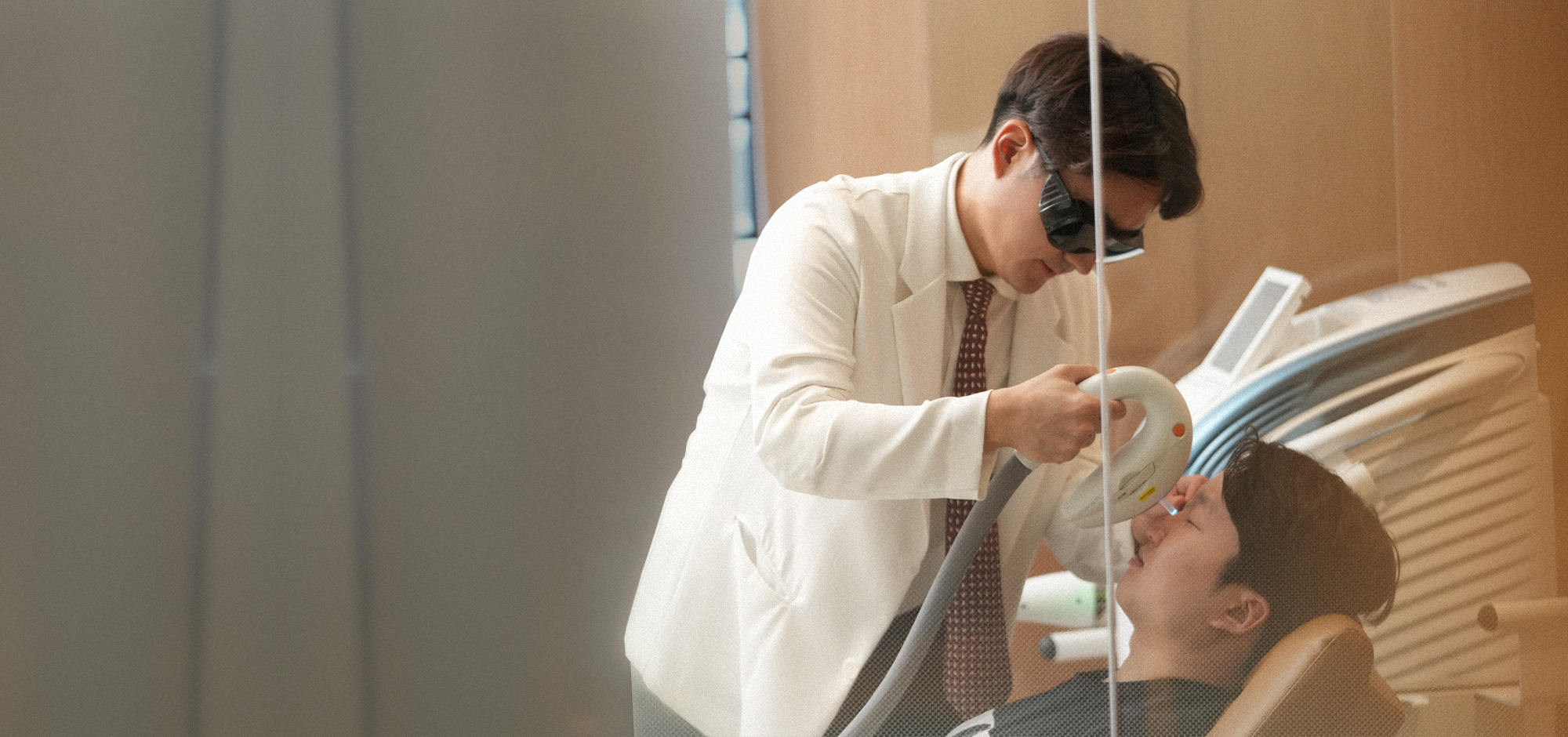
Dry eye treatment — if meibomian gland dysfunction (MGD) is contributing, Oasis M22 IPL therapy at Nunehim Eye Center in Guro, Seoul can significantly improve tear film stability. Preservative-free artificial tears used proactively throughout the day are the first-line option.
👁️ The 20-20-20 Rule — Your Minimum Daily Habit
Every 20 minutes of screen work, look at something 20 feet (6 metres) away for at least 20 seconds. This relaxes the ciliary muscle that holds the lens in a near-focus position, temporarily relieving accommodative spasm.
Set a timer. Do it consistently. In Seoul’s open-plan offices where taking breaks may feel uncomfortable, a brief gaze out of the window — towards the Han River or Gwanak mountain if you’re lucky — serves perfectly.
- Blink deliberately — complete, slow blinks to coat the corneal surface
- Adjust monitor distance — screen should be 50–70 cm from eyes, top of screen at or slightly below eye level
- Increase text size — don’t strain to read small text; zoom in
- Reduce screen glare — matte screen protectors and anti-glare coatings help significantly in brightly-lit Seoul offices
Q. How Should I Set Up My Workstation to Protect My Eyes?
💻 Monitor Setup
Position screen 50–70 cm away. Centre should be 10–20° below eye level. Use a matte screen protector or anti-glare film. Calibrate brightness to match your environment — brighter is not better. Avoid placing screens against bright windows.
💡 Lighting
Avoid harsh overhead fluorescent lighting directly above your screen. Use warm indirect lighting (2700–3000K) at desk level. In Seoul’s open-plan offices, position your desk perpendicular to windows to avoid both glare and silhouetting.
⏱️ Breaks
20-20-20 rule every 20 minutes. Full 5-minute break from screens every hour. Stand, look outside, and blink actively. For severe CVS, consider a “screen curfew” 1 hour before sleep to allow the accommodative system to relax.
“Working in the Guro Digital Complex means many of my patients sit at screens for 10+ hours a day. The number one thing I tell them: your blink rate on a screen drops by two-thirds. That alone causes a degree of dry eye that no amount of eye drops will fix if the underlying habit doesn’t change.”
— Dr. Daniel Baik, Board-Certified Ophthalmologist, Nunehim Eye Center, Guro, Seoul
❓ Computer Vision Syndrome FAQs
Q. Does blue light from screens actually damage eyes?
The evidence for blue light causing permanent retinal damage from screens is currently weak — your screen emits far less blue light than natural daylight. However, blue light does suppress melatonin production, disrupting sleep, which indirectly worsens eye fatigue. The greater issue with screens is not blue light but reduced blink rate and accommodative stress.
Q. Can computer eye strain permanently damage my vision?
CVS itself does not cause permanent structural damage. However, chronic accommodation spasm can worsen myopia progression — particularly in younger adults under 35. If CVS is causing uncorrected or under-corrected myopia to worsen, an up-to-date prescription from Dr. Baik at Nunehim Eye Center in Guro is essential.
Q. Should I use blue-light blocking glasses?
They won’t hurt. Quality anti-reflective coatings reduce screen glare meaningfully, which eases visual fatigue. If you find them helpful, continue using them. But they’re not a substitute for regular breaks, proper screen ergonomics, and treating any underlying dry eye or refractive error.
Q. Is IPL treatment at Nunehim useful for CVS-related dry eye?
Yes — if meibomian gland dysfunction (MGD) is contributing to your dry eye and CVS symptoms. Oasis M22 IPL therapy improves meibomian gland function by reducing inflammation and improving oil secretion, leading to more stable tear film throughout the day. It is particularly effective for office workers with moderate-to-severe MGD.
Q. How is CVS different from just being tired?
Screen-related eye fatigue is characterised by its specific timing (worsening during and immediately after screen use, improving with rest), its visual components (blur, difficulty refocusing), and its association with dry eye symptoms. General fatigue from poor sleep also worsens CVS — they interact. A slit-lamp examination can distinguish dry eye, refractive error, and accommodative dysfunction as contributing factors.
Q. When should a Seoul IT worker see an ophthalmologist for CVS?
Book an appointment at Nunehim Eye Center in Guro if: symptoms persist despite a week of good screen hygiene; you notice vision blur at distance after close work; you’re having headaches more than twice a week; or you notice significant dry eye symptoms. These may indicate an underlying condition beyond simple eye strain.
Q. My employer in Guro requires long screen hours. Are there any legal protections?
Korean labour law stipulates that VDT (visual display terminal) workers should have regular eye exams at employer expense. Workers using screens for more than 4 hours daily are entitled to periodic occupational health assessments that include vision screening. Ask your HR department about your entitlements.

Eye Strain Getting You Down? Book a Screen Health Check in Guro
Dr. Daniel Baik offers comprehensive CVS assessments — prescription review, dry eye evaluation, and IPL if needed. Serving Guro · Yeongdeungpo · Gasan · Gwanak · Dongjak.
📍 Visit Nunehim Eye Center — Guro, Seoul
Convenient access from Yeongdeungpo, Gasan, Gwanak & Dongjak. Near Guro Digital Complex Station (Line 2).
📌 Address
551 Siheung-daero, Guro-gu, Seoul
눈에힘안과 | nunehim.com
🕐 Hours
Mon–Fri: 9:00 AM – 6:30 PM
Sat: 9:00 AM – 2:00 PM
Sun & Holidays: Closed
🌐 Languages
Korean & English consultations available.
Book online at nunehim.com


Leave a comment