Eyelid Inflammation (Blepharitis): Causes, Symptoms & Daily Care
Expert blepharitis treatment at Nunehim Eye Center — Yeongdeungpo · Guro · Gasan · Seoul
Q. What is blepharitis and why is it so common in Seoul?
Blepharitis is chronic inflammation of the eyelid margins, affecting the follicles and meibomian oil glands. In Seoul’s urban environment — particularly in Yeongdeungpo, Guro, and Gasan — fine dust (PM2.5), long screen hours, and contact lens wear create ideal conditions for blepharitis to persist. At Nunehim Eye Center, blepharitis treatment is among our most frequently managed conditions, and most patients achieve significant relief within weeks of a structured care routine.
Q. What exactly causes blepharitis?
Blepharitis has two main forms: anterior (affecting the outer eyelid near the lashes, linked to seborrheic dermatitis or Staphylococcus bacteria) and posterior (affecting the inner lid margin, caused by meibomian gland dysfunction/MGD). Both types can lead to dry eye disease, styes, and corneal damage if left untreated. Most patients at our Guro-area clinic have mixed-type blepharitis with anterior and posterior components simultaneously.
Common triggers include Demodex mite overgrowth, seborrheic skin conditions, meibomian gland dysfunction from heavy screen exposure, contact lens wear in dusty urban environments like Yeongdeungpo and Gasan, and poor makeup removal habits. Seoul’s seasonal swings — humid summers to cold dry winters — can also worsen flares.
📊 Blepharitis in Korea — Key Statistics
- ▸ Over 2.3 million Koreans are treated for dry eye & blepharitis annually (HIRA 2023)
- ▸ Seoul’s average PM2.5 levels exceed WHO safe limits on 1 in 3 days per year
- ▸ Adults in Guro, Gasan & Yeongdeungpo report 40% higher daily screen time vs. national average
- ▸ 60–70% of blepharitis cases involve meibomian gland dysfunction (Korean Ophthalmology Society)
Q. What are the symptoms of blepharitis I should watch for?
- Red, swollen, or greasy eyelid margins
- Crusty flakes at the base of eyelashes — especially noticeable in the morning
- Gritty, burning, or itching sensation in the eyes
- Excessive tearing or, paradoxically, very dry eyes
- Sensitivity to light (photophobia)
- Frequent styes (hordeola) or chalazia
- Blurred vision that temporarily improves with blinking
- Misdirected or lost eyelashes in severe chronic cases
Q. What blepharitis treatments are available at Nunehim Eye Center?
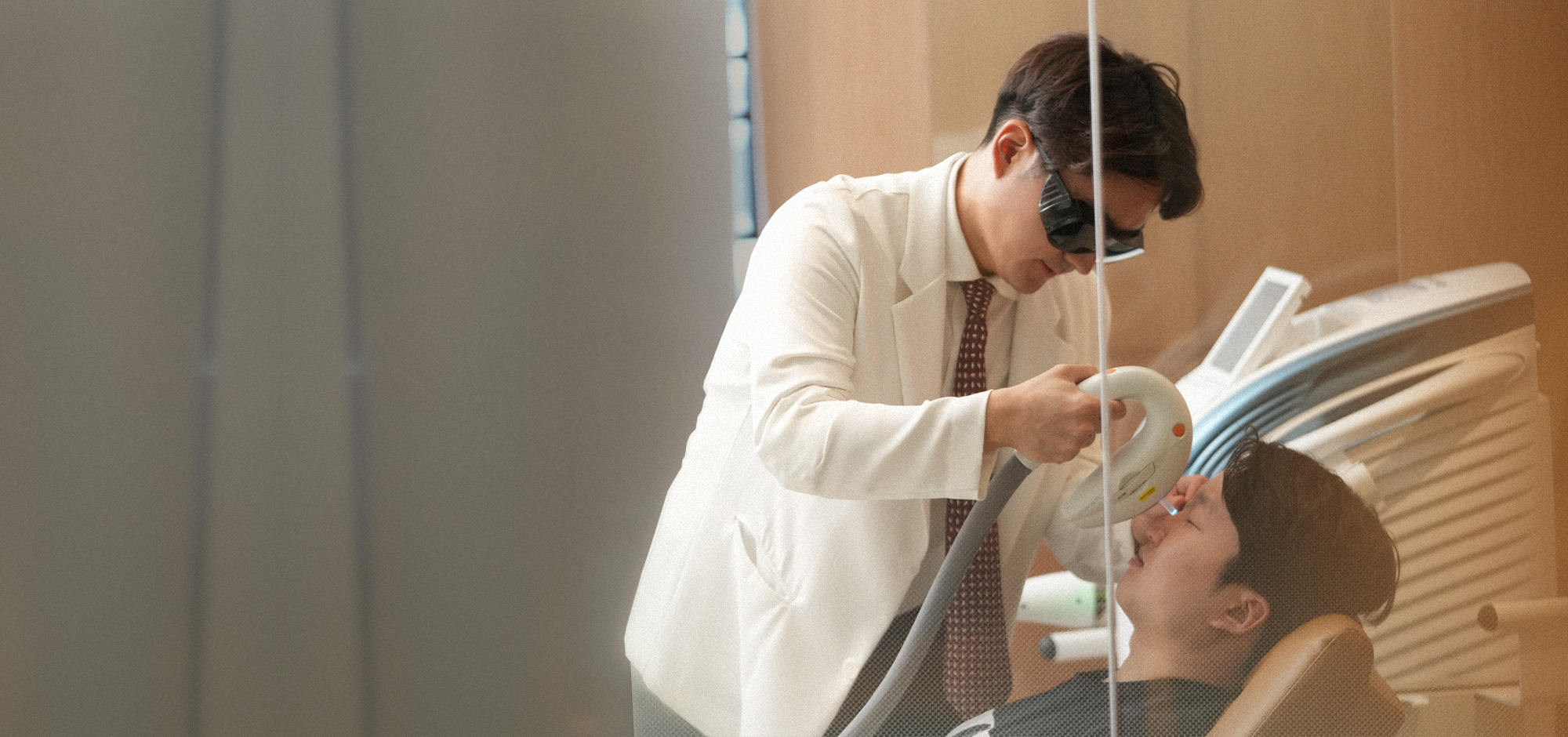
At Nunehim Eye Center in Yeongdeungpo, Dr. Daniel Baik — a board-certified ophthalmologist — uses a layered approach. Assessment first determines whether anterior or posterior blepharitis dominates, and whether Demodex mites are a factor. Treatment typically begins with professional in-office eyelid cleaning, warm compresses, and lid scrubs, followed by meibomian gland expression if MGD is present.
Medical options include antibiotic eye drops for bacterial blepharitis, topical steroids for inflammatory flares, omega-3 supplementation to improve meibum quality, and preservative-free artificial tears for associated dry eye. For Demodex-related blepharitis — increasingly common in patients from Gasan and Gwanak — tea tree oil–based lid treatments or thermal pulsation therapy may be recommended. Most patients see marked improvement within 4–6 weeks.
Q. How do I care for blepharitis at home daily?
Home care is the cornerstone of long-term management. Dr. Baik recommends a daily lid hygiene routine: apply a warm compress (40°C) for 10 minutes each morning to soften meibum secretions, then gently scrub the eyelid margins with diluted baby shampoo or a commercial lid wipe. This is especially important for patients in high-pollution areas like Yeongdeungpo and Gasan, where airborne particles accumulate on lids throughout the day.
Additional home care: take regular screen breaks (20-20-20 rule), avoid mascara or eyeliner on the inner lid margin, switch to daily-wear contact lenses if you wear contacts in dusty Guro or Gwanak environments, and maintain a diet rich in omega-3 fatty acids. Never rub your eyes — this worsens inflammation and can spread bacteria along the lid margin.
Q. When should I see a doctor in Seoul for my eyelid symptoms?
- Symptoms persist for more than 2 weeks despite home lid hygiene
- A painful red lump (stye) develops on or inside the eyelid
- Vision becomes blurred or you notice new floaters or flashes
- Eyelashes are falling out or growing in the wrong direction (trichiasis)
- You develop corneal pain or significant light sensitivity
- You wear contact lenses and experience worsening redness or discharge
😮 Mild
Occasional morning crustiness and mild lid redness. Responds well to warm compresses and lid scrubs within 1–2 weeks.
😣 Moderate
Persistent burning, frequent styes, and dry eye. Requires prescription drops alongside a daily hygiene routine.
😰 Severe
Corneal involvement, significant lash loss, or chronic chalazia. Meibomian gland expression or minor surgical drainage may be needed.
A word from Dr. Daniel Baik
“Blepharitis is one of those conditions that patients often endure for years, thinking that morning eye crustiness is simply normal. It isn’t. With the right combination of in-office treatment and a consistent home lid hygiene routine, we can dramatically reduce inflammation and protect your long-term eye health.”
— Dr. Daniel Baik, board-certified ophthalmologist, Nunehim Eye Center, Yeongdeungpo · Seoul
❓ Frequently Asked Questions About Blepharitis
Q. Is blepharitis contagious?
Blepharitis itself is not contagious — it is a chronic inflammatory condition, not a direct infection. However, Staphylococcus bacteria associated with anterior blepharitis can spread through shared towels or makeup. Demodex mites are transmissible through close contact. Practice good hygiene and avoid sharing eye cosmetics or face towels.
Q. Can blepharitis be cured permanently?
Blepharitis is a chronic condition — most patients need ongoing management rather than a one-time cure. With consistent lid hygiene and appropriate treatment, symptoms can be controlled very effectively and many patients experience long periods of remission. Dr. Baik will create an individualised management plan at your consultation at Nunehim Eye Center.
Q. Can I wear contact lenses if I have blepharitis?
It is best to reduce contact lens wear during active flares. If you live in high-pollution areas like Guro or Gasan and need vision correction, Dr. Baik may recommend daily disposable lenses and rigorous lens hygiene, or exploring orthokeratology (OK lens) — worn only at night — as an alternative to daytime wear. OK lenses can be ideal for blepharitis patients who need to avoid daytime lens exposure.
Q. How is Demodex blepharitis different from regular blepharitis?
Demodex blepharitis is caused by an overgrowth of Demodex folliculorum mites that naturally live on skin follicles. Signs include cylindrical dandruff-like sleeves around lash bases, intense itching, and recurrent styes. It is more common in older adults. Treatment requires tea tree oil–based lid cleansers specifically targeting Demodex, not standard antibiotics.
Q. Does Seoul’s fine dust make blepharitis worse?
Yes — PM2.5 particulate matter can accumulate on the eyelid margin and clog meibomian gland orifices, worsening posterior blepharitis and MGD. Patients in Yeongdeungpo, Guro, and Gwanak are advised to wear wraparound glasses outdoors on high-pollution days and cleanse their lids each evening, especially during spring fine-dust season.
Q. How long does blepharitis treatment take to show results?
Most patients see improvement within 2–4 weeks of consistent daily lid hygiene. Prescription antibiotic or steroid drops typically improve symptoms within 1–2 weeks. Meibomian gland dysfunction may take 6–8 weeks to respond to thermal pulsation or omega-3 supplementation. Complete resolution varies by severity and consistency of home care.
Q. Is Nunehim Eye Center able to consult in English?
Yes — Dr. Daniel Baik conducts consultations in both Korean and English. If you are an expat living in Yeongdeungpo, Guro, Gasan, or the surrounding Gwanak area, you are very welcome at Nunehim Eye Center. We provide clear, accessible explanations of your diagnosis and treatment options in English.

Struggling with persistent eyelid irritation?
Book a blepharitis consultation with Dr. Daniel Baik at Nunehim Eye Center. Serving Yeongdeungpo, Guro, Gasan, and Gwanak.
📍 Visit Nunehim Eye Center — Guro, Seoul
Convenient access from Guro, Gasan, Gwanak & Dongjak. Near Guro Digital Complex Station (Line 2).
📍 Address
Yeongdeungpo-gu, Seoul
nunehim.com
🕐 Hours
Mon–Fri: 9:00–18:00
Sat: 9:00–13:00
🌐 Languages
Korean & English
consultations available


Leave a comment