Colour Blindness: Types, Testing & Life in Seoul
Your complete guide to colour vision deficiency — diagnosis, daily life, and expert care in Guro & Yeongdeungpo, Seoul
Q. What is a colour blindness test in Seoul?
A colour blindness test in Seoul evaluates your ability to distinguish colours using standardised tools such as the Ishihara plates or Farnsworth D-15 panel. At Nunehim Eye Center in Guro, Seoul, Dr. Daniel Baik — a board-certified ophthalmologist — offers comprehensive colour vision assessments in both Korean and English, making diagnosis accessible for expats and locals across Yeongdeungpo, Gasan, and Gwanak.
Q. What is colour blindness?
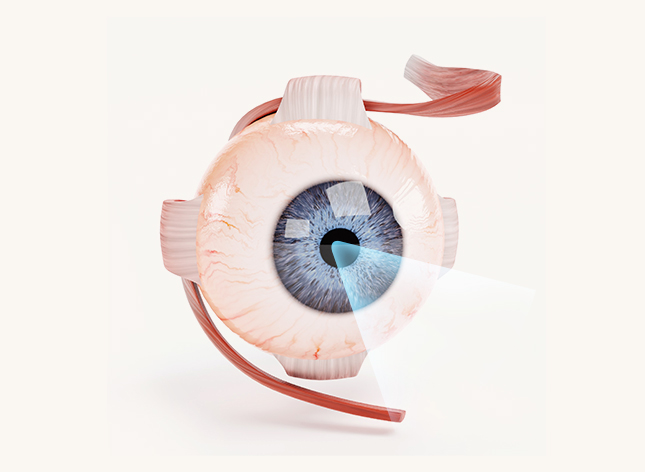
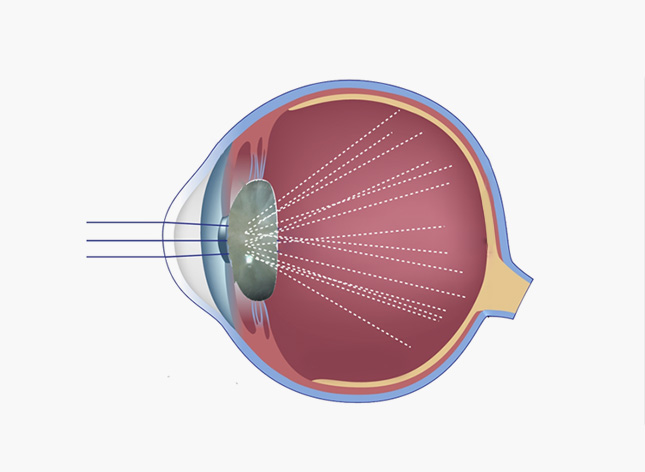
Colour blindness — medically known as colour vision deficiency (CVD) — is a condition in which a person cannot perceive certain colours in the normal range. The most common form is red-green colour blindness, caused by the absence or malfunction of cone cells in the retina. While it is rarely a cause of total colour loss, it can significantly affect daily tasks such as reading maps, choosing clothing, interpreting traffic signals, or working in colour-sensitive professions like medicine, design, or aviation.
Q. What are the types of colour blindness?
There are three main categories of colour vision deficiency. Red-green colour blindness is the most prevalent, affecting roughly 8% of men and 0.5% of women of Northern European descent. It includes deuteranopia (missing green cones), deuteranomaly (weakened green cones), protanopia (missing red cones), and protanomaly (weakened red cones). Blue-yellow colour blindness (tritanopia/tritanomaly) is rarer and affects the perception of blue and yellow tones. Complete colour blindness (achromatopsia) is extremely uncommon and results in seeing the world in shades of grey. Most CVD is inherited in an X-linked recessive pattern, explaining why men are far more commonly affected.
📊 Colour Blindness in South Korea — Key Facts
- ▸ Approximately 5–8% of Korean men have some form of colour vision deficiency
- ▸ Red-green CVD accounts for over 90% of all cases in Korea
- ▸ Colour vision is routinely tested in Korean school health screenings from Grade 1
- ▸ Certain occupations in Korea — including airline pilot, military officer, and some medical roles — require normal colour vision by law
Q. How is colour blindness tested?
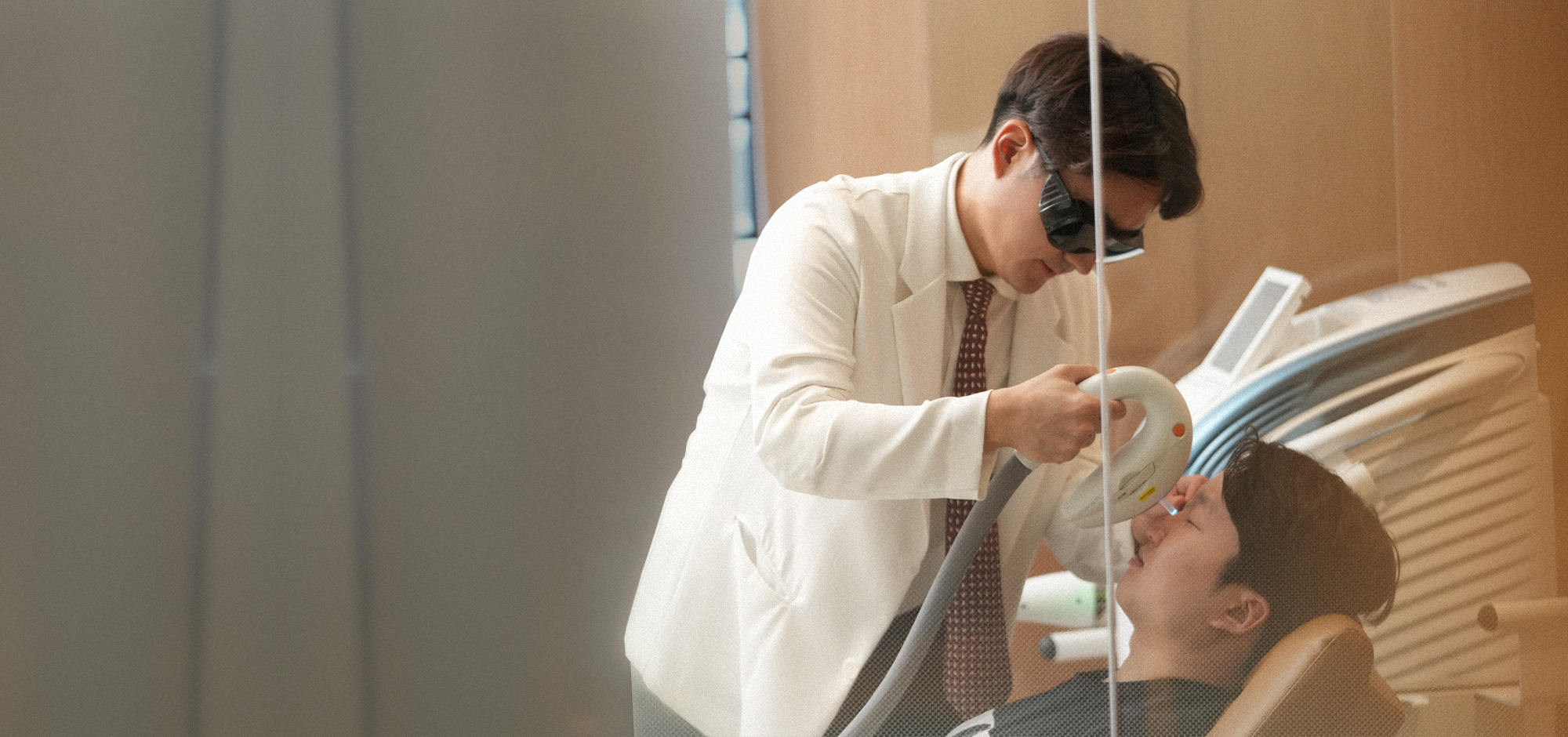
The most widely used tool is the Ishihara colour plate test, which displays numbers or patterns embedded in multicoloured dots. A person with normal colour vision reads the number easily, while someone with red-green CVD cannot. At Nunehim Eye Center in Guro, Seoul, Dr. Daniel Baik performs a comprehensive colour vision evaluation as part of a full eye examination. The test takes only a few minutes and is painless.
For more detailed assessment, the Farnsworth-Munsell 100 Hue Test or the Farnsworth D-15 Panel can be used to map the exact range and severity of the deficiency. These are particularly relevant for patients in Yeongdeungpo and Gasan who need occupational colour vision clearance. Results are explained clearly in both Korean and English.
Q. How does colour blindness affect daily life in Seoul?
Living with colour vision deficiency in Seoul is generally manageable, but the city’s dense visual environment — from colour-coded subway lines to traffic lights and restaurant menu boards — can occasionally present challenges. The Seoul Metro uses 9 distinct colour-coded lines, some of which (Lines 2/5 and 3/6 pairs) can be difficult to distinguish for people with red-green CVD.
Apps such as Color Blind Pal and built-in iOS/Android accessibility filters can help. In the Guro-gu, Yeongdeungpo, and Gwanak areas of Seoul, Nunehim Eye Center is uniquely positioned to advise both Korean patients and English-speaking expats on coping strategies, assistive technology, and any further investigation needed.
Q. When should I see an eye doctor in Seoul about colour vision?
- You struggle to read colour-coded Seoul Metro maps or traffic signals
- Your child’s teacher reports difficulty identifying colours in class
- A job application or license renewal requires a colour vision certificate
- You notice sudden changes in colour perception (this may signal a medical issue)
- You are an expat in Gasan or Gwanak and have never had a formal colour vision test
🔴 Red-Green CVD
Prevalence: ~8% of men
Types: Protanopia, Deuteranopia
Affects: Reds, greens, browns look similar
Severity: Mild to complete
🔵 Blue-Yellow CVD
Prevalence: ~0.01% of people
Types: Tritanopia, Tritanomaly
Affects: Blues look green, yellows look pink
Often: Acquired, not inherited
⬛ Achromatopsia
Prevalence: Extremely rare
Types: Complete / Incomplete
Affects: No colour perception at all
Associated with: Severe light sensitivity
👨⚕️ A Note from Dr. Daniel Baik
“Many patients at our Guro clinic are surprised to learn they’ve had colour vision deficiency their entire lives — they simply adapted without realising it. As a board-certified ophthalmologist offering consultations in both Korean and English, I make it a priority to test colour vision as part of every comprehensive eye examination, particularly for children and working adults in Yeongdeungpo, Gasan, and Gwanak. Early identification opens the door to appropriate support and career planning.”
— Dr. Daniel Baik, Board-Certified Ophthalmologist, Nunehim Eye Center, Seoul
❓ Frequently Asked Questions — Colour Blindness in Seoul
Q. Is colour blindness curable?
Inherited colour blindness currently has no cure, but it is a stable condition that does not worsen over time. Special EnChroma glasses and digital colour-correction filters can improve colour discrimination in some patients. Acquired colour blindness — caused by disease, medication, or injury — may be partially reversible if the underlying cause is treated promptly.
Q. Can colour blindness be tested in English at a Seoul clinic?
Yes. Nunehim Eye Center in Guro, Seoul provides full English-language consultations, including colour vision testing. Dr. Daniel Baik conducts the Ishihara plate test and, when needed, more advanced assessments, explaining results in clear English. The clinic serves the international community across Yeongdeungpo, Gasan, and Gwanak.
Q. What jobs in Korea require colour vision testing?
Korean regulations require normal colour vision for pilots, ship officers, certain military roles, some medical professionals, and electrical engineers working with coded wiring. Teachers, police officers, and firefighters may also need to pass colour vision standards. If you need an official certificate, Dr. Baik can issue documentation following a formal colour vision assessment at our Guro clinic.
Q. My child failed a school colour vision screening in Seoul — what next?
Korean schools screen children’s colour vision from Grade 1, and a failed result is common for boys. If your child’s school has flagged a possible deficiency, a follow-up ophthalmology appointment is recommended for a definitive diagnosis. At Nunehim Eye Center, we see paediatric patients from Guro, Gasan, Gwanak, and Yeongdeungpo, and can advise teachers and parents on classroom accommodations.
Q. Can LASIK or LASEK affect colour vision?
Standard refractive surgery such as TransPRK or 2-Day LASEK does not cause colour blindness. Colour perception is a retinal function, not a corneal one, so reshaping the cornea does not alter colour discrimination. If you have concerns about colour vision before surgery, Dr. Baik will include a colour vision screening as part of your pre-operative assessment at Nunehim Eye Center.
Q. Are colour-blind glasses available in Seoul?
Colour-corrective glasses such as EnChroma are available for purchase online and from some Korean optical shops. They work by filtering specific wavelengths of light to improve contrast between red and green. They do not restore normal colour vision, but many users find them helpful for specific activities. Our team at Guro can advise whether such glasses are likely to help based on your specific type of CVD.
Q. How long does a colour vision test take at Nunehim Eye Center?
A standard Ishihara colour plate test takes approximately 5–10 minutes and is typically included within a comprehensive eye examination. Extended testing with the Farnsworth D-15 or 100-Hue test takes 15–30 minutes. Results are available immediately and can be explained in English or Korean. Appointments are available for patients from Yeongdeungpo, Guro, Gasan, Gwanak, and beyond.

Book a Colour Vision Test in Seoul
Serving Guro · Yeongdeungpo · Gasan · Gwanak | Korean & English consultations available
📍 Visit Nunehim Eye Center — Guro, Seoul
Convenient access from Guro, Gasan, Gwanak & Dongjak. Near Guro Digital Complex Station (Line 2).
📌 Address
Guro-gu, Seoul
nunehim.com
🕐 Hours
Mon–Fri: 9:00am – 6:00pm
Sat: 9:00am – 1:00pm
🌐 Languages
Korean & English
consultations available


Leave a comment