Astigmatism Explained: Symptoms, Correction & Surgery Options in Seoul
Expert astigmatism diagnosis & treatment at Nunehim Eye Center — serving Yeongdeungpo, Guro, Gasan & Gwanak in Seoul
Q. What Is Astigmatism and Can It Be Corrected?
Astigmatism is a common refractive error caused by an irregularly shaped cornea or lens, resulting in blurred or distorted vision at all distances. Yes — astigmatism treatment in Seoul is highly effective through corrective lenses or surgical options such as TransPRK/2-Day LASEK performed by Dr. Daniel Baik at Nunehim Eye Center in Yeongdeungpo.
Q. What Exactly Is Astigmatism?
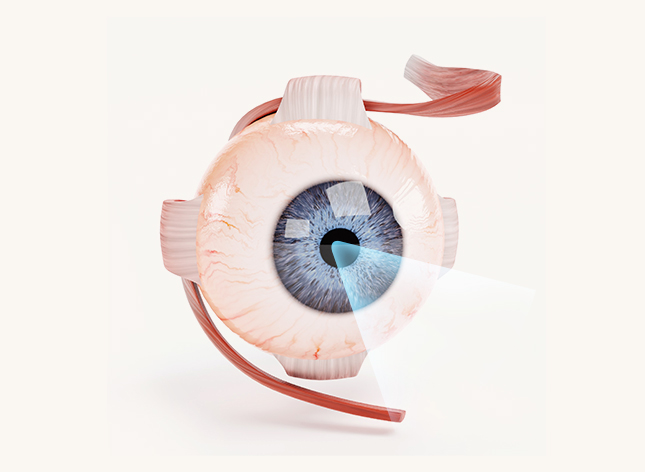
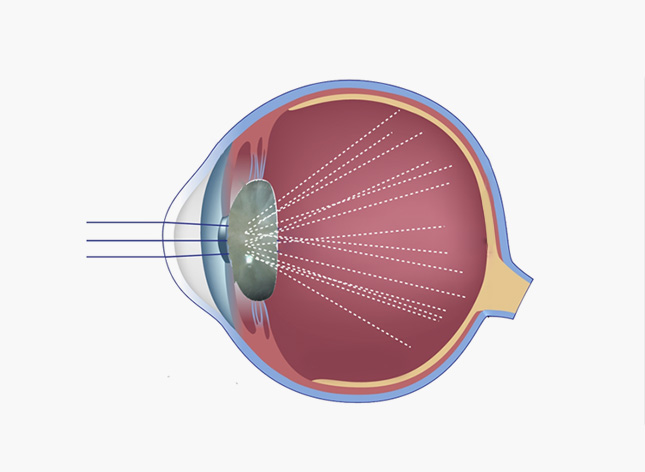
Astigmatism treatment in Seoul begins with understanding the condition. A normal cornea is perfectly round — like a basketball — focusing light cleanly onto the retina. With astigmatism, the cornea or lens curves more like a rugby ball, with one meridian steeper than the other. This means light rays focus at multiple points, producing blurry, distorted, or doubled vision at all distances.
Astigmatism is extremely prevalent in South Korea. Research suggests that more than 30% of Koreans have clinically significant astigmatism, and it commonly co-exists with myopia — which affects nearly 96% of Korean young adults in urban areas such as Yeongdeungpo, Guro, and Gasan. It can be present from birth or develop following eye surgery, injury, or disease of the cornea.
Astigmatism in Korea — Key Statistics
▸ Over 30% of Koreans have clinically significant astigmatism requiring optical correction
▸ ~96% of Korean university students have myopia, often combined with astigmatism
▸ Astigmatism affects children and adults alike — early diagnosis prevents amblyopia
▸ TransPRK corrects both myopia and astigmatism simultaneously with no flap incision
Q. What Are the Symptoms of Astigmatism?
- Blurred or distorted vision at both near and far distances
- Eye strain and fatigue, particularly after reading or prolonged screen use
- Frequent headaches, especially around the forehead and eyes
- Squinting to improve clarity of vision
- Difficulty with night driving — halos or starbursts around lights
- Objects appearing tilted or slanted
Q. What Astigmatism Correction Options Are Available in Seoul?
Dr. Daniel Baik, board-certified ophthalmologist at Nunehim Eye Center in Yeongdeungpo, recommends the best correction based on your individual examination:
- Toric spectacle lenses — the simplest and most affordable option, using cylindrical lenses to counteract the uneven corneal curvature
- Toric contact lenses — soft or rigid gas-permeable lenses with different powers in different meridians, providing clear and comfortable daily vision
- TransPRK/2-Day LASEK surgery — laser corneal reshaping to permanently correct the irregular curvature; suitable for eligible patients from Guro, Gasan, Gwanak, and across Seoul
Q. What Types of Astigmatism Exist?
There are three main types of astigmatism, classified by where the meridians focus light relative to the retina:
Myopic astigmatism — one or both principal meridians focus in front of the retina. This is the most common type in Korea, particularly in young adults living in Yeongdeungpo, Guro, and Gasan with high levels of near-work and screen use.
Hyperopic astigmatism — one or both meridians focus behind the retina. Mixed astigmatism — one meridian is myopic and the other is hyperopic, requiring more complex optical correction. A full corneal topography exam at Nunehim Eye Center determines your exact type.
Q. When Should I See an Eye Doctor in Seoul for Astigmatism?
- You experience persistent blurred vision not fully corrected by your current glasses or contacts
- You have recurring headaches or eye strain without an identified cause
- Your child squints, tilts their head, or sits very close to screens or books
- You notice halos, glare, or starbursts around lights — especially at night
- You are exploring refractive surgery options (TransPRK/LASEK) and want to assess candidacy
Mild Astigmatism
Cylinder power below 1.00D. Typically managed with spectacles or toric soft contact lenses. May not require surgical intervention.
Moderate Astigmatism
Cylinder 1.00–2.00D. Toric rigid gas-permeable lenses or TransPRK laser surgery are highly effective options at Nunehim Eye Center.
High Astigmatism
Cylinder above 2.00D. Careful evaluation required — surgery eligibility depends on corneal thickness and topography assessment.
A Note from Dr. Daniel Baik
“Astigmatism is one of the most frequently underdiagnosed causes of visual discomfort that I see in patients from Yeongdeungpo, Guro, and Gasan. Many people simply accept blurred or strained vision as normal — not realising that with accurate corneal mapping and the right correction, whether spectacles, toric lenses, or TransPRK surgery, their quality of life can dramatically improve. If you are experiencing any visual strain or blurring, please come in for a full examination. We welcome both Korean and English-speaking patients at Nunehim Eye Center.”
— Dr. Daniel Baik, Board-Certified Ophthalmologist | Nunehim Eye Center, Yeongdeungpo, Seoul
❓ Frequently Asked Questions about Astigmatism Treatment in Seoul
Q. Can astigmatism worsen over time?
Yes, astigmatism can progress — particularly during childhood and adolescence — but typically stabilises in adulthood. Regular eye examinations at Nunehim Eye Center in Yeongdeungpo allow Dr. Daniel Baik to monitor any changes and update your prescription before vision deteriorates further.
Q. Is TransPRK/LASEK suitable for correcting astigmatism?
TransPRK (transepithelial photorefractive keratectomy) is an excellent and safe option for correcting both myopia and astigmatism simultaneously. Dr. Daniel Baik evaluates candidacy based on corneal thickness, topography, and lifestyle. Because TransPRK does not involve a corneal flap, it is particularly suitable for patients with thin corneas.
Q. How long does recovery take after astigmatism surgery in Seoul?
With 2-Day LASEK at Nunehim Eye Center, most patients experience noticeable vision improvement within 3–5 days. Full visual stabilisation typically takes 2–4 weeks. We provide thorough post-operative follow-up for patients from Guro, Gasan, Gwanak, and all across Seoul.
Q. Can I use regular contact lenses if I have astigmatism?
Standard spherical contact lenses cannot correct astigmatism because they do not account for the multiple focal points caused by irregular corneal curvature. You will need toric contact lenses — specifically designed with different powers in different meridians. Dr. Baik can perform a full contact lens fitting at Nunehim Eye Center.
Q. Does astigmatism cause headaches?
Yes — uncorrected astigmatism forces the eyes to work continuously harder to achieve focus, resulting in significant eye strain and headaches, particularly after long periods of reading, computer use, or driving. Many patients in Guro, Gasan, and Yeongdeungpo who work long hours on screens find marked relief after proper astigmatism correction.
Q. Can children have astigmatism corrected surgically?
Laser refractive surgery is generally not recommended until the prescription has been stable for at least one year, and typically not before the age of 18–20. For children in Gwanak, Guro, and Yeongdeungpo with astigmatism, spectacles or toric contact lenses are the recommended correction during the growing years. Orthokeratology (OK lens) may also be considered.
Q. Does Nunehim Eye Center offer English consultations for astigmatism?
Yes. Dr. Daniel Baik is a board-certified ophthalmologist who conducts full consultations in both Korean and English. Nunehim Eye Center welcomes the growing expat community in Seoul — including patients from Yeongdeungpo, Guro, Gasan, and Gwanak — who prefer to discuss their eye health and treatment options in English.

Book Your Astigmatism Consultation in Seoul
Visit Nunehim Eye Center in Yeongdeungpo, Seoul — Korean & English consultations with Dr. Daniel Baik, board-certified ophthalmologist.
📍 Visit Nunehim Eye Center — Guro, Seoul
Convenient access from Guro, Gasan, Gwanak & Dongjak. Near Guro Digital Complex Station (Line 2).
📌 Address
Guro-gu, Seoul
nunehim.com
🕐 Hours
Mon–Fri: 9am–6pm
Sat: 9am–1pm
🌐 Languages
Korean & English consultations available


Leave a comment