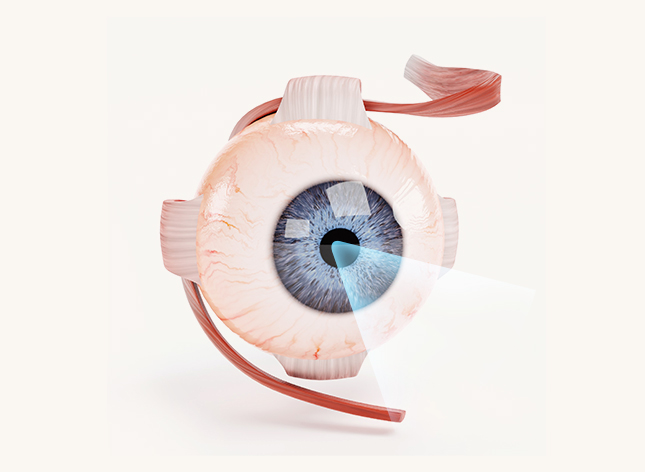
Why Children in Korea Have High Myopia Rates — And What to Do
Expert guidance from Dr. Daniel Baik — Board-Certified Ophthalmologist | Nunehim Eye Center, Yeongdeungpo · Seoul
Q. Why Do Children in Korea Have Such High Myopia Rates?
Children myopia in Korea is at epidemic proportions: up to 97% of young adults in Seoul are myopic, driven by intense near-work from early schooling, minimal outdoor time, and genetic factors. Early intervention with OK lens, atropine drops, or lifestyle changes — available at Nunehim Eye Center in Yeongdeungpo — can significantly slow progression and protect your child’s vision for life.
Q. What Are the Root Causes of Children Myopia in Korea?
The children myopia Korea epidemic is driven by a “perfect storm” of factors unique to Korean society. Students average 6–8 hours of near-work daily — studying, reading, and using digital devices — while spending less than 60 minutes outdoors. Residential density in urban neighbourhoods like Yeongdeungpo, Guro, Gasan, and Gwanak limits access to open spaces where children can exercise their distance vision. Genetics compound the issue: East Asian populations have a higher inherent susceptibility to axial eye elongation, the underlying mechanism of myopia. Korea’s education culture, which begins intense academic preparation from kindergarten, accelerates onset to younger and younger ages.
📊 Children Myopia in Korea — Key Statistics
- ▸ Up to 97% of young adult men in Seoul are myopic (2021 Korean ophthalmic study)
- ▸ Over 80% of Korean children show myopia signs by age 12
- ▸ Korean urban children (Guro, Gasan, Gwanak) average under 60 min outdoor time per day
- ▸ Average myopia progression: −0.75D per year in untreated school-age children
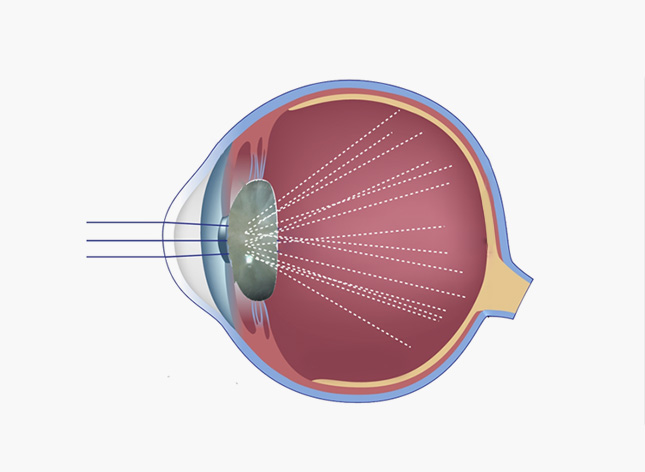
Q. What Myopia Control Treatments Are Available for Children in Seoul?
At Nunehim Eye Center in Yeongdeungpo, Dr. Daniel Baik offers evidence-based myopia control options for children. OK lens (orthokeratology) is our most popular choice — rigid contact lenses worn overnight that gently reshape the cornea, giving clear daytime vision while slowing progression by 30–60%. They’re suitable for children from age 6 and are widely used in Guro, Gasan, and Gwanak schools.
Low-dose atropine drops (0.01%) are a proven pharmacological option that reduces myopia progression by up to 60% with minimal side effects. Myopia control spectacle lenses incorporating peripheral defocus technology offer a spectacle-based alternative. The right choice depends on your child’s age, prescription, and lifestyle — Dr. Baik will guide you through the options in English or Korean.
Q. How Can Parents Prevent or Slow Myopia Progression at Home?
Outdoor time is the single most powerful preventive intervention for children myopia in Korea. Natural light triggers retinal dopamine release, which inhibits excessive axial eye growth. Korean and international ophthalmology guidelines recommend a minimum of 90 minutes of outdoor activity per day. Even in densely built areas of Yeongdeungpo, Guro, and Gwanak, parks and schoolyards provide sufficient outdoor light.
The 20-20-20 rule also helps: every 20 minutes of near work, look at something 20 feet away for 20 seconds. Ensure proper reading posture (minimum 30 cm eye-to-book distance) and good room lighting. Limit screen-to-face distance on smartphones. For expat families in Gasan and surrounding Seoul neighbourhoods, Nunehim Eye Center provides bilingual (Korean and English) paediatric eye consultations.

Q. When Should I Take My Child to an Eye Clinic in Seoul?
- Your child squints frequently or tilts their head to see clearly
- They sit unusually close to the TV or hold devices very close to their face
- Complaints of headaches or eye fatigue after reading or schoolwork
- Declining school performance due to difficulty reading the board
- One or both parents have moderate to high myopia (strong genetic risk)
- Your child has not had an eye exam in the past 12 months
- Your child has been diagnosed with myopia and is overdue for a follow-up
🔍 Mild Myopia
−0.25D to −3.00D. Glasses or soft lenses. Annual exams. Begin outdoor programme and consider myopia control lenses if progressing faster than −0.5D/year.
⚠️ Moderate Myopia
−3.00D to −6.00D. OK lens or atropine therapy strongly recommended. 6-monthly exams. High progression risk in Guro, Yeongdeungpo school-age children.
🚨 High Myopia
Above −6.00D. Elevated risks: retinal detachment, macular degeneration, glaucoma. Comprehensive dilated exam every 6–12 months. Discuss refractive surgery eligibility at 18+.
👨⚕️ From Dr. Daniel Baik
“In my clinic in Yeongdeungpo, I see children as young as six presenting with rapidly progressing myopia. The most important step parents can take is bringing their child in early — before the prescription reaches a level that becomes difficult to manage. With OK lens and targeted lifestyle changes, we can make a real difference in your child’s visual future.”
— Dr. Daniel Baik, Board-Certified Ophthalmologist | Nunehim Eye Center | Guro · Yeongdeungpo · Gasan · Gwanak, Seoul
❓ Frequently Asked Questions
Q. At what age should my child have their first eye exam in Korea?
Korean ophthalmologists recommend the first comprehensive eye exam at age 3–4, before starting school. Children with a family history of myopia or any vision concerns should be seen earlier. Annual exams are recommended for all school-age children in Yeongdeungpo, Guro, Gasan, Gwanak, and throughout Seoul.
Q. Can myopia be reversed or cured in children?
Myopia cannot be reversed once the eyeball has elongated, but its progression can be significantly slowed. Evidence-based treatments — OK lens, low-dose atropine, myopia control lenses — aim to prevent high myopia (above −6.00D) from developing, thereby reducing the risk of serious complications in adulthood.
Q. What is OK lens and is it safe for children?
OK lens (orthokeratology) uses custom rigid lenses worn overnight to reshape the cornea and slow axial eye growth. Clinical evidence shows 30–60% reduction in progression. Suitable for children from age 6 when properly fitted. Nunehim Eye Center in Yeongdeungpo fits and monitors OK lenses with regular follow-up.
Q. How does outdoor time help prevent myopia in children?
Outdoor natural light stimulates retinal dopamine release, which inhibits excessive axial eye elongation. Studies across Korea, Taiwan, and Singapore confirm children spending 80–120 minutes outdoors daily have significantly lower myopia incidence. Even walks through Guro, Gwanak, or Gasan parks provide meaningful protective light exposure.
Q. Is myopia in Korean children purely genetic?
Genetics create a predisposition, but environment is the dominant driver of Korea’s myopia epidemic. Studies of Korean children who emigrated show significantly lower rates when they adopted lifestyles with more outdoor time. Both genes and environment must be addressed — which is why myopia control combines medical treatment with lifestyle counselling.
Q. What vision correction does Nunehim Eye Center specialise in?
Nunehim Eye Center specialises in OK lens (orthokeratology) for myopia control, comprehensive paediatric eye exams, and for adults aged 18+: TransPRK/2-Day LASEK refractive surgery. We do not offer SMILE LASIK. Dr. Daniel Baik provides bilingual consultations (Korean and English) at our Yeongdeungpo clinic, accessible from Guro, Gasan, and Gwanak.
Q. How often should a myopic child visit the eye doctor?
Children with myopia should be seen every 6 months to monitor progression and adjust treatment. Those on OK lens or atropine may need quarterly visits initially. Children at risk but not yet myopic should have annual exams. Nunehim Eye Center serves families from Yeongdeungpo, Guro, Gasan, Gwanak, and all of Seoul.

Book a Children’s Eye Consultation at Nunehim Eye Center
Serving Yeongdeungpo · Guro · Gasan · Gwanak and all of Seoul. Korean & English consultations available.
📍 Visit Nunehim Eye Center — Yeongdeungpo, Seoul
Convenient access from Yeongdeungpo, Guro, Gasan, Gwanak & Dongjak. Near Yeongdeungpo-gu Office Station (Line 5).
📍 Address
Yeongdeungpo-gu, Seoul
nunehim.com
🕐 Hours
Mon–Fri: 9am–6pm
Sat: 9am–1pm
🌏 Languages
Korean & English
consultations available


Leave a comment