Glaucoma Screening: Who Needs It and How Often in Korea
Comprehensive glaucoma screening Korea — Dr. Daniel Baik, Board-Certified Ophthalmologist | Nunehim Eye Center, Guro, Seoul
Q. Who Needs Glaucoma Screening in Korea and How Often?
In Korea, adults over age 40 should have a glaucoma screening every 1–2 years, while those with risk factors (family history, high myopia, elevated eye pressure) should be screened annually. Glaucoma screening Korea is widely available at specialist eye clinics like Nunehim Eye Center in Guro, where Dr. Daniel Baik provides comprehensive optic nerve assessment and visual field testing in both Korean and English.
Q. What Is Glaucoma and Why Is Screening So Important?
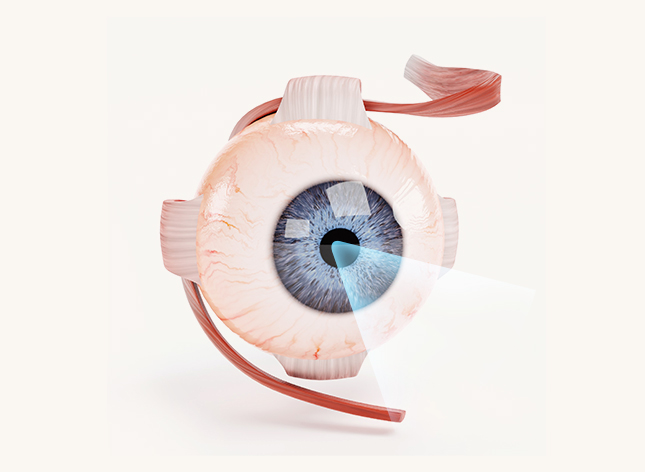
Glaucoma is a group of eye diseases that damage the optic nerve, often associated with elevated intraocular pressure (IOP). It is the leading cause of irreversible blindness worldwide, affecting an estimated 76 million people. The critical challenge of glaucoma is that it is largely asymptomatic in the early and middle stages — by the time patients notice vision loss, up to 40% of optic nerve fibers may already be permanently destroyed. This is why glaucoma screening Korea guidelines emphasize early detection. In Guro, Yeongdeungpo, Gasan, and across Gwanak, many patients first discover their glaucoma during a routine eye exam, not because of symptoms.
Q. Who Is at Highest Risk for Glaucoma in Korea?
- Adults over 40 years of age (risk doubles each decade after 40)
- People with a first-degree relative (parent, sibling) diagnosed with glaucoma
- Individuals with high myopia (−6.00 D or greater) — extremely common in Korea
- Patients with elevated intraocular pressure (>21 mmHg)
- Individuals with thin central corneal thickness
- Those with a history of eye injury, prolonged steroid use, or diabetes
- Patients with sleep apnea or hypertension (vascular risk factors)
📊 Glaucoma in Korea: Key Statistics
▸ Glaucoma prevalence in Korea: approximately 3.5% of adults over 40 (Korean Glaucoma Society, 2023)
▸ Normal-tension glaucoma accounts for 70–80% of Korean glaucoma cases — higher than Western populations
▸ Korea has near-100% myopia rates in young adults — a major risk factor for glaucoma development
▸ Only 1 in 10 Korean glaucoma patients is aware they have the disease before diagnosis
Q. What Does a Glaucoma Screening in Korea Include?
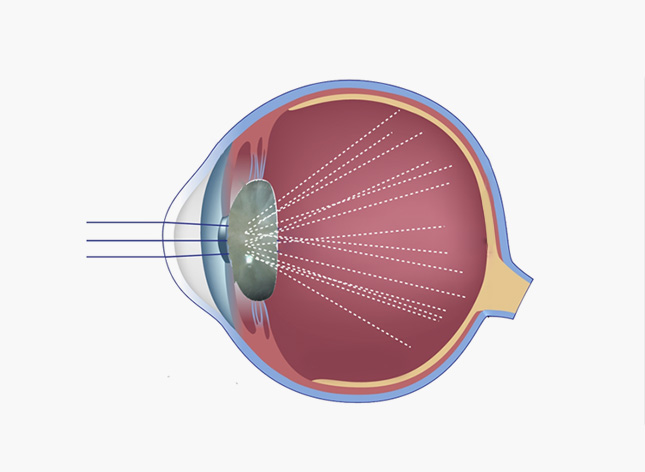
A comprehensive glaucoma screening at Nunehim Eye Center in Guro includes: intraocular pressure measurement (non-contact tonometry and Goldmann applanation), optic nerve head assessment via dilated fundoscopy, OCT (optical coherence tomography) of the retinal nerve fiber layer and ganglion cell complex, visual field testing (automated perimetry), and central corneal thickness measurement (pachymetry).
These tests together create a complete picture of glaucoma risk and can detect early changes years before vision loss occurs. Patients from Yeongdeungpo, Gasan, Gwanak, and surrounding areas can receive a full screening in one visit. Results are explained in both Korean and English.
Q. What Is Normal-Tension Glaucoma and Why Is It So Common in Korea?
Normal-tension glaucoma (NTG) is a form where optic nerve damage occurs despite intraocular pressure within the normal range (≤21 mmHg). It is uniquely prevalent in East Asia — affecting up to 80% of Korean glaucoma patients — compared to roughly 30% in Western populations. The exact cause is unclear but is thought to involve vascular dysregulation and optic nerve susceptibility.
Because IOP is normal in NTG, standard pressure checks alone will miss it. This is why OCT imaging of the optic nerve and visual field testing are essential components of glaucoma screening Korea protocols. Dr. Daniel Baik at Nunehim Eye Center in Guro is experienced in detecting and managing NTG in patients across Yeongdeungpo, Guro, Gasan, and Gwanak.
Q. When Should You Get an Urgent Glaucoma Evaluation?
- Sudden severe eye pain with headache, nausea, and blurred vision (possible acute angle-closure glaucoma — ophthalmologic emergency)
- Rainbow halos around lights, especially in dim environments
- Noticed narrowing of your visual field (peripheral vision loss)
- IOP above 21 mmHg recorded at a health checkup
- Family member recently diagnosed with glaucoma
- You have high myopia (≥−6.00 D) and have never had a glaucoma evaluation
🟢 Low Risk
Age 18–39, no risk factors, no family history. Screen every 3–5 years or at first comprehensive eye exam. Annual check if myopia develops.
🟡 Moderate Risk
Age 40–60, mild myopia, or borderline IOP. Screen every 1–2 years including OCT and visual fields. Baseline optic nerve photos recommended.
🔴 High Risk
Age 60+, family history, high myopia, IOP >21, prior diagnosis. Screen every 6–12 months. Full OCT, VF, and optic nerve imaging each visit.
From Dr. Daniel Baik, Board-Certified Ophthalmologist
“Glaucoma is a silent thief of vision, and this is especially true in Korea where 70–80% of cases are normal-tension type — meaning standard pressure checks alone are not enough. I see patients in Guro, Yeongdeungpo, and Gasan who have never had an OCT scan despite years of wearing high-prescription glasses. For anyone with significant myopia or a family history of glaucoma, I strongly recommend an annual comprehensive screening that includes optic nerve imaging. Catching glaucoma early means we can preserve your vision for life.”
— Dr. Daniel Baik, Board-Certified Ophthalmologist, Nunehim Eye Center, Guro, Seoul
❓ Frequently Asked Questions About Glaucoma Screening in Korea
Q. Is glaucoma hereditary?
Yes. Having a first-degree relative with glaucoma increases your risk by 4–9 times. The most common forms (primary open-angle glaucoma and normal-tension glaucoma) have strong hereditary components. If a parent or sibling has glaucoma, annual screening from age 35 onwards is recommended.
Q. Does glaucoma screening hurt?
Most glaucoma screening tests are painless. Non-contact tonometry (the “air puff” test) takes less than a second. OCT imaging is non-invasive and takes about 5 minutes per eye. Visual field testing requires attentive participation but causes no discomfort. Dilation drops may cause temporary light sensitivity for 3–4 hours.
Q. Can glaucoma be cured?
Glaucoma cannot currently be cured and vision lost to glaucoma cannot be recovered. However, with proper treatment (eye drops, laser therapy, or surgery), progression can be halted and remaining vision preserved. This is why early detection through glaucoma screening Korea programs is so vital — finding it before vision loss occurs is the key to a good long-term outcome.
Q. Can I still get LASEK if I have glaucoma?
Patients with glaucoma or glaucoma suspects require careful evaluation before any refractive surgery. At Nunehim Eye Center, Dr. Daniel Baik evaluates each case individually. Well-controlled early glaucoma with stable visual fields may not preclude TransPRK/2-Day LASEK, but IOP effects on corneal measurements must be carefully accounted for. A thorough consultation is essential before proceeding.
Q. Is glaucoma screening covered by Korean health insurance?
Basic glaucoma screening (IOP measurement, fundoscopy) is generally covered under Korean National Health Insurance (건강보험) when there is clinical indication. OCT imaging and visual field testing are covered for confirmed glaucoma or suspects. Routine preventive screening may be partially out-of-pocket. Our team at Nunehim Eye Center in Guro can clarify coverage for your specific situation.
Q. How does high myopia increase glaucoma risk?
High myopia (≥−6.00 D) is associated with a 2–3× increased risk of developing glaucoma. The elongated axial length in highly myopic eyes alters optic nerve head anatomy, making it structurally more vulnerable to pressure-related damage. Additionally, the stretched retinal nerve fiber layer is thinner and more susceptible to insult. In Korea, where high myopia rates approach 20–25% of the adult population, this represents a major public health concern.
Q. Can OK lens (orthokeratology) worsen glaucoma?
OK lens (orthokeratology) reshapes the cornea overnight to temporarily correct myopia. For patients with suspected or confirmed glaucoma, OK lens use requires careful monitoring because corneal curvature changes can affect IOP measurement accuracy. At Nunehim Eye Center, patients with any glaucoma risk who want OK lens undergo thorough optic nerve assessment and tonometry correction before and during OK lens wear.

Protect Your Vision — Get a Glaucoma Screening in Seoul Today
Glaucoma has no early symptoms. Don’t wait until vision is lost. Book a comprehensive glaucoma screening with Dr. Daniel Baik at Nunehim Eye Center — serving Guro, Yeongdeungpo, Gasan, and Gwanak.
📍 Visit Nunehim Eye Center — Guro, Seoul
Convenient access from Guro, Gasan, Gwanak & Dongjak. Near Guro Digital Complex Station (Line 2).
📌 Address
Guro-gu, Seoul | nunehim.com
🕐 Hours
Mon–Fri: 9am–6pm | Sat: 9am–1pm
🌐 Languages
Korean & English consultations available


Leave a comment