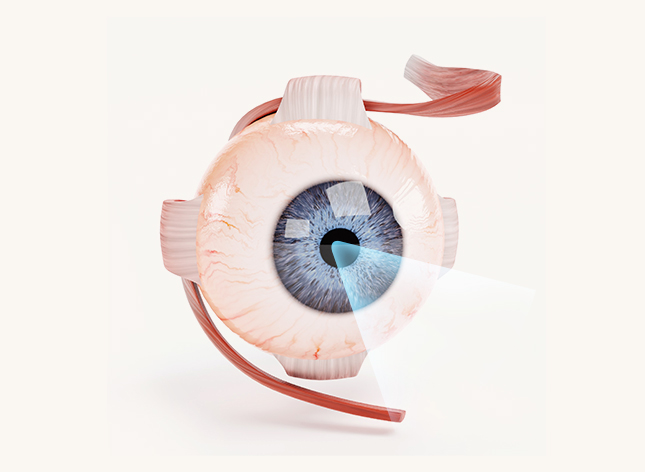
School Vision Screening in Korea: What to Do If Your Child Fails
A guide for parents in Yeongdeungpo, Guro & Gasan — from Nunehim Eye Center, Seoul
Q. What should I do if my child fails a school vision screening in Korea?
If your child fails a school vision screening in Korea, you should schedule a comprehensive eye exam at an ophthalmology clinic within 4–6 weeks. School screenings detect reduced visual acuity but cannot diagnose the cause — only a full clinical evaluation by a board-certified ophthalmologist can determine whether your child needs glasses, treatment for myopia progression, or further care. In Seoul neighborhoods like Yeongdeungpo, Guro, and Gasan, pediatric eye care is readily accessible.
Q. What is school vision screening in Korea, and how does it work?
School vision screening in Korea is a mandatory health check conducted annually in elementary and middle schools under the School Health Act (학교건강검사). Every student has their visual acuity measured, typically using a standard Snellen or Landolt C chart. Results are classified as normal (1.0 or better) or requiring follow-up (below 0.7 in either eye). Schools send a notification letter home when a child does not meet the threshold — this is commonly called “failing” the school vision screening in Korea.
These screenings are valuable for early detection, but they are not diagnostic. A school nurse or technician administering the test cannot identify the type of refractive error (myopia, hyperopia, astigmatism), check for amblyopia (lazy eye), or evaluate ocular health. That is why a follow-up with a qualified ophthalmologist is so important for any child who does not pass.
Q. Why do so many Korean children fail school vision screenings?
Korea has one of the highest rates of myopia in the world. Studies show that approximately 80–97% of Korean high school graduates are myopic, and the prevalence has risen sharply over the past three decades. Heavy academic workloads, prolonged near work (reading, devices), and limited outdoor time all contribute. In urban areas like Guro-gu, Yeongdeungpo-gu, and Gwanak-gu — densely populated districts with many apartment complexes and private tutoring centers — children may spend 8–12 hours per day on close-focus tasks during the school week.
📊 Myopia in Korean Children — Key Statistics
- ▸ 80–97% of Korean high school graduates are myopic (Korean Ophthalmological Society)
- ▸ Myopia prevalence in Korean 12-year-olds increased from 23% (1970s) to over 70% (2020s)
- ▸ Children who spend <1 hour/day outdoors have 2× higher risk of myopia onset
- ▸ High myopia (≥-6D) significantly raises lifetime risk of retinal detachment and glaucoma
Q. What happens during a pediatric eye exam in Seoul?
A comprehensive pediatric eye exam at Nunehim Eye Center in Guro, Seoul includes visual acuity testing with and without correction, cycloplegic refraction (using eye drops to relax the focusing muscle and measure the true prescription), cover testing for alignment, and a slit-lamp examination. For younger children, we also screen for amblyopia and strabismus.
Many children need cycloplegia because their young, flexible lenses can compensate for refractive errors and give falsely better results without dilation. At our Yeongdeungpo-area clinic, the full examination takes 60–90 minutes, including the 30-minute waiting period after the cycloplegic drops are administered.
Q. What are the treatment options if my child needs vision correction?
Depending on the diagnosis, treatment options include single-vision glasses (the first-line option for most children), soft contact lenses for older children and teens, and orthokeratology (OK lens) — a specialty contact lens worn at night to gently reshape the cornea and provide clear daytime vision without glasses. OK lens therapy is particularly popular in Korea because it has been shown in multiple clinical studies to slow myopia progression in children aged 8–18.
At Nunehim Eye Center, serving patients from Gasan, Gwanak, and Guro, Dr. Daniel Baik will recommend the most appropriate option based on your child’s age, prescription strength, lifestyle, and progression history. The goal is not just correction but long-term eye health.
Q. When should I bring my child to an eye doctor immediately?
- Your child squints frequently or holds books very close to their face
- They complain of headaches after reading or screen time
- One eye appears to wander or turn in/out (possible strabismus)
- The school letter indicates vision below 0.5 in either eye
- Your child has a strong family history of high myopia or eye disease
- They have not had any eye exam in the past 12 months
📋 Step 1: Screening
School nurse checks visual acuity annually. If below 0.7, a notification is sent home recommending ophthalmology follow-up.
🔬 Step 2: Full Exam
Board-certified ophthalmologist performs cycloplegic refraction, cover test, and slit-lamp exam. Takes 60–90 min with drops.
👓 Step 3: Treatment
Prescription glasses, OK lens, or myopia management program initiated. Annual re-checks to monitor progression.
From Dr. Daniel Baik, Board-Certified Ophthalmologist
“When a parent brings in a school screening result, the first thing I want to do is get an accurate cycloplegic refraction — because without it, we are guessing at the prescription. In children with early myopia, catching it at -1.00D versus -3.00D makes a real difference in what we can do to slow progression. My recommendation: if your child fails the school vision screening in Korea, don’t wait for the next school year — book a proper exam within the month.”
— Dr. Daniel Baik | Nunehim Eye Center, Guro-gu, Seoul | nunehim.com
❓ Frequently Asked Questions — School Vision Screening Korea
Q. At what age should my child have their first eye exam in Korea?
The Korean Ophthalmological Society recommends a first comprehensive eye exam between ages 3–5, before school entry. After that, annual checks are advisable — more frequently if myopia is present or progressing.
Q. Can myopia in children be cured or only managed?
Currently, myopia cannot be cured, but its progression can be significantly slowed. Treatments such as OK lens (orthokeratology) and atropine eye drops have strong clinical evidence for myopia control. The earlier intervention begins, the better the long-term outcome.
Q. Is the school vision screening reliable enough to skip a proper eye exam?
No. School screenings catch obvious refractive errors but miss amblyopia, early glaucoma, and many other conditions. A clinical examination by a board-certified ophthalmologist is far more thorough and is the only way to establish a complete picture of your child’s ocular health.
Q. My child passed the screening — do they still need an eye exam?
Passing the screening means your child’s acuity was above the cutoff that day, but it does not rule out early myopia, astigmatism, or other concerns. Annual exams are still recommended, especially in Korea’s high-myopia environment where progression can be rapid.
Q. How much does a pediatric eye exam cost in Seoul?
Basic consultations at ophthalmology clinics in Seoul are covered under Korean National Health Insurance (건강보험). The exact out-of-pocket cost depends on the procedures required — cycloplegic refraction may involve a small co-pay. Contact Nunehim Eye Center for current fee details.
Q. Does Nunehim Eye Center offer consultations in English?
Yes. Dr. Daniel Baik is a board-certified ophthalmologist who conducts consultations in both Korean and English, making Nunehim Eye Center accessible to expat families living in Yeongdeungpo, Guro, Gasan, and surrounding areas of Seoul.
Q. What is the OK lens (orthokeratology) and is it safe for children?
OK lens (orthokeratology) is a specialty rigid gas-permeable lens worn overnight that temporarily reshapes the cornea, providing clear vision during the day without glasses or daytime contacts. Numerous peer-reviewed studies confirm its safety and efficacy for myopia control in children aged 8 and older. It is one of the most widely used myopia management tools in East Asia, including Korea.

Book a Pediatric Eye Exam in Seoul
Serving families in Yeongdeungpo · Guro · Gasan · Gwanak
📍 Visit Nunehim Eye Center — Guro, Seoul
Convenient access from Guro, Gasan, Gwanak & Dongjak. Near Guro Digital Complex Station (Line 2).
🏥 Address
Guro-gu, Seoul
nunehim.com
🕐 Hours
Mon–Fri: 9am – 6pm
Sat: 9am – 1pm
🌐 Languages
Korean & English
consultations available


Leave a comment