Halos and Glare After LASEK Surgery: Are They Permanent?
Dr. Daniel Baik at Nunehim Eye Center, Seoul explains why halos and glare occur after LASEK, how long they last, and when to seek follow-up care.
Q. Are halos and glare after LASEK permanent?
No — for the vast majority of patients, halos and glare after LASEK are temporary and improve progressively over 3–6 months as the cornea heals and re-epithelialises. A small subset of patients (around 2–5%) may experience persistent halos or glare after LASEK beyond 6 months, particularly those with larger pupils, higher prescriptions, or a smaller optical zone. At Nunehim Eye Center in Yeongdeungpo, Seoul, Dr. Daniel Baik performs pre-operative topography and pupil measurement to minimise this risk for every patient undergoing TransPRK/2-Day LASEK.
Q. What exactly are halos and glare after LASEK surgery?
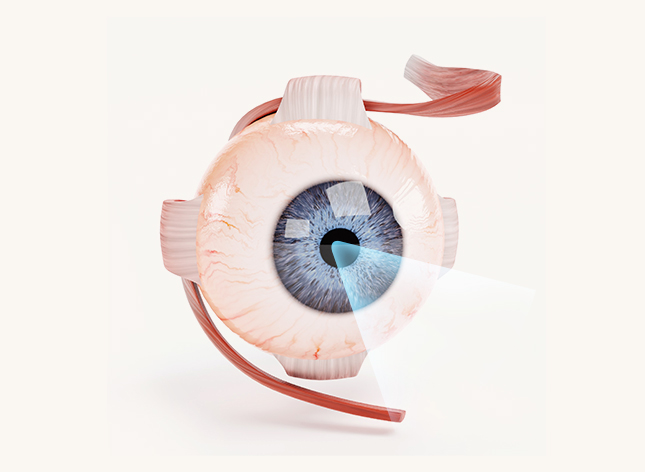
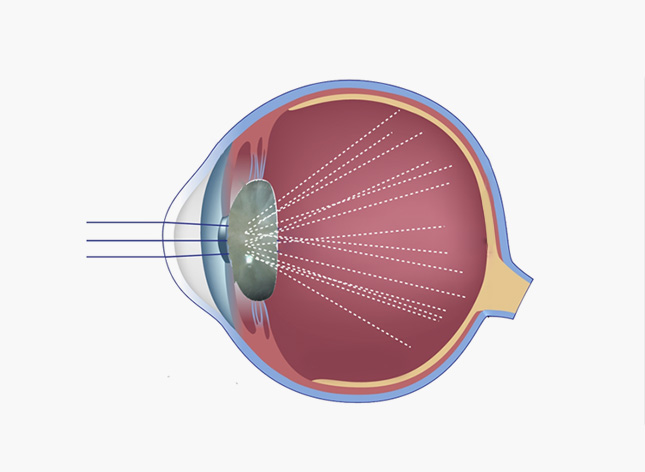
Halos and glare after LASEK are visual disturbances that occur when light entering the eye is scattered or diffracted abnormally following laser vision correction. A halo appears as a ring or circle of light around a light source — most noticeable around car headlights, street lamps, or phone screens at night. Glare is a more diffuse scattering of light that creates a “washed out” or blinding sensation. Both are extremely common in the first weeks following LASEK and are a normal part of the corneal healing process. They are more prominent at night or in low-contrast environments, which is why many patients report that their night driving is temporarily affected after surgery.
Q. Why do halos and glare occur specifically after LASEK?
LASEK (and its modern variant TransPRK, the primary surface ablation procedure at Nunehim Eye Center) removes the corneal epithelium and reshapes the stromal layer using an excimer laser. During the healing phase — typically the first 1–4 weeks — the new epithelium is irregular in thickness, creating an uneven refractive surface. This epithelial irregularity scatters incoming light, producing halos and glare. As the epithelium smooths out and stabilises (usually by weeks 4–8), these symptoms diminish substantially. Residual halos beyond 3 months are more likely related to the ablation zone size relative to the patient’s mesopic (low-light) pupil diameter — a reason why careful pre-operative planning at our Seoul clinic is essential.
📊 LASEK Surgery in Korea: Key Statistics
- ▸ Korea performs over 400,000 laser eye surgery procedures annually — one of the highest rates per capita globally
- ▸ Approximately 70–85% of LASEK patients report noticeable halos or glare in the first 4 weeks post-operatively
- ▸ By 3 months, over 90% of patients report resolution or significant reduction in halos and glare after LASEK
- ▸ TransPRK (touchless surface ablation) offers comparable outcomes to LASIK with a lower risk of flap-related complications, and is the preferred method at Nunehim Eye Center
Q. How long do halos and glare last after LASEK surgery?
The timeline for resolution of halos and glare after LASEK follows the corneal epithelial healing curve. In the first 1–7 days, vision is blurred and light sensitivity is significant — this is the most uncomfortable phase. By weeks 2–4, the epithelium closes and functional vision returns, but halos and glare remain prominent at night. Between months 1–3, most patients see a dramatic improvement in night vision quality as stromal surface smoothing progresses.
By months 3–6, the majority of patients in Yeongdeungpo, Guro, and Gasan who underwent LASEK at Nunehim Eye Center report that halos and glare are no longer functionally limiting. A small number of patients — typically those who had high myopia (above -6.00 D) or large scotopic pupils — may notice residual night vision disturbance beyond 6 months. In these cases, Dr. Daniel Baik evaluates whether wavefront-guided enhancement is appropriate.
Q. How can halos and glare after LASEK be managed during recovery?
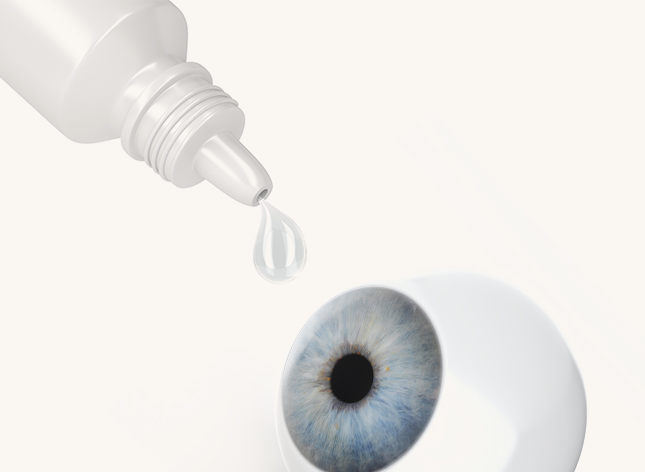
Several strategies help patients in Seoul manage halos and glare after LASEK during the healing period. Anti-inflammatory eye drops (prescribed steroid and NSAID drops) support smooth re-epithelialisation and may reduce the duration of surface irregularity. Lubricating eye drops are essential — dry eye significantly worsens halos and glare, and surface ablation procedures can temporarily reduce corneal sensation and tear production. Patients are advised to use preservative-free artificial tears every 1–2 hours for the first month.
Wearing anti-glare or yellow-tinted driving glasses at night can reduce the subjective impact of halos and glare while awaiting full corneal stabilisation. High-contrast screen filters on phones and computers are also helpful. Patients from Gwanak, Dongjak, and other parts of Seoul who commute at night should factor this temporary limitation into their return-to-work planning. Most desk workers return to full function within 1–2 weeks; night-driving is typically resumed comfortably by weeks 4–8.
Q. When should halos and glare after LASEK prompt a clinic visit?
- Halos and glare are worsening after month 2, rather than improving
- Vision at distance is significantly worse than expected at any point after week 3
- You notice monocular diplopia (double vision in one eye only) — may indicate irregular astigmatism
- Persistent pain, redness, or discharge beyond the first week — possible infection or inflammation
- Night vision is still functionally limiting at 6 months post-surgery
⚠️ Patients in Yeongdeungpo, Guro, Gasan, or Gwanak who are concerned about their recovery progress after LASEK should contact Nunehim Eye Center for a post-operative evaluation. Early intervention can address issues like dry eye, irregular epithelium, or residual prescription before they become longer-term concerns.
⏱ Week 1–2
Significant light sensitivity, halos, and blurring are expected and normal. Bandage contact lens in place. Steroid and antibiotic drops 4× daily. Rest at home recommended.
📅 Month 1–3
Halos and glare after LASEK progressively reduce. Vision stabilises for most patients. Night driving gradually improves. Continued use of lubricating drops essential. Topography reviewed at 1-month check.
✅ Month 3–6
Vision fully stable for most patients. Residual halos or glare rare. Enhancement considered only after 6–12 months of stable refraction. Annual review recommended for all post-LASEK patients.
Dr. Daniel Baik — Nunehim Eye Center
“Halos and glare after LASEK are one of the most common concerns patients bring to my clinic in Yeongdeungpo. I always reassure them: these symptoms are a sign that the cornea is actively healing, not that something has gone wrong. In my practice serving patients from Guro, Gasan, and Gwanak, the pattern is consistent — patients who follow their drop regimen diligently, control screen time in the first two weeks, and stay well-lubricated recover their night vision quality significantly faster. TransPRK, the technique we use at Nunehim Eye Center, produces a very smooth ablation profile, and I consistently see halos resolved by the 3-month mark in the great majority of my patients.”
— Dr. Daniel Baik, Board-Certified Ophthalmologist, Nunehim Eye Center, Seoul
❓ Frequently Asked Questions: Halos and Glare After LASEK
Q. Is LASEK or LASIK better for reducing halos and glare?
Both procedures can produce halos and glare, but the causes differ. LASIK halos are often related to the flap edge or a smaller optical zone. LASEK/TransPRK halos arise from epithelial healing irregularity, which resolves over weeks to months. For patients with thin corneas, dry eyes, or active lifestyles (contact sports), LASEK is the safer choice and long-term outcomes for night vision are comparable to LASIK once healing is complete.
Q. Does Nunehim Eye Center perform SMILE LASIK?
No. Nunehim Eye Center specialises in TransPRK and 2-Day LASEK (surface ablation methods) and OK lens (orthokeratology). We do not perform SMILE LASIK. Dr. Daniel Baik will discuss which procedure is most appropriate for your eyes, corneal thickness, lifestyle, and prescription during your consultation. For many patients — particularly those with high myopia, dry eyes, or thin corneas — TransPRK offers the safest and most durable outcome.
Q. Can dry eye worsen halos and glare after LASEK?
Yes, significantly. Dry eye causes irregular tear film distribution across the corneal surface, which scatters light and amplifies the perception of halos and glare. LASEK temporarily reduces corneal sensation, which can blunt the blink reflex and worsen dry eye symptoms post-operatively. This is why Dr. Baik routinely assesses tear function before surgery and prescribes a structured lubricating drop regimen for all LASEK patients, especially those residing in Guro and Gasan where urban air quality can exacerbate dry eye.
Q. Should I stop driving at night after LASEK?
In the first 2–4 weeks, most patients should avoid night driving due to significantly increased halos and glare. After the first month, as vision stabilises, many patients find night driving manageable with anti-glare glasses. A practical test: if you can comfortably read road signs and judge distances without significant halo distraction, you are likely safe to drive. Always consult Dr. Baik before resuming night driving, particularly for longer commutes around Yeongdeungpo or Gwanak.
Q. What is the optical zone and how does it affect halos?
The optical zone is the diameter of the treated area on the cornea. If your scotopic (dark-adapted) pupil is larger than the optical zone, light entering through the untreated peripheral cornea creates a halo effect. Modern excimer lasers use a 6.0–6.5 mm optical zone with a transition blend, which minimises this risk. Pre-operative pupillometry (measuring pupil size in dim light) at Nunehim Eye Center ensures that the treatment zone is planned appropriately for each patient.
Q. Can halos and glare after LASEK be treated if they persist?
If significant halos and glare persist beyond 6 months and corneal topography shows residual irregular astigmatism or a decentred ablation, wavefront-guided or topography-guided re-treatment may be considered. This is rare with modern TransPRK protocols. Other supportive measures include optimising dry eye treatment, prescription anti-glare lenses for night driving, and corneal cross-linking if ectasia is a concern. Dr. Baik evaluates each case individually at Nunehim Eye Center.
Q. Where can patients from Gwanak and Gasan get LASEK consultations in Seoul?
Nunehim Eye Center in Yeongdeungpo-gu, Seoul is easily accessible from Gwanak, Gasan, Guro, and Dongjak via Seoul Metro Line 2 (Guro Digital Complex Station). Dr. Daniel Baik is a board-certified ophthalmologist offering TransPRK/2-Day LASEK evaluations in Korean and English. The pre-operative assessment includes corneal topography, pachymetry, pupillometry, and tear film analysis — a comprehensive approach designed to minimise the risk of post-operative halos and glare after LASEK.

Book Your LASEK Consultation at Nunehim Eye Center
Serving patients from Yeongdeungpo · Guro · Gasan · Gwanak · Seoul
Korean & English consultations available
📍 Visit Nunehim Eye Center — Yeongdeungpo, Seoul
Convenient access from Guro, Gasan, Gwanak & Dongjak. Near Guro Digital Complex Station (Line 2).
📌 Address
Yeongdeungpo-gu, Seoul
nunehim.com
🕐 Hours
Mon–Fri: 9:00 – 18:00
Sat: 9:00 – 13:00
🌐 Languages
Korean & English
consultations available


Leave a comment