Retinal Detachment: Emergency Symptoms Every Seoul Resident Should Know
Recognize the warning signs before you lose your sight — Yeongdeungpo · Guro · Gasan · Gwanak
Q. What is retinal detachment?
Retinal detachment is a sight-threatening emergency in which the retina — the light-sensitive layer lining the back of the eye — pulls away from the tissue that supplies it with oxygen and nutrients. Without prompt treatment, the detached portion of the retina can lose function permanently within hours to days. If you notice sudden flashes of light, a shower of new floaters, or a shadow spreading across your vision, this is one eye symptom that always warrants same-day emergency evaluation, anywhere in Seoul.
Q. What are the warning symptoms of retinal detachment?
The retina itself has no pain receptors, so retinal detachment never hurts — it announces itself through vision changes instead. The classic warning signs are sudden flashes of light (photopsia), a sudden increase in floaters — specks, threads, or cobwebs drifting across your vision — and a dark curtain or shadow that spreads from the edge of your visual field toward the center. Some people also notice a sudden, painless drop in vision in one eye. Any one of these symptoms appearing suddenly should be treated as an emergency in Yeongdeungpo, Guro, or anywhere else in Seoul — not something to monitor overnight.
▸ Globally, rhegmatogenous retinal detachment (the most common type) affects roughly 1 in 10,000 people each year, though risk rises sharply with age, high myopia (nearsightedness), and prior eye trauma or surgery.
▸ Korea has one of the highest rates of myopia in the world, and high myopia is a well-established risk factor for retinal tears and detachment — making awareness especially important for younger patients in Seoul.
▸ Without treatment, a fully detached retina almost always leads to permanent vision loss in the affected area.
▸ When treated promptly — ideally within 24 to 72 hours of symptom onset — modern surgical techniques successfully reattach the retina in the large majority of cases.
Q. How is retinal detachment treated?
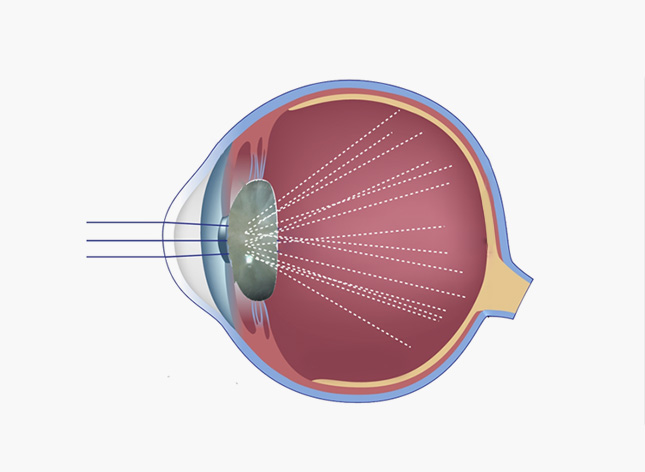
Treatment depends on the size, location, and type of detachment, but the goal is always the same: seal any retinal tears and reattach the retina as quickly as possible. Options include laser photocoagulation or cryotherapy for small tears caught early, pneumatic retinopexy (a gas bubble injection), scleral buckling, and vitrectomy surgery for more extensive detachments.
Outcomes are strongly tied to how quickly treatment begins, which is why sudden flashes, floaters, or a visual curtain should always be treated as same-day emergencies — for patients from Yeongdeungpo, Guro, Gasan, Gwanak, and beyond.
Q. Who is most at risk in Guro, Gasan, and Gwanak?
People with high myopia, those who have had previous cataract or other eye surgery, individuals with a family history of retinal detachment, and anyone who has experienced recent blunt eye trauma face the highest risk. Given how common high myopia is among students and office workers across Guro, Gasan, and Gwanak, we encourage anyone with strong nearsightedness to learn these warning signs well before an emergency happens.
Q. When is this a true emergency?
- A sudden shower of new floaters, especially appearing all at once
- Flashes of light, particularly in side vision, that are new or worsening
- A dark shadow or curtain spreading across part of your vision
- Sudden, painless blurring or loss of vision in one eye
- Any of the above after a recent blow to the head or eye
Posterior Vitreous Detachment (PVD)
A common, usually harmless age-related change where the gel inside the eye separates from the retina, often causing new floaters or flashes. Still warrants a same-week retinal exam to rule out a tear.
Retinal Tear
A small break in the retina that can occur on its own or follow a PVD. If caught at this stage, a quick in-office laser or freezing treatment can often prevent full detachment.
Retinal Detachment
The retina separates from the back of the eye, threatening permanent vision loss in that area without prompt surgical repair.
In my practice across Yeongdeungpo and Guro, the patients with the best outcomes are almost always the ones who came in the same day their symptoms started. As a board-certified ophthalmologist, I want every patient in Seoul to remember this: sudden flashes, a shower of floaters, or a shadow in your vision is never something to sleep on — call us or go to the nearest emergency eye clinic immediately.
— Dr. Daniel Baik, Board-Certified Ophthalmologist
❓ Frequently Asked Questions
Q. Does retinal detachment hurt?
No. The retina has no pain receptors, so detachment is painless — which is exactly why people sometimes delay seeking care. Trust the visual symptoms, not the absence of pain.
Q. Can floaters be normal?
Yes, a few floaters that have been stable for a long time are usually harmless. What matters is a sudden increase or new flashes, which should always be checked promptly.
Q. How fast does retinal detachment progress?
It can progress from a small tear to a significant detachment within hours to days, which is why same-day evaluation is recommended for new symptoms.
Q. Is surgery always required?
Most true retinal detachments require some form of procedure — laser, gas bubble, buckle, or vitrectomy — to reattach the retina. Treatment is selected based on the specific case.
Q. Will my vision fully recover after treatment?
It depends on how long the retina was detached and whether the central macula was involved. Earlier treatment is strongly associated with better visual outcomes.
Q. Am I at higher risk if I’m very nearsighted?
Yes. High myopia thins and stretches the retina, making tears and detachment more likely — this is especially relevant given how common high myopia is in Korea.
Q. What should I do right now if I have these symptoms?
Contact an ophthalmologist or go to an emergency eye care provider the same day — do not wait until the next morning or assume it will resolve on its own.

Don’t Wait — Protect Your Vision
If you’re experiencing sudden flashes, floaters, or a shadow in your vision, contact Nunehim Eye Center right away. Serving Yeongdeungpo, Guro, Gasan, and Gwanak with Korean & English consultations.
📍 Visit Nunehim Eye Center — Guro, Seoul
Convenient access from Guro, Gasan, Gwanak & Dongjak. Near Guro Digital Complex Station (Line 2).
Address: Guro-gu, Seoul
nunehim.com
Hours: Mon–Fri 9–6
Sat 9–1
Languages: Korean & English


Leave a comment