Ptosis (Droopy Eyelid): Causes & Treatment Options in Seoul
Expert diagnosis and eyelid care at Nunehim Eye Center, Guro · Yeongdeungpo · Seoul
Q. What is ptosis (droopy eyelid) and how is it treated in Seoul?
Ptosis is a condition where one or both upper eyelids droop lower than normal, sometimes partially or fully blocking vision. Treatment depends on severity and cause: mild cases may be monitored, while significant ptosis — especially in children where it risks amblyopia — requires surgical correction. At Nunehim Eye Center in Guro, Seoul, Dr. Daniel Baik evaluates ptosis comprehensively and coordinates surgical referrals when needed.
Q. What exactly is ptosis (droopy eyelid)?
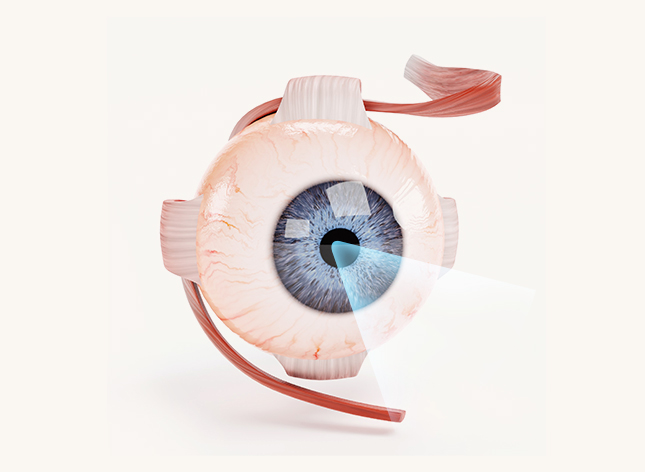
Ptosis (pronounced “TOH-sis”) refers to the drooping or falling of the upper eyelid. The upper eyelid is normally positioned 1–2mm below the upper limbus (edge of the iris), covering just a sliver of the iris. In ptosis, the eyelid falls lower, sometimes covering part of the pupil and blocking the visual axis. In Seoul and across Korea, ptosis is commonly seen in both children and adults — congenital ptosis affects approximately 1 in 800 newborns, while acquired ptosis becomes increasingly prevalent with age due to levator aponeurosis dehiscence, the most common cause in adults.
Q. What causes a droopy eyelid (ptosis)?
The causes of ptosis fall into several categories. Aponeurotic (involutional) ptosis is the most common in adults — the levator aponeurosis (the tendon lifting the eyelid) stretches or detaches with age, often accelerated by contact lens wear, eye rubbing, or prior eye surgery. This is particularly relevant in Seoul’s population where contact lens use is near-universal. Congenital ptosis results from maldevelopment of the levator muscle and presents at birth or early childhood. Neurogenic ptosis may indicate serious conditions such as Horner syndrome or third cranial nerve palsy and requires urgent investigation. Myogenic ptosis is associated with conditions like myasthenia gravis.
Q. What are the signs and symptoms of ptosis?
- One or both upper eyelids sitting lower than normal (covering part of the iris or pupil)
- Raising the eyebrows or tilting the head back to see clearly
- A tired or sleepy appearance
- Reduced visual field — difficulty seeing upward
- Eye fatigue, particularly when reading or using screens
- In children: amblyopia (lazy eye) if the ptotic lid blocks the visual axis
- Double vision (if associated with ocular motility disorders)
📊 Ptosis in Korea: Key Statistics
- ▸ Congenital ptosis affects approximately 1 in 800 live births in Korea — one of the conditions routinely screened at newborn and infant eye exams
- ▸ Contact lens wear — practiced by over 40% of Korean adults — accelerates aponeurotic ptosis through repeated lid manipulation
- ▸ In Seoul, cosmetic and functional blepharoplasty combined with ptosis repair is among the most commonly performed oculoplastic procedures
- ▸ Ptosis-associated amblyopia accounts for up to 15% of all amblyopia cases in pediatric ophthalmology clinics across Korea
Q. What are the treatment options for ptosis droopy eyelid in Seoul?
Surgical correction is the definitive treatment for ptosis. The approach depends on the cause and severity: Levator advancement/resection is the most common procedure for aponeurotic and mild-to-moderate congenital ptosis — the levator muscle is tightened or reattached. Frontalis sling surgery is used when levator function is very poor (as in severe congenital ptosis) — a sling material connects the eyelid to the frontalis muscle so the patient can open the eye using their forehead.
In Guro, Yeongdeungpo, and Gwanak districts of Seoul, oculoplastic surgery for ptosis is performed by specialist surgeons. At Nunehim Eye Center, Dr. Daniel Baik evaluates every case of ptosis thoroughly and refers to trusted oculoplastic surgeons when surgical correction is indicated, ensuring seamless coordinated care for patients from across Seoul.
Q. Can ptosis be managed without surgery?
In mild cases where ptosis does not affect vision or cause significant symptoms, watchful waiting with regular monitoring is appropriate. Ptosis crutches — small supports fitted to the frame of glasses that hold the eyelid open — are a non-surgical option for patients who are unable or unwilling to undergo surgery, particularly elderly patients or those with medical contraindications.
For myasthenia gravis-related ptosis, medical treatment of the underlying condition (acetylcholinesterase inhibitors, immunosuppressants) can improve eyelid position. In children, treatment of any associated amblyopia — with glasses and patching — is essential in parallel with or before surgical planning. Families in Gasan, Gwanak, and Yeongdeungpo visiting Nunehim Eye Center receive a full management plan tailored to the child’s or adult’s specific situation.
Q. When is droopy eyelid a medical emergency requiring immediate care?
- Sudden onset ptosis with double vision, headache, or pupil dilation → suspect third nerve palsy or aneurysm — go to ER immediately
- Ptosis with facial drooping, weakness, or speech difficulty → possible stroke — call 119 immediately
- Ptosis with pain, redness, and proptosis (eye bulging) → possible orbital cellulitis — urgent ER visit
- New ptosis after head trauma or neck injury → possible Horner syndrome — urgent evaluation needed
- Congenital ptosis in newborn or infant covering the pupil → urgent pediatric ophthalmology referral to prevent amblyopia
👶 Congenital Ptosis
Present at birth. Usually unilateral. Levator maldevelopment. Surgery timing critical to prevent amblyopia. Guro & Yeongdeungpo pediatric eye exams detect this early.
🧓 Aponeurotic (Adult)
Most common in adults. Levator aponeurosis stretches with age, contact lens wear, or eye rubbing. Good levator function. Excellent surgical outcomes.
⚡ Neurogenic / Myogenic
May indicate underlying neurological or systemic disease. Requires urgent work-up including imaging. Treatment targets underlying cause.
From Dr. Daniel Baik, Board-Certified Ophthalmologist
“Ptosis is something I see frequently at Nunehim Eye Center — from newborns in Guro whose parents notice an asymmetric eyelid opening, to adults in Yeongdeungpo and Gwanak who have noticed a gradually sleepier appearance. What concerns me most is catching the cases that signal something urgent — sudden ptosis always needs prompt evaluation. For the more common gradual adult ptosis or the child with congenital drooping, we have very effective solutions, and I work closely with oculoplastic surgeons in Seoul to ensure each patient gets the right treatment.”
— Dr. Daniel Baik, Nunehim Eye Center, Guro-gu, Seoul
❓ Frequently Asked Questions about Ptosis Droopy Eyelid Seoul
Q. Is ptosis surgery covered by Korean national health insurance (NHIS)?
Ptosis repair is covered by Korean NHIS when it is functionally significant — meaning the drooping eyelid causes measurable visual field loss or affects daily functioning. Purely cosmetic ptosis correction (double eyelid surgery combined with ptosis repair for aesthetic reasons) is generally not covered. Dr. Baik can document the functional necessity during your assessment at Nunehim Eye Center.
Q. Can ptosis get worse over time?
Yes — aponeurotic ptosis typically worsens gradually with age, and factors like contact lens wear, frequent eye rubbing, or prior eye surgery can accelerate it. Congenital ptosis generally remains stable but doesn’t improve on its own. Sudden worsening of any ptosis should be evaluated urgently to rule out a serious neurological or systemic cause.
Q. How long is recovery after ptosis surgery?
Most patients return to desk work and light activity within 1–2 weeks. Bruising and swelling typically resolve within 2–4 weeks. Full surgical results — including final eyelid height and symmetry — are best assessed at 3 months. Contact lens wear is usually restricted for 4–6 weeks post-operatively.
Q. Can children with ptosis wear glasses instead of having surgery?
Glasses alone cannot lift a drooping eyelid. However, in children with ptosis-related amblyopia, corrective glasses are prescribed to treat the refractive component, and patching may be used to treat the amblyopia. The ptosis itself — if severe enough to threaten the visual axis — ultimately requires surgery. Timing is guided by the ophthalmologist based on the severity and the amblyopia risk.
Q. Where can I get a ptosis evaluation in Yeongdeungpo or Guro, Seoul?
Nunehim Eye Center, located in Guro-gu and serving Yeongdeungpo, Gasan, Gwanak, and surrounding Seoul districts, offers comprehensive ptosis evaluations in Korean and English. Dr. Daniel Baik performs a detailed assessment of levator function, margin-reflex distance, eyelid symmetry, and any associated findings — and provides a full management plan including surgical referral coordination when appropriate.
Q. Is droopy eyelid related to my contact lens use?
Yes — this is a well-documented association in Korean ophthalmology literature. Soft contact lens wear, particularly rigid gas-permeable lenses, gradually stretches and weakens the levator aponeurosis through the mechanical action of insertion and removal. Studies show that long-term contact lens wearers develop ptosis at higher rates. Reducing unnecessary contact lens use and avoiding eye rubbing can slow progression.
Q. What tests are done to evaluate ptosis at an eye clinic in Seoul?
A ptosis evaluation at Nunehim Eye Center includes: measurement of margin-reflex distance (MRD1/MRD2), assessment of levator function (excursion in mm), visual field testing to quantify functional impairment, pupil assessment (to detect Horner syndrome or third nerve palsy), and a full slit-lamp and fundus examination. Photographs are taken for documentation and insurance purposes. Neurological examination or imaging may be ordered if a sinister cause is suspected.

Concerned About a Droopy Eyelid? Get Evaluated in Seoul
Nunehim Eye Center · Guro-gu, Seoul · Korean & English consultations · Board-certified ophthalmologist Dr. Daniel Baik
📍 Visit Nunehim Eye Center — Guro, Seoul
Convenient access from Guro, Gasan, Gwanak & Dongjak. Near Guro Digital Complex Station (Line 2).
📌 Address
Guro-gu, Seoul
nunehim.com
🕐 Hours
Mon–Fri: 9:00–18:00
Sat: 9:00–13:00
🌐 Languages
Korean & English consultations available


Leave a comment