High Myopia Risks: Why Being Very Nearsighted Is a Medical Concern
Understanding high myopia risks — expert eye care at Nunehim Eye Center, Yeongdeungpo, Seoul
Q. What Are the High Myopia Risks and Why Should I Be Concerned?
High myopia — defined as a refractive error of −6.00 dioptres or worse — is not just a matter of needing thick glasses. It is a medical condition that significantly increases the risk of serious, vision-threatening complications including retinal detachment, glaucoma, cataracts, and myopic macular degeneration. At Nunehim Eye Center in Yeongdeungpo, Seoul, Dr. Daniel Baik evaluates and manages high myopia patients from across Guro, Gasan, and Gwanak to prevent these complications before they occur.
Q. What Is High Myopia and How Common Is It in Korea?
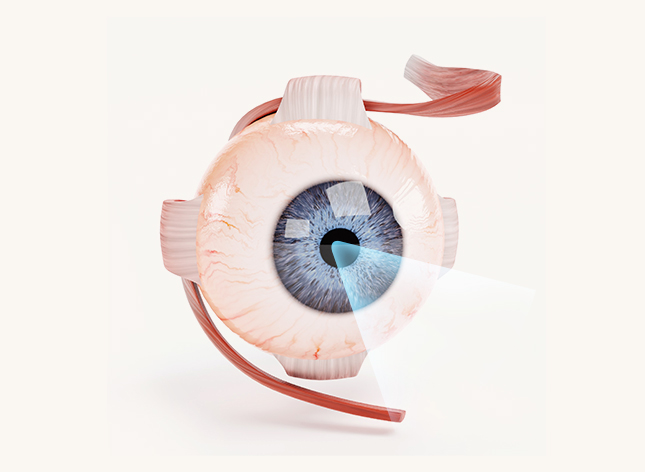
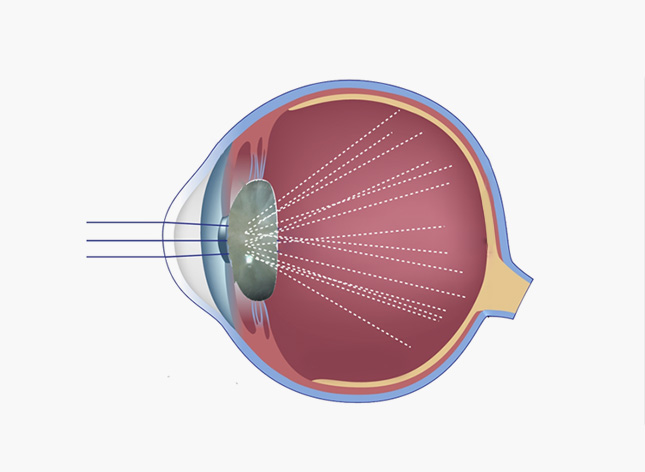
Myopia (nearsightedness) occurs when the eyeball is too long or the cornea too curved, causing light to focus in front of the retina rather than on it. High myopia, sometimes called pathological or degenerative myopia, refers to severe myopia (typically −6.00 D or more, or axial length above 26 mm). South Korea has one of the highest myopia rates in the world — studies show over 95% of young Korean men are myopic, and a significant proportion have high myopia. This is driven by intense near-work demands, extended screen time, and reduced outdoor activity during childhood. The consequences extend far beyond blurry distance vision: the elongated eyeball stretches and thins the retina, choroid, and sclera, creating multiple high myopia risks that can cause permanent vision loss.
High Myopia in Korea: Key Statistics
- ▸ Over 95% of young Korean men are myopic — one of the highest rates in the world
- ▸ Approximately 20–25% of Koreans have high myopia (−6.00 D or worse)
- ▸ Risk of retinal detachment is 10× higher in high myopia vs. normal vision
- ▸ Myopic macular degeneration is now the leading cause of irreversible vision loss in young East Asians
Q. What Serious Complications Can High Myopia Cause?
The most concerning high myopia risks arise from mechanical stretching of the posterior segment of the eye. Retinal detachment — where the retina peels away from the back of the eye — is a sight-threatening emergency that is 10 times more common in highly myopic eyes. Myopic macular degeneration (MMD) involves the thinning and breakdown of the central retina, causing permanent loss of fine-detail vision. Glaucoma risk is also elevated, as high myopia alters the optic nerve’s susceptibility to pressure damage.
Posterior staphyloma — an outward bulging of the back of the eye — is a structural complication unique to high myopia that accelerates retinal thinning. Cataract formation also occurs earlier in highly myopic eyes, often requiring surgical treatment in middle age rather than late life. Patients in Yeongdeungpo, Guro, and Gasan with high myopia should have annual dilated fundus examinations to screen for these complications.
Q. How Can High Myopia Progression Be Slowed in Children?
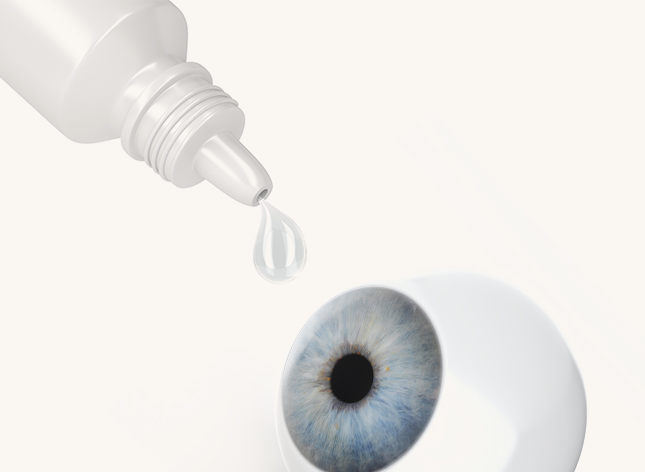
Myopia control is now a major focus of paediatric eye care. The goal is to slow the elongation of the eyeball during childhood and adolescence, reducing the final level of myopia and the associated risks. At Nunehim Eye Center, Dr. Daniel Baik offers orthokeratology (OK lens) — specially designed rigid contact lenses worn overnight that reshape the cornea and have been shown to reduce myopia progression by 40–60%. OK lenses are popular among children in Gwanak, Gasan, and Yeongdeungpo because they provide clear daytime vision without the need for glasses or contacts during waking hours.
Other proven myopia control options include low-dose atropine eye drops and specially designed spectacle lenses. Increased outdoor time (at least 2 hours daily) is recommended for all myopic children, as exposure to natural light slows axial elongation. Early intervention during the school years, when myopia progresses fastest, yields the greatest long-term benefit.
Q. What Symptoms in High Myopia Require Urgent Evaluation?
- Sudden increase in floaters (dark spots or threads in vision)
- Flashes of light, especially in peripheral vision
- A dark curtain or shadow appearing in your field of vision
- Sudden or progressive blurring of central vision
- Distortion or wavy appearance of straight lines (metamorphopsia)
- Any sudden unexplained change in your previously stable vision
👁️ Retinal Risks
Retinal detachment, retinal tears, lattice degeneration, and myopic macular degeneration. Annual dilated fundus exams are essential.
🫧 Pressure Risks
Glaucoma risk is significantly elevated. High myopia alters optic nerve anatomy, making interpretation of glaucoma tests more complex. Specialist monitoring is key.
🔬 Lens Risks
Early cataract formation is common in high myopia. Surgical planning requires special care due to altered axial length and IOL calculation challenges.
A Note from Dr. Daniel Baik
“As a board-certified ophthalmologist, I want patients in Yeongdeungpo, Guro, and Gwanak to understand that high myopia is not just a vision inconvenience — it is a lifelong eye health risk. The good news is that with regular monitoring and early intervention for children, we can significantly reduce the burden of high myopia complications. I encourage every highly myopic patient to commit to annual comprehensive eye exams.”
— Dr. Daniel Baik, Nunehim Eye Center, Seoul
❓ Frequently Asked Questions — High Myopia Risks
Q. At what level of myopia should I be worried about complications?
Complications become significantly more common at −6.00 D or higher (high myopia) and increase further beyond −10.00 D (extreme myopia). However, even moderate myopia (−3.00 to −6.00 D) carries some elevated risk. Axial length above 26 mm is also a key risk marker regardless of the dioptre reading. Anyone with myopia should have regular comprehensive exams.
Q. Can LASIK or laser surgery eliminate high myopia risks?
Laser refractive surgery (such as TransPRK or 2-Day LASEK, offered at Nunehim Eye Center) corrects the refractive error so you no longer need glasses, but it does not change the physical length of the eyeball. The structural risks from axial elongation — retinal detachment, macular degeneration, glaucoma — persist after surgery. Regular eye exams remain essential even after successful refractive correction.
Q. What is OK lens (orthokeratology) and does it really slow myopia?
Orthokeratology (OK lens) involves wearing specially designed rigid contact lenses overnight. They temporarily reshape the cornea so that vision is clear during the day without glasses or contacts. Multiple clinical trials show that OK lenses reduce myopia progression in children by 40–60% compared to standard glasses. They are available at Nunehim Eye Center and are particularly popular among school-aged children in Gwanak, Gasan, and Yeongdeungpo.
Q. How often should a highly myopic person have eye exams?
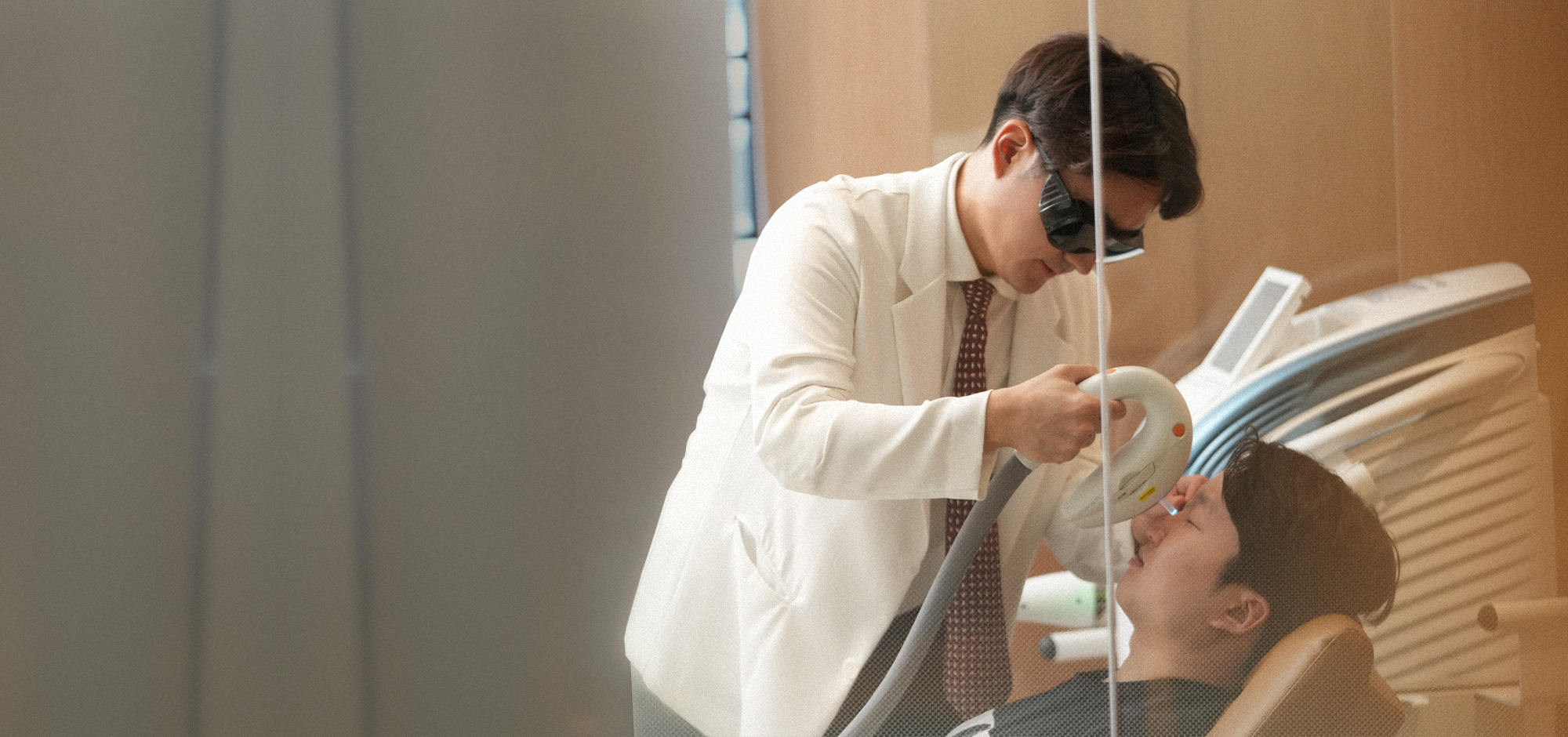
At minimum, annually — ideally with a dilated fundus examination to check the peripheral retina and optic nerve. If you have additional risk factors (family history of retinal detachment, very high myopia above −10.00 D, or prior retinal findings), your ophthalmologist may recommend every 6 months. Seek urgent evaluation immediately if you notice new floaters, flashes, or a vision curtain.
Q. Can myopic macular degeneration be treated?
Early-stage myopic macular degeneration requires close monitoring. If neovascularisation (abnormal blood vessel growth) develops — a complication called myopic CNV — anti-VEGF injections can stabilise vision and prevent further loss. The earlier treatment is started, the better the visual outcome. Routine monitoring at Nunehim Eye Center enables early detection of this complication.
Q. Is there anything I can do to prevent high myopia complications?
While you cannot change axial length once established, proactive management makes a significant difference: annual comprehensive eye exams, prompt reporting of any new visual symptoms, blood pressure management (relevant to retinal vascular health), protecting eyes from trauma, and — for children — myopia control therapy to limit final myopia level. Lifestyle factors like UV protection and a balanced diet may also support retinal health.
Q. Does Korean health insurance cover high myopia monitoring?
Many aspects of high myopia monitoring — including fundus examinations, retinal imaging (OCT), and treatment of complications like retinal tears or CNV — are covered or partially covered by Korean National Health Insurance (건강보험). Refractive correction procedures are generally not covered. The team at Nunehim Eye Center can guide you through what is and is not covered, in both Korean and English.

Book a High Myopia Consultation at Nunehim Eye Center
Comprehensive retinal monitoring and myopia control — Yeongdeungpo, Seoul
📍 Visit Nunehim Eye Center — Guro, Seoul
Convenient access from Guro, Gasan, Gwanak & Dongjak. Near Guro Digital Complex Station (Line 2).
📌 Address
Yeongdeungpo-gu, Seoul
nunehim.com
🕐 Hours
Mon–Fri: 9:00–18:00
Sat: 9:00–13:00
🌐 Languages
Korean & English consultations available


Leave a comment