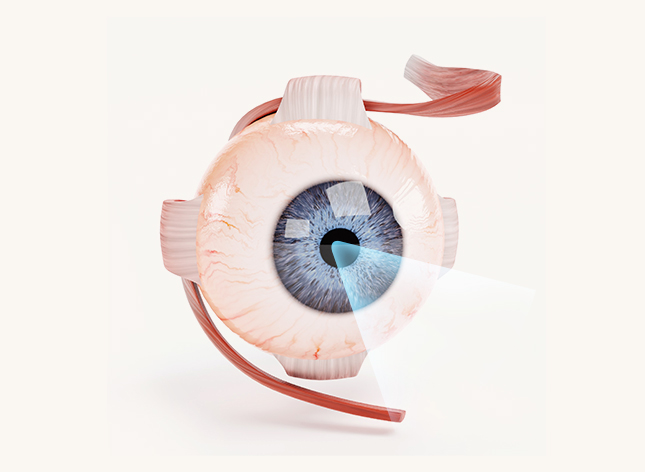
OK Lens vs Atropine: Best Myopia Control Options for Children in Seoul
Expert myopia control for children in Yeongdeungpo · Guro · Gasan · Gwanak
Q. What is the best myopia control option for children in Seoul?
For myopia control in children, OK lenses (orthokeratology) and atropine eye drops are the two most evidence-based options in Seoul. OK lenses reshape the cornea overnight for clear daytime vision while slowing eye elongation. Low-dose atropine (0.01–0.05%) drops reduce progression by 50–77%. At Nunehim Eye Center in Guro, Seoul, Dr. Daniel Baik tailors the plan to each child’s age, prescription, and progression rate.
Q. What Are OK Lenses (Orthokeratology) and How Do They Work?
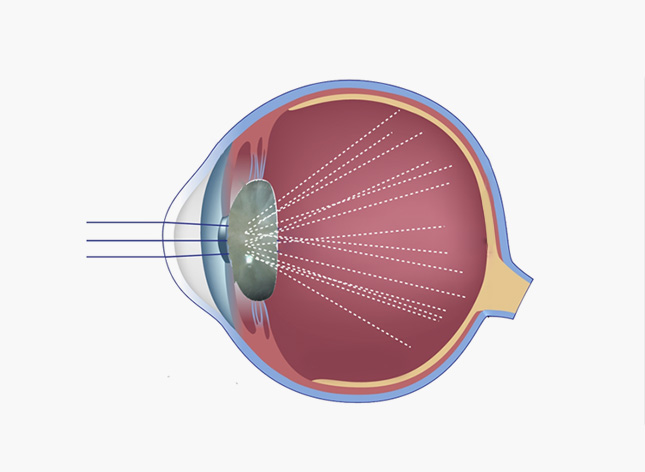
OK lenses — short for orthokeratology — are rigid gas-permeable contact lenses worn overnight. As your child sleeps, they gently reshape the cornea so vision is clear during the day without glasses. More importantly, clinical studies show OK lenses significantly slow axial eye elongation — the main driver of worsening myopia. This is especially relevant in Seoul, where near-100% myopia rates are reported among Guro, Yeongdeungpo, and Gasan teenagers.
Q. How Does Atropine Therapy Slow Myopia Progression in Children?
Atropine eye drops are applied once nightly in very low concentrations (0.01%–0.05%). They relax the eye’s focusing mechanism and act on retinal signaling to slow axial growth. The ATOM and LAMP studies confirmed 50–77% reduction in myopia progression with minimal side effects. Children at Nunehim Eye Center in Guro are monitored regularly to assess response and adjust concentration as needed.
Myopia in Korea: Key Statistics
- ▸ Over 96% of Korean high school graduates are myopic — the highest rate in the world
- ▸ Average myopia onset in Korean children has dropped to age 7–8
- ▸ High myopia (>−6D) affects up to 23% of young adults in Seoul, raising retinal and glaucoma risk
- ▸ OK lens therapy reduces axial elongation by up to 50% compared to spectacles alone
Q. Who Is a Good Candidate for OK Lens Therapy in Guro, Seoul?
OK lens therapy is ideal for children aged 7–18 with mild-to-moderate myopia (−1.00 to −6.00D) who can follow a nightly wear routine. It is especially popular among children in Yeongdeungpo and Guro whose busy school schedules make daytime contact lens wear difficult. Children with fast-progressing myopia (>0.75D per year) are particularly strong candidates.
At Nunehim Eye Center, Dr. Daniel Baik performs corneal topography mapping and axial length measurements before fitting. The initial visit takes 60–90 minutes, with follow-ups at 1 week, 1 month, then every 3–6 months.
Q. When Is Atropine the Better Choice for My Child?
Atropine drops are preferred for younger children (under 7), those with very high prescriptions, or children who cannot tolerate contact lens wear. They also complement OK lenses in rapidly progressing cases. Families in Gasan and Gwanak often choose atropine for simplicity — just one drop at bedtime.
Korean ophthalmology guidelines recommend starting myopia control as early as possible after diagnosis. Dr. Daniel Baik follows the latest Korean Ophthalmological Society recommendations, selecting the most appropriate concentration based on progression rate and any reported side effects.

Q. When Should You Bring Your Child to an Eye Clinic in Seoul?
- Child squints or sits very close to the screen
- Myopia worsening more than 0.50D in 6 months
- Child is under age 8 and already myopic
- Family history of high myopia or retinal complications
- Complaints of eye strain or headaches after school
- Difficulty reading the whiteboard in Guro, Gasan, or Gwanak schools
OK Lens
Worn overnight · Daytime freedom · Best for active children aged 7–18 in Yeongdeungpo & Guro · Slows axial elongation ~50%
Atropine Drops
One drop nightly · No lens handling · Suitable from age 4+ · Reduces progression 50–77% · Simple for families in Gasan & Gwanak
Combined Therapy
OK lens + atropine for fast progressors · Maximum myopia control efficacy · Closely monitored at Nunehim Eye Center, Seoul
From Dr. Daniel Baik
“As a board-certified ophthalmologist practicing in Seoul, I see the real-world impact of myopia on children every day. Whether it’s OK lens therapy or low-dose atropine, the goal is the same: protect your child’s vision for life. At our Guro clinic, we guide each family with evidence-based recommendations tailored to their child’s progression rate and routine — in both Korean and English.”
— Dr. Daniel Baik, Board-Certified Ophthalmologist, Nunehim Eye Center, Seoul
❓ Frequently Asked Questions: OK Lens vs Atropine in Seoul
Q. At what age can children start OK lens therapy in Seoul?
Most children can begin OK lens therapy from age 7 or 8, once the cornea is sufficiently developed and they can handle lens care independently. At Nunehim Eye Center in Guro, Seoul, Dr. Daniel Baik assesses readiness based on corneal topography, refraction stability, and the child’s motivation. Some cooperative younger children may also be considered on a case-by-case basis.
Q. How long does it take for OK lens to work?
Most children achieve acceptable daytime vision clarity within 1–2 weeks. Full corneal reshaping typically occurs within 2–4 weeks of consistent nightly wear. Parents in Yeongdeungpo and Gasan often notice significant improvement after just the first night, though complete optimization may take up to a month.
Q. Can OK lenses and atropine drops be used at the same time?
Yes. Combined use of OK lenses and low-dose atropine is increasingly recommended for children with rapidly progressing myopia. Studies suggest the combination achieves superior myopia control compared to either therapy alone. Dr. Daniel Baik carefully monitors combined therapy patients at Nunehim Eye Center to maximize benefit while minimizing side effects.
Q. Is atropine therapy safe for children long-term?
Low-dose atropine (0.01–0.05%) has an excellent long-term safety profile supported by ATOM1, ATOM2, and LAMP2 studies. The most common side effects — mild light sensitivity and slight near blur — are minimal at low concentrations. Annual checks at Nunehim Eye Center allow Dr. Daniel Baik to monitor intraocular pressure, lens clarity, and overall eye health throughout treatment.
Q. How effective are OK lenses at slowing myopia progression?
Clinical evidence shows OK lenses reduce axial elongation by 32–63% compared to single-vision spectacles. In East Asian populations — including children in Seoul, Guro, and Gasan — results tend to be on the higher end due to faster natural progression rates. Consistency of nightly wear is key to achieving the best outcomes.
Q. What happens if we stop myopia control treatment?
If OK lens wear is stopped, the corneal reshaping reverses within 1–4 weeks and myopia returns. For atropine, a rebound progression may occur if stopped abruptly, especially at higher concentrations. Dr. Daniel Baik recommends a gradual tapering schedule for atropine and continued monitoring after stopping either treatment in children still in growth years.
Q. Does Nunehim Eye Center offer myopia control consultations in English?
Yes. Dr. Daniel Baik is a board-certified ophthalmologist who conducts consultations in both Korean and English. Nunehim Eye Center in Guro, Seoul warmly welcomes international families and expats living in Yeongdeungpo, Gasan, and Gwanak who need pediatric eye care and myopia control services with clear English communication.

Book a Myopia Control Consultation in Seoul
Nunehim Eye Center · Guro-gu, Seoul · Korean & English · nunehim.com
📍 Visit Nunehim Eye Center — Guro, Seoul
Convenient access from Guro, Gasan, Gwanak & Dongjak. Near Guro Digital Complex Station (Line 2).
📍 Address
551 Siheung-daero, Guro-gu, Seoul
nunehim.com
🕐 Hours
Mon–Fri 09:00–18:30 (lunch 13:00–14:00)
Sat 09:00–14:00
🌐 Languages
Korean & English consultations available


Leave a comment