Computer Vision Syndrome: IT Workers’ Eye Health Guide for Seoul
Expert insights from Dr. Daniel Baik, board-certified ophthalmologist at Nunehim Eye Center, Guro, Seoul.
Q. What is Computer Vision Syndrome and how do you treat it?
Computer Vision Syndrome (CVS) is a cluster of eye and vision symptoms caused by prolonged digital screen use — including eye strain, dryness, blurred vision, and headaches. Treatment involves the 20-20-20 rule, optimised screen ergonomics, lubricating eye drops, and correction of underlying refractive errors. In Seoul, where IT workers in Gasan, Yeongdeungpo, and Guro average over 10 hours of screen time daily, CVS has become one of the most common reasons for an ophthalmology visit.
Q. What exactly is computer eye strain and who does it affect in Seoul?
Computer Vision Syndrome (CVS) — also called digital eye strain — refers to a group of eye and vision problems resulting from extended screen use. It affects anyone who spends two or more continuous hours on a computer, tablet, or smartphone. In Seoul, this includes virtually the entire workforce: developers in Gasan Digital Complex, financial analysts in Yeongdeungpo’s high-rises, designers in Guro, and students in Gwanak’s university district. Computer eye strain in Seoul is among the most underdiagnosed occupational health issues, with many workers dismissing symptoms as “just tiredness” rather than seeking an eye exam.
Q. What are the symptoms of Computer Vision Syndrome?
- Eye fatigue and strain — heavy or aching eyes after screen use
- Blurred vision or difficulty focusing, especially when switching between screen and distance
- Dry, irritated, or red eyes caused by reduced blink rate
- Headaches concentrated around or behind the eyes
- Neck, shoulder, and upper back pain from poor screen ergonomics
- Increased light sensitivity (photophobia) after long screen sessions
- Difficulty concentrating — eyes losing focus repeatedly during work
📊 Digital Eye Strain in Korea: Key Statistics
▸ Korea ranks among the top 5 countries globally for average daily screen time — over 10 hours per day for working adults in tech-heavy districts like Gasan and Yeongdeungpo.
▸ Approximately 70–80% of Korean office workers report at least one CVS symptom regularly, according to ophthalmology surveys.
▸ Korea has one of the world’s highest myopia rates (over 95% in young adults), and excessive near-focus screen time may accelerate progression.
▸ Dry eye disease — a primary CVS driver — affects an estimated 30% of Koreans, with office air conditioning worsening symptoms year-round.
Q. How can I reduce computer eye strain at my Seoul office?
Start with the 20-20-20 rule: every 20 minutes, look at something 20 feet (6 metres) away for 20 seconds. Position your screen 50–70 cm from your eyes with the top of the monitor at or slightly below eye level. Reduce overhead lighting glare and use a matte screen filter if reflections are an issue — common in Yeongdeungpo and Guro’s glass-walled offices.
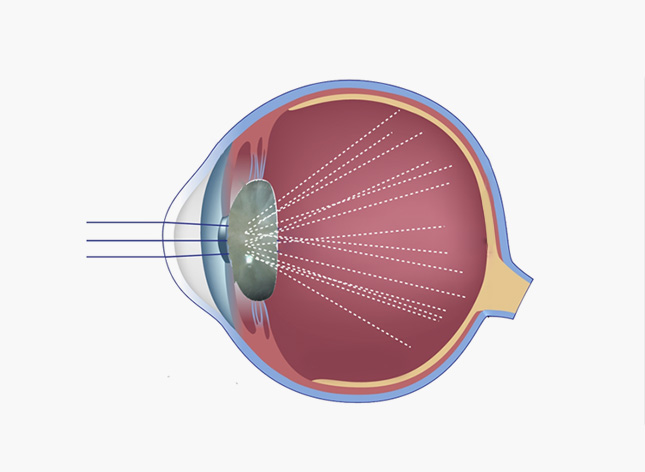
Increase your blink rate consciously: when concentrating, our blink rate drops from ~15 to ~5 times per minute, causing the tear film to evaporate and the corneal surface to dry out. Preservative-free lubricating eye drops (available at most Seoul pharmacies) can compensate. Adjusting screen brightness to match your ambient room lighting and enabling night mode after 18:00 further reduces accommodative effort.
Q. What can an ophthalmologist do for computer eye strain?
A comprehensive eye exam at Nunehim Eye Center in Guro can identify underlying causes that ergonomic changes alone cannot fix: uncorrected or under-corrected myopia, hyperopia, astigmatism, presbyopia, or a binocular vision disorder (such as convergence insufficiency). CVS symptoms are significantly worse in people with even mild undetected refractive errors — a 0.25 dioptre difference between glasses and screen distance can cause continuous accommodative fatigue over an 8-hour workday.
Dr. Daniel Baik also assesses dry eye disease using tear film analysis and meibomian gland evaluation, and can prescribe specialised office lenses — progressive or anti-fatigue lenses optimised for the intermediate computer viewing distance — reducing the focusing effort that causes headaches and eye strain for IT workers in Gasan and Gwanak.
Q. When should Seoul IT workers see a doctor about screen-related eye symptoms?
- Symptoms persist for more than a week despite ergonomic changes and regular breaks
- Blurred vision lasts for more than an hour after stopping screen use
- You are experiencing frequent headaches concentrated around the eyes or temples
- You notice difficulty driving at night or halos around lights — signs of worsening myopia
- You haven’t had an eye exam in more than 2 years (recommended annually for heavy screen users)
- You are over 40 and finding it harder to focus between your screen and printed documents
🖥️ Screen Setup
Monitor at arm’s length (50–70 cm) → Top edge at or below eye level → Brightness = ambient light → Matte filter for glare → Font size ≥12pt.
⏱️ Break Habits
20-20-20 rule every 20 minutes → Stand/walk every hour → Consciously blink more → Lubricating drops mid-afternoon → Night mode after 18:00.
👁️ Eye Care
Annual eye exam → Update glasses/contact prescription → Ask about anti-fatigue or occupational lenses → Treat dry eye if present → Schedule check if symptoms persist.
From Dr. Daniel Baik
“Computer Vision Syndrome is the occupational eye disease of our generation — and Seoul’s IT sector is at the frontline. I see patients from Gasan Digital Complex, Yeongdeungpo, and Guro almost every week presenting with symptoms they’ve been ignoring for months. The good news is that CVS is almost always treatable: the right prescription, proper ergonomics, and dry eye management can return most patients to comfortable, productive screen use within weeks. Don’t wait until your vision is blurred to see an ophthalmologist.”
— Dr. Daniel Baik, Board-Certified Ophthalmologist, Nunehim Eye Center
❓ Frequently Asked Questions
What is Computer Vision Syndrome and how common is it in Seoul?
Computer Vision Syndrome (CVS), also called digital eye strain, is a group of eye and vision problems caused by prolonged use of computers, tablets, and smartphones. In Seoul — one of Asia’s most digitally connected cities — CVS is extremely prevalent: studies estimate that over 70% of office workers and IT professionals in districts like Gasan, Yeongdeungpo, and Guro experience symptoms at some point. Long work hours combined with poor screen ergonomics make Seoul’s tech workforce particularly vulnerable.
What are the main symptoms of Computer Vision Syndrome?
Symptoms of CVS include eye strain and fatigue, blurred or double vision, dry and irritated eyes, headaches (especially frontal or around the eyes), neck and shoulder pain, increased sensitivity to light, and difficulty re-focusing between the screen and distant objects. Symptoms typically worsen the longer you use a screen without a break and may persist for hours after stopping screen use. If you work in Gasan Digital Complex or Yeongdeungpo’s office towers, these symptoms may become a daily pattern.
What causes digital eye strain for Seoul IT workers?
CVS is caused by a combination of factors: reduced blink rate (from ~15 blinks/min to ~5 blinks/min while staring at screens, causing dry eye), high-contrast blue-light-emitting screens, poor ambient lighting, incorrect viewing distances, uncorrected refractive errors, and small or low-contrast text. In Seoul’s open-plan offices in Guro and Gasan, additional factors include air conditioning drying out the office environment and very long continuous screen sessions — often 8–12 hours per day — without adequate breaks.
Does blue light from screens cause permanent eye damage?
Current scientific evidence does not support the claim that typical blue light exposure from office screens causes permanent retinal damage in adults. However, blue light does disrupt circadian rhythms and melatonin production when used at night, affecting sleep quality. The primary driver of CVS symptoms is not blue light per se, but reduced blink rate and continuous focusing effort. At Nunehim Eye Center in Guro, Dr. Daniel Baik recommends addressing the underlying ergonomic and environmental factors rather than relying solely on blue-light-blocking glasses.
What is the 20-20-20 rule and does it work?
The 20-20-20 rule is a simple evidence-supported strategy: every 20 minutes of screen use, look at something at least 20 feet (6 metres) away for at least 20 seconds. This allows the ciliary muscles — which control lens focusing — to relax, reducing accommodative fatigue. Studies show this rule significantly reduces eye strain symptoms in office workers. IT professionals in Yeongdeungpo, Gasan, and Guro can set a phone timer or use a dedicated app to implement this habit during long coding or design sessions.
Can computer eye strain cause lasting vision damage?
CVS symptoms are typically temporary and resolve with rest and proper ergonomic adjustments. However, if left unaddressed, persistent symptoms may indicate an underlying uncorrected refractive error — such as myopia, hyperopia, or astigmatism — that is being exacerbated by screen use. In some cases, prolonged accommodative stress may accelerate myopia progression, particularly in younger adults. At Nunehim Eye Center in Guro, Dr. Daniel Baik recommends a comprehensive eye exam if screen-related symptoms persist despite ergonomic changes.
Where can I get a computer eye strain assessment in Guro or Yeongdeungpo?
Nunehim Eye Center, located in Guro-gu, Seoul, offers comprehensive eye exams tailored to office and IT workers — including assessment for dry eye disease, refractive errors, accommodative dysfunction, and early myopia progression. Dr. Daniel Baik, a board-certified ophthalmologist, provides consultations in both Korean and English, making Nunehim Eye Center a convenient choice for expat tech workers in Guro, Gasan, Yeongdeungpo, and Gwanak. Visit nunehim.com to book your assessment.

Book an Eye Strain Assessment in Guro, Seoul
Comprehensive eye exams for office and IT workers — dry eye assessment, refractive correction, and occupational lens advice. Korean & English consultations available. Serving Guro, Yeongdeungpo, Gasan, Gwanak and all of Seoul.
📍 Visit Nunehim Eye Center — Guro, Seoul
Convenient access from Guro, Gasan, Gwanak & Dongjak. Near Guro Digital Complex Station (Line 2).
📌 Address
551 Siheung-daero, Guro-gu, Seoul
nunehim.com
🕐 Hours
Mon–Fri 09:00–18:30 (Lunch 13:00–14:00)
Sat 09:00–14:00
🌐 Languages
Korean & English consultations available


Leave a comment