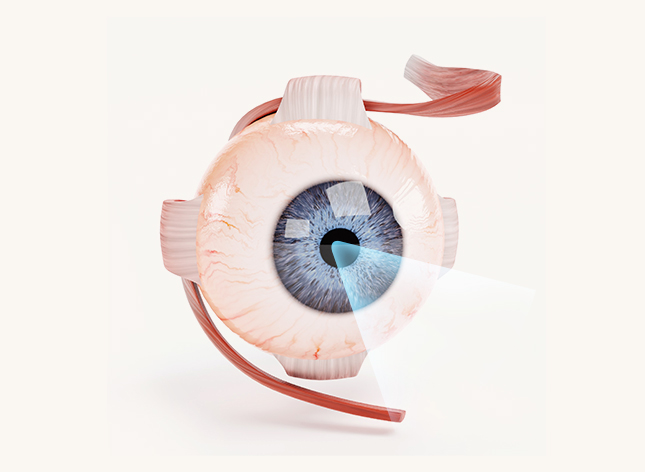
Night Vision Problems After Age 40: What Is Normal?
Understanding night vision changes — and when to see an ophthalmologist in Seoul
Q. What Is Normal Night Vision After 40? — Quick Answer
Night vision problems causes include pupil aging (senile miosis), lens yellowing, cataracts, glaucoma, and vitamin A deficiency. After age 40, it is normal to need more light and notice increased glare at night. However, sudden or one-sided changes, or severe halos, are not normal and require prompt evaluation by a board-certified ophthalmologist.
Q. What Are the Most Common Night Vision Problems Causes?
Night vision problems causes range from the completely normal — age-related pupil shrinkage — to the medically serious, such as glaucoma or retinal disease. In Seoul, where nearly 97% of young adults are myopic and the population is aging rapidly, night vision concerns are among the most common reasons patients visit an ophthalmologist in Yeongdeungpo, Guro, and Gasan. The good news: most causes are identifiable and many are treatable.
Night Vision & Eye Health in Korea: Key Statistics
- ▸ Over 97% of Korean men aged 19–25 are myopic — the highest rate globally, affecting lens clarity at all light levels
- ▸ Cataracts affect approximately 40% of Koreans over age 60, making them the leading cause of glare and night vision problems in Seoul
- ▸ Glaucoma prevalence in Korea is approximately 3.5% among adults over 40 — and rising, with night vision often the earliest functional loss
- ▸ Dark adaptation slows by ~30% per decade after age 40 due to rod photoreceptor and pigment changes
Q. What Causes Night Vision to Decline — and What Can Be Done?
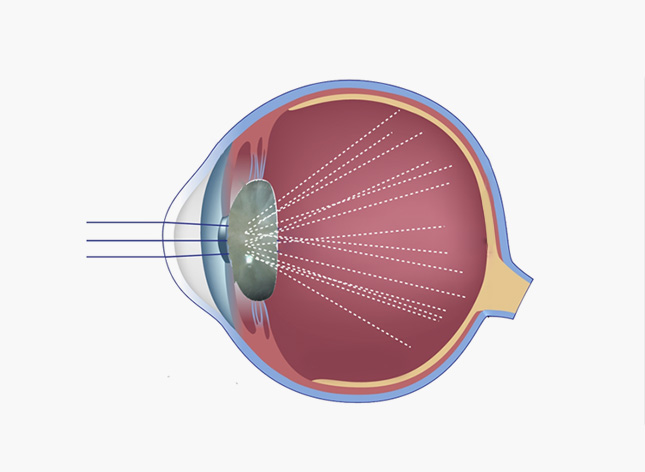
The primary night vision problems causes after 40 include: (1) Pupil senile miosis — the pupil becomes smaller and slower to dilate, admitting less light. This is a normal aging change but can be noticeable when driving at night in dimly lit areas like Gwanak or Dongjak. (2) Lens yellowing and thickening — reduces light transmission by up to 50% by age 60. (3) Rod photoreceptor decline — the dim-light sensing cells in the retina decrease gradually with age.
Pathological causes include cataracts (light scattering and glare), glaucoma (rod cell loss from elevated intraocular pressure), retinitis pigmentosa (genetic rod-cell degeneration), and diabetic retinopathy. At Nunehim Eye Center in Guro, each of these is assessed with a comprehensive dilated eye exam including optic nerve evaluation.
Q. How Is Night Vision Evaluated at an Eye Clinic in Seoul?
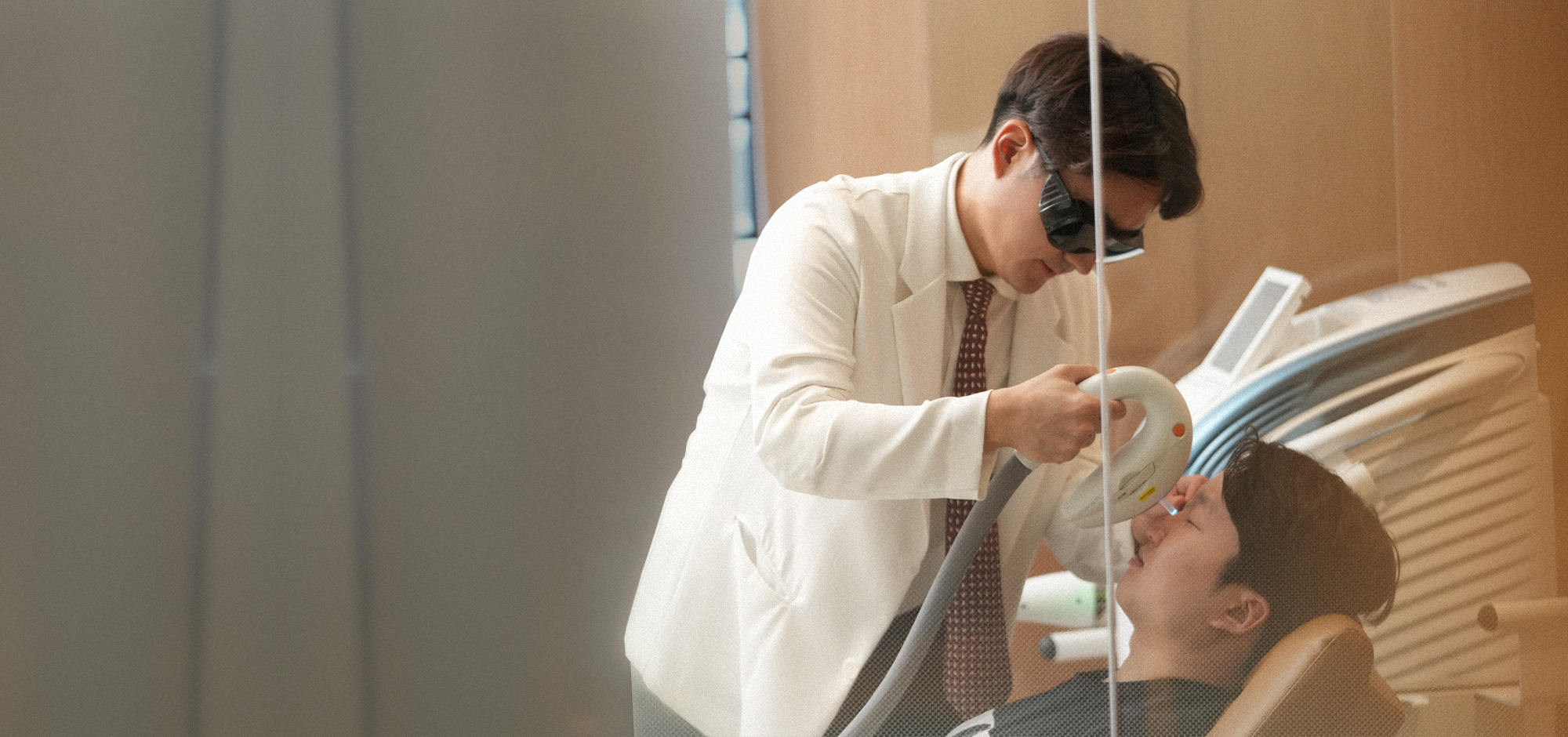
A comprehensive night vision evaluation at Nunehim Eye Center in Guro, Seoul includes visual acuity testing under dim illumination, contrast sensitivity assessment, slit-lamp examination of the lens and pupil, and dilated fundus examination of the optic nerve and retina. Where indicated, visual field testing or electroretinography may be performed. Patients from Yeongdeungpo, Gasan, and Gwanak can access full diagnostic services in a single visit.
For patients wearing OK lens (orthokeratology), a corneal topographic map of the reshaping zone is reviewed, as the transition zone can create nighttime halos in some individuals. Dr. Daniel Baik, board-certified ophthalmologist, adjusts lens parameters when halos are clinically significant.
Q. When Should I Seek Urgent Care for Night Vision Problems?
- Sudden loss of night vision in one or both eyes — may indicate retinal detachment or vascular occlusion
- Night vision loss accompanied by eye pain, redness, or light sensitivity — may indicate acute angle-closure glaucoma, a medical emergency
- New floaters, flashing lights, or a dark curtain across your vision alongside night vision decline
- Rapid progression of glare or halos over days to weeks, not months
- Night vision problems in a child — may indicate retinitis pigmentosa or vitamin A deficiency
Normal Aging
Gradual, symmetrical decrease in dim-light contrast sensitivity. Begins ~age 40. Slower dark adaptation when entering a dark room. Both eyes equally affected.
Cataracts
Significant glare and halos around headlights at night. Worse in winter Seoul air. Treatable with cataract surgery. Common over age 60 in Yeongdeungpo and Guro areas.
Glaucoma
Peripheral night vision loss occurs first as rod cells are damaged. Screenable with IOP and visual field testing. Early detection critical for patients in Gwanak and Gasan.
“When a patient over 40 visits our clinic in Guro with night vision complaints, the first question I ask is: is this happening in one eye or both? Bilateral gradual change is usually aging — but unilateral change, or rapid progression, means we need to look more carefully at the optic nerve and retina. Night vision is one of the most sensitive early indicators of glaucoma and retinal disease.”
— Dr. Daniel Baik, board-certified ophthalmologist, Nunehim Eye Center, Guro, Seoul
❓ Frequently Asked Questions: Night Vision Problems
Why does night vision get worse after age 40?
After age 40, the pupil naturally becomes smaller and less responsive to dim light — a process called senile miosis. The lens also thickens and yellows, reducing the amount of light reaching the retina by up to 50% by age 60. These changes are a normal part of aging, but they can feel alarming when you first notice difficulty driving at night in areas like Guro or Gwanak. A comprehensive eye exam at Nunehim Eye Center can confirm whether your night vision change is normal aging or a treatable condition.
What is the difference between normal aging and nyctalopia?
Normal aging causes gradual, symmetrical difficulty in dim-light environments. Nyctalopia — clinical night blindness — is a symptom that may indicate vitamin A deficiency, retinitis pigmentosa, advanced glaucoma, or other retinal disorders. If your night vision is deteriorating dramatically over months, or is worse in one eye than the other, this is not normal aging and warrants a dilated eye exam as soon as possible.
Can cataracts cause night vision problems in Seoul patients?
Yes — cataracts are one of the most frequent night vision problems causes among patients over 50 in Yeongdeungpo, Guro, and Gasan. The clouding lens scatters incoming light, producing glare halos around streetlights and oncoming headlights. If nighttime driving is becoming unsafe due to glare, cataract surgery may be appropriate. The procedure is quick, safe, and reliably restores night vision in most cases.
Does glaucoma affect night vision?
Glaucoma primarily damages the peripheral retinal nerve fibers, which contain rod photoreceptors responsible for dim-light and peripheral vision. Night vision and peripheral vision are often the first functional losses in glaucoma — sometimes before the patient notices anything. This is why regular intraocular pressure screening and visual field testing is recommended for adults over 40 in Seoul, particularly those with a family history of glaucoma.
Can OK lens (orthokeratology) affect night vision?
Some OK lens wearers notice mild halos or glare at night, especially during the first one to two months of wear. This occurs because the transition zone at the edge of the reshaped cornea diffracts light slightly. At Nunehim Eye Center, Dr. Daniel Baik customises OK lens fitting to minimise the optical zone edge effect. For most patients in our Guro and Gwanak practice, nighttime halos are mild and resolve as corneal reshaping stabilises within a few weeks.
Are there treatments for night vision problems?
Treatment depends on the cause. Cataracts are treated with surgery. Glaucoma is managed with pressure-lowering eye drops, laser procedures, or surgery depending on severity. Vitamin A deficiency is corrected with supplementation. Updated spectacle prescriptions with anti-reflective coatings significantly improve nighttime driving comfort for many patients. For patients attending Nunehim Eye Center from Yeongdeungpo or Gasan, same-day optical services are available.
When should I visit an ophthalmologist for night vision problems in Seoul?
You should visit promptly if night vision worsens suddenly, affects only one eye, or is accompanied by eye pain, floaters, flashing lights, or a curtain-like visual field defect. Routine evaluation is advisable if you are over 40 and notice progressive difficulty with nighttime driving. Nunehim Eye Center in Guro, Seoul offers comprehensive eye exams in both Korean and English, with convenient access from Yeongdeungpo, Gasan, Gwanak, and Dongjak via Guro Digital Complex Station.

Concerned About Your Night Vision? Book a Consultation in Guro, Seoul
Serving patients from Yeongdeungpo · Guro · Gasan · Gwanak · Dongjak
📍 Visit Nunehim Eye Center — Guro, Seoul
Convenient access from Guro, Gasan, Gwanak & Dongjak. Near Guro Digital Complex Station (Line 2).
📌 Address
551 Siheung-daero, Guro-gu, Seoul
nunehim.com
🕐 Hours
Mon–Fri: 09:00–18:30 (lunch 13:00–14:00)
Saturday: 09:00–14:00
🌐 Languages
Korean & English consultations available


Leave a comment