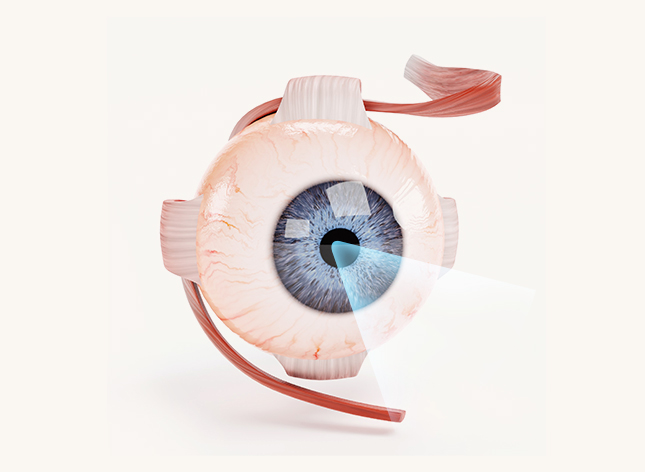
Meibomian Gland Dysfunction: The Hidden Cause of Chronic Dry Eye
Expert insight from Dr. Daniel Baik, board-certified ophthalmologist at Nunehim Eye Center — Guro · Seoul
Q. What is meibomian gland dysfunction and why does it cause dry eye?
Meibomian gland dysfunction (MGD) is a chronic condition in which the oil-secreting glands in the eyelid margins become blocked or produce abnormal secretions. Because these glands supply the oily outer layer of the tear film that prevents tears from evaporating too quickly, MGD is now recognised as the leading cause of evaporative dry eye worldwide — and the primary driver of the persistent dry eye epidemic seen among residents of Seoul’s Guro, Yeongdeungpo, Gasan, and Gwanak districts. Diagnosis and treatment by a board-certified ophthalmologist can restore gland function and significantly improve quality of life.
Q. What are the meibomian glands, and what do they do?
The meibomian glands are specialised sebaceous glands embedded vertically within the tarsal plates of the upper and lower eyelids. In a healthy adult, the upper lid contains approximately 25–40 glands and the lower lid 20–30. Each gland opens through a small orifice along the lid margin just behind the lash line. Their secretion — called meibum — is a complex mixture of lipids (waxes, esters, fatty acids, and cholesterol) that forms the outermost, lipid layer of the three-layer tear film. This lipid layer is critical: it reduces the evaporation rate of the aqueous tear layer underneath by more than 90%. When meibomian glands malfunction — due to obstruction, altered secretion chemistry, or reduced gland mass — the lipid layer thins and tears evaporate rapidly, leaving the ocular surface exposed and inflamed. This cycle is the root of evaporative dry eye disease, and it is frequently missed or underdiagnosed in primary care settings across Seoul.
Q. How common is MGD in Korea?
The burden of MGD-related dry eye disease in Korea is substantial and growing:
- ▸ Dry eye disease affects an estimated 10–33% of the Korean adult population; MGD accounts for the majority of evaporative dry eye cases
- ▸ Screen time among Korean adults averages over 8 hours per day — one of the highest globally — directly suppressing the blink reflex and stagnating meibomian secretions
- ▸ Contact lens wear, prevalent in Yeongdeungpo, Guro, and Gasan, is a recognised risk factor for accelerated meibomian gland dropout
- ▸ Fine dust (PM2.5) exposure, particularly in Seoul’s Guro and Gwanak industrial corridors, triggers ocular surface inflammation that worsens MGD-related lid margin disease
Q. What are the treatment options for meibomian gland dysfunction Seoul?
Treatment of MGD is stepwise and sustained. The essential first-line measure is daily warm compresses: apply a heated eye mask (40°C minimum, for 10 minutes) to melt solidified meibum, then perform gentle eyelid massage from the base of the lashes toward the lid margin to manually express the softened secretions. This at-home regimen, performed twice daily, forms the foundation of all MGD therapy — consistent adherence over 6–8 weeks is necessary to see meaningful improvement.
Lid hygiene — using diluted baby shampoo or commercial tea tree oil lid scrubs — removes debris, reduces Demodex colonisation, and decreases the bacterial load responsible for meibum degradation. For patients in Guro, Yeongdeungpo, and Gasan with moderate-to-severe MGD, Dr. Daniel Baik may recommend in-office meibomian gland expression under slit-lamp guidance, topical cyclosporine or lifitegrast anti-inflammatory drops, omega-3 fatty acid supplementation (EPA + DHA 2,000 mg daily), and short-course topical tetracycline therapy to normalise lipid chemistry. Meibography is used to monitor gland dropout and guide long-term management decisions.
Q. Who is most at risk for MGD in Seoul?
Several factors increase the risk of developing MGD, many of which are highly prevalent in Seoul’s urban population. Age is the strongest predictor: gland dropout increases with age, and posterior blepharitis-type MGD is common in adults over 40. Contact lens wear (especially extended wear or poor hygiene) accelerates meibomian gland dropout. High daily screen time dramatically reduces effective blink rate. Asian ethnicity is associated with a higher prevalence of obstructive MGD — with multiple Korean studies confirming rates substantially higher than in Western populations.
Additional risk factors include rosacea, Demodex infestation, use of systemic medications (particularly retinoids and antihistamines), and environmental exposure to fine dust and low-humidity environments — the latter two particularly relevant for residents of the Guro Digital Complex area, Gasan, Gwanak, and Yeongdeungpo who commute through Seoul’s industrial and commercial corridors daily.
Q. What symptoms suggest I should see an eye doctor for dry eye or MGD?
See a board-certified ophthalmologist promptly if you experience any of the following:
- Dry eye symptoms that have not improved after 4–6 weeks of regular artificial tear use
- Fluctuating vision during the day that clears briefly after blinking, especially during screen work
- Visible thickening, foaming, or oiliness along the eyelid margins
- Eyelid crusting or mattering each morning that does not resolve with simple lid hygiene
- Red, swollen, or inflamed eyelid margins (blepharitis)
- Symptoms that worsen markedly on high fine-dust days in Guro or Gwanak
- Dry eye in the context of planned refractive surgery (TransPRK/LASEK or OK lens therapy) — MGD must be controlled before surgery
Residents of Gasan, Yeongdeungpo, Gwanak, and Guro can visit Nunehim Eye Center for comprehensive meibomian gland assessment including slit-lamp evaluation and meibography.
Mild MGD
Mildly inspissated secretions, minimal gland dropout on meibography. Symptoms manageable. Treatment: warm compresses + lid hygiene twice daily, omega-3 supplementation. 6–8 weeks for improvement.
Moderate MGD
Turbid or granular secretion, partial gland dropout. Intermittent blurred vision. Adds in-office gland expression, topical anti-inflammatory drops (cyclosporine), and short-course tetracycline therapy. Regular follow-up every 3 months.
Severe MGD
No expressible secretion, significant gland dropout on meibography, corneal staining. Intensive treatment protocol. May require referral for advanced lid therapy, oral omega-3, and long-term anti-inflammatory maintenance. See Dr. Daniel Baik at Nunehim Eye Center, Guro.
From Dr. Daniel Baik
“Meibomian gland dysfunction is the most underdiagnosed condition I see in patients from Guro, Yeongdeungpo, and Gasan. Many people with persistent dry eye, blurred vision, or red eyes have been treating the symptom rather than the cause — they’ve been using artificial tears for years without ever having their eyelid glands assessed. As a board-certified ophthalmologist, I use slit-lamp evaluation and meibography to identify exactly how much gland function remains, and we build a personalised treatment plan from there. Warm compresses consistently done correctly, lid hygiene, and in-office expression can make a dramatic difference. Early treatment also matters enormously — once gland tissue is lost to dropout, it cannot regenerate.”
— Dr. Daniel Baik, Board-Certified Ophthalmologist · Nunehim Eye Center (눈에힘안과), Guro-gu, Seoul · nunehim.com
❓ Frequently Asked Questions: Meibomian Gland Dysfunction Seoul
What exactly is meibomian gland dysfunction (MGD)?
Meibomian gland dysfunction (MGD) is a chronic, diffuse abnormality of the meibomian glands — the oil-secreting glands along the eyelid margin — characterised by terminal duct obstruction and/or qualitative or quantitative changes in their secretion. Because the oil layer (lipid layer) of the tear film is critically dependent on meibomian secretion, MGD leads to rapid tear evaporation, ocular surface inflammation, and the symptoms of dry eye disease. MGD is now recognised as the leading cause of dry eye worldwide, including among patients in Seoul, Yeongdeungpo, Guro, and Gasan.
What are the most common symptoms of MGD-related dry eye?
Symptoms of MGD-related dry eye include a burning or stinging sensation, persistent dryness or grittiness, intermittent blurred vision that clears with blinking, redness, light sensitivity, and paradoxical watery eyes (reflex tearing in response to surface irritation). Many patients also notice crusting or oiliness along the eyelid margins, and eyelashes that stick together on waking. Symptoms are frequently worse in air-conditioned environments, during screen use, or on days with low humidity or high fine dust (PM2.5) — conditions very common in Seoul’s Guro, Gwanak, and Yeongdeungpo districts.
How is MGD diagnosed at an eye clinic?
Diagnosis of MGD is clinical, based on slit-lamp biomicroscopy of the eyelid margins and meibomian gland orifices. Dr. Daniel Baik, board-certified ophthalmologist at Nunehim Eye Center in Guro, assesses the gland orifice appearance (plugging, vascularity, keratinisation), the quality of meibomian secretion expressed by gentle compression (clear liquid vs. turbid, granular, or toothpaste-like secretion), and the tear film stability using tear break-up time (TBUT). Meibography — infrared imaging of the glands — can reveal gland dropout (permanent loss) that guides prognosis and treatment intensity.
Is MGD related to blepharitis?
Yes — MGD and blepharitis frequently coexist and are often considered part of a continuous spectrum of eyelid disease. Anterior blepharitis affects the eyelid skin and lash follicles, while posterior blepharitis is synonymous with MGD. Demodex mite infestation (Demodex folliculorum and Demodex brevis) is an increasingly recognised contributor to both conditions in Korean patients, particularly those over 40. A comprehensive eyelid evaluation at Nunehim Eye Center in Guro, Seoul, helps distinguish and treat each component appropriately.
How is MGD treated in Korea?
Treatment of MGD in Seoul is stepwise. The cornerstone is warm compress therapy — applying a heated mask (at least 40°C for 10 minutes) to melt solidified meibum, followed by eyelid massage to express the softened secretions. Twice-daily lid hygiene with dilute baby shampoo or commercial lid scrub pads removes debris and reduces bacterial load. Omega-3 fatty acid supplementation has moderate evidence for improving meibomian secretion quality. For more severe cases, in-office meibomian gland expression and topical anti-inflammatory therapy (cyclosporine or lifitegrast drops) may be prescribed. At Nunehim Eye Center in Guro, Dr. Daniel Baik tailors a treatment protocol based on gland assessment and tear-film analysis, serving patients from across Yeongdeungpo, Gasan, and Gwanak.
Can screen time and digital device use worsen MGD?
Yes — significantly. Studies consistently show that the blink rate decreases by up to 66% during focused screen use, from a normal 15–20 blinks per minute to as few as 5–7. Incomplete blinks (where the eyelid does not fully close) are even more common than reduced total blinks. This means meibomian glands are not adequately expressed during normal daily activity, leading to stasis, inspissation of secretions, and gland obstruction. Korea’s average screen time among adults exceeds 8 hours daily, making digital device use one of the primary drivers of MGD and dry eye across Seoul — including high-density residential and commercial zones in Yeongdeungpo, Guro, and Gasan.
When should someone with dry eye see an ophthalmologist in Seoul?
You should see a board-certified ophthalmologist if your dry eye symptoms persist despite regular artificial tear use, if you experience significant fluctuating vision that affects daily activities such as driving or reading, if your symptoms are worsening over time, or if you notice thickened or absent secretions when you gently press the eyelid margin. Patients considering refractive surgery (TransPRK/LASEK or OK lens/orthokeratology) should always be screened for MGD beforehand, as unmanaged dry eye can compromise surgical outcomes. Nunehim Eye Center in Guro serves residents of Gwanak, Gasan, Yeongdeungpo, and surrounding Seoul districts with comprehensive dry eye evaluations.

Struggling with Chronic Dry Eye? Get a Meibomian Gland Evaluation in Seoul
Dr. Daniel Baik, board-certified ophthalmologist · Korean & English consultations · Guro, Seoul · nunehim.com
📍 Visit Nunehim Eye Center — Guro, Seoul
Convenient access from Guro, Gasan, Gwanak & Dongjak. Near Guro Digital Complex Station (Line 2).
📌 Address
551 Siheung-daero, Guro-gu, Seoul
nunehim.com
🕐 Hours
Mon–Fri 09:00–18:30 (lunch 13:00–14:00)
Sat 09:00–14:00
🌐 Languages
Korean & English consultations available


Leave a comment