Colour Blindness: Types, Testing & Life in Seoul
A board-certified ophthalmologist guide for Yeongdeungpo, Guro & Gasan residents
Q. What is colour blindness, in short?
Colour blindness, or colour vision deficiency, is an inherited or acquired difficulty distinguishing certain colours, most often red and green, caused by malfunctioning cone photoreceptors in the retina. It is diagnosed with an Ishihara colour blindness test, and while there is no cure for the inherited form, an accurate diagnosis at an eye clinic in Seoul helps patients plan for school, work, and daily life.
Q. What is colour blindness?
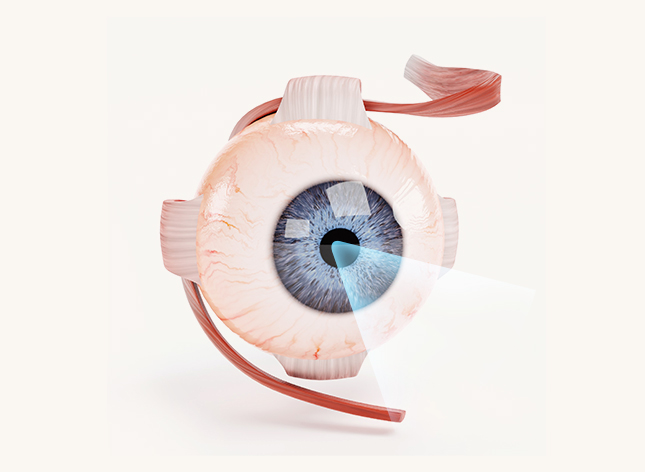
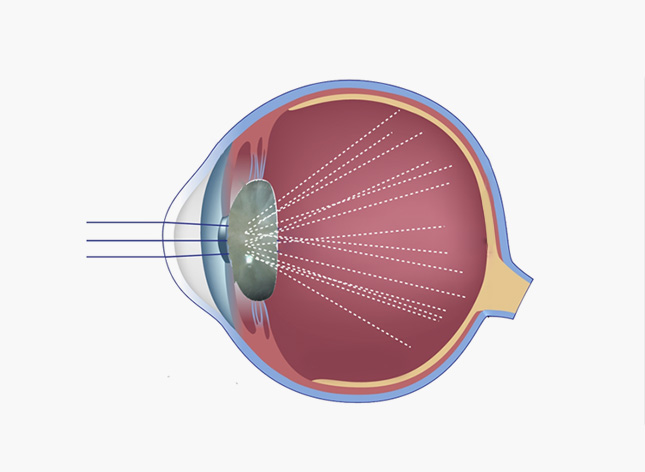
Colour vision depends on three types of cone cells in the retina, each tuned to red, green, or blue wavelengths of light. When one or more cone types function abnormally, the brain cannot distinguish certain colours normally. Red-green colour blindness (protan and deutan types) is by far the most common form. Blue-yellow colour blindness (tritan type) is rarer, and total colour blindness, or achromatopsia, is extremely rare. Congenital colour blindness is inherited in an X-linked recessive pattern, present from birth, and stays stable over a lifetime. Acquired colour vision loss develops later from conditions such as cataract, glaucoma, diabetic retinopathy, or optic nerve disease, or from certain medications, and often affects blue-yellow discrimination first.
Q. What are the symptoms and signs?
- Difficulty telling red and green apart, especially in dim light
- Confusing similar shades such as brown and green, or blue and purple
- Trouble reading colour-coded charts, maps, or graphs
- Children may colour objects with unexpected colours or struggle with colour-based classroom activities
- No pain or blurred vision – visual acuity is otherwise normal
Colour Blindness in Korea: The Numbers
- ▸ Roughly 5.9% of Korean men and about 0.4% of Korean women have congenital red-green colour blindness, according to Korean ophthalmologic survey data.
- ▸ Colour vision testing is a required part of the mandatory military conscription physical exam for young men in Korea.
- ▸ Total colour blindness, or achromatopsia, affects an estimated 1 in 30,000 to 50,000 people worldwide.
- ▸ Because the condition is X-linked, sons of colour-blind fathers are not affected, but daughters become carriers.
Q. How is colour blindness diagnosed and managed?
The Ishihara plate test is the standard first-line screening tool. The patient identifies numbers or patterns hidden within a pattern of coloured dots, and the test takes only a few minutes at any eye clinic, including ours in Yeongdeungpo.
For a more detailed diagnosis, the Farnsworth D-15 arrangement test and the anomaloscope grade the severity as mild, moderate, or severe, and classify the exact type as protan, deutan, or tritan. Congenital colour blindness has no cure, so management focuses on practical support: colour-enhancing glasses, smartphone apps that identify colours through the camera, labelled clothing, and adapted classroom or workplace materials. Acquired colour vision loss is managed by treating the underlying cause, such as cataract surgery, better diabetes control, or stopping an offending medication.
Q. How does colour blindness affect daily life in Seoul?
In practice, most colour-blind residents of Seoul manage daily tasks without major difficulty. Seoul subway lines are identified by number as well as colour, and traffic signals follow a fixed top-to-bottom arrangement that colour-blind drivers learn to read by position rather than colour alone.
Korean context matters for a few specific situations: the conscription physical exam grades colour-deficient recruits differently for specialty assignments such as pilot roles, and certain electrical, wiring, and transportation jobs may require an official colour vision certificate. Patients in Yeongdeungpo, Guro, and Gasan who need this documentation for school or employment can obtain a formal Ishihara and anomaloscope report at our clinic.
Q. When should you see a doctor in Seoul?
- Any adult noticing a new difficulty with colours, which suggests an acquired cause rather than a congenital one and needs prompt evaluation
- Before a mandatory military conscription physical or a job or license application that requires a colour vision certificate
- Parents noticing a child consistently confusing colours past age four or five
- Sudden colour distortion in one eye only, which may signal optic neuritis or another urgent condition and needs same-day care
- Residents of Yeongdeungpo, Guro, Gasan, or Gwanak who need an official colour vision report for school or work
Protanopia / Protanomaly
Red-cone deficiency. Reds appear darker and can be confused with black or dark green.
Deuteranopia / Deuteranomaly
Green-cone deficiency and the most common form. Reds and greens both appear muted and similar.
Tritanopia / Tritanomaly
Blue-cone deficiency and rare. Blues are confused with greens, and yellows with violets.
In my clinic in Yeongdeungpo, I see colour blindness most often at two points in life: during the first school vision check for a young child, and just before the mandatory military conscription physical for a young man. An accurate Ishihara and anomaloscope diagnosis does not change the colour vision itself, but it gives patients and families clarity, and in Korea that clarity often matters for school, work, and service assignments.
– Dr. Daniel Baik, board-certified ophthalmologist, Nunehim Eye Center
❓ Frequently Asked Questions
Q. Can colour blindness be cured?
No. Inherited red-green or blue-yellow colour blindness is a permanent, non-progressive condition because it is caused by the genetic structure of the cone photoreceptors themselves. Colour-enhancing glasses and smartphone apps can improve day-to-day colour discrimination for some patients, but they do not restore normal colour vision.
Q. Does colour blindness affect Korean military service?
Colour vision is tested at every conscription physical exam. Mild colour deficiency usually does not exempt a person from service, but it can affect eligibility for specific roles that depend heavily on colour discrimination, such as pilot duty or certain technical specialties. A formal diagnosis from an eye clinic helps clarify the grading.
Q. Can a colour-blind person still get a driver licence in Korea?
In Korea, a standard driver licence is generally not restricted by colour blindness, since traffic signals follow a fixed top-to-bottom or left-to-right arrangement that colour-blind drivers learn to read by position. Certain professional licences, such as commercial pilot or some public transport roles, do require a colour vision certificate.
Q. Is colour blindness more common in men than women?
Yes. The most common forms are inherited on the X chromosome, so men, who have only one X chromosome, need just one altered gene copy to be colour blind, while women need two. This is why red-green colour blindness affects roughly 5.9% of Korean men but only about 0.4% of Korean women.
Q. Can colour blindness develop later in life?
Yes. This is called acquired colour vision deficiency, and unlike the inherited form it can affect one eye only and often worsens over time. Common causes include cataracts, diabetic retinopathy, glaucoma, optic nerve disease, and certain medications. Any adult noticing new colour changes should see an ophthalmologist promptly.
Q. What is the Ishihara test and how long does it take?
The Ishihara test uses a series of plates filled with coloured dots that form numbers or patterns visible to people with normal colour vision but hidden or altered for people with colour vision deficiency. It takes about five minutes and is usually the first screening step before more detailed testing such as the anomaloscope.
Q. Where can I get a colour vision test near Yeongdeungpo or Guro?
Nunehim Eye Center in Yeongdeungpo-gu offers Ishihara screening and detailed colour vision assessment for patients from Yeongdeungpo, Guro, Gasan, and Gwanak, including official documentation for school, employment, or conscription purposes, with both Korean and English consultations available.
Book a Colour Vision Consultation
nunehim.com
📍 Visit Nunehim Eye Center — Guro, Seoul
Convenient access from Guro, Gasan, Gwanak & Dongjak. Near Guro Digital Complex Station (Line 2).
Address: 551 Siheung-daero, Guro-gu, Seoul / nunehim.com
Hours: Mon-Fri 09:00-18:30 (lunch 13-14), Sat 09:00-14:00
Languages: Korean & English


Leave a comment