Night Driving Difficulty: Causes and Solutions for Drivers in Seoul
Why night driving feels harder — and what actually helps — from Nunehim Eye Center, Yeongdeungpo-gu
Q. Why is night driving difficulty so common, and what helps?
Night driving difficulty affecting the eyes — glare, halos around headlights, blurred road signs — usually comes from one or more treatable causes: an outdated glasses or contact lens prescription, early cataracts, dry eye, or residual effects from previous refractive surgery. Because pupils dilate more in low light, any imperfection in how light focuses on the retina becomes far more noticeable after dark. A comprehensive eye exam at our Yeongdeungpo-gu clinic can usually identify the specific cause within a single visit, and most patients see meaningful improvement once it’s addressed.
Q. What causes night driving difficulty for the eyes?
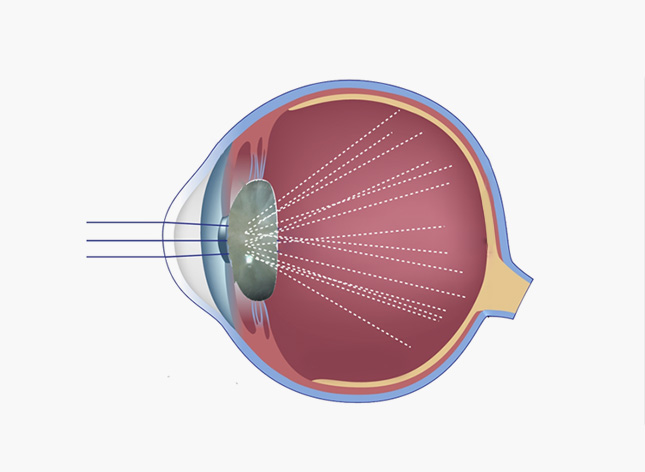
Several overlapping issues make night driving harder as vision changes: uncorrected or under-corrected refractive error (especially astigmatism) scatters light into halos; naturally larger pupils at night exaggerate any optical imperfection; early cataracts scatter oncoming headlight glare before it reaches the retina; dry eye disrupts the tear film that light passes through, creating starbursts around lights; and reduced contrast sensitivity — a common, often overlooked age-related change — makes it harder to distinguish a dark-clothed pedestrian or a faded lane marking from the road itself. Patients who have had older-generation refractive surgery sometimes report more halos at night due to higher-order aberrations, which is one reason we discuss night vision profiles carefully before any procedure at our Guro-area clinic.
Q. What are the signs you should get your eyes checked?
- Headlights and streetlights appear surrounded by halos or starbursts
- Oncoming headlights cause noticeably more glare than they used to
- You find yourself avoiding night driving on the way home to Gasan, Gwanak, or other outer areas of Seoul
- Road signs and lane markings look blurrier after dark than during the day
- Your eyes feel dry, gritty, or tired specifically during evening or night drives
Why This Matters for Drivers in Seoul
▸ Contrast sensitivity — the ability to distinguish objects from their background — naturally declines from around the mid-40s onward, even in people with otherwise normal visual acuity.
▸ Dry eye is reported at high rates among adults in Korea, particularly in cities like Seoul with heavy screen use, air pollution, and indoor heating/air conditioning — all of which can worsen night glare symptoms.
▸ Some degree of lens clouding (early cataract change) is common well before it becomes noticeable in daytime vision, and it often shows up first as night driving difficulty.
▸ Patients commuting through Yeongdeungpo, Guro, and Gasan often mention evening expressway driving as the first place they notice symptoms, since higher speeds and oncoming headlights make even mild glare more disruptive.
Q. How is night driving difficulty treated?
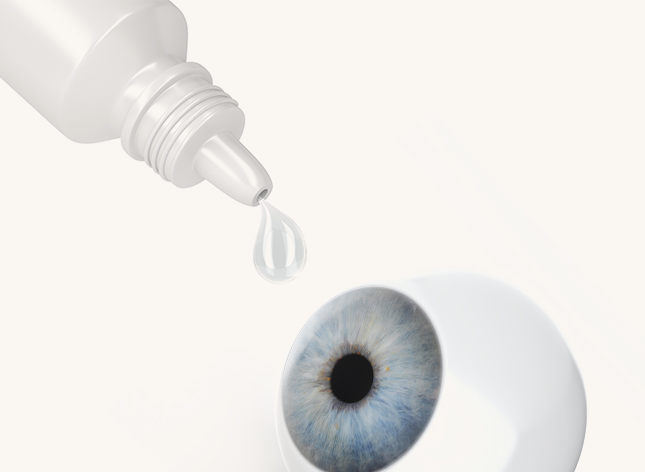
Treatment depends entirely on the underlying cause. An updated glasses or contact lens prescription with a quality anti-reflective coating resolves many cases on its own. Dry eye — a frequent contributor — responds well to a structured treatment plan that may include preservative-free artificial tears, warm compresses, or in-office treatment for meibomian gland dysfunction. When cataracts are the cause, modern cataract surgery with astigmatism-correcting intraocular lenses can dramatically reduce glare and halos.
For patients who’ve had prior refractive surgery, a careful refraction and corneal topography check can reveal whether residual astigmatism or a pupil-size mismatch is contributing — something we evaluate specifically for patients from Guro, Gasan, and Yeongdeungpo who come in with night glare complaints after procedures done elsewhere.
Q. Can vision correction choice affect night driving?
Yes — vision correction method matters for night driving comfort. At Nunehim Eye Center we do not perform SMILE LASIK; we specialize in TransPRK (2-Day LASEK) and orthokeratology (OK lens), both allowing careful, individualized planning around pupil size and higher-order aberrations — factors closely tied to nighttime glare and halos. For patients who prefer not to have surgery, a properly fitted OK lens can reshape the cornea overnight, often reducing night driving difficulty from residual refractive error without daytime dependence on glasses or contacts.
Q. When does night driving difficulty need urgent evaluation?
- Sudden onset of glare or halos in one eye only, especially with new floaters or flashes of light
- Sudden vision loss or a curtain-like shadow affecting part of your visual field while driving
- Glare accompanied by eye pain, redness, or headache
- A sudden, significant change in prescription strength needed to see clearly at night
- Any of the above occurring after a recent eye injury or eye surgery
Optical Causes
Refractive error, astigmatism, and post-surgical higher-order aberrations that scatter light into halos.
Ocular Surface
Dry eye, tear film instability, and meibomian gland issues that create glare around lights.
Lens & Retina
Early cataracts and reduced contrast sensitivity that make low-light driving harder.
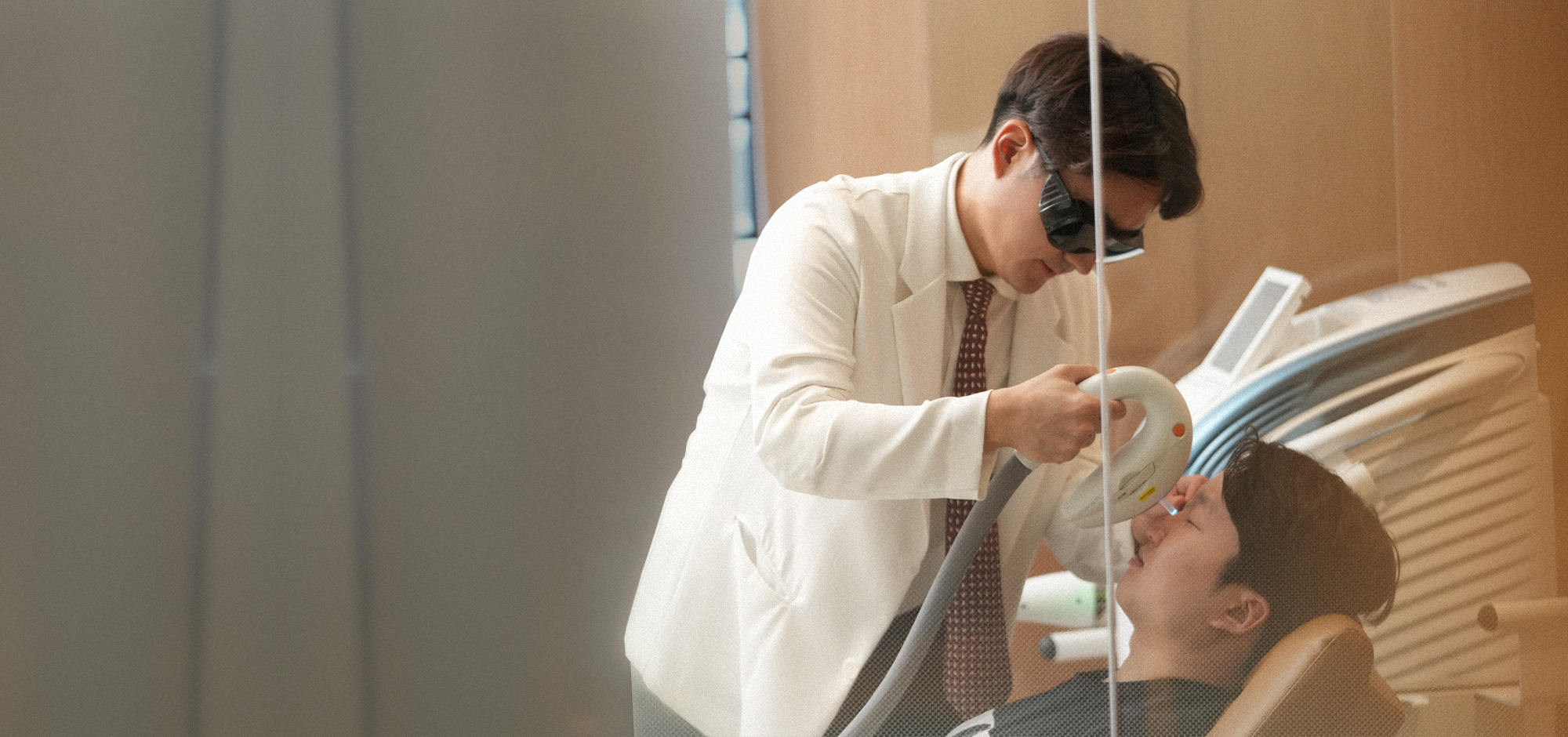
“Night driving complaints are some of the most satisfying to treat, because the cause is almost always identifiable and very often correctable — patients are surprised how much difference a proper prescription update or dry eye treatment can make.”
— Dr. Daniel Baik, board-certified ophthalmologist, Nunehim Eye Center
❓ Frequently Asked Questions
Q. Why do headlights look like they have starbursts around them at night?
This is usually caused by irregular light scatter from an uncorrected refractive error, dry eye affecting the tear film, or early cataract changes — all of which are diagnosable during a comprehensive exam.
Q. Is night driving difficulty a sign of cataracts?
It can be one of the earliest signs, often appearing before cataracts are noticeable in daytime vision, which is why an eye exam is worthwhile even if your day vision still feels fine.
Q. Can dry eye really affect night driving?
Yes — an unstable tear film scatters light passing through it, which commonly shows up as glare or starburst patterns around headlights and streetlights.
Q. Will new glasses fix my night driving problems?
Often, yes, especially with an anti-reflective coating, though it depends on whether refractive error is the primary cause versus dry eye or early cataracts.
Q. Does OK lens help with night driving vision?
A well-fitted OK lens can improve night vision by correcting refractive error more precisely for some patients, though fit and candidacy should be evaluated individually.
Q. I had refractive surgery years ago and now have night glare — is that normal?
Some patients notice increased night glare after older refractive procedures; a current evaluation can determine whether residual astigmatism or other factors are contributing and whether they’re treatable.
Q. Where can I get an evening vision evaluation near Gasan or Guro?
Nunehim Eye Center in Yeongdeungpo-gu offers comprehensive exams that assess refractive error, dry eye, and lens clarity together, with both Korean and English consultations for patients throughout Guro, Gasan, and Gwanak.

Book a Consultation
Nunehim Eye Center · nunehim.com · Yeongdeungpo-gu, Seoul
📍 Visit Nunehim Eye Center — Guro, Seoul
Convenient access from Guro, Gasan, Gwanak & Dongjak. Near Guro Digital Complex Station (Line 2).
551 Siheung-daero, Guro-gu, Seoul
nunehim.com
Mon–Fri 09:00–18:30 (lunch 13–14)
Sat 09:00–14:00
Korean & English


Leave a comment