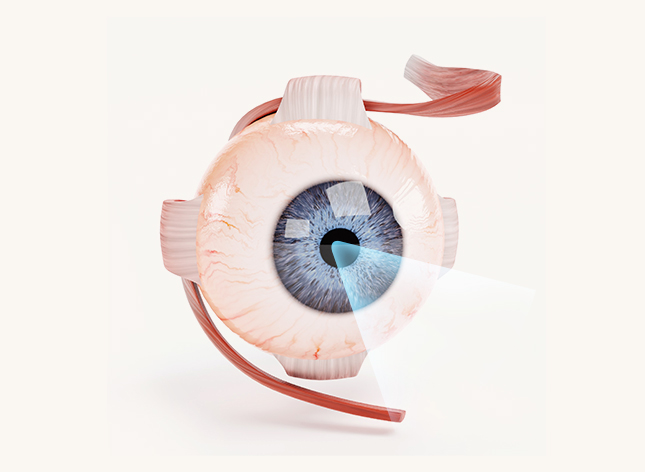
Headache and Eye Pain: When It Could Be a Sight-Threatening Condition
What patients in Yeongdeungpo, Guro, Gasan, and Gwanak, Seoul need to know
Quick Answer: When Is This an Emergency?
Sudden, severe eye pain with headache, blurred vision, halos around lights, and nausea or vomiting can signal acute angle-closure glaucoma, a sight-threatening emergency requiring same-day treatment. Most other causes of headache eye pain, such as eye strain, dry eye, or migraine, are not emergencies but still deserve evaluation if they are frequent or worsening.
Q. What causes headache and eye pain together?
Headache and eye pain frequently occur together because the trigeminal nerve carries sensation from both the eyes and much of the face and scalp. Common causes range from harmless and self-limited, such as digital eye strain, dry eye, and uncorrected refractive error, to more serious conditions including migraine, sinusitis, optic neuritis, uveitis, and acute angle-closure glaucoma. Because the range of causes for headache eye pain is so wide, an eye exam is often the fastest way to narrow down the diagnosis.
Q. What symptoms suggest something serious?
- Sudden blurring or loss of vision alongside the headache
- Halos or rainbow rings appearing around lights
- Severe, one-sided eye pain accompanied by nausea or vomiting
- A red, hard, or firm-feeling eye
- Headache that is the ‘worst of your life’ or comes on abruptly
Any of these features warrants same-day evaluation rather than waiting to see if symptoms improve on their own.
Headache and Eye Disease in Korea: Key Statistics
- ▸ Migraine affects an estimated 15–20% of Korean adults, with women affected roughly two to three times more often than men.
- ▸ Korean and other East Asian populations tend to have anatomically narrower anterior chamber angles, raising the population risk of acute angle-closure glaucoma compared to Western populations.
- ▸ Glaucoma remains one of the leading causes of irreversible blindness in Korea, and is frequently symptom-free until significant damage has occurred.
- ▸ Prompt pressure-lowering treatment during an acute angle-closure attack preserves vision in the large majority of cases when given within hours of onset.
Q. What are the treatment options?
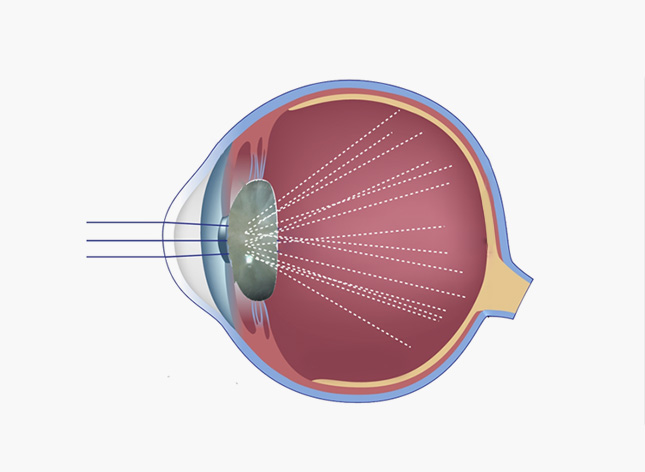
Treatment depends entirely on the underlying cause. Acute angle-closure glaucoma requires urgent pressure-lowering medication followed by laser peripheral iridotomy to create a permanent drainage pathway. Digital eye strain and dry eye respond well to lubricating drops, the 20-20-20 rule, and correcting any refractive error. Migraine-related eye pain is best managed in coordination with a neurologist, while sinus-related pain often resolves once the underlying sinus infection is treated.
At Nunehim Eye Center, we first determine whether the source of headache eye pain is ocular, and refer promptly to the appropriate specialist when it is not, so patients across Yeongdeungpo, Guro, and Gasan aren’t left guessing.
Q. What tests are used to diagnose the cause?
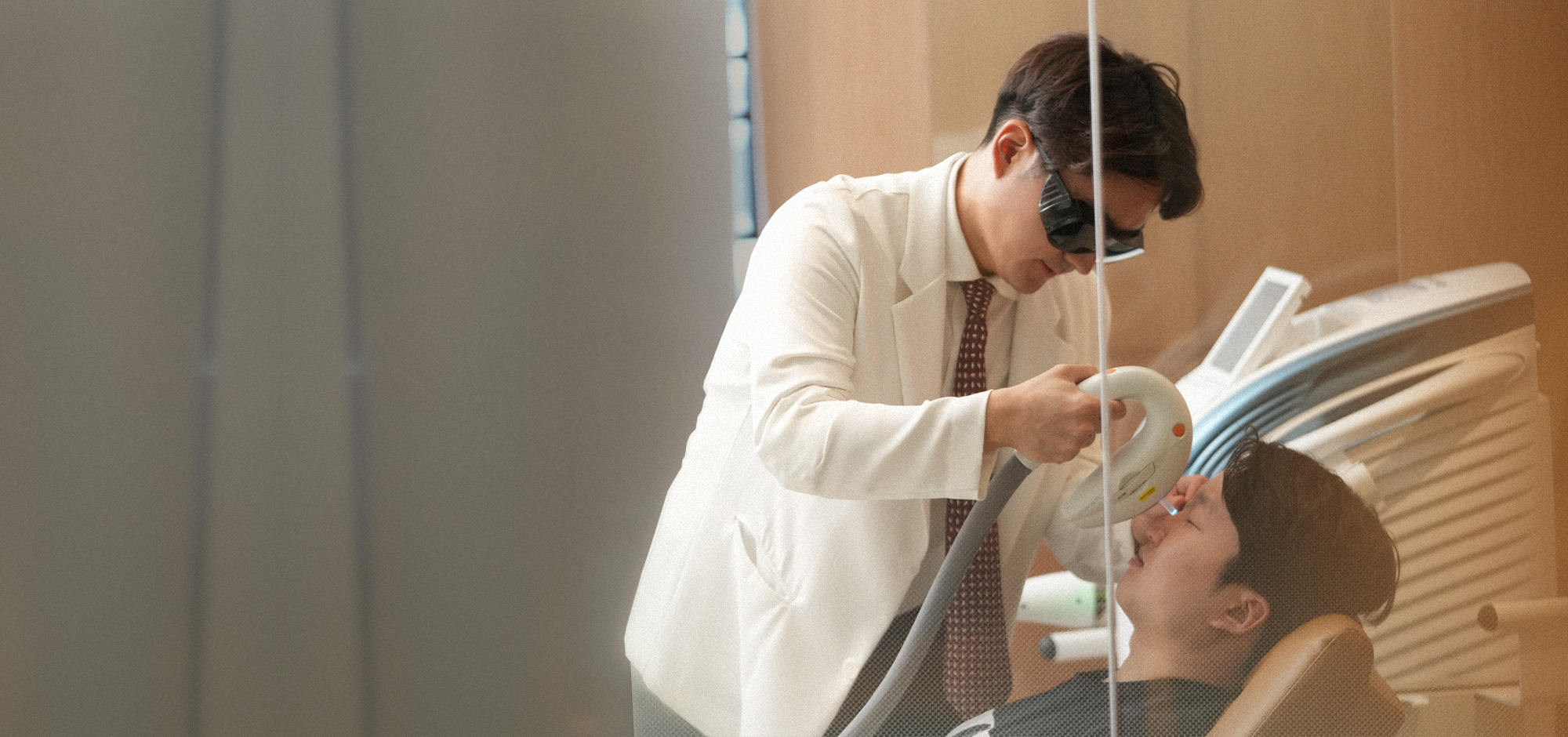
A focused workup typically includes tonometry to measure intraocular pressure, gonioscopy to examine the eye’s drainage angle, a dilated fundus exam, OCT imaging of the optic nerve, and a visual field test when glaucoma or optic nerve involvement is suspected. Most of these tests are completed in a single visit with same-day results.
For patients in Gwanak and nearby districts, urgent same-day appointments are available when acute symptoms are present.
Q. ER or eye doctor — which one first?
- Go to the emergency room or an emergency ophthalmology clinic immediately if you have severe eye pain with vomiting, halos around lights, or a hard red eye
- Seek a same-day eye exam for sudden vision changes, even without severe pain
- Schedule a prompt visit within a few days for recurring headaches linked to screen use, reading, or known dry eye
When in doubt, especially with sudden or severe symptoms, treat it as urgent and seek care the same day.
Eye Strain / Tension
Dull, band-like ache around the eyes and forehead that worsens with screen use and improves with rest. Not an emergency.
Migraine
Throbbing, often one-sided pain with light sensitivity and sometimes a visual aura. Managed with neurology and lifestyle triggers.
Acute Angle-Closure Glaucoma
Severe pain, halos, nausea, red firm eye. A true emergency requiring same-day treatment to protect vision.
A Note from Dr. Daniel Baik
“Not every headache is an eye problem, but when eye pain, blurred vision, and headache appear together, especially suddenly, I always want to see that patient the same day. In Seoul, where narrow-angle anatomy is more common, a same-day pressure check can be the difference between a full recovery and permanent vision loss.”
❓ Frequently Asked Questions
Q. Can eye strain from screens cause headaches?
Yes. Prolonged screen use reduces blink rate, causing dry eye and ciliary muscle fatigue that commonly produces a dull ache around or behind the eyes, often radiating to the temples or forehead. This is especially common among office workers in Yeongdeungpo and Gasan who spend long hours in front of monitors, and it is usually relieved with breaks, corrected refractive error, and dry eye treatment.
Q. What is acute angle-closure glaucoma and why is it more common in Korea?
Acute angle-closure glaucoma occurs when the drainage angle of the eye suddenly closes, causing eye pressure to spike rapidly. It produces severe eye pain, headache, blurred vision with halos around lights, and often nausea or vomiting. Korean and other East Asian populations tend to have anatomically shallower anterior chambers and narrower angles, which raises the population risk compared to Western populations, making awareness of this condition especially important for patients in Seoul.
Q. How can I tell if my headache is from my eyes or a migraine?
Eye-related headaches typically worsen with visual tasks and improve with rest or closing the eyes, while migraines often involve throbbing pain, light and sound sensitivity, and sometimes a visual aura before the headache begins. Because the two can overlap, an eye exam that rules out an ocular cause is a reasonable first step before pursuing neurology evaluation.
Q. Does uncorrected refractive error cause headaches?
Yes. Uncorrected nearsightedness, farsightedness, or astigmatism forces the eye muscles to work harder to maintain focus, which frequently causes frontal headaches, especially after reading or screen work. An updated glasses or contact lens prescription resolves this type of headache in most patients.
Q. Is sinus-related eye pain dangerous?
Sinus infections can cause pain around and behind the eyes that mimics an ocular problem, particularly with sinusitis affecting the frontal or ethmoid sinuses near the orbit. While usually not vision-threatening, severe or worsening sinus-related eye symptoms, especially with swelling or vision changes, should be evaluated promptly to rule out orbital complications.
Q. What tests will the eye doctor perform?
A workup for headache with eye pain typically includes tonometry to measure eye pressure, a dilated fundus exam, gonioscopy to assess the drainage angle, OCT imaging of the optic nerve, and a visual field test when glaucoma or optic nerve disease is suspected. Most of these tests are completed in a single visit.
Q. Should expats in Seoul worry about this condition?
Anyone experiencing sudden, severe eye pain with headache, especially with nausea, vomiting, or halos around lights, should seek same-day evaluation regardless of nationality. Nunehim Eye Center provides consultations in Korean and English for patients throughout Yeongdeungpo, Guro, Gasan, and Gwanak, so language should never be a barrier to prompt care.

Book a Consultation for Headache & Eye Pain
Nunehim Eye Center · nunehim.com · Korean & English consultations
📍 Visit Nunehim Eye Center — Guro, Seoul
Convenient access from Guro, Gasan, Gwanak & Dongjak. Near Guro Digital Complex Station (Line 2).
Address
551 Siheung-daero, Guro-gu, Seoul · nunehim.com
Hours
Mon–Fri 09:00–18:30 (lunch 13:00–14:00), Sat 09:00–14:00
Languages
Korean & English


Leave a comment