IPL vs Eye Drops for Dry Eye: Which Works Better for Office Workers?
A board-certified ophthalmologist’s guide for Seoul’s screen-heavy workforce
Q. Which works better — IPL or eye drops — for office worker dry eye?
For most office workers in Seoul with meibomian gland dysfunction — the leading cause of dry eye in screen-heavy jobs — IPL dry eye treatment addresses the underlying gland blockage and provides longer-lasting relief than eye drops alone, which mainly treat surface symptoms. The best results often combine both: IPL to restore gland function, and drops to maintain comfort between sessions.
Q. What is IPL dry eye treatment?
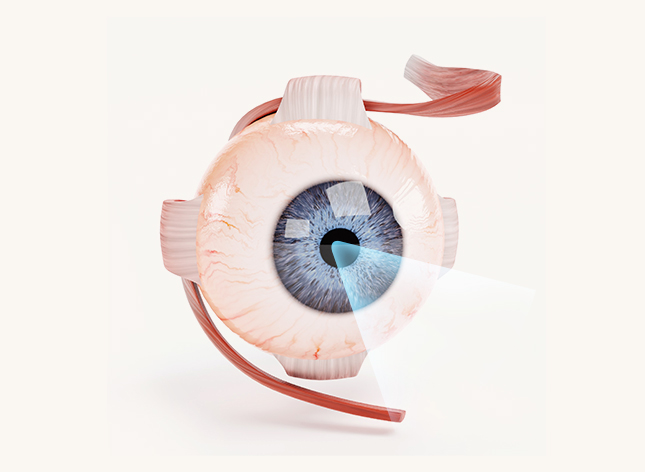
IPL dry eye treatment uses controlled pulses of light applied near the lower eyelid to reduce inflammation and unblock the meibomian glands — the tiny oil glands along the eyelid margin responsible for the outer lipid layer of the tear film. When these glands become blocked or atrophied, a condition called meibomian gland dysfunction (MGD), tears evaporate too quickly, leaving the eyes dry, gritty, and fatigued by midday. For office workers who spend eight or more hours in front of digital screens across Yeongdeungpo’s business towers and Gasan’s tech campuses, MGD is now understood to be the leading cause of dry eye disease, more common than reduced tear production alone.
Q. What are the symptoms of screen-related dry eye?
- Burning, stinging, or gritty sensation, especially in the afternoon
- Eyes that feel dry despite frequent blinking
- Blurred vision that improves temporarily after blinking
- Redness or heaviness around the eyelids
- Increased sensitivity to air conditioning or heating
- Difficulty wearing contact lenses for a full workday
Q. Why are office workers especially at risk?
Reduced blink rate during focused screen work is a major contributor. Commuters from Gwanak and Dongjak often add extra hours of screen exposure on their phones during long commutes into Guro and Yeongdeungpo, compounding time already spent looking at monitors at work. Air-conditioned and heated offices, common throughout Seoul’s business districts, further accelerate tear evaporation.
Dry Eye by the Numbers in Korea
- ▸ Over 70% of Korean office workers report dry eye symptoms related to prolonged screen use
- ▸ Meibomian gland dysfunction accounts for the majority of dry eye cases in Korean adults under 50
- ▸ Average blink rate drops by more than half during focused screen work, accelerating tear evaporation
- ▸ Patients in Seoul’s Guro and Yeongdeungpo business districts report longer daily screen exposure than the national average due to commute plus office hours
Q. What treatment options are available for office worker dry eye?
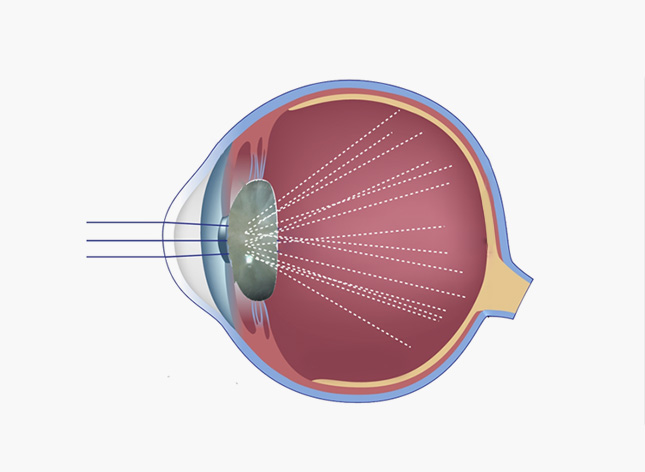
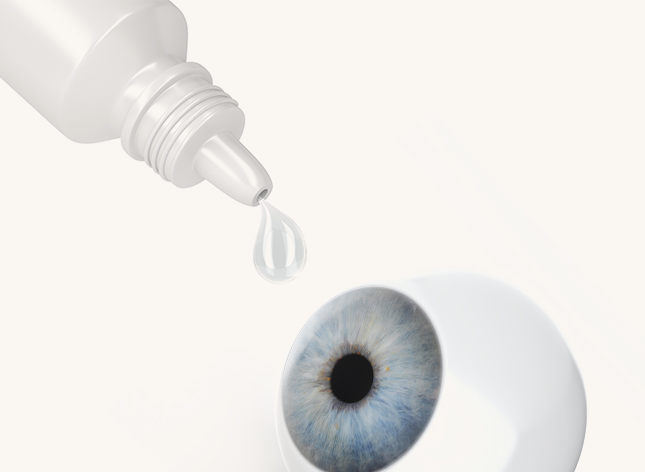
Eye drops remain the first line of treatment for mild dry eye. Preservative-free artificial tears, and in more persistent cases, prescription anti-inflammatory drops, help restore comfort by supplementing the tear film. However, drops address symptoms rather than the underlying gland dysfunction, so relief is often temporary and requires frequent reapplication throughout a workday.
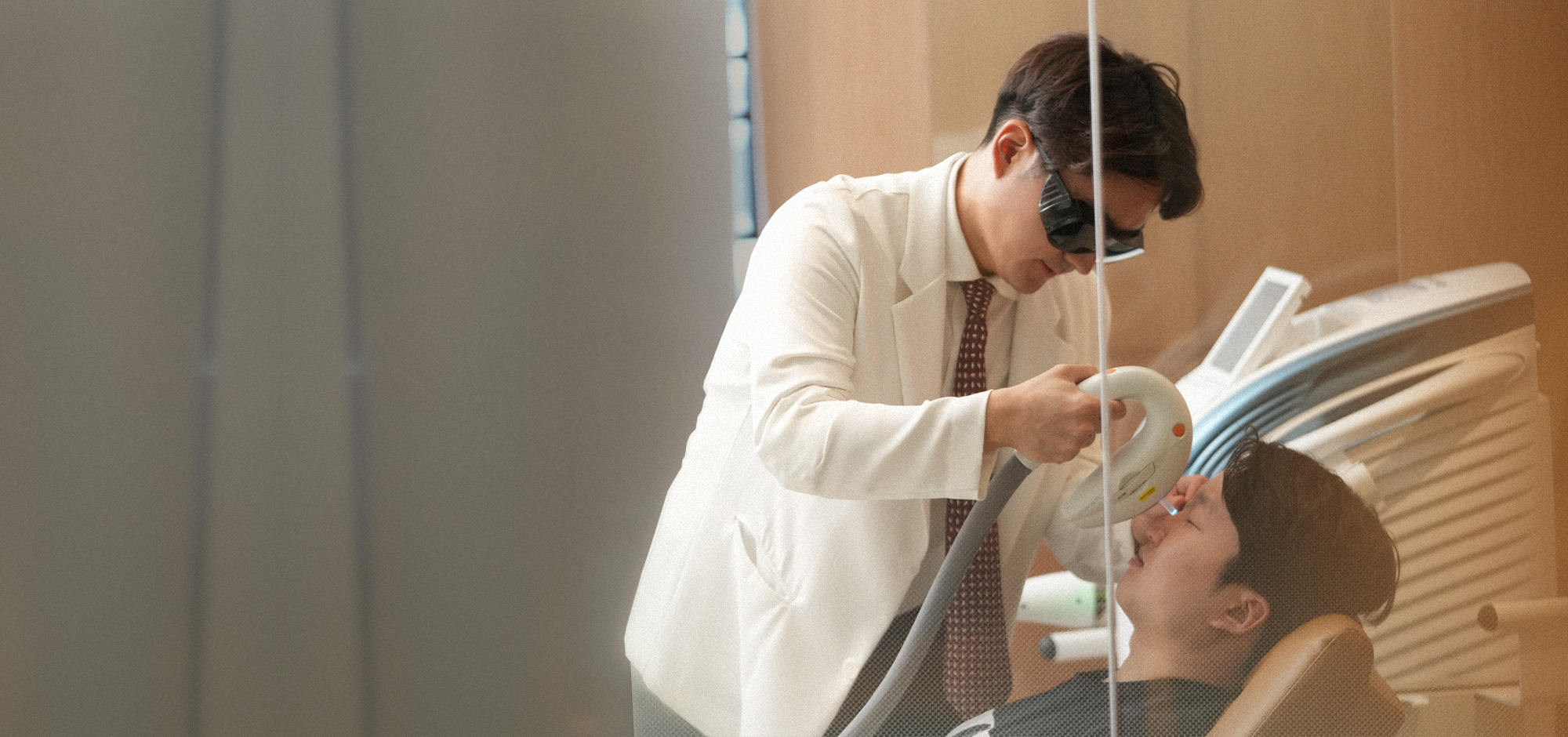
IPL therapy, performed using the Oasis M22 system at Nunehim Eye Center, targets the root cause by reducing inflammation around the meibomian glands and improving their ability to secrete oil. A typical course involves 3 to 4 sessions spaced 3 to 4 weeks apart, with many patients at our Guro clinic reporting noticeable improvement in tear stability after the second session.
Q. Can IPL and eye drops be used together?
Yes — combining both is often the most effective approach. Patients typically continue using lubricating drops during and after an IPL course, especially during Seoul’s dry winter months or in air-conditioned offices common across Gasan and Gwanak. IPL reduces how often drops are needed over time, but drops remain useful for day-to-day comfort, particularly for contact lens wearers or those reading fine print on monitors for long stretches.
Q. When should office workers see a doctor rather than self-treating?
- Symptoms persist for more than 2 to 3 weeks despite regular use of over-the-counter drops
- Eye pain, significant redness, or light sensitivity develops
- Vision fluctuates noticeably throughout the day
- Contact lens wear becomes uncomfortable or impossible
- Symptoms interfere with work performance or concentration
Mild
Occasional dryness, responds well to over-the-counter drops, no visible gland changes on exam.
Moderate
Daily symptoms, visible meibomian gland dropout on exam, typically a good candidate for IPL therapy.
Severe
Chronic inflammation and gland atrophy, often requiring combined IPL and prescription therapy.
“In my practice at Nunehim Eye Center, I see how much daily screen exposure affects office workers across Yeongdeungpo, Guro, and Gasan. IPL has changed how we manage moderate to severe dry eye because it treats the gland dysfunction directly rather than just masking symptoms. For many patients, it means finally getting through a workday without reaching for drops every hour.” — Dr. Daniel Baik, board-certified ophthalmologist
❓ Frequently Asked Questions
Q. How many IPL sessions are needed for dry eye relief?
Most patients complete 3 to 4 sessions spaced 3 to 4 weeks apart. Many notice improved tear stability and reduced burning after the second session, though full benefit is typically assessed after the complete course.
Q. Is IPL treatment painful?
No. Patients describe IPL as a mild warming or slight snapping sensation on the skin near the lower eyelid. Protective eye shields are worn throughout, and the procedure takes about 15 to 20 minutes per session.
Q. Are eye drops enough if I only have mild dry eye?
For mild, occasional dryness without visible gland changes, preservative-free artificial tears are often sufficient. An eye exam can confirm whether meibomian gland dysfunction is present before deciding on IPL.
Q. How long do IPL results last?
Many patients maintain improvement for 6 months to a year after completing a course, with occasional maintenance sessions recommended, especially for those with heavy daily screen exposure.
Q. Can I go back to work immediately after an IPL session?
Yes. There is no downtime. Most patients return directly to the office after their appointment, which makes it practical for those working in Yeongdeungpo, Guro, or Gasan business districts.
Q. Does IPL work for contact lens wearers?
Yes, and it often helps significantly. Many contact lens wearers with meibomian gland dysfunction find they can extend comfortable wear time after completing an IPL course, though lenses should be removed before each session.
Q. Is IPL covered by insurance in Korea?
IPL for dry eye is generally considered a non-covered procedure under Korean national health insurance, though initial dry eye diagnosis and prescription eye drops may be covered. Please consult our clinic staff regarding current pricing.

Book a Consultation
Visit us at nunehim.com
📍 Visit Nunehim Eye Center — Guro, Seoul
Convenient access from Guro, Gasan, Gwanak & Dongjak. Near Guro Digital Complex Station (Line 2).
**Address:** 551 Siheung-daero, Guro-gu, Seoul / nunehim.com
**Hours:** Mon–Fri 09:00–18:30 (lunch 13–14), Sat 09:00–14:00
**Languages:** Korean & English


Leave a comment