Eye Floaters: Should You Worry? When to See a Doctor in Seoul
Expert guidance from a board-certified ophthalmologist serving Guro, Yeongdeungpo, Gasan & Gwanak
Quick Answer
Eye floaters are small specks, threads, or cobweb-like shapes that drift across your vision, caused by tiny clumps in the vitreous gel inside the eye. Most floaters are harmless and related to normal aging, but a sudden shower of new floaters, flashes of light, or a shadow in your peripheral vision can signal a retinal tear or detachment — a true emergency that needs same-day evaluation in Seoul.
Q. What Are Eye Floaters?
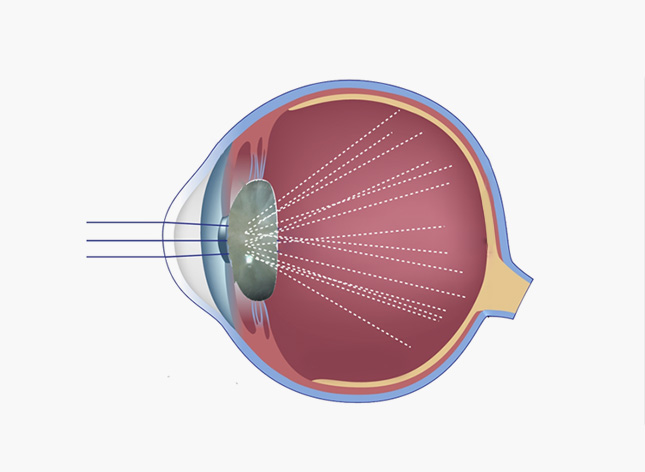
Eye floaters are shadows cast on the retina by small clumps of collagen fibers or cells suspended in the vitreous, the clear gel that fills the back of the eye. As we age, the vitreous gradually shrinks and becomes more liquid — a normal process called vitreous syneresis — which allows these fibers to clump together and cast the shadows we perceive as floaters.
Q. What Are the Symptoms of Eye Floaters?
Floaters can look different from person to person, but common descriptions among our patients include:
- Small dots, specks, or dark spots drifting in your field of vision
- Cobweb-like or thread-like shapes
- Ring- or C-shaped floaters, a classic sign of posterior vitreous detachment
- Floaters that move when you move your eyes and seem to drift away when you try to look directly at them
- More noticeable against bright, plain backgrounds such as a clear sky or white wall
Floaters by the Numbers in Korea
▸ Posterior vitreous detachment, the most common cause of new floaters, affects the majority of people by their mid-60s, and can occur earlier in nearsighted individuals
▸ Studies of Korean adults show myopia prevalence exceeding 70–90% in younger cohorts, contributing to earlier-than-average floater onset
▸ Roughly 1 in 7 patients presenting with sudden new floaters and flashes is found to have a retinal tear on dilated exam
▸ Retinal detachment, while rare overall, occurs more frequently in highly myopic patients and after eye trauma or cataract surgery
Q. How Are Eye Floaters Treated?
Most floaters caused by normal vitreous aging require no treatment at all. Over weeks to months, the brain often adapts and floaters become less noticeable, even though they remain present. Our first step at Nunehim Eye Center is always a dilated retinal exam to confirm the floaters are benign.
In select cases of dense, vision-obstructing floaters, options such as vitrectomy surgery or laser vitreolysis may be discussed, though these are reserved for floaters that significantly interfere with daily life after a thorough risk-benefit discussion.
Q. Why Are Floaters So Common Among Younger Patients in Gasan and Gwanak?
Korea has one of the highest rates of myopia in the world, and our patients from the Gasan tech district and Gwanak’s university-heavy population are no exception. Nearsighted eyes are longer than average, which stretches and thins the vitreous gel earlier in life — meaning floaters and posterior vitreous detachment can appear in patients in their 30s and 40s rather than typically in the 60s. Anyone in Yeongdeungpo or Guro with high myopia and new floaters should have a dilated exam promptly.

Q. When Are Eye Floaters an Emergency in Seoul?
- A sudden shower or significant increase in the number of floaters
- New flashes of light, especially in dim lighting
- A dark curtain, shadow, or veil appearing in your peripheral or central vision
- Sudden blurring or vision loss accompanying floaters
- Floaters following recent eye trauma, injury, or eye surgery
Age-Related
Gradual onset of a few floaters over months to years; a normal part of vitreous aging and typically not sight-threatening.
Post-Surgical
New floaters can appear after cataract surgery or other intraocular procedures as the vitreous shifts; usually monitored with routine follow-up.
Warning Sign
Sudden onset with flashes or a shadow in vision — requires a same-day dilated exam to rule out retinal tear or detachment.
A Note From Dr. Daniel Baik
“Sudden new floaters are one of the few true same-day emergencies in ophthalmology. I always tell my patients in Guro and Gwanak: it’s far better to come in for a dilated exam and find nothing serious than to wait and risk a retinal detachment progressing.”

❓ Frequently Asked Questions
Q. Are eye floaters dangerous?
Most floaters are a harmless part of normal aging and are not dangerous on their own. However, a sudden increase in floaters, especially with flashes of light or a shadow in your vision, can indicate a retinal tear or detachment, which is a medical emergency requiring prompt evaluation.
Q. Can eye floaters go away on their own?
Floaters themselves rarely disappear completely, but most people notice them less over time as the brain adapts to filter them out. The underlying vitreous strands typically remain, though their visibility often decreases within a few months.
Q. Do I need a dilated eye exam for floaters?
Yes, any new onset of floaters — especially a sudden increase — should be evaluated with a dilated retinal exam. This is the only reliable way to distinguish harmless age-related floaters from a retinal tear that requires prompt treatment.
Q. Are floaters more common if I’m nearsighted?
Yes. Highly myopic (nearsighted) eyes are longer and undergo earlier vitreous changes, so floaters and posterior vitreous detachment often appear years earlier than in patients with normal vision. This is especially relevant for Korea’s high-myopia population in Seoul.
Q. Can eye floaters be removed?
For most patients, no treatment is needed. In select cases with dense, vision-impairing floaters, vitrectomy surgery or laser vitreolysis can be considered, though both carry risks that should be weighed carefully against the relatively low impact of typical floaters.
Q. What is the difference between floaters and flashes?
Floaters are shadows from debris in the vitreous gel, while flashes (photopsia) occur when the vitreous tugs on the retina, stimulating it to send a light signal to the brain. Flashes accompanying new floaters raise concern for a retinal tear and warrant urgent evaluation.
Q. Where can I get an urgent floater evaluation in Yeongdeungpo or Guro?
Nunehim Eye Center in Guro-gu offers same-day dilated retinal exams for patients experiencing new or worsening floaters, serving Yeongdeungpo, Gasan, Gwanak, and surrounding Seoul neighborhoods.

Book a Floater & Retina Evaluation
Schedule a dilated retinal exam with Dr. Daniel Baik at Nunehim Eye Center, conveniently located for patients in Yeongdeungpo, Guro, Gasan, and Gwanak.
📍 Visit Nunehim Eye Center — Guro, Seoul
Convenient access from Guro, Gasan, Gwanak & Dongjak. Near Guro Digital Complex Station (Line 2).
Address
551 Siheung-daero, Guro-gu, Seoul
nunehim.com
Hours
Mon–Fri 09:00–18:30 (lunch 13:00–14:00)
Sat 09:00–14:00
Languages
Korean & English


Leave a comment