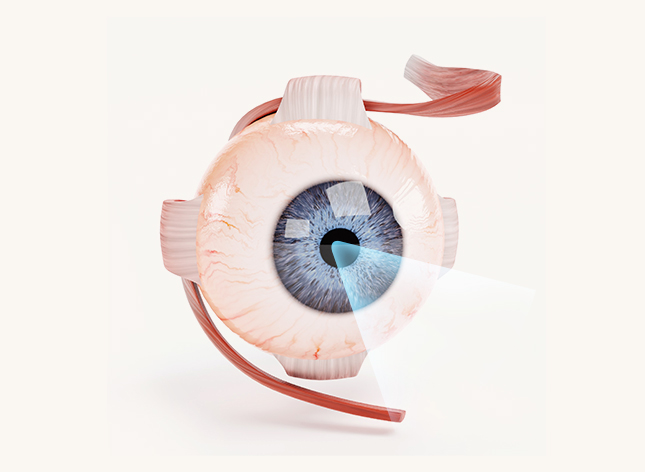
Vision Blurring Again After LASIK or LASEK?
Understanding myopic regression and non-surgical alternatives like adult ortho-k, from Nunehim Eye Center, Guro, Seoul.
Quick Answer
If distance vision has gradually blurred years after LASIK or LASEK, it is often, but not always, myopic regression: a partial, gradual return of nearsightedness or astigmatism. Dry eye, presbyopia, early cataract, and rarely corneal ectasia can cause the same complaint, so the cause must be confirmed before choosing a fix. Depending on the amount of regression, corneal shape, and lifestyle, the solution may be glasses, repeat laser surgery, adult orthokeratology (dream lenses), or scleral lenses, not automatically another surgery.
Q. What is myopic regression after LASIK or LASEK?
LASIK and LASEK correct myopia and astigmatism by reshaping the cornea with a laser. Even after a successful procedure, some patients gradually see part of that refractive error return over time, a phenomenon commonly called myopic regression. Patient guidance from the U.S. FDA on excimer laser vision correction similarly describes the possibility of a partial return of refractive error months to years after surgery.
Regression rarely means a full return to the original, pre-surgery prescription. For example, a patient who was -6.00 diopters before LASIK and reached near-plano vision after surgery might, years later, develop only -0.75 to -1.25 diopters of myopia, enough to blur a highway sign or a lecture-hall screen, even if daytime vision still feels mostly fine.
Situations where regression is often noticed first
- ▸ Road signs or traffic lights look blurred while driving at night
- ▸ Glare or halos around lights feel more noticeable in dark rooms or cinemas
- ▸ A classroom or meeting-room screen is not quite crisp from a distance
- ▸ One eye seems to have blurred faster than the other
- ▸ Squinting brings the distance image into slightly better focus
- ▸ Vision returns to normal with glasses, confirming uncorrected vision has dropped
Q. What actually causes regression after laser vision correction?
Several distinct mechanisms can produce the same complaint of vision fading again, which is exactly why a proper work-up matters before choosing a treatment.
- Epithelial remodeling: the corneas outermost layer can redistribute its thickness over time, partly compensating for the laser-induced change in curvature, more likely when a large amount of central tissue was removed for high original myopia
- Continued progression of the eyes own myopia: LASIK and LASEK correct existing refractive error but do not stop the eyes axial length from growing, so some adults, especially those who had high myopia or were younger at surgery, develop genuinely new myopia afterward
- Small residual refractive error at the time of surgery: a small amount of uncorrected myopia or astigmatism can be masked by youthful focusing ability, then become noticeable years later as that focusing reserve declines with age
- Dry eye and an unstable tear film: since the tear film is the eyes outermost refracting surface, an unstable tear layer causes vision that fluctuates with blinking, worsens by late afternoon, and temporarily sharpens with artificial tears
- Presbyopia or early cataract: blur that appears with near tasks after the early forties often reflects presbyopia rather than regression, while blur at all distances with glare or dulled color may indicate early cataract
- Corneal ectasia: uncommon but important, gradual thinning and forward bulging of the cornea after LASIK, with increasing irregular astigmatism, requires a different work-up and treatment path than simple regression
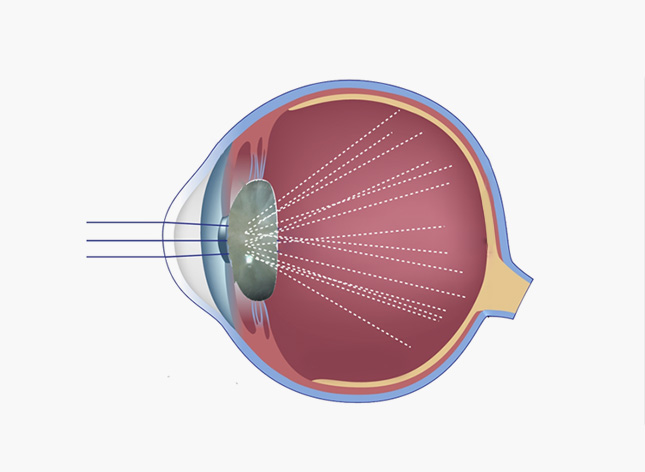
Q. What exams are needed when vision blurs after LASIK?
A drop in vision years after LASIK should never be treated as automatic proof of regression. The work-up typically includes uncorrected and best-corrected visual acuity, refraction, corneal topography, corneal thickness and residual stromal bed assessment, axial length measurement, dry eye testing, and a slit-lamp and retinal exam to rule out cataract, glaucoma, or retinal disease, especially important for patients who were highly myopic before surgery, since the retina retains those risk characteristics even after refractive surgery corrects the glasses prescription.
Corneal topography is the single most important test here: it maps the front and back surface curvature, symmetry, and the shape of the original ablation, distinguishing straightforward regression from irregular astigmatism or early ectasia, and helping determine whether a dream lens or a scleral lens would fit better if surgery is not the chosen path.
Q. When should regression symptoms not be ignored?
- Glasses no longer bring vision fully into focus
- Astigmatism keeps increasing on repeat exams
- One eye is worsening noticeably faster than the other
- Images appear doubled or ghosted
- Night glare is worsening rapidly
- Topography shows asymmetric corneal steepening
Q. What are the four ways to address regression?
Glasses
Simple, safe, reversible; needed again for distance tasks.
Repeat Surgery
Restores unaided vision; requires stable, regular cornea with enough tissue.
Adult Ortho-K
Reversible, non-surgical, worn overnight; needs custom post-LASIK fitting.
Scleral Lens
Best for irregular corneas or ectasia; worn during the day.
Q. Why might adult orthokeratology (dream lenses) suit post-LASIK regression?
Ortho-k is often thought of as a myopia-control treatment for children, but its underlying principle, a rigid lens worn overnight that temporarily reshapes the epithelium and central corneal curvature, works for suitable adults too, allowing clear daytime vision without glasses or contact lenses.
- No additional corneal tissue is removed, the effect is achieved by reshaping, not ablation
- The correction is reversible; stopping lens wear allows the cornea to gradually return to its prior state
- Patients can go through the entire day without glasses or contacts
- The treatment target can be adjusted later if the prescription changes or presbyopia develops
Who tends to do well with ortho-k after LASIK
- ▸ A relatively small amount of residual myopia or astigmatism
- ▸ Good best-corrected vision with glasses
- ▸ A fairly regular, symmetric cornea on topography
- ▸ No signs of ectasia or progressive irregular astigmatism
- ▸ Consistent sleep schedule and reliable lens hygiene
- ▸ A preference for a reversible option over further laser tissue removal
Q. Why is ortho-k fitting different after LASIK?
A post-LASIK cornea is not shaped like a natural, unoperated cornea. Myopic LASIK flattens the central cornea while leaving the periphery relatively steeper, creating a flat-center, steep-periphery profile. Applying a standard, off-the-shelf ortho-k design to this altered surface risks lens decentration and uneven pressure distribution, so fitting must be built around detailed corneal topography with a custom reverse-geometry lens rather than a generic parameter set.
- Degree of central corneal flattening from the original surgery
- Size and centration of the original optical treatment zone
- Peripheral corneal curvature
- Remaining amount of myopia and astigmatism
- Corneal symmetry and pupil size
- Epithelial health, tear film quality, and meibomian gland function
- Lens centration stability and overnight movement, confirmed on next-morning topography
Q. What does Nunehim Eye Centers doctor say?
When patients tell me their vision has faded years after LASIK or LASEK, the first step is never assuming it is automatically regression. Dry eye, presbyopia, and early cataract can look identical from the patients side. Once the cause is confirmed, many of my patients across Guro, Gasan, and Yeongdeungpo are relieved to learn that a well-fitted adult dream lens, not another surgery, can be enough. Dr. Daniel Baik, board-certified ophthalmologist
Q. How does adult ortho-k compare with scleral lenses?
Adult Ortho-K (Dream Lens)
- Worn mainly overnight, removed for the day
- Best for regular, fairly symmetric corneas
- Effect fades gradually if wear stops
- Goal: glasses- and lens-free daytime vision
Scleral Lens
- Worn mainly during the day
- Best for irregular corneas, ectasia, or severe dry eye
- Correction disappears once the lens is removed
- Goal: sharp, stable vision over an irregular surface
❓ Frequently Asked Questions
Q. Does myopic regression mean my LASIK or LASEK surgery failed?
Not necessarily. Regression can happen even after a technically successful procedure. It can stem from epithelial remodeling of the cornea, natural progression of the eye’s own myopia, dry eye, presbyopia, early cataract, or, rarely, corneal ectasia. The only way to know is a full eye exam that separates these causes.
Q. How soon after LASIK or LASEK can regression appear?
It varies widely. Some patients notice mild blur within the first year, while others remain stable for a decade or longer before a small amount of myopia or astigmatism gradually returns. Original prescription strength, age at surgery, corneal healing response, and axial length changes all play a role.
Q. If my vision blurs again, do I always need repeat surgery?
No. If the residual power is small, glasses can fully correct it. If the cornea is regular and shaped appropriately, adult orthokeratology (ortho-k, or dream lenses) is a non-surgical option. Repeat LASIK or LASEK is only appropriate when the cornea is stable, regular, and has enough healthy tissue remaining.
Q. Can I use ortho-k (dream lenses) after already having had LASIK?
Yes, in appropriately selected patients. However, a post-LASIK cornea is flatter in the center and relatively steeper in the periphery than a natural cornea, so a standard ortho-k lens design cannot simply be applied. Fitting must be based on detailed corneal topography with a custom reverse-geometry design.
Q. Does ortho-k permanently cure myopic regression?
No. Ortho-k reshapes the cornea temporarily while the lenses are worn regularly; it does not remove corneal tissue. If lens wear stops, the eye gradually returns to its prior refractive state over time. This reversibility is actually one of its advantages for patients who want to avoid another permanent procedure.
Q. Which is better for regression after LASIK: ortho-k or repeat surgery?
Neither is universally better, it depends on your cornea. Repeat surgery may suit patients with sufficient remaining corneal tissue, a stable prescription, and a preference for a permanent result. Ortho-k may suit patients who prefer a reversible, non-surgical option, do not want more laser tissue removal, and have a fairly regular cornea with modest residual power.
Q. Can scleral lenses help if I have severe dry eye or an irregular cornea after surgery?
Yes, in many cases. Scleral lenses vault over the entire cornea and rest on the white of the eye, trapping a reservoir of fluid that both smooths an irregular corneal surface optically and protects it from dryness. They are generally worn during the day rather than overnight, and are especially useful when glasses no longer give clear, comfortable vision.

Book a Consultation
If your vision has faded years after LASIK or LASEK, Nunehim Eye Center in Guro-gu offers full regression work-ups and fitting for adult dream lenses or scleral lenses, serving Yeongdeungpo, Gasan, and Gwanak in Korean or English.
nunehim.com
📍 Visit Nunehim Eye Center — Guro, Seoul
Convenient access from Guro, Gasan, Gwanak & Dongjak. Near Guro Digital Complex Station (Line 2).
Address: 551 Siheung-daero, Guro-gu, Seoul / nunehim.com
Hours: Mon–Fri 09:00–18:30 (lunch 13–14), Sat 09:00–14:00
Languages: Korean & English


Leave a comment