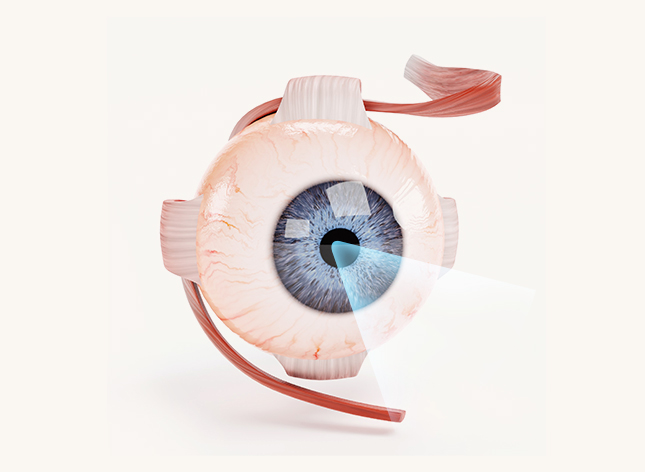
High Myopia Risks: Why Being Very Nearsighted Is a Medical Concern
Comprehensive Eye Care in Yeongdeungpo, Guro & Gasan, Seoul
Q. What are the high myopia risks I should know about?
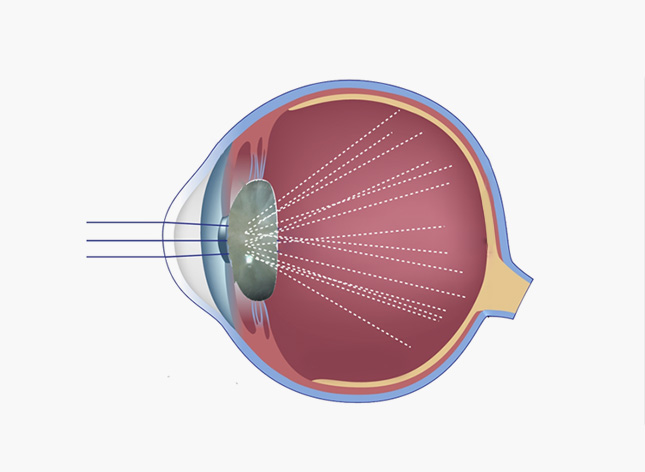
High myopia risks go far beyond needing thicker glasses. When nearsightedness reaches -6.00 diopters or worse, the eyeball elongates, thinning the retina and raising the lifetime risk of retinal detachment, myopic macular degeneration, and glaucoma. Anyone with high myopia in Seoul should have annual dilated retinal exams, not just vision checks.
Q. What counts as high myopia?
Ophthalmologists classify myopia as mild (up to -3.00D), moderate (-3.00 to -6.00D), and high (-6.00D or worse), or by axial length greater than 26mm. Korea has one of the highest myopia rates in the world, and a large share of young adults in Seoul, including Yeongdeungpo and Guro, fall into the high myopia category by their twenties.
High Myopia in Korea: Key Statistics
- ▸ Around 96.5% of Korean young adults are myopic, among the highest rates worldwide
- ▸ High myopia (-6.00D or worse) affects an estimated 20% of Korean adults in their 20s and 30s
- ▸ High myopia raises retinal detachment risk 3–10 times compared to non-myopic eyes
- ▸ Glaucoma risk is roughly 2–3 times higher in high myopes
Q. How is high myopia managed?
Management combines vision correction with structural monitoring. Options include glasses or contact lenses, orthokeratology (OK lens) to slow progression in children, and for stable adult prescriptions, TransPRK or 2-Day LASEK — we do not perform SMILE LASIK. Every patient with high myopia also needs a dilated retinal exam schedule regardless of corrective choice.
Patients from Gasan, Yeongdeungpo, and Guro are evaluated by Dr. Daniel Baik to build a monitoring plan suited to their axial length and retinal findings.
Q. What complications can high myopia cause?
The stretched, thinned retina in high myopia is more prone to tears, lattice degeneration, and detachment. Long-term structural changes can also lead to myopic macular degeneration, a leading cause of irreversible vision loss in highly myopic eyes, along with earlier-onset cataracts and glaucoma.
Q. When should I see a doctor in Seoul?
- Sudden floaters or a shower of new spots
- Flashes of light in peripheral vision
- A shadow or curtain across part of your vision
- Rapid changes in your glasses prescription
- Blurred or distorted central vision
- No dilated retinal exam in the past year
Degrees
Mild: to -3.00D · Moderate: -3.00 to -6.00D · High: -6.00D or worse
Complication Risk
Retinal detachment, macular degeneration, glaucoma, early cataracts
Monitoring
Annual dilated retinal exam · immediate visit for flashes/floaters
From Dr. Daniel Baik
“As a board-certified ophthalmologist practicing in Yeongdeungpo, I see how often high myopia is treated as a glasses problem instead of a retinal one. Once a patient crosses -6.00 diopters, an annual dilated exam matters as much as their prescription.”
❓ Frequently Asked Questions
Q. What is considered high myopia?
High myopia is generally defined as a refractive error of -6.00 diopters or worse, or an axial eye length beyond 26mm. It differs from mild-to-moderate nearsightedness because the eyeball itself is significantly elongated, thinning and stretching the retina.
Q. Why is high myopia a medical concern, not just an inconvenience?
The elongated eyeball associated with high myopia increases the risk of retinal detachment, myopic macular degeneration, glaucoma, and early cataracts. These are sight-threatening conditions that require lifelong monitoring, not just corrective lenses.
Q. Can high myopia be prevented in children?
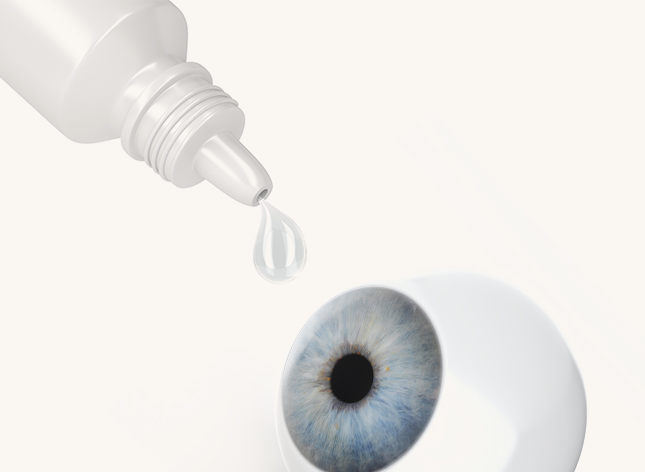
While genetics play a role, outdoor time, controlled near-work habits, and treatments such as low-dose atropine drops or orthokeratology (OK lens) have been shown to slow myopia progression in children, which is especially important given Korea’s high rates of childhood nearsightedness.
Q. Does LASIK or PRK cure high myopia risk?
No. Refractive surgery such as TransPRK/2-Day LASEK corrects focusing power so glasses aren’t needed, but it does not shorten the eyeball or reduce the underlying structural risks of high myopia. Patients still need regular retinal exams after surgery.
Q. How often should someone with high myopia get an eye exam in Seoul?
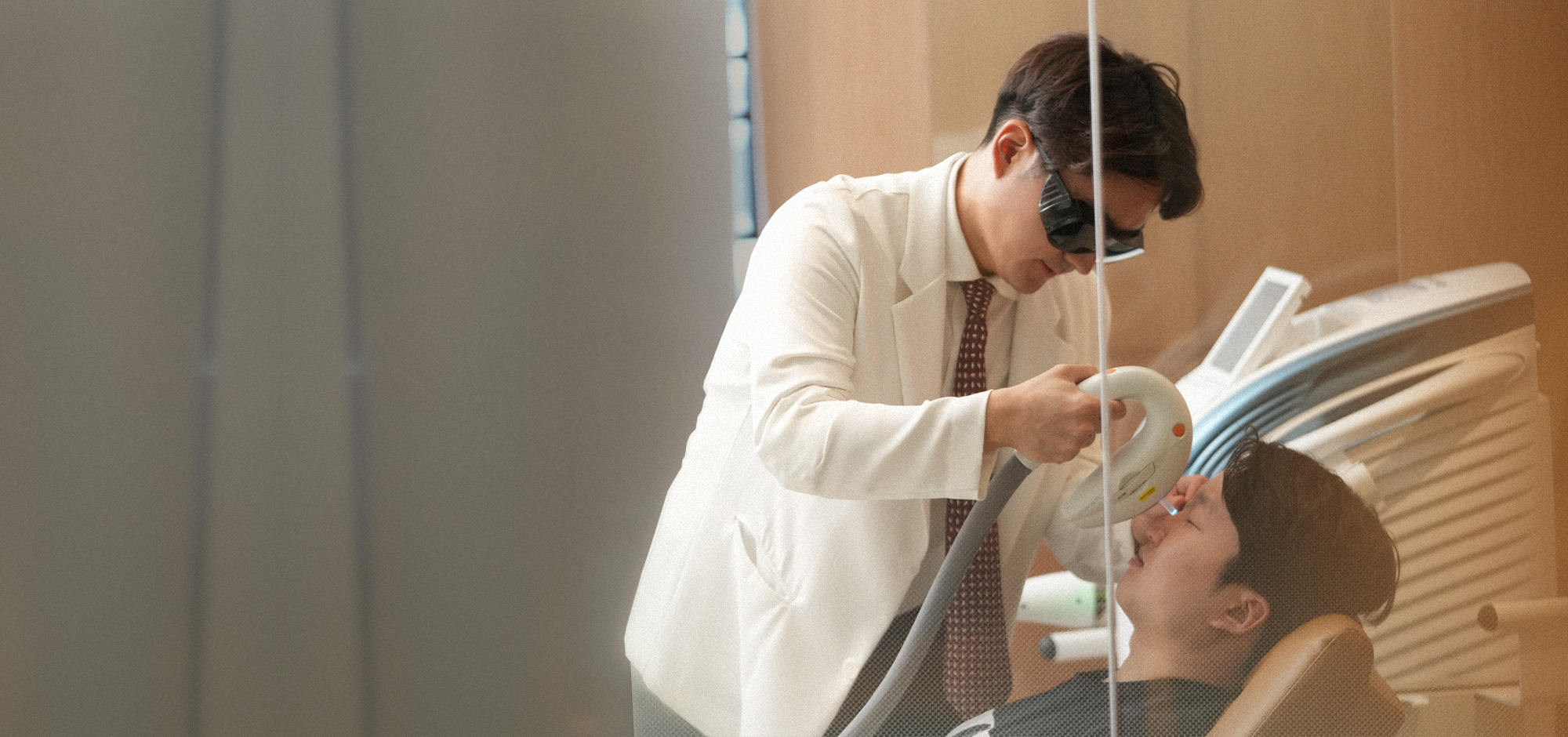
Most ophthalmologists recommend a comprehensive dilated retinal exam at least once a year, or immediately if new floaters, flashes, or vision changes occur. Patients across Yeongdeungpo, Guro, and Gasan can schedule annual high myopia monitoring at Nunehim Eye Center.
Q. What are the warning signs of a retinal detachment?
Sudden floaters, flashes of light, or a shadow or curtain moving across the visual field are emergency symptoms that require same-day evaluation, since untreated retinal detachment can cause permanent vision loss.
Q. Is OK lens a good option for high myopia in children?
Orthokeratology (OK lens) reshapes the cornea overnight to reduce daytime dependence on glasses and has evidence for slowing axial elongation in children, making it a popular option for young high myopia patients in Seoul, though it requires careful fitting and follow-up.

Book a Consultation
High myopia retinal screening available for patients in Yeongdeungpo, Guro, Gasan & Gwanak.
📍 Visit Nunehim Eye Center — Guro, Seoul
Convenient access from Guro, Gasan, Gwanak & Dongjak. Near Guro Digital Complex Station (Line 2).
Address
551 Siheung-daero, Guro-gu, Seoul
nunehim.com
Hours
Mon–Fri 09:00–18:30 (lunch 13–14)
Sat 09:00–14:00
Languages
Korean & English


Leave a comment