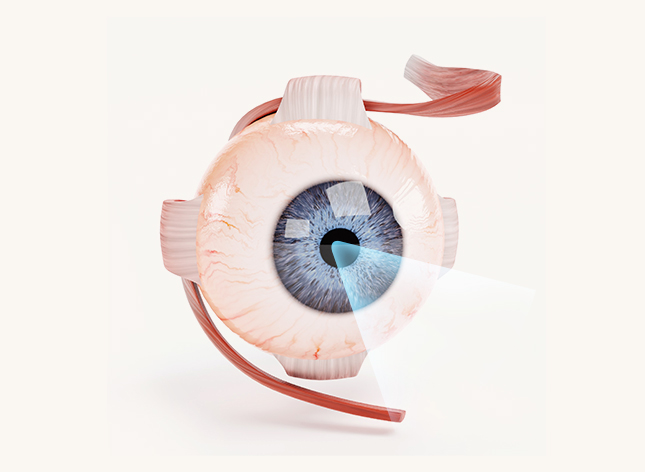
Meibomian Gland Dysfunction: The Hidden Cause of Chronic Dry Eye
Expert guidance from Nunehim Eye Center, Guro-gu, Seoul
Q. What is meibomian gland dysfunction?
Meibomian gland dysfunction (MGD) is a condition in which the oil-producing glands along the eyelid margin become blocked or produce poor-quality oil, causing tears to evaporate too fast and leading to chronic dry eye. It is one of the most common — and most underdiagnosed — causes of persistent eye irritation in Seoul, particularly among office workers in Yeongdeungpo, Guro, and Gasan.
Q. What causes meibomian gland dysfunction?
MGD develops when the meibomian glands, small oil glands lining the upper and lower eyelids, become obstructed by thickened secretions. Contributing factors include aging, prolonged screen use with reduced blinking, contact lens wear, eyelid inflammation (blepharitis), certain skin conditions like rosacea, and environmental factors such as heated or air-conditioned indoor air common in Seoul offices during both summer and winter.
Q. What are the symptoms of MGD?
- Burning, stinging, or gritty sensation
- Eyes that feel dry despite frequent blinking
- Symptoms that worsen throughout the day
- Fluctuating or occasionally blurry vision
- Redness and mild swelling of the eyelid margin
- Crusting or flaking at the base of the eyelashes
- Discomfort wearing contact lenses
Local Context: Dry Eye and Digital Habits in Seoul
- ▸ Long hours in front of screens are common among office workers in Yeongdeungpo and Gasan, a well-documented risk factor for reduced blink rate and MGD.
- ▸ Korea has one of the highest rates of myopia in the world, and many young adults in Guro and Gwanak who wear contact lenses daily are at increased risk of gland dysfunction over time.
- ▸ Seasonal dry indoor air during Seoul winters, combined with heating systems, tends to worsen evaporative dry eye symptoms.
- ▸ Studies on East Asian populations report meibomian gland dysfunction as one of the most frequently diagnosed causes of chronic dry eye presentations.
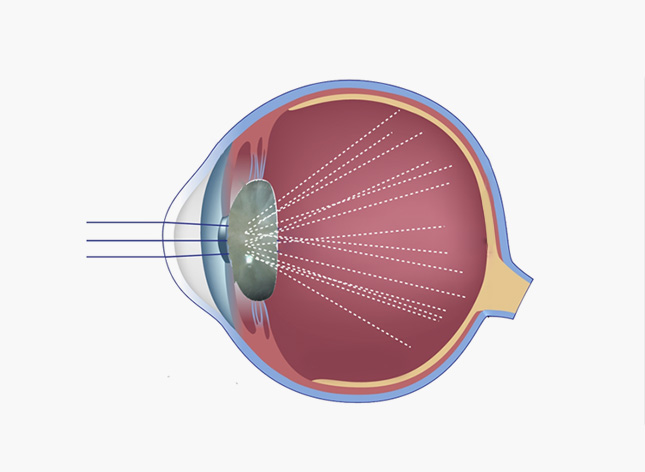
Q. How is meibomian gland dysfunction treated?
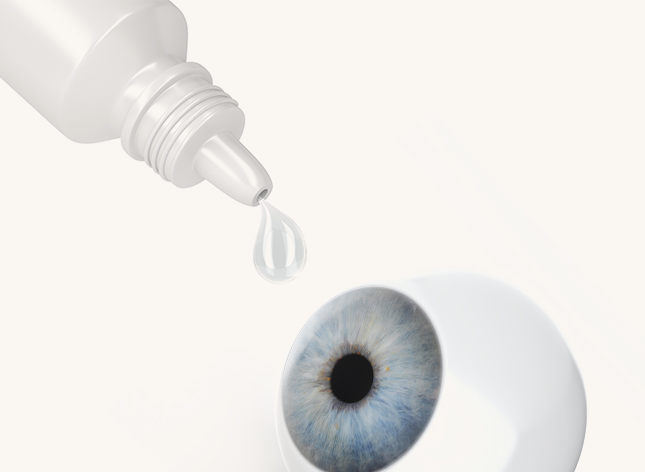
Treatment begins conservatively with warm compresses to soften hardened gland secretions, gentle lid massage, and eyelid hygiene using lid wipes or diluted cleanser. Preservative-free artificial tears help manage day-to-day dryness while the underlying gland issue is addressed.
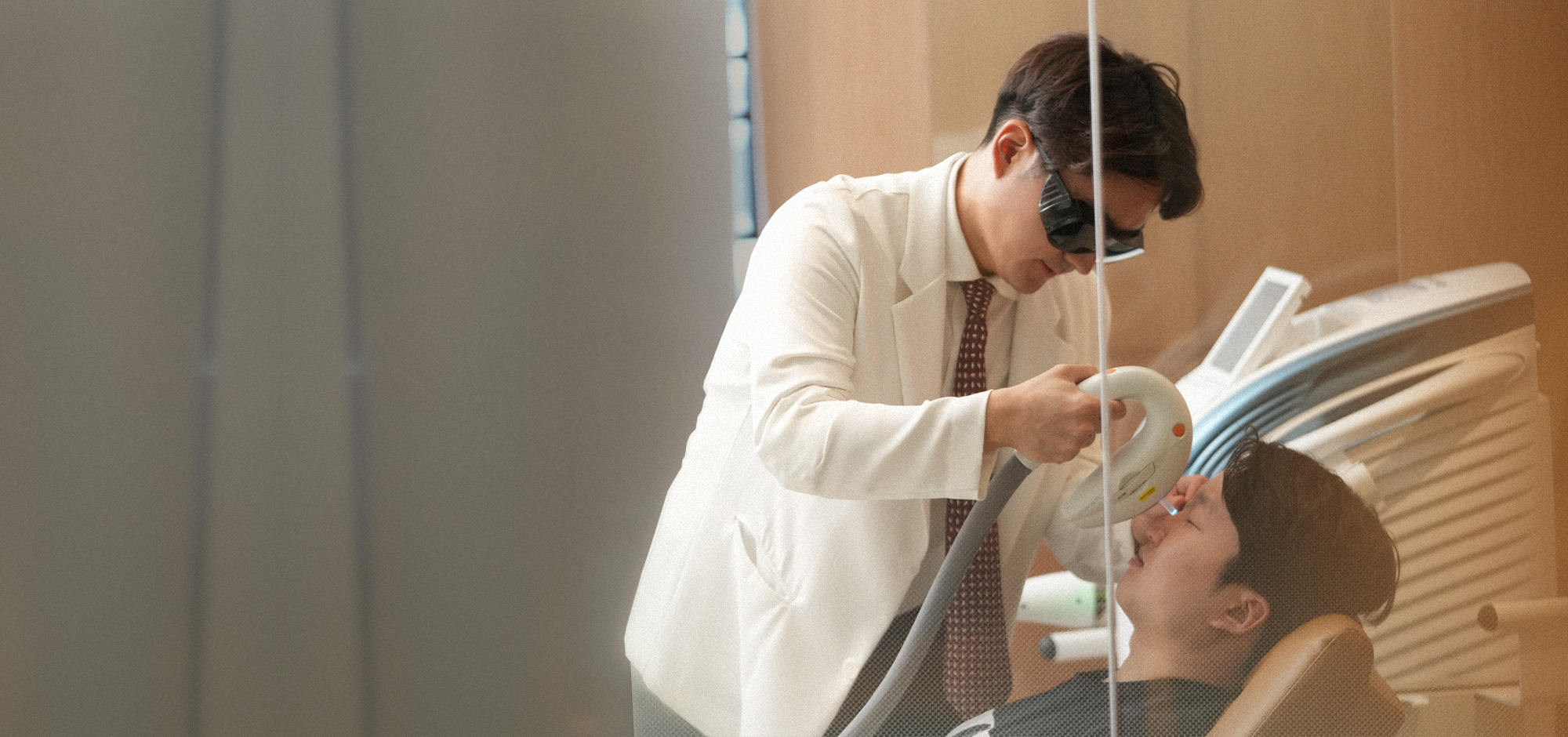
For moderate to advanced cases, in-office meibomian gland expression, intense pulsed light therapy, or prescription anti-inflammatory drops may be recommended. Treatment is tailored after evaluating gland structure and oil quality under the slit lamp.
Q. Can lifestyle changes help manage MGD?
Taking regular breaks from screens using the 20-20-20 rule, ensuring complete blinks, using a humidifier in dry indoor air, and removing eye makeup thoroughly each night can meaningfully reduce symptoms alongside medical treatment.
Diet may also play a supporting role — omega-3 fatty acids have been studied for their potential benefit on tear film oil quality, though they work best as a complement to, not a replacement for, direct gland treatment.
Q. When should MGD be treated urgently?
- Sudden, significant vision blurring
- Eye pain rather than simple irritation
- Signs of corneal involvement, such as light sensitivity
- Redness spreading beyond the lid margin
- No improvement after several weeks of home care
Mild MGD
Occasional dryness, glands only partly blocked, responds well to warm compresses and lid hygiene.
Moderate MGD
Daily symptoms, visible gland changes, typically needs in-office gland expression plus home care.
Advanced MGD
Significant gland loss, chronic discomfort, managed long-term with combination therapy to preserve remaining gland function.
A Note from Dr. Daniel Baik
“Meibomian gland dysfunction is one of the most under-recognized causes of chronic dry eye I see in patients from Guro, Gasan, and Gwanak. Many have tried artificial tears for months without knowing the real problem is in the eyelid glands. Once we identify and treat the gland issue directly, most patients notice a real difference within weeks.”
❓ Frequently Asked Questions
Q. Is meibomian gland dysfunction (MGD) the same as dry eye?
MGD is one of the leading causes of dry eye disease, specifically the “evaporative” type, where the oily layer of the tear film is deficient and tears evaporate too quickly. Many patients with chronic dry eye actually have underlying MGD driving their symptoms.
Q. What are the early signs of meibomian gland dysfunction?
Early signs include eyelid heaviness, mild crusting along the lash line, occasional blurry vision that clears with blinking, and dryness that worsens by the end of the day, especially after screen use common in Seoul office jobs.
Q. Can meibomian gland dysfunction be reversed?
Early and moderate MGD often responds well to consistent warm compresses, lid hygiene, and in-office treatments such as meibomian gland expression. Advanced cases with significant gland loss cannot be fully reversed, which is why early treatment matters.
Q. How is MGD diagnosed at Nunehim Eye Center?
We use slit-lamp examination and meibomian gland assessment to grade gland structure and oil quality, then evaluate tear film stability. This lets us tailor treatment rather than offering generic dry eye advice.
Q. Does screen time make meibomian gland dysfunction worse?
Yes. Extended screen use reduces blink rate and complete blinking, which allows meibomian gland oil to thicken and clog more easily — a common pattern among office workers in Yeongdeungpo and Gasan.
Q. Are warm compresses enough to treat MGD?
Warm compresses help soften hardened oil in mild cases, but many patients need additional in-office gland expression, lid hygiene routines, or anti-inflammatory treatment for lasting improvement.
Q. When should I see a doctor in Seoul for chronic dry eye or MGD?
If dryness, irritation, or blurry vision persists for more than two to three weeks despite artificial tears, or keeps you from comfortable screen use or contact lens wear, it is time for an evaluation. Patients from Guro, Gwanak, and Dongjak can book a consultation at Nunehim Eye Center in Korean or English.

Book a Consultation
Nunehim Eye Center welcomes English and Korean speaking patients from Yeongdeungpo, Guro, Gasan, and Gwanak for dry eye and MGD evaluation.
or visit nunehim.com
📍 Visit Nunehim Eye Center — Guro, Seoul
Convenient access from Guro, Gasan, Gwanak & Dongjak. Near Guro Digital Complex Station (Line 2).
Address
551 Siheung-daero, Guro-gu, Seoul / nunehim.com
Hours
Mon–Fri 09:00–18:30 (lunch 13–14), Sat 09:00–14:00
Languages
Korean & English


Leave a comment