Cataracts vs Normal Ageing: How to Tell the Difference
Cataracts symptoms and normal eye ageing, explained for patients in Guro, Yeongdeungpo, Gasan & Gwanak, Seoul
Quick Answer
The key difference is progression and treatability: normal age-related vision changes, like presbyopia, stabilize and are fully corrected with glasses. Cataracts, on the other hand, cause progressive clouding of the eye’s natural lens that steadily worsens and can only be resolved with cataract surgery.
Q. What is a cataract?
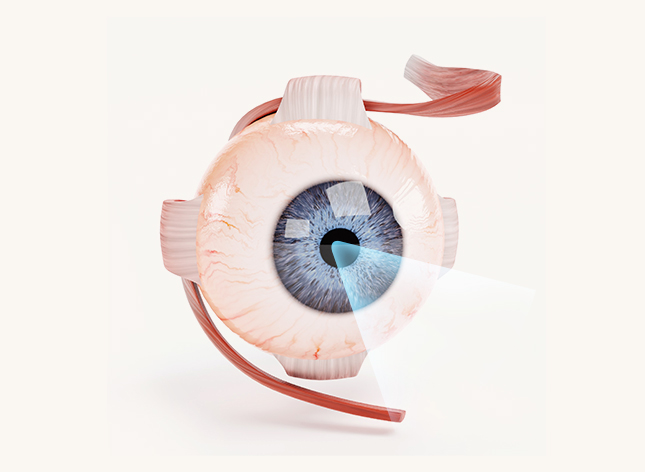
A cataract is a clouding of the eye’s naturally clear lens, which sits behind the iris and focuses light onto the retina. As the proteins in the lens break down and clump together with age, vision gradually becomes hazy, dim, or yellow-tinted. This is different from simple age-related presbyopia, which is a stiffening of the lens that affects near focus but not overall clarity. Patients visiting our clinic near Guro Digital Complex often describe cataracts as looking through a foggy or dusty window that no glasses prescription can fully clear.
Q. What are the symptoms of cataracts?
- Cloudy, blurry, or hazy vision that glasses can’t fully correct
- Increased glare or halos around lights, especially when driving at night
- Colors appearing faded or yellow-tinted
- Frequent changes in glasses or contact lens prescription
- Double vision in one eye, or difficulty reading in dim light
Cataracts in Korea: Key Statistics
- ▸ Cataracts are the leading cause of reversible vision loss among Koreans over 60, per Korean Ophthalmological Society data
- ▸ Nearly 70% of Koreans in their 70s show measurable lens clouding on eye exam
- ▸ Cataract surgery is one of the most frequently performed surgeries in Korea, with several hundred thousand procedures annually
- ▸ NHIS covers standard monofocal cataract surgery for medically indicated cases
Q. How are cataracts diagnosed and treated?
Diagnosis starts with a dilated eye exam and slit-lamp evaluation to assess the degree of lens clouding. In early stages, updated glasses, brighter reading lights, and anti-glare lenses may be enough to manage symptoms. Once clouding significantly affects daily activities like driving or reading, cataract surgery becomes the only effective treatment.
At our clinic serving Yeongdeungpo, Guro, and Gasan, we walk patients through lens options, from standard monofocal to premium multifocal, based on lifestyle and visual goals before recommending surgery timing.
Q. How is a cataract different from normal ageing changes?
Normal age-related vision change, or presbyopia, is a gradual stiffening of the lens that reduces the eye’s ability to focus up close, typically starting in the early-to-mid 40s. It is corrected reliably with reading glasses or progressive lenses and does not worsen overall image clarity.
A cataract is structurally different: the lens itself becomes cloudy, scattering and blocking light before it reaches the retina. This affects vision at all distances, not just near tasks, and tends to progress over months to years rather than staying stable.
Q. When should blurry vision be evaluated urgently?
- Sudden vision loss or a sudden increase in blurriness
- New flashes of light, floaters, or a curtain-like shadow in vision
- Vision loss affecting only one eye
- Eye pain, redness, or nausea accompanying blurred vision
Early Stage
Mild haziness, slightly reduced contrast. Often managed with updated glasses and monitoring.
Moderate Stage
Noticeable glare, difficulty driving at night, frequent prescription changes.
Advanced Stage
Significant vision impairment affecting daily activities. Surgery is recommended.
From Dr. Daniel Baik
“Many patients in Guro and Gwanak assume blurry vision is simply a normal part of getting older. It’s worth having a dilated exam to check, since cataracts and ordinary presbyopia need very different management, and catching a cataract early gives you more time to plan surgery on your own schedule rather than in an emergency.”
❓ Frequently Asked Questions
Q. Can cataracts be prevented?
There is no guaranteed way to prevent cataracts, since lens clouding is a normal part of ageing. However, wearing UV400 sunglasses, not smoking, and keeping diabetes and blood pressure well controlled can meaningfully slow the pace of lens changes. Regular eye exams also allow early detection before cataracts affect daily life.
Q. At what age do cataracts typically develop?
Cataracts most commonly become visually significant after age 60, though early lens changes can often be measured on a dilated eye exam from the mid-40s onward. Some patients in Guro and Yeongdeungpo develop cataracts requiring surgery in their 50s, especially with diabetes or prior eye trauma.
Q. Is cataract surgery covered by Korean National Health Insurance?
Yes. Standard monofocal cataract surgery is covered under Korea’s NHIS for medically necessary cases, significantly reducing out-of-pocket cost. Premium intraocular lens upgrades, such as multifocal or toric lenses, are typically paid out of pocket in addition to the covered portion.
Q. How long does cataract surgery take and what is recovery like?
The procedure itself typically takes 10 to 15 minutes per eye and is performed as day surgery under local anesthesia. Most patients in Seoul resume light activities within 1 to 2 days, with full visual stabilization over 4 to 6 weeks as the eye heals.
Q. Will I need reading glasses after cataract surgery?
It depends on the intraocular lens selected. Monofocal lenses generally correct one distance well, so reading glasses may still be needed for close work. Multifocal or extended-depth-of-focus lenses can reduce, though not always eliminate, dependence on glasses.
Q. Can cataracts come back after surgery?
The original cataract cannot recur, since the cloudy natural lens is removed during surgery. However, the thin capsule holding the new lens in place can become cloudy months to years later, a condition called posterior capsule opacification. This is treated quickly and painlessly with YAG laser.
Q. How is a cataract different from presbyopia?
Presbyopia is a normal age-related stiffening of the eye’s lens that reduces near-focusing ability, usually starting in the early-to-mid 40s and corrected with reading glasses. Cataracts, by contrast, are clouding of the lens itself, affecting clarity and contrast at all distances, and usually becoming significant later in life.

Book a Consultation
Concerned about cataracts symptoms or normal ageing changes? Schedule an exam with Dr. Daniel Baik in Guro, Seoul.
nunehim.com
📍 Visit Nunehim Eye Center — Guro, Seoul
Convenient access from Guro, Gasan, Gwanak & Dongjak. Near Guro Digital Complex Station (Line 2).
Address:
551 Siheung-daero, Guro-gu, Seoul
nunehim.com
Hours:
Mon–Fri 09:00–18:30 (lunch 13:00–14:00)
Sat 09:00–14:00
Languages:
Korean & English


Leave a comment