Night Driving Difficulty: Causes and Solutions for Drivers in Seoul
Expert guidance on glare, halos, and reduced night vision from Nunehim Eye Center, Seoul
Q. What causes night driving difficulty?
Night driving difficulty in Seoul drivers is most often caused by uncorrected refractive error, early cataracts, or corneal irregularities that scatter light and produce glare and halos around headlights and streetlights, especially along wet or poorly lit roads in Yeongdeungpo, Guro, and Gasan.
Q. What is night driving difficulty (eyes)?
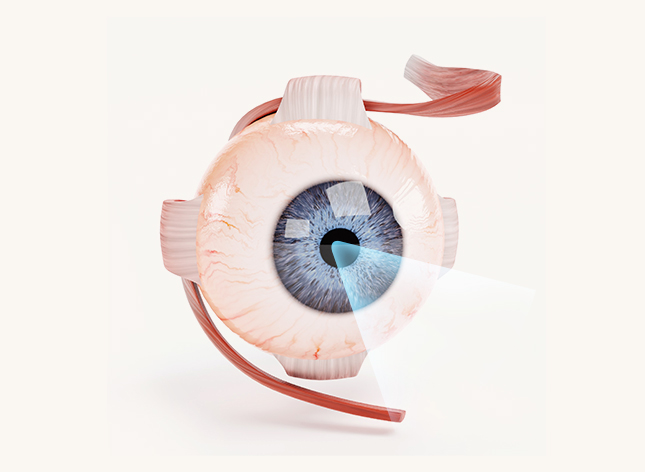
Night driving difficulty describes a cluster of symptoms — glare, halos, starbursts, and reduced contrast — that appear specifically in low light. In darkness, the pupil dilates to let in more light, which also allows more light to pass through any irregularity in the cornea or lens. That scattered light lands on the retina as haze rather than a sharp point, which is why oncoming headlights can look like they are exploding into a soft glow rather than a clean beam.
Night Vision: Facts for Seoul Drivers
- ▸ Over 96% of Korean adults in their 20s–30s have some degree of myopia, a leading contributor to night glare complaints.
- ▸ Korean clinical data shows up to 40% of patients report temporary halos after older-generation refractive surgery, a rate reduced with modern TransPRK technique.
- ▸ Contrast sensitivity naturally declines starting in the 40s, compounding night driving difficulty for commuters across Seoul.
- ▸ Reduced night visibility is a recognized contributing factor in nighttime collisions on ring roads near Guro and Gasan, according to Seoul traffic safety data.
Q. How can night driving difficulty be treated?
Treatment depends on the cause. An updated glasses prescription with anti-reflective coating resolves many mild cases. Dry eye, which worsens glare, responds well to lubrication and in-office treatment. For patients with significant refractive error, vision correction such as TransPRK/2-Day LASEK or orthokeratology (OK lens) can reduce dependence on glasses and improve night clarity when properly planned.
Where cataracts are the underlying cause, modern lens replacement surgery can dramatically improve both daytime and nighttime vision. We tailor the approach after a full diagnostic workup at our Guro-gu clinic.
Q. Could this be an early sign of a bigger problem?
Yes, in some cases. New or worsening glare in patients over 40 can be an early sign of cataract formation, since a clouding lens scatters light before it noticeably affects daytime sharpness. In younger patients, progressive halos combined with frequent prescription changes can point to keratoconus, a thinning of the cornea that requires early detection and specialized management.
Q. When should I see a doctor in Seoul?
- Glare or halos that make it hard to judge distance to oncoming cars
- Sudden worsening of night vision over weeks or months
- Night symptoms accompanied by eye pain, redness, or headache
- Difficulty reading road signs or license plates after dark despite a recent glasses update
Common Causes
Uncorrected myopia/astigmatism, dry eye, early cataract, corneal irregularity, post-surgical healing.
Diagnostic Tests
Corneal topography, pupil size measurement, contrast sensitivity testing, dilated exam.
Treatment Timeline
Glasses/dry eye care: days. TransPRK/OK lens: weeks. Cataract surgery recovery: about 1–2 weeks.
From Dr. Daniel Baik
“Night driving complaints are rarely random — they almost always trace back to a specific, treatable cause. As a board-certified ophthalmologist, I encourage patients across Yeongdeungpo, Guro, and Gasan to get evaluated early, since many of these issues improve significantly once properly diagnosed.”
❓ Frequently Asked Questions
Q. Why do headlights and streetlights suddenly look like they have halos around them?
Halos form when light scatters across an irregular or swollen cornea, or through an early cataract, spreading a single point of light into a blurred ring. This is common with high myopia, dry eye, and post-refractive-surgery corneas, and is one of the most frequent complaints among drivers commuting through Yeongdeungpo and Guro at night.
Q. Is night driving difficulty different from normal blurry vision?
Yes. Many patients see clearly during the day but struggle specifically after dusk because their pupils dilate in low light, letting more light scatter through uncorrected refractive errors or a hazy lens, which daytime pupil constriction otherwise masks.
Q. Can glasses alone fix night driving problems?
For many patients, an updated prescription with anti-reflective coating significantly reduces glare. However, if cataracts, keratoconus, or significant dry eye are contributing, glasses alone will not fully resolve the symptoms and further evaluation is needed.
Q. Does LASIK or TransPRK cause night vision problems?
Some patients experience temporary halos in the weeks after any corneal refractive procedure while the eye heals. At Nunehim Eye Center, we use TransPRK and 2-Day LASEK, which preserve corneal tissue and are associated with lower rates of night vision disturbance compared to older techniques.
Q. Are OK lenses (orthokeratology) helpful for night driving?
OK lenses reshape the cornea overnight to improve daytime vision without surgery, but because they must be fitted and monitored carefully, poorly fitted lenses can sometimes worsen night glare. Regular follow-up at a specialized clinic is essential.
Q. How is night driving difficulty diagnosed?
We use corneal topography, pupil size measurement, contrast sensitivity testing, and a dilated eye exam to determine whether the cause is refractive, corneal, or lens-related, and to rule out early cataract or dry eye disease.
Q. Where can I get evaluated for night driving difficulty near Yeongdeungpo or Guro?
Nunehim Eye Center in Seoul offers comprehensive night vision evaluations with Korean and English consultations, serving patients across Yeongdeungpo, Guro, Gasan, and Gwanak.

Book a Consultation
Get a comprehensive night vision evaluation at Nunehim Eye Center, Seoul.
nunehim.com
📍 Visit Nunehim Eye Center — Guro, Seoul
Convenient access from Guro, Gasan, Gwanak & Dongjak. Near Guro Digital Complex Station (Line 2).
Address
551 Siheung-daero, Guro-gu, Seoul
nunehim.com
Hours
Mon–Fri 09:00–18:30 (lunch 13–14)
Sat 09:00–14:00
Languages
Korean & English


Leave a comment