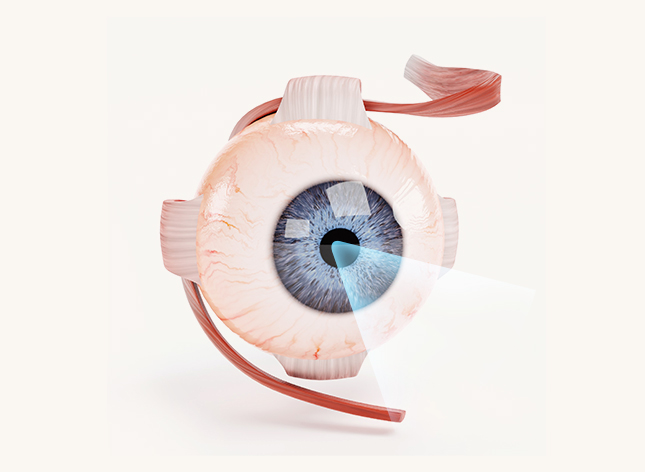
Presbyopia Surgery in Seoul: Multifocal IOL, LASEK or Reading Glasses?
A board-certified ophthalmologist explains your options in Guro & Yeongdeungpo, Seoul
Q. What is the best presbyopia surgery option in Seoul?
There is no single ‘best’ presbyopia surgery — the right choice depends on your age, lens clarity, and lifestyle. Patients over 50 with early lens changes often benefit most from a multifocal or extended depth-of-focus IOL, while younger patients with a clear natural lens may prefer TransPRK or 2-Day LASEK monovision. A comprehensive eye exam at a Seoul clinic experienced in presbyopia surgery is the only reliable way to know which path fits your eyes.
Q. Why does presbyopia surgery matter for patients in Seoul?
Presbyopia surgery Seoul searches have grown steadily as the city’s population ages and as more professionals in Yeongdeungpo, Guro, and Gasan seek to stay glasses-free for both close computer work and daily life. South Korea also has one of the world’s most mature refractive surgery industries, meaning patients in Seoul have access to the latest lens and laser technologies alongside experienced surgical teams.
Q. What are the treatment options for presbyopia?
Presbyopia treatment falls into three broad categories: optical correction (reading glasses or multifocal contact lenses), corneal-based surgery (TransPRK or 2-Day LASEK with monovision or blended vision), and lens-based surgery (refractive lens exchange with a multifocal or extended depth-of-focus IOL). Each has a different risk profile, cost, and durability, which is why an individualized consultation matters more than the marketing name of any single technique.
Presbyopia in Korea: Key Statistics
- ▸ Nearly all adults over age 45–50 in Korea experience some degree of presbyopia, consistent with global prevalence data.
- ▸ Korea has one of the highest rates of myopia in the world, near 90% among young adults, meaning many presbyopic patients are also correcting long-standing near-sightedness.
- ▸ Refractive lens exchange volumes in Korean clinics have risen alongside the aging of the baby-boom generation now reaching their 50s and 60s.
- ▸ Multifocal and EDOF IOL adoption in Seoul has increased as newer diffractive designs reduce night-time glare compared with earlier generations.
Q. What does refractive lens exchange involve?
Refractive lens exchange uses the same microincision technique as modern cataract surgery. The natural lens is gently emulsified and removed, then a multifocal or EDOF IOL is folded and inserted through a small self-sealing incision, typically under topical anesthesia in 10–15 minutes per eye.
Because this replaces the lens permanently, it also eliminates the possibility of ever developing a cataract in that eye, which is a meaningful long-term benefit for patients in their 50s and beyond.
Q. How does TransPRK or 2-Day LASEK correct presbyopia?
TransPRK and 2-Day LASEK reshape the cornea with an excimer laser rather than replacing the lens. For presbyopia, surgeons typically create a mild monovision or blended-vision profile — one eye optimized for distance, the other slightly myopic for near tasks — which the brain adapts to over several weeks.
This clinic does not perform SMILE LASIK; presbyopia and refractive correction here are managed with TransPRK, 2-Day LASEK, or OK lens (orthokeratology) depending on the patient.
Q. What should patients know before choosing surgery?
- Multifocal and EDOF IOLs can cause halos or glare around lights at night, especially in the first 1–2 months.
- Monovision from LASEK/TransPRK reduces depth perception slightly and is not ideal for professional drivers or pilots.
- Dry eye should be treated before either procedure, as it affects both healing and visual quality.
- A trial with monovision contact lenses can help predict tolerance before committing to permanent surgery.
Ages 40–45
Early presbyopia. Reading glasses or monovision contacts are usually sufficient.
Ages 46–55
TransPRK/LASEK monovision is often ideal if the natural lens remains clear.
Ages 55+
Refractive lens exchange with a multifocal/EDOF IOL is frequently recommended, especially with early lens changes.
“Every patient asking about presbyopia surgery in Yeongdeungpo or Guro has a different lifestyle and different tolerance for trade-offs. My role is to match the right technology — whether that is TransPRK, 2-Day LASEK, or a multifocal IOL — to the patient in front of me, not to sell a single technique to everyone.” — Dr. Daniel Baik, board-certified ophthalmologist, Nunehim Eye Center
❓ Frequently Asked Questions
Q. What is presbyopia and why does it happen with age?
Presbyopia is the natural, age-related loss of the eye’s ability to focus on near objects, caused by gradual stiffening of the crystalline lens and weakening of the surrounding ciliary muscle. It typically becomes noticeable between ages 40 and 45 and affects nearly everyone eventually, regardless of whether they were previously near-sighted, far-sighted, or had perfect distance vision.
Q. Is presbyopia surgery different from cataract surgery?
They can overlap. When a multifocal or extended depth-of-focus intraocular lens (IOL) is used to treat presbyopia, the surgical technique is identical to standard cataract surgery — the eye’s natural lens is removed and replaced with an artificial one. The key difference is that presbyopia lens exchange (refractive lens exchange) is performed before a visually significant cataract has formed, purely to reduce dependence on reading glasses.
Q. How do multifocal and extended depth-of-focus IOLs work?
These advanced IOLs use multiple concentric optical zones or diffractive rings to create several focal points — near, intermediate, and distance — so the brain learns to select the sharpest image for each task. Extended depth-of-focus (EDOF) lenses instead stretch a single focal point into a longer, continuous range, which tends to reduce halos and glare compared with older multifocal designs.
Q. Who is a good candidate for LASEK or TransPRK monovision instead of lens surgery?
Patients in their 40s to mid-50s who still have a healthy natural lens, mild to moderate refractive error, and no early cataract are often better suited to corneal surface procedures such as TransPRK or 2-Day LASEK using a monovision or blended-vision approach. This preserves the natural lens and is generally reversible in effect through further correction, whereas lens-based surgery is not.
Q. What are the risks and trade-offs of presbyopia-correcting IOLs?
The most common trade-offs are halos or starbursts around lights at night, reduced contrast sensitivity in dim conditions, and a longer neuroadaptation period during which the brain adjusts to multiple focal points. A small percentage of patients request IOL exchange if symptoms do not resolve. A thorough preoperative discussion, corneal topography, and dry eye treatment beforehand meaningfully lower these risks.
Q. How long is recovery after refractive lens exchange or LASEK for presbyopia?
After lens exchange, most patients resume desk work within 2 to 3 days and driving within a week, though full stabilization of near vision and neuroadaptation can take 4 to 8 weeks. TransPRK or 2-Day LASEK involves a longer initial epithelial healing period of 3 to 5 days with some light sensitivity, followed by gradual visual improvement over 2 to 4 weeks.
Q. Can reading glasses still be a reasonable choice instead of surgery?
Yes. For many patients, well-fitted progressive or single-vision reading glasses remain a safe, low-cost, fully reversible option with none of the surgical risks discussed above. Surgery is best considered by patients who are strongly motivated to reduce glasses dependence and who understand and accept the specific trade-offs of the chosen procedure.

Book a Consultation
Discuss your presbyopia surgery options in Seoul with Dr. Daniel Baik.
nunehim.com
📍 Visit Nunehim Eye Center — Guro, Seoul
Convenient access from Guro, Gasan, Gwanak & Dongjak. Near Guro Digital Complex Station (Line 2).
Address
551 Siheung-daero, Guro-gu, Seoul
nunehim.com
Hours
Mon–Fri 09:00–18:30 (lunch 13–14)
Sat 09:00–14:00
Languages
Korean & English


Leave a comment