School Vision Screening in Korea: What to Do If Your Child Fails
A parent’s guide from Nunehim Eye Center, Guro-gu, Seoul
Quick Answer
If your child failed a school vision screening in Korea, book a comprehensive eye exam with an ophthalmologist within a few weeks. Most failures are due to myopia, which is highly treatable with glasses, contact lenses, or myopia-control options like OK lens — but a full exam is needed to confirm the diagnosis and rule out other conditions.
Q. What is the school vision screening in Korea?
School vision screening Korea children undergo each year is a basic acuity check performed by homeroom teachers or school nurses using a standardized eye chart. It is designed to catch obvious vision problems quickly across an entire class, not to diagnose specific eye conditions. Because the test is brief, it can miss subtler issues like early astigmatism, so a failed result — or even a borderline pass — is worth following up on with a real exam in Yeongdeungpo, Guro, or your nearest clinic.
Q. Why do so many Korean children fail vision screening?
Korea has one of the highest rates of childhood myopia in the world. National surveys have found uncorrected or under-corrected myopia in a large majority of high-school-aged students, with rates climbing sharply during elementary and middle school years. Intensive near-work from studying, screen time, and limited outdoor exposure are widely cited as contributing factors by Korean ophthalmology researchers.
Myopia in Korean Schoolchildren — Key Figures
- ▸ Childhood and adolescent myopia prevalence in Korea is among the highest globally, with studies reporting rates near 60-70% by late high school.
- ▸ Myopia onset is increasingly common before age 10, especially in dense urban districts of Seoul.
- ▸ Children in Gasan and Gwanak with a myopic parent have a substantially higher risk of developing myopia themselves.
- ▸ Early diagnosis and myopia-control treatment can meaningfully slow prescription progression compared to glasses alone.
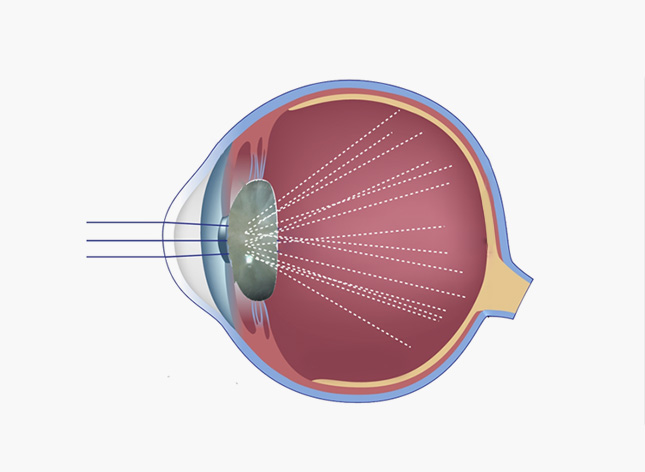
Q. What are the treatment options after a failed screening?
Once myopia or another refractive error is confirmed, options range from standard glasses and daytime contact lenses to dedicated myopia-control approaches. Orthokeratology (OK lens) is reshaped nightly to give clear daytime vision without any daytime correction, and has documented myopia-control benefits in children.
Low-dose atropine drops and specialized myopia-control spectacle lenses are additional options your ophthalmologist may discuss depending on your child’s age, prescription, and lifestyle. Families across Yeongdeungpo and Guro often combine glasses with regular outdoor-time recommendations as a first step.
Q. What does a comprehensive follow-up exam involve?
A full pediatric eye exam checks visual acuity in each eye separately, measures the refractive error precisely, evaluates eye alignment and movement, and examines the retina and optic nerve. This is far more thorough than a school chart test and can catch amblyopia, strabismus, or astigmatism that screening alone would miss.
When to Seek Care Promptly
- Your child squints, sits close to the TV, or complains of headaches after reading
- One eye consistently performs worse than the other on screening
- Vision has noticeably worsened since the last exam
- Your child has not had an eye exam in over a year
Q. When should I see a doctor in Seoul after a failed screening?
Ideally within two to four weeks. Uncorrected myopia can affect classroom performance and, in growing children, prescriptions can shift quickly. Clinics serving Yeongdeungpo, Guro, Gasan, and Gwanak typically offer same-week appointments for school-referred children.
Stage 1: Screening
Basic acuity check at school flags children below the visual cutoff for referral.
Stage 2: Full Exam
Comprehensive refraction, eye health, and alignment check confirms the diagnosis.
Stage 3: Management
Glasses, contacts, or myopia-control treatment plan with regular follow-up.
From Dr. Daniel Baik
“I see many parents worried after a school screening letter, but a failed screening is very manageable once we understand the cause. As a board-certified ophthalmologist, I focus on giving each child in Guro and the surrounding Seoul neighborhoods a clear plan — not just glasses, but a strategy to protect their vision as they grow.”
❓ Frequently Asked Questions
Q. What happens during a school vision screening in Korea?
Korean elementary and middle schools conduct annual vision screenings, typically using a simple Snellen-type chart to check visual acuity in each eye. It’s a quick pass/fail test, not a full eye exam — students who score below 0.7 (20/28 equivalent) in either eye are usually flagged for follow-up with an ophthalmologist in Guro, Yeongdeungpo, or another nearby district.
Q. My child failed the screening — is this an emergency?
No, but it should not be ignored. A failed screening simply means uncorrected vision was below the school’s cutoff. In most cases this is due to myopia (nearsightedness), which is extremely common in Korean schoolchildren. Book a comprehensive eye exam within a few weeks to confirm the cause and start appropriate management.
Q. What causes most vision screening failures in Korean children?
The overwhelming majority of failures are due to myopia. Korea has one of the highest childhood myopia rates in the world, with prevalence exceeding 60-70% by the end of high school in national epidemiological surveys. Reduced outdoor time and heavy near-work (reading, tablets, hagwon study) are major contributing factors.
Q. Can myopia in children be slowed down or only corrected with glasses?
Both. Glasses or contact lenses correct blurred vision immediately, but myopia control treatments — such as orthokeratology (OK lens), low-dose atropine eye drops, or specialized myopia-control spectacle lenses — can slow the rate at which a child’s prescription worsens year over year. Discuss options with your ophthalmologist based on your child’s age and prescription.
Q. Is orthokeratology (OK lens) safe for school-age children?
OK lenses are FDA-cleared and widely used in Korea for children as young as 7-8, worn overnight to reshape the cornea temporarily so the child sees clearly during the day without glasses or daytime contacts. They also have documented myopia-control benefits. Proper fitting, hygiene education, and regular follow-up visits are essential for safety.
Q. What if my child also has astigmatism or amblyopia (lazy eye)?
A comprehensive exam will check for astigmatism, unequal prescriptions between eyes, and amblyopia — all of which a basic school screening cannot detect. Amblyopia in particular needs early treatment (patching, glasses, or vision therapy) because the window for correcting it narrows significantly after around age 8-9.
Q. How often should my child have a full eye exam after failing a screening?
Most ophthalmologists recommend a comprehensive exam every 6-12 months for children with confirmed myopia, since prescriptions in growing children can change quickly. Families in Yeongdeungpo, Guro, Gasan, and Gwanak often schedule these around school breaks for convenience.

Book a Consultation
Schedule a comprehensive vision exam for your child at Nunehim Eye Center, serving Yeongdeungpo, Guro, Gasan, and Gwanak.
Or visit nunehim.com
📍 Visit Nunehim Eye Center — Guro, Seoul
Convenient access from Guro, Gasan, Gwanak & Dongjak. Near Guro Digital Complex Station (Line 2).
Address
551 Siheung-daero, Guro-gu, Seoul · nunehim.com
Hours
Mon–Fri 09:00–18:30 (lunch 13–14), Sat 09:00–14:00
Languages
Korean & English


Leave a comment