Glaucoma vs Normal Eye Pressure: What Every Adult in Seoul Should Know
Nunehim Eye Center · Guro, Seoul
Quick Answer
Glaucoma is a disease of the optic nerve — not simply “high eye pressure.” You can have completely normal eye pressure and still develop glaucoma (called normal-tension glaucoma), or have elevated pressure for years and never develop the disease. In Korea, normal-tension glaucoma makes up roughly 70–77% of all glaucoma cases, which is far higher than in Western populations. That means an eye pressure reading alone is not enough to rule glaucoma out — a full optic nerve and visual field exam is what actually protects your vision.
Q. What is glaucoma, and how is it different from having high eye pressure?
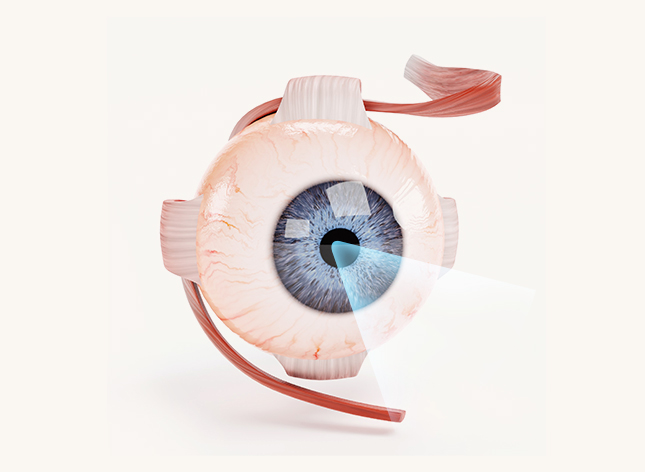
Glaucoma is a progressive disease in which the optic nerve — the cable that carries visual information from your eye to your brain — is gradually damaged. Elevated intraocular pressure (IOP) is the single biggest risk factor for this damage, which is why glaucoma and eye pressure get used interchangeably in everyday conversation. But they are not the same thing. Some adults walk around with eye pressure in the high-normal range for decades and never lose a single fiber of their optic nerve. Others, especially in Korea, have textbook-normal pressure readings of 14–18 mmHg and still develop progressive, irreversible vision loss because their optic nerve is unusually sensitive to pressure, or because blood flow to the nerve is compromised. This is normal-tension glaucoma, and it is the most common form of glaucoma diagnosed in Seoul and across Korea.
Q. What are the symptoms and signs of glaucoma?
- Gradual loss of peripheral (side) vision — often unnoticed until it is advanced, because the brain fills in the missing areas
- Tunnel vision in later stages, when central vision is all that remains
- Sudden eye pain, redness, blurred vision, nausea, and halos around lights — this is an emergency sign of acute angle-closure glaucoma, not chronic glaucoma
- No symptoms at all in early-to-moderate chronic glaucoma, which is why it is often called “the silent thief of sight”
- Difficulty adjusting to dim rooms or driving at night as the disease progresses
Glaucoma in Korea — By the Numbers
- ▸ Glaucoma affects an estimated 3–4% of Korean adults over age 40, and the rate rises sharply after age 60
- ▸ Roughly 70–77% of glaucoma cases diagnosed in Korea are normal-tension glaucoma, compared with about 30–40% in Western countries
- ▸ National health screening data suggests fewer than 1 in 5 Koreans with glaucoma are aware they have it before a routine exam catches it
- ▸ High myopia — extremely common among adults in Seoul — roughly doubles the lifetime risk of developing glaucoma
Q. How is glaucoma treated and managed?
Glaucoma cannot be cured, but in the vast majority of cases it can be controlled well enough to protect your remaining vision for life. Treatment almost always starts with daily prescription eye drops (most often prostaglandin analogues) that lower eye pressure and reduce stress on the optic nerve. If drops aren’t enough or aren’t tolerated well, selective laser trabeculoplasty (SLT) is a quick, in-office procedure that can lower pressure for years at a time. For more advanced or harder-to-control cases, minimally invasive glaucoma surgery (MIGS) or traditional filtering surgery such as trabeculectomy may be recommended. Because normal-tension glaucoma doesn’t always respond to pressure-lowering treatment alone, management often also includes monitoring blood flow and vascular risk factors.
The single most important factor in successful treatment is early detection — vision already lost to glaucoma cannot be recovered, so the goal of every visit is to catch changes before they affect your daily life.
Q. Who is at higher risk for glaucoma?
Risk rises with age, especially after 40, and roughly doubles with each decade after that. A first-degree relative with glaucoma raises your own risk several-fold, so family history matters even if your eyes feel fine. High myopia (nearsightedness), which is extremely common among adults and students across Yeongdeungpo, Guro, and Gasan, is an independent risk factor, as are diabetes, long-term steroid use, previous eye injury, and thin corneas. Because so many risk factors are silent, an eye exam is often the only way to know where you stand.
Q. When should you see an ophthalmologist in Seoul?
- You are over 40 and have never had a dilated eye exam or optic nerve check
- A parent or sibling has been diagnosed with glaucoma
- You are highly nearsighted (high myopia)
- You have diabetes or another vascular condition
- You experience sudden eye pain, redness, blurred vision, or halos around lights — seek care immediately, this can be an emergency
Early Glaucoma
Eye pressure or optic nerve changes are detected on screening, but visual field testing is still normal or near-normal. This is the ideal stage to begin treatment, when damage can still be prevented entirely.
Moderate Glaucoma
Measurable peripheral vision loss appears on visual field testing, though most patients still don’t notice any change in daily life. Consistent treatment and monitoring every 3–6 months are essential here.
Advanced Glaucoma
Significant peripheral vision loss, sometimes progressing to tunnel vision. Treatment focuses on aggressively preserving whatever central vision remains, often combining drops, laser, and surgery.
— Dr. Daniel Baik, Board-Certified Ophthalmologist
“Because normal-tension glaucoma is so common here, I never rely on eye pressure alone to rule glaucoma in or out. Every comprehensive exam at Nunehim Eye Center includes optic nerve imaging and visual field testing, not just a pressure check. Patients from Yeongdeungpo, Guro, and Gasan are often surprised to learn their pressure was completely ‘normal’ the entire time their peripheral vision was quietly narrowing — that’s exactly why we screen the nerve directly.”
❓ Frequently Asked Questions
Q. Can you have glaucoma with completely normal eye pressure?
Yes. This is called normal-tension glaucoma, and it is actually the most common form of glaucoma diagnosed in Korea, accounting for an estimated 70–77% of cases. The optic nerve is damaged even though intraocular pressure stays within the normal range of roughly 10–21 mmHg, likely due to increased nerve sensitivity or reduced blood flow. This is why a dilated exam and optic nerve imaging matter more than the pressure number alone.
Q. Is glaucoma curable?
No. Any vision lost to glaucoma is permanent, because damaged optic nerve fibers do not regenerate. However, with consistent treatment, the great majority of people diagnosed early keep functional vision for the rest of their lives. The goal of treatment is always to stop further damage, not to reverse what has already occurred.
Q. How is glaucoma actually diagnosed?
Diagnosis combines several tests in one visit: tonometry to measure eye pressure, optical coherence tomography (OCT) to image the optic nerve fibers directly, a visual field test to map any blind spots, and gonioscopy to examine the eye’s drainage angle. No single test is definitive on its own — it’s the combination that confirms glaucoma.
Q. Who is at higher risk for glaucoma in Korea specifically?
Adults over 40, anyone with a family history of glaucoma, people with high myopia (very common among Seoul adults), and those with diabetes are all at elevated risk. Because normal-tension glaucoma is so prevalent in the Korean population, even people who have never had high pressure readings should still be screened regularly after 40.
Q. How often should I get my eye pressure and optic nerve checked?
Adults over 40 without other risk factors should have a comprehensive eye exam, including optic nerve evaluation, about once a year. If you have a family history of glaucoma, diabetes, or high myopia, more frequent monitoring — sometimes every 6 months — is often recommended.
Q. Does glaucoma cause blindness if left untreated?
Yes. Glaucoma is one of the leading causes of irreversible blindness worldwide, but the timeline is usually slow, often over many years, which is exactly why it goes unnoticed without regular screening. With treatment, permanent blindness from glaucoma is largely preventable.
Q. Can LASIK, TransPRK, or other refractive surgery cause glaucoma or affect glaucoma monitoring?
Refractive surgery itself does not cause glaucoma. However, procedures that reshape the cornea can change how accurately eye pressure is measured afterward, so your surgeon and ophthalmologist should account for your corneal thickness and surgical history when interpreting future pressure readings. This is one more reason to keep a consistent eye care provider who has your full history on file.

Book a Consultation
Dr. Daniel Baik and the team at Nunehim Eye Center welcome English and Korean-speaking patients across Yeongdeungpo, Guro, and Gasan.
📍 Visit Nunehim Eye Center — Guro, Seoul
Convenient access from Guro, Gasan, Gwanak & Dongjak. Near Guro Digital Complex Station (Line 2).
Address
551 Siheung-daero, Guro-gu, Seoul
nunehim.com
Hours
Mon–Fri 09:00–18:30 (lunch 13:00–14:00)
Sat 09:00–14:00
Languages
Korean & English


Leave a comment