
OK Lens vs Atropine: Best Myopia Control Options for Children in Seoul
A board-certified ophthalmologist compares the two leading treatments to slow childhood myopia progression
Quick Answer
Both orthokeratology (OK lens) and low-dose atropine drops are proven myopia control options for children in Seoul, slowing axial length growth by roughly 30 to 60 percent. OK lens corrects vision overnight with no daytime glasses; atropine is a simple nightly eye drop that suits younger or lens-averse children. Many pediatric patients at our Guro-gu clinic combine both for stronger control.
Q. What is myopia control and why does it matter for children in Seoul?
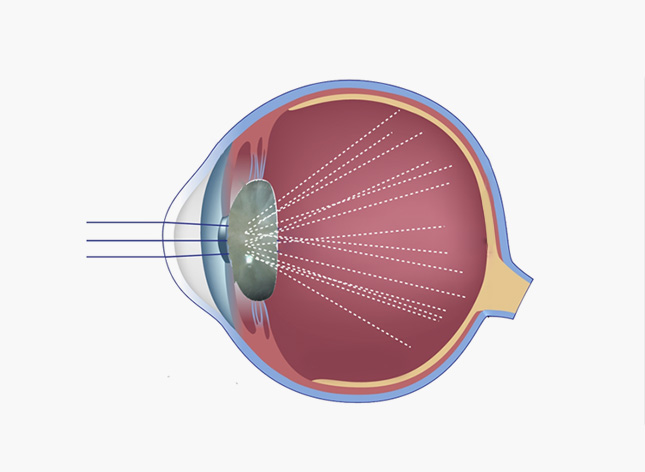
Myopia control refers to treatments that slow the progression of nearsightedness in children, rather than simply correcting it with glasses. This matters enormously in Korea: nearly all Korean children are exposed to intense near-work from early schooling, and unchecked myopia that worsens year after year raises lifetime risk of retinal detachment, glaucoma, and myopic maculopathy in adulthood. Parents in Yeongdeungpo, Guro, Gasan, and Gwanak increasingly ask about myopia control at their child’s very first glasses prescription, not years later.
Q. What are the signs my child needs myopia control in Guro or Yeongdeungpo?
- Squinting at the classroom board or holding books close to the face
- A new or worsening glasses prescription at each 6-12 month check
- Rapid axial length growth measured by biometry
- Family history of high myopia (over -6.00 diopters) in either parent
Myopia in Korea: The Numbers
- ▸ Roughly 96% of Korean men in their late teens are myopic, among the highest rates worldwide
- ▸ Myopia progresses fastest between ages 8 and 13, the exact window myopia control targets
- ▸ Each additional diopter of myopia meaningfully raises lifetime risk of retinal disease
- ▸ Children in Seoul with two myopic parents progress on average faster than those with none
Q. How does OK lens treatment work for myopia control?
Orthokeratology (OK lens) uses a rigid, custom-designed contact lens worn only while sleeping. It gently reshapes the cornea overnight, so your child wakes up with clear vision and needs no glasses or daytime lenses. Beyond correcting vision, the altered corneal shape changes how light focuses at the peripheral retina, which is believed to be the mechanism that slows further eye elongation. Fitting is done at our Guro-gu clinic with corneal topography, and most children in Yeongdeungpo adapt within one to two weeks.
OK lens is well suited to active children and those who play sports, since there is nothing to wear, lose, or fog up during the school day. It requires disciplined nightly cleaning and consistent follow-up, particularly in the first month.
Q. How does low-dose atropine slow myopia progression?
Low-dose atropine (typically 0.01% to 0.05%) is a single eye drop applied nightly. Its exact mechanism is not fully understood, but it appears to act on receptors in the retina and sclera that regulate eye growth, slowing axial elongation independent of any lens on the eye. It requires no lens handling at all, which makes it a practical first option for younger children in Gasan and Gwanak, or for families not ready for contact lens wear.
Atropine alone does not correct blur, so children still wear glasses during the day. Its main trade-offs are mild light sensitivity and occasional near-focus changes, both of which we monitor at scheduled visits.

Q. When should I see a doctor in Seoul about my child’s myopia?
- Your child’s prescription changed by 0.50 diopters or more in the last year
- Either parent has high myopia over -6.00 diopters
- Your child is under 10 and already myopic
- You’ve noticed squinting, eye strain, or headaches after screen time or reading
OK Lens
Overnight wear, no daytime correction needed, strong evidence for control, higher upfront cost.
Atropine Drops
Nightly drop, glasses still needed by day, easiest to start young, lower monthly cost.
Combination
OK lens plus atropine for fast progressors or strong family history, the most involved plan.
“I tell every family in Guro and Yeongdeungpo the same thing: the best myopia control plan is the one your child will actually follow every night. OK lens and atropine both work — my job is finding the right fit for your child’s age, lifestyle, and eyes.”
— Dr. Daniel Baik, board-certified ophthalmologist, Nunehim Eye Center
❓ Frequently Asked Questions
Q. Is OK lens or atropine better for myopia control in Seoul children?
Both are proven, evidence-based options. OK lens (orthokeratology) reshapes the cornea overnight so children see clearly all day without glasses or daytime lenses, and studies show it slows axial length growth by roughly 30 to 60 percent. Low-dose atropine drops (0.01 percent to 0.05 percent) are placed nightly and work well for children who are not ready for a lens on the eye, or who play contact sports. Many families in Yeongdeungpo and Guro choose OK lens for the vision-correction benefit, and add atropine for extra control if progression continues.
Q. What age can my child start OK lens or atropine treatment?
Most Korean pediatric ophthalmology guidelines consider starting myopia control between ages 6 and 12, when myopia is diagnosed early and progressing quickly. OK lenses generally require a child mature enough to handle lens insertion and removal with parental help, usually from about age 7. Atropine drops have no minimum lens-handling requirement, so they are often the first choice for younger children in Gasan and Gwanak families we see.
Q. Are OK lenses safe for children to wear overnight?
When properly fitted and monitored, OK lenses have a strong safety record. The main risk is corneal infection, which is minimized through strict lens hygiene, regular follow-up visits, and prompt evaluation of any redness or discomfort. At Nunehim Eye Center we schedule closer follow-up in the first month of OK lens wear for every child fitted in our Guro clinic.
Q. Does low-dose atropine have side effects?
Low-dose atropine (0.01 to 0.05 percent) causes far fewer side effects than the higher concentrations used decades ago. Some children experience mild light sensitivity or slightly reduced near-focus, which usually resolves or is managed with photochromic lenses or reading glasses. Serious side effects are rare at these low doses, which is why atropine has become a first-line option across Seoul pediatric eye clinics.
Q. How much does myopia control cost in Seoul?
Costs vary by clinic and treatment type. OK lenses are a higher upfront cost with periodic lens replacement, while atropine drops are a lower monthly cost but require an ongoing prescription. Combination therapy costs more than either alone but often achieves the strongest control. We provide a personalized cost estimate at the first consultation at our Guro-gu location, based on your child’s prescription and goals.
Q. Can OK lens and atropine be combined?
Yes. Combination therapy is increasingly recommended for children with fast-progressing myopia, especially strong family history of high myopia. Research suggests combining OK lens with low-dose atropine can improve control beyond either treatment alone. We regularly design combination plans for children in Yeongdeungpo and Guro whose myopia continues to progress on a single therapy.
Q. How often does my child need follow-up visits?
OK lens wearers typically return at 1 day, 1 week, 1 month, and then every 3 months for fitting checks and corneal health screening. Atropine-only patients are usually seen every 3 to 6 months to track axial length and refraction. Consistent follow-up is the most important factor in catching problems early and confirming the treatment is actually slowing progression.

Book a Consultation
Schedule a myopia control evaluation for your child at Nunehim Eye Center in Guro-gu, serving Yeongdeungpo, Gasan, and Gwanak families.
nunehim.com
📍 Visit Nunehim Eye Center — Guro, Seoul
Convenient access from Guro, Gasan, Gwanak & Dongjak. Near Guro Digital Complex Station (Line 2).
Address
551 Siheung-daero, Guro-gu, Seoul
nunehim.com
Hours
Mon-Fri 09:00-18:30 (lunch 13-14)
Sat 09:00-14:00
Languages
Korean & English


Leave a comment