
Medically reviewed by Dr. Jinhag Baik, MD · Last updated September 2026
Presbyopia (Reading Vision Loss): Options for People Over 40 in Seoul
Why near vision fades after 40, and what actually works — Nunehim Eye Center, Guro-gu, Seoul
Quick Answer
Presbyopia treatment in Seoul ranges from reading glasses and progressive lenses to multifocal contact lenses and, for the right candidates, surgical options like multifocal IOLs or presbyopia-focused LASEK — nearly everyone develops some degree of presbyopia by their mid-to-late 40s, and the right option depends on lifestyle, existing prescription, and how much you want to reduce dependence on glasses.
Q. What is presbyopia treatment in Seoul, and who needs it?
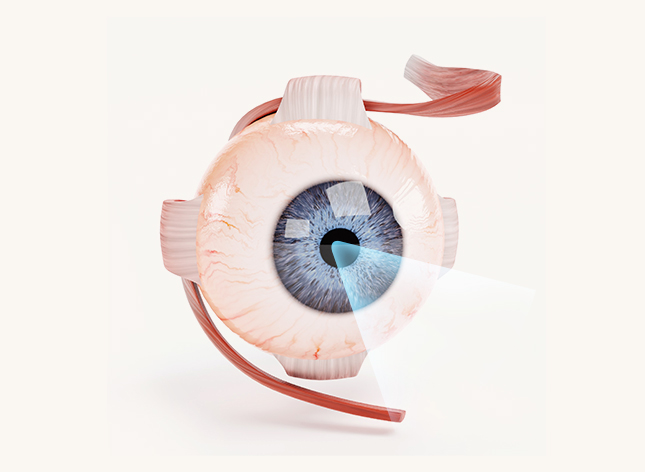
Presbyopia treatment in Seoul covers everything from simple reading glasses to multifocal lens surgery, and nearly everyone over 40 needs some form of it — presbyopia is not a disease but a universal age-related change in which the eye’s natural lens gradually loses flexibility, making it harder to focus on close objects like phone screens, menus, or fine print. It affects people in Yeongdeungpo, Guro, and Gasan regardless of their prior glasses prescription.
Q. What are the symptoms of presbyopia?
- Holding books, menus, or phones farther away to focus
- Eye strain or headaches after reading or close work
- Needing brighter light to read comfortably
- Blurry near vision that is worse in the evening or when tired
- Difficulty switching focus quickly between near and distance
Presbyopia in Korea: The Numbers
- ▸ Nearly 100% of Koreans experience some degree of presbyopia by age 45–50
- ▸ Most patients need a prescription update every 1–2 years through their 40s and 50s
- ▸ Presbyopia symptoms are the most common reason adults over 40 schedule their first eye exam in years
- ▸ Multifocal IOL adoption has grown steadily among Korean cataract-surgery patients seeking reduced glasses dependence
Q. What are the non-surgical options for presbyopia?
Reading glasses are the simplest starting point, followed by progressive (no-line multifocal) glasses that correct distance, intermediate, and near vision in one lens. Multifocal or monovision contact lenses suit patients who prefer not to wear glasses; monovision corrects one eye for distance and the other for near, and adaptation varies by person.
We help patients in Guro and Gasan trial these options before committing, since comfort with monovision in particular is very individual.
Q. What surgical options exist for presbyopia?
For patients who also need cataract surgery, multifocal or extended depth-of-focus intraocular lenses can correct both the cataract and presbyopia at once. For patients without cataracts, select corneal-based approaches or monovision laser correction may reduce glasses dependence — candidacy depends on corneal shape, prescription, and lifestyle priorities.
Q. When should I see a doctor about presbyopia in Seoul?
- Near vision blur is affecting work or daily reading
- You are over 40 and have not had an eye exam recently
- Sudden or one-sided vision changes accompany the near blur
- You are considering surgical correction and want to know your candidacy
- Your current reading glasses no longer feel strong enough
- Flashes, new floaters, or a curtain-like shadow (possible retinal issue — seek urgent care)
Early (40–45)
Mild near blur; reading glasses usually sufficient.
Progressive (45–60)
Prescription strengthens; progressives or multifocal lenses fit best.
Stable (60+)
Presbyopia stabilizes; cataract evaluation often relevant too.
From Dr. Daniel Baik
“Presbyopia catches a lot of my patients off guard because they’ve had great vision their whole lives. The good news is there are more good options today than ever — the key is matching the option to how you actually live and work.”
❓ Frequently Asked Questions
Q. Is presbyopia the same as being farsighted?
No. Presbyopia is the age-related stiffening of the eye’s natural lens, which reduces the ability to focus on near objects, and it happens to almost everyone regardless of whether they were previously nearsighted, farsighted, or had perfect vision. Farsightedness (hyperopia) is a separate, often lifelong, refractive condition.
Q. At what age does presbyopia usually start in Seoul?
Most people in Seoul, as elsewhere, begin noticing presbyopia symptoms — needing to hold phones or menus farther away, eye strain when reading — between ages 40 and 45. It progresses gradually until it stabilizes around age 60–65.
Q. Can presbyopia be corrected without surgery?
Yes. Reading glasses, progressive (no-line bifocal) glasses, and multifocal or monovision contact lenses are all effective non-surgical options. Many patients start with reading glasses and move to progressives as the condition advances over several years.
Q. What surgical options exist for presbyopia in Seoul?
Options include multifocal or extended depth-of-focus intraocular lenses (often combined with cataract surgery for patients who need it anyway), and presbyopia-adjusted corneal laser procedures for select candidates. At Nunehim Eye Center we evaluate candidacy individually rather than assuming one solution fits everyone.
Q. Does presbyopia get worse every year?
Presbyopia progresses until roughly age 60–65, after which the lens has stiffened about as much as it will. This is why your reading glasses strength typically needs updating every 1–2 years during your 40s and 50s, then tends to stabilize later.
Q. Can I get LASIK or TransPRK if I already have presbyopia?
Standard TransPRK/2-Day LASEK corrects distance vision but does not eliminate the need for reading glasses on its own, since presbyopia is a separate, progressive lens issue. Some patients choose a monovision approach — correcting one eye for distance and one for near — which we discuss individually during consultation, since NOT everyone adapts well to it.
Q. How is presbyopia diagnosed and treated at Nunehim Eye Center?
We perform a full refraction, near-vision testing, and a dilated exam to rule out other causes of blurred near vision such as early cataract. From there we discuss the full range of options — from simple reading glasses to surgical correction — so patients in Yeongdeungpo, Guro, Gasan, and Gwanak can choose what fits their daily life.

Book a Consultation
Ready to explore your presbyopia options? Schedule a consultation at Nunehim Eye Center in Guro-gu, Seoul.
Or visit nunehim.com
📍 Visit Nunehim Eye Center — Guro, Seoul
Convenient access from Guro, Gasan, Gwanak & Yeongdeungpo. Near Guro Digital Complex Station (Line 2).
Address
551 Siheung-daero, Guro-gu, Seoul · nunehim.com
Hours
Mon–Fri 09:00–18:30 (lunch 13:00–14:00), Sat 09:00–14:00
Languages
Korean & English
Related guides
About the author: Dr. Jinhag (Daniel) Baik, MD, is an ophthalmologist and the director of Nunehim Eye Clinic in Seoul, Korea (near Guro Digital Complex Station). A former Samsung semiconductor engineer, he welcomes English-speaking patients for vision correction, cataract, and general eye care.


Leave a comment