Colour Blindness Test Seoul: Types, Diagnosis & Everyday Life
Understanding colour vision deficiency — testing and support in Guro, Seoul
Quick Answer
A colour blindness test in Seoul—commonly the Ishihara plate test—can confirm whether you have red-green, blue-yellow, or total colour vision deficiency in under 15 minutes. At Nunehim Eye Center in Guro-gu, board-certified ophthalmologist Dr. Daniel Baik offers comprehensive colour vision testing along with guidance on daily life, driving, and career considerations for patients across Yeongdeungpo, Guro, Gasan, and Gwanak.
Q. What Is Colour Blindness and What Causes It?
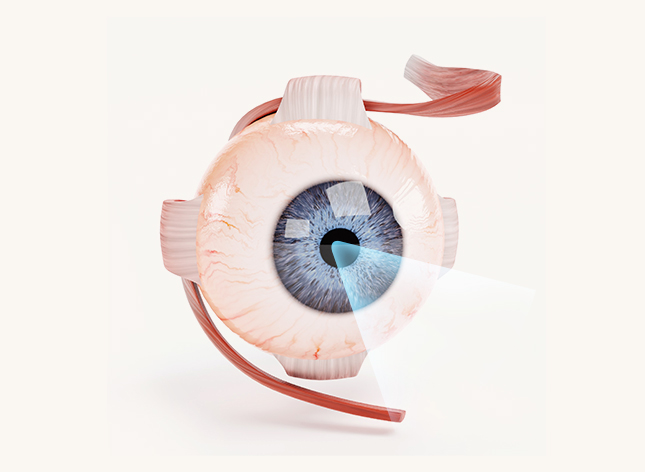
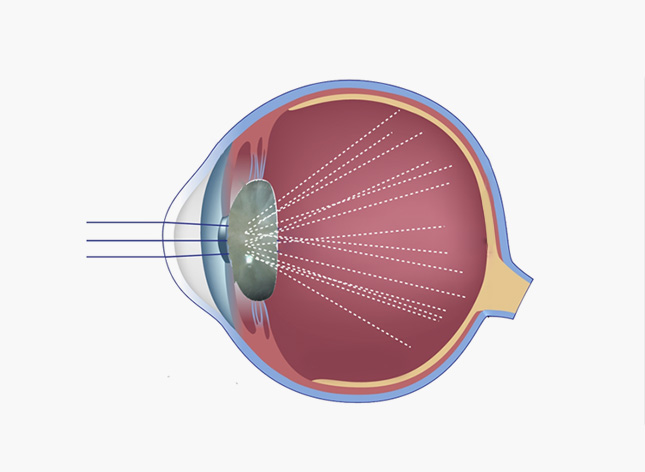
Colour blindness, or colour vision deficiency, is a condition where the eye has difficulty distinguishing certain colours, most often red and green, and less commonly blue and yellow. It results from an absence or malfunction of the light-sensitive cone cells in the retina. Most cases are inherited genetically on the X chromosome, though the condition can also develop later in life from eye disease, aging, or medication side effects. Anyone in Seoul considering a colour blindness test should know the condition is rarely visible from the outside and often goes unnoticed until formal testing.
Q. What Are the Symptoms of Colour Blindness?
- Difficulty telling red and green apart, especially in dim lighting
- Trouble distinguishing shades of purple, blue, and pink
- Colours appearing duller or less vibrant than others describe
- Needing to check labels for colour rather than relying on sight (clothing, wiring, charts)
- Children struggling with colour-coded schoolwork or crayons
Colour Blindness by the Numbers
- ▸ An estimated 5–8% of Korean men and about 0.5% of Korean women have some form of red-green colour blindness
- ▸ Colour blindness affects roughly 1 in 12 men and 1 in 200 women worldwide
- ▸ Congenital (inherited) colour blindness accounts for the large majority of cases seen in Korean ophthalmology clinics
- ▸ Many Korean students first learn of their colour vision deficiency during mandatory school-entry or military service eye exams
Q. How Is Colour Blindness Diagnosed and Managed?
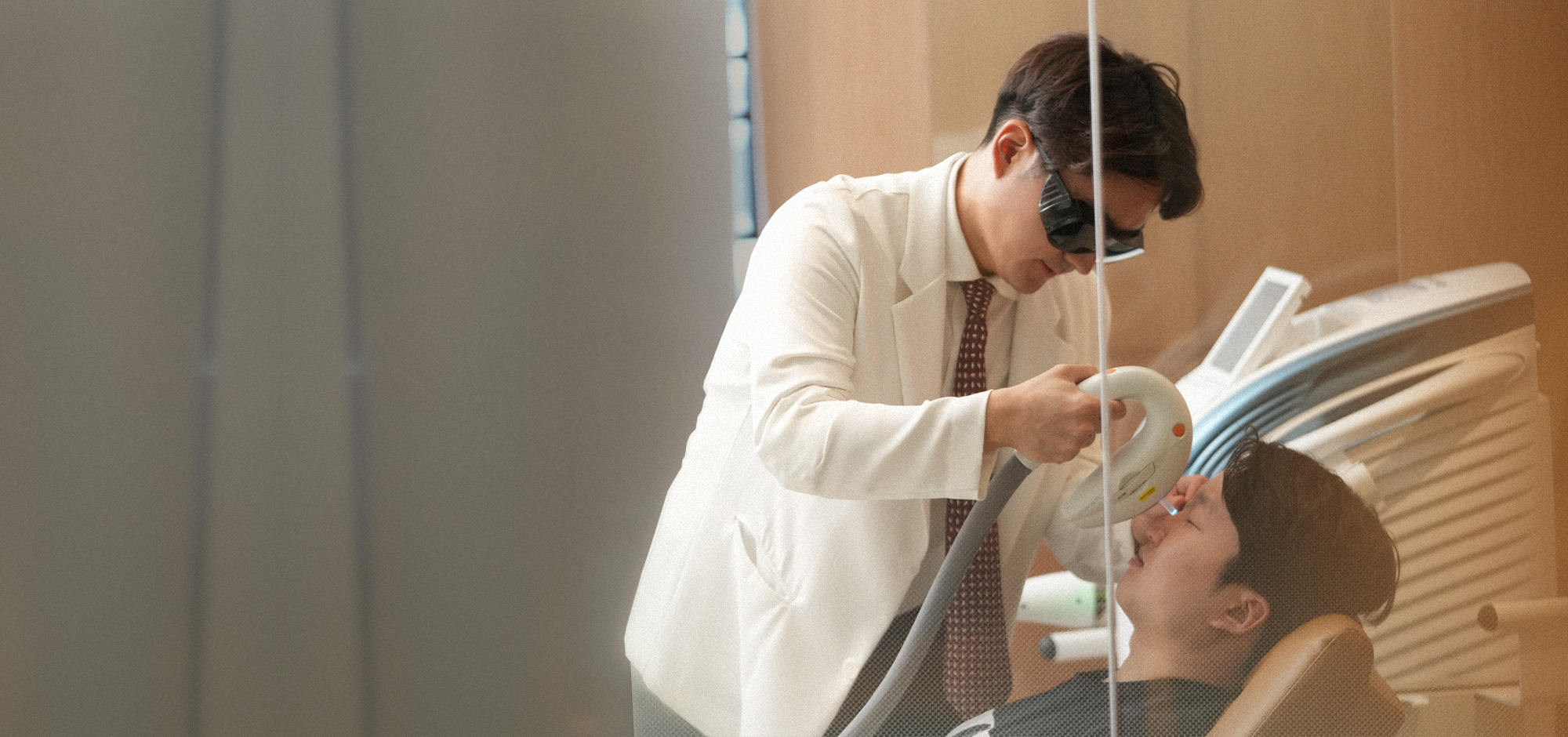
Diagnosis typically starts with the Ishihara test, a series of dot-pattern plates containing hidden numbers visible only to those with normal colour vision. If results suggest a deficiency, Nunehim Eye Center may follow up with more detailed testing, such as the Farnsworth D-15 test, to determine type and severity. Patients from Yeongdeungpo, Gasan, and across Seoul visit for this evaluation ahead of driving licence applications, school admissions, or careers such as aviation, police work, or firefighting, where colour vision standards apply.
While there is currently no cure for inherited colour blindness, there are effective ways to manage daily life with it. Colour-correcting glasses can enhance contrast between certain hues for some patients, and various smartphone apps can identify colours in real time. Dr. Baik also helps patients and parents adapt learning materials and provides official documentation for schools, workplaces, or government applications in Guro-gu and beyond.
Q. Does Colour Blindness Get Worse Over Time?
Inherited colour blindness is generally stable throughout life and does not worsen with age on its own. However, acquired colour vision problems—caused by cataracts, glaucoma, diabetic retinopathy, or certain medications—can progress if the underlying condition isn’t treated. This is why any sudden change in colour perception in adulthood, particularly among patients over 40 in Gwanak, Guro, or Yeongdeungpo, warrants a full eye exam rather than being assumed to be lifelong colour blindness.
Q. When Should I See a Doctor in Seoul About Colour Vision Changes?
- Colour vision suddenly changes or worsens in adulthood
- Colour blindness is accompanied by blurred vision, eye pain, or floaters
- Only one eye seems affected by the colour change
- You need certified colour vision testing for a driver’s licence, school, or job application
- A child seems to consistently mislabel colours past age four
Red-Green Deficiency
The most common form, affecting how red and green hues are perceived. Includes protanomaly and deuteranomaly.
Blue-Yellow Deficiency
A rarer form affecting the ability to distinguish blue from green and yellow from red, known as tritanomaly.
Total Colour Blindness
Extremely rare (achromatopsia), where the world is seen only in shades of grey, often paired with light sensitivity.
From Dr. Daniel Baik
“In my clinic in Guro, I meet patients of all ages who are curious, sometimes worried, about their colour vision. A simple Ishihara test gives clear answers in minutes, and for most people, colour blindness turns out to be a manageable part of life rather than a barrier.” — Dr. Daniel Baik, board-certified ophthalmologist at Nunehim Eye Center.
❓ Frequently Asked Questions
Q. Can colour blindness be cured?
There is no cure for inherited colour blindness, but colour-correcting lenses, assistive smartphone apps, and simple lifestyle adjustments can help many patients manage daily tasks more comfortably.
Q. Is colour blindness more common in men or women?
Yes, inherited red-green colour blindness is far more common in men because the responsible genes sit on the X chromosome, of which men carry only one copy.
Q. Can I get a driver’s licence in Korea if I’m colour blind?
Most people with mild to moderate colour blindness can still obtain a driver’s licence in Korea, though some categories require additional vision testing; Nunehim Eye Center can provide the documentation needed.
Q. How long does a colour blindness test take?
A standard Ishihara colour blindness test at our Guro-gu clinic takes about 10 to 15 minutes, with results available immediately.
Q. Can children be tested for colour blindness?
Yes, children as young as four can be tested using simplified colour vision charts, which is especially useful before starting school in Yeongdeungpo or Guro districts.
Q. Does colour blindness affect night vision?
Colour blindness itself does not affect night vision, since the rod cells responsible for low-light vision are separate from the cone cells that process colour.
Q. Where can I get a colour blindness test near Gasan or Gwanak?
Nunehim Eye Center in Guro-gu is easily accessible from Gasan and Gwanak via Guro Digital Complex Station, and offers same-day colour vision testing with English-speaking support.

Book a Consultation
Get a colour blindness test and full eye exam with Dr. Daniel Baik at Nunehim Eye Center, Guro-gu, Seoul.
Or visit nunehim.com
📍 Visit Nunehim Eye Center — Guro, Seoul
Convenient access from Guro, Gasan, Gwanak & Yeongdeungpo. Near Guro Digital Complex Station (Line 2).
Address
551 Siheung-daero, Guro-gu, Seoul · nunehim.com
Hours
Mon–Fri 09:00–18:30 (lunch 13:00–14:00), Sat 09:00–14:00
Languages
Korean & English


Leave a comment