Corneal Abrasion & Eye Injury in Seoul: First Aid and When to See a Doctor
Urgent eye care guidance from Nunehim Eye Center, Guro-gu, Seoul
Quick Answer
If you have scratched your eye, rinse it gently with clean water or saline, avoid rubbing it, and seek same-day evaluation. Most corneal abrasion eye injury Seoul cases heal within 24 to 72 hours with proper antibiotic drops, but a delayed exam raises the risk of infection or scarring. Nunehim Eye Center in Guro-gu offers urgent same-day slit-lamp exams for exactly this kind of injury.
Q. What Causes a Corneal Abrasion?
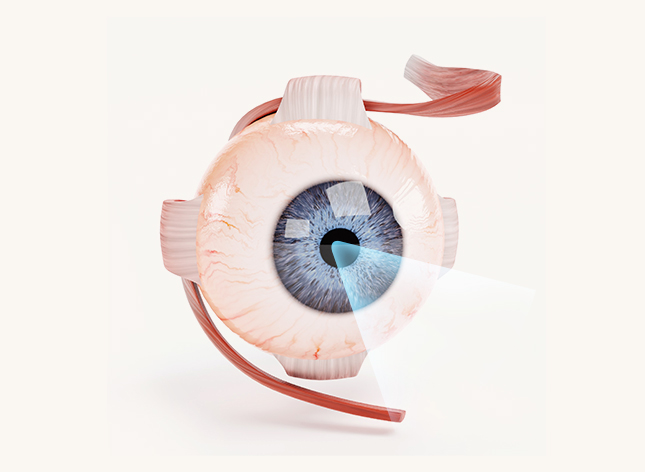
A corneal abrasion is a scratch on the clear front surface of the eye, often caused by fingernails, makeup brushes, tree branches, paper edges, contact lenses, or foreign debris like sand or metal fragments. Because the cornea has one of the densest nerve supplies in the body, even a tiny scratch can cause intense pain, tearing, and light sensitivity. Patients dealing with a corneal abrasion eye injury Seoul situation often arrive at Nunehim Eye Center in Guro-gu describing a sudden gritty, foreign-body sensation after an accident at work, at home, or during sports in Yeongdeungpo or Gasan.
Q. What Are the Symptoms of a Corneal Abrasion?
- Sharp pain that worsens with blinking
- Excessive tearing
- Redness
- Blurred vision
- Sensitivity to light (photophobia)
- A feeling that something is stuck in the eye
- Involuntary eyelid spasm (blepharospasm)
By the Numbers
- ▸ Corneal abrasions are among the most common eye injuries seen in emergency and urgent ophthalmology visits in Korea
- ▸ Most uncomplicated abrasions heal within 24–72 hours with proper treatment
- ▸ Untreated or improperly managed abrasions carry a meaningfully higher risk of corneal infection (microbial keratitis)
- ▸ Contact lens wearers face a higher risk of infection-related complications after a corneal scratch and should stop lens wear immediately
Q. What Is the First Aid for an Eye Injury?
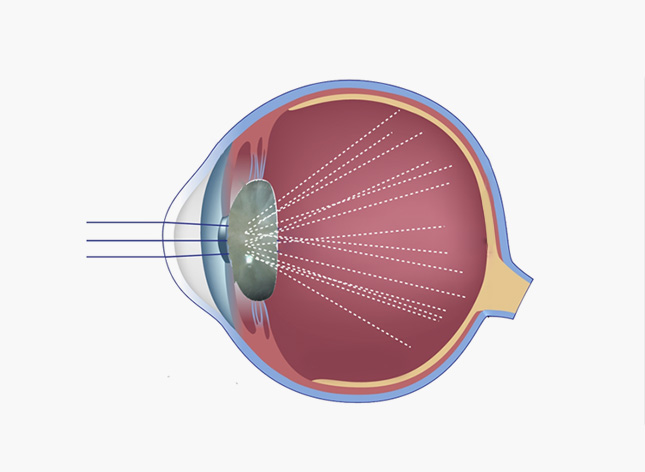
If you or someone near you sustains an eye injury, do not rub the eye. Rinse gently with clean water or sterile saline for several minutes to flush out any visible debris, blink normally to help tears clear small particles, and avoid touching the eye with cotton swabs or tweezers. Cover the eye loosely with a clean cloth or shield — never apply pressure — and seek prompt evaluation, especially for anything beyond a mild, brief irritation.
Do not attempt to remove an embedded object such as metal, glass, or wood yourself. Patients in Gasan and Gwanak who experience a penetrating injury should go directly to an emergency room or urgent ophthalmology clinic rather than waiting, since a delay can worsen outcomes significantly.
Q. How Is a Corneal Abrasion Treated?
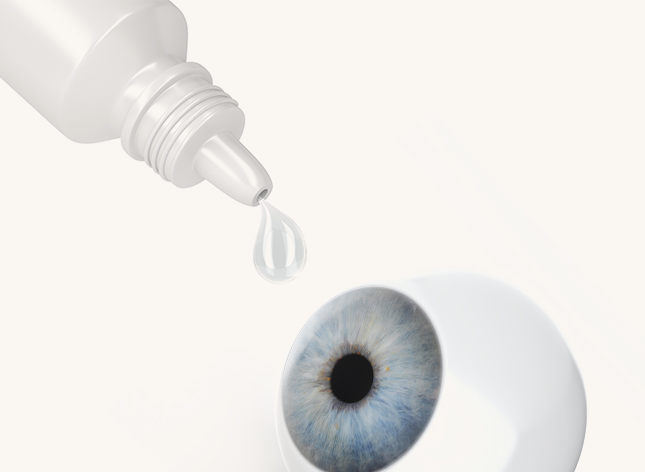
Treatment typically includes antibiotic eye drops or ointment to prevent infection while the corneal surface heals, along with preservative-free artificial tears for comfort. Oral pain relievers can help with discomfort, and an eye patch is rarely used today since it can actually slow healing. At Nunehim Eye Center, Dr. Daniel Baik uses fluorescein dye and a slit lamp to map the exact size and depth of the abrasion, checks for any retained foreign body, and schedules a follow-up exam within 24 to 48 hours to confirm the surface is healing properly — a step many patients across Yeongdeungpo skip when self-treating at home.
Q. When Should I See a Doctor in Seoul?
- Any eye pain following chemical exposure — rinse for 15–20 minutes and go immediately
- Vision that remains blurred after blinking
- A visible object embedded in the eye
- Pain that worsens after 24 hours instead of improving
- Discharge, increasing redness, or a white spot on the cornea (possible infection)
- Injury from a high-speed source like metal grinding, fireworks, or a sports impact
- Any injury in a contact lens wearer
Severity Levels
- Mild — surface scratch, heals in 1–2 days
- Moderate — larger abrasion, needs antibiotic drops, 3–5 days
- Severe — penetrating or chemical injury, needs urgent evaluation
Common Causes
- Fingernails & makeup brushes
- Contact lens mishandling
- Foreign debris — sand, metal, wood
- Chemical splashes
Recovery Timeline
- Hours 1–24: pain and light sensitivity peak
- Day 1–3: surface re-epithelializes
- Day 3–7: follow-up confirms healing
- Weeks: rare scarring needs monitoring
From Dr. Daniel Baik
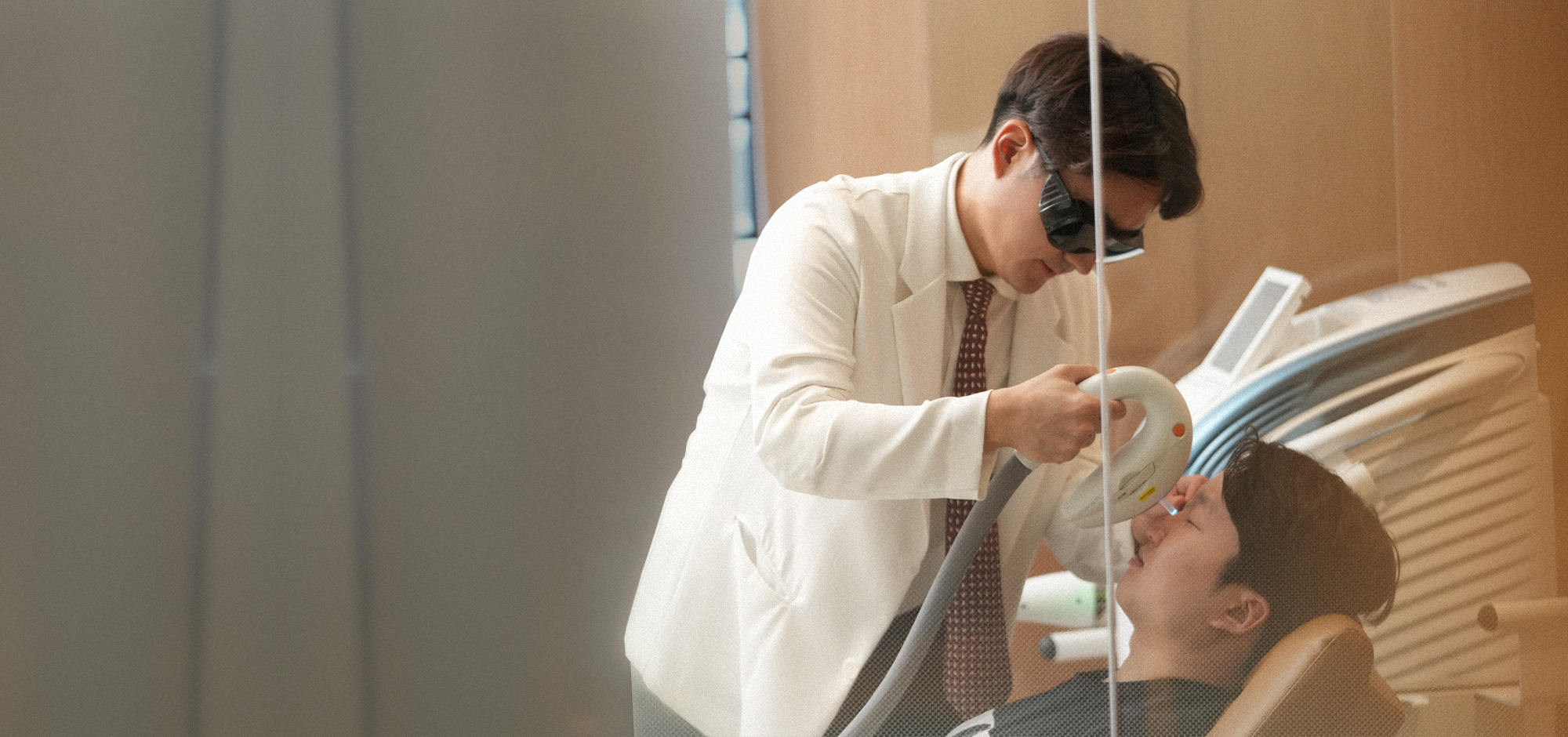
“I tell every patient who comes into my Guro-gu clinic with a scratched cornea the same thing: pain that feels this sharp is your eye telling you something needs attention today, not next week. Most corneal abrasions heal beautifully with the right drops and a bit of patience, but skipping the exam is how a simple scratch turns into a stubborn infection.”
❓ Frequently Asked Questions
Q. How long does a corneal abrasion take to heal?
Most mild to moderate corneal abrasions heal within 24 to 72 hours with proper antibiotic treatment and care. Larger or deeper scratches may take up to a week, and a follow-up exam ensures the surface has fully closed.
Q. Can I wear contact lenses after a corneal abrasion?
No, not until your ophthalmologist confirms the cornea has fully healed, which is typically at least one week after symptoms resolve. Wearing lenses too soon significantly raises the risk of infection.
Q. Is a corneal abrasion the same as a corneal ulcer?
No. A corneal abrasion is a scratch on the surface, while a corneal ulcer is an infected, open sore that can develop if an abrasion becomes infected or is left untreated. Ulcers are more serious and require urgent treatment.
Q. Should I patch my eye after an injury?
Modern guidelines generally discourage patching for simple corneal abrasions, since it can slow healing and hide worsening symptoms. Your doctor will advise if a patch or bandage contact lens is appropriate for your specific injury.
Q. What should I do if I get a chemical in my eye?
Rinse continuously with clean water or saline for at least 15–20 minutes before doing anything else, then seek emergency care immediately, even if the pain seems to improve. Chemical injuries can cause serious damage that is not immediately obvious.
Q. Will a corneal abrasion affect my vision permanently?
Most corneal abrasions heal completely without any lasting effect on vision. Deeper injuries or abrasions that become infected can occasionally leave a small scar that affects vision if it sits over the central cornea, which is why timely treatment matters.
Q. Can children get corneal abrasions, and are they treated differently?
Yes, children commonly scratch their eyes with fingernails, toys, or branches. Treatment principles are similar to adults, though young children may need extra care with drop administration and closer follow-up, which Nunehim Eye Center in Guro-gu and Yeongdeungpo provides for pediatric patients.

Book a Consultation
Scratched your eye or experienced another eye injury? Same-day urgent evaluation is available at Nunehim Eye Center in Guro-gu — serving Yeongdeungpo, Gasan, and Gwanak with Korean and English consultations.
nunehim.com
📍 Visit Nunehim Eye Center — Guro, Seoul
Convenient access from Guro, Gasan, Gwanak & Yeongdeungpo. Near Guro Digital Complex Station (Line 2).
Address
551 Siheung-daero, Guro-gu, Seoul · nunehim.com
Hours
Mon–Fri 09:00–18:30 (lunch 13:00–14:00), Sat 09:00–14:00
Languages
Korean & English


Leave a comment