
Floaters After Eye Surgery in Seoul: What Is Normal and What Is Not
A practical guide for post-operative patients in Guro, Yeongdeungpo, Gasan and Gwanak
Quick Answer
Floaters after eye surgery are common and usually harmless — a few new specks, threads or small bubbles that fade or become less noticeable over weeks to months. For floaters after eye surgery in Seoul, the key is recognising the warning signs: a sudden shower of new floaters, flashes of light, a dark curtain or shadow, or a drop in vision can mean a retinal tear or detachment and need a same-day dilated eye exam. Pain with increasing redness and worsening vision after surgery also needs urgent attention.
Q. What causes floaters after eye surgery?
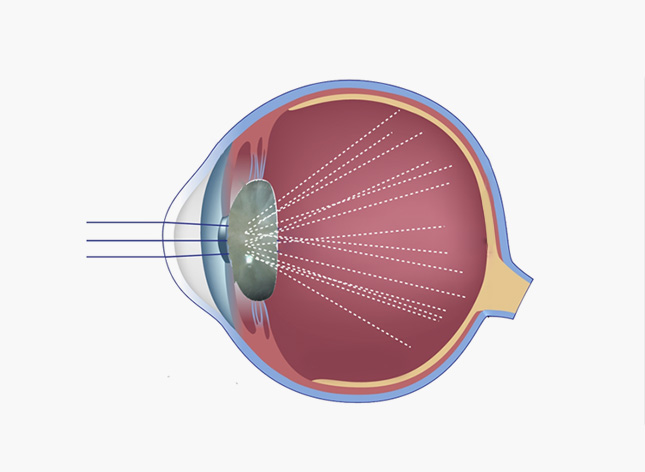
Floaters are shadows cast on the retina by small clumps of collagen, cells or bubbles in the vitreous — the clear gel that fills the back of the eye. Floaters after eye surgery are one of the most common post-operative questions we hear from patients in Seoul, and the cause depends on the procedure. After cataract surgery, the vitreous can shift forward and separate from the retina earlier than it otherwise would (posterior vitreous detachment, or PVD), and mild inflammation can leave temporary cells floating in the eye. After YAG laser capsulotomy for a cloudy lens capsule, tiny capsule fragments often drift for a few days. After intravitreal injections, small air bubbles are very common and typically disappear within a day or two.
Sometimes the floaters were there all along. After cataract surgery or TransPRK, vision becomes much clearer, and pre-existing vitreous opacities suddenly stand out against a sharp, bright background. This is especially common in highly myopic patients — a large group in Guro, Gasan and Yeongdeungpo, given how prevalent myopia is in Korea — because myopic eyes tend to develop vitreous changes earlier.
Q. What do normal floaters after eye surgery look like?
- A few grey or dark specks, dots, threads or cobweb shapes that drift when you move your eye
- Small round bubbles (usually after an injection) that rise to the top of your vision and disappear within 1–2 days
- Floaters most noticeable against bright backgrounds such as a white wall, the sky or a monitor
- Gradual improvement over days to weeks as the brain adapts and debris settles
- No associated curtain, shadow or loss of part of your visual field
📊 Eye Surgery and Floaters in Korea — Key Facts
▸ Cataract surgery has consistently ranked as the most frequently performed major surgery in Korea in national health insurance statistics, so post-operative floaters are a very common concern.
▸ A Korean nationwide study (Park et al., 2013) estimated the incidence of rhegmatogenous retinal detachment at roughly 10 per 100,000 people per year, with a peak in middle age and higher rates in myopic eyes.
▸ International data show that around 1 in 7 people with a symptomatic acute posterior vitreous detachment have a retinal tear at presentation (Hollands et al., JAMA 2009) — which is why new floaters deserve a dilated exam.
▸ Korea has some of the highest myopia rates in the world, and high myopia is one of the strongest risk factors for retinal tears after cataract surgery.
Q. How are floaters after eye surgery in Seoul evaluated and treated?
Every patient with new or increasing floaters after surgery should have a dilated fundus examination to check the peripheral retina. If the retina is intact, most floaters need no treatment: they settle below the line of sight and the brain learns to ignore them over weeks to a few months. Post-operative inflammation is controlled with the anti-inflammatory drops prescribed after surgery, so using them exactly as directed matters.
If a retinal tear is found, laser retinopexy performed promptly in the clinic can seal the tear and greatly reduce the risk of detachment. A retinal detachment requires surgical repair, usually within days. For a small number of patients with dense, persistent floaters that interfere with daily life, vitrectomy may be discussed with a retina specialist after careful weighing of the risks. At Nunehim Eye Center in Guro, we perform dilated retinal examinations and coordinate urgent retina referral when needed.
Q. Can TransPRK or LASEK cause floaters?
TransPRK and 2-Day LASEK are surface procedures performed on the cornea — they do not enter the inside of the eye, so they do not directly create vitreous floaters. However, many patients notice pre-existing floaters more clearly once they can see sharply without glasses.
Because most refractive surgery candidates are myopic, and myopic eyes carry a higher risk of retinal thinning and tears, every pre-operative work-up at our clinic includes a dilated retinal examination. If lattice degeneration or a retinal hole is found, it can be treated with preventive laser before your vision correction.

Q. When should I see a doctor in Seoul?
Call your surgeon or seek same-day eye care if you notice any of the following after surgery:
- A sudden shower of many new floaters, or a floater that looks like smoke or a large cobweb
- Flashes of light, especially in the side of your vision
- A dark curtain, shadow or veil spreading across part of your vision
- A sudden drop in vision in the operated eye
- Increasing pain, redness or swelling in the days after surgery with worsening vision (possible infection — rare but urgent)
- Floaters that keep increasing rather than settling over the first weeks
Q. What is the typical timeline for floaters after eye surgery?
First Week
Bubbles after injections and debris after YAG laser are common and usually fade within days. Any flashes or curtain need same-day review.
1–3 Months
Most floaters settle below the line of sight and the brain adapts. A PVD can still occur in this period, so report any sudden change.
After 3 Months
Remaining floaters are usually stable and harmless. Persistent, dense floaters that limit daily life can be reassessed with a retina specialist.
A Word from Dr. Daniel Baik
“I tell every surgical patient the same thing: a few new floaters are expected, but a sudden change is not. If you suddenly see many more floaters, flashes or a shadow, do not wait for your next scheduled visit — come in that day. A retinal tear found early is usually a quick laser treatment; a detachment found late is a much bigger operation.”
— Dr. Daniel Baik, board-certified ophthalmologist, Nunehim Eye Center

❓ Frequently Asked Questions
Q. Is it normal to see floaters after cataract surgery?
Yes. New or more noticeable floaters are common after cataract surgery, either because vision is now clearer or because the vitreous has shifted. They usually fade over weeks. Any sudden increase, flashes or a curtain needs an urgent dilated exam.
Q. How long do floaters last after eye surgery?
Bubbles and laser debris often clear within days. Floaters from vitreous changes usually become much less noticeable within one to three months, although some faint floaters may remain permanently without causing harm.
Q. Why do I see small black bubbles after an eye injection?
Those are tiny air bubbles introduced with the injection. They typically rise to the top of your vision and are absorbed within 24–48 hours. They are harmless.
Q. Can floaters appear after YAG laser capsulotomy?
Yes. Fragments of the opened capsule commonly float for a few days to weeks. YAG capsulotomy also slightly raises the risk of retinal detachment, so new flashes or a shadow should be checked promptly.
Q. Can floaters after surgery be a sign of retinal detachment?
They can be. A sudden burst of floaters, particularly with flashes or a curtain over your vision, may signal a retinal tear or detachment. These are emergencies and should be examined the same day.
Q. Are there eye drops that dissolve floaters?
No eye drop has been proven to dissolve vitreous floaters. Management is reassurance and monitoring for most people, and surgery only for rare, severely symptomatic cases.
Q. Where can I get a floater check near Guro, Yeongdeungpo or Gwanak?
Nunehim Eye Center in Guro-gu offers dilated retinal examinations in Korean and English, easily reached from Yeongdeungpo, Gasan and Gwanak. If symptoms start outside clinic hours, go to a hospital emergency department with ophthalmology coverage.

Book a Consultation
New floaters, flashes or shadows after eye surgery? Get a dilated retinal examination with Dr. Daniel Baik — Korean and English consultations for patients from Guro, Gasan, Yeongdeungpo and Gwanak.
📍 Visit Nunehim Eye Center — Guro, Seoul
Nunehim Eye Center in Guro-gu is a short trip from Guro, Gasan Digital Complex, Gwanak and Yeongdeungpo — convenient by subway and bus from across southwest Seoul, near Guro Digital Complex Station (Line 2). Walk-ins are welcome, but booking ahead on Naver saves waiting time.
📍 Address
551 Siheung-daero, Guro-gu, Seoul
nunehim.com
🕘 Hours
Mon–Fri 09:00–18:30 (lunch 13:00–14:00)
Sat 09:00–14:00
🗣 Languages
Korean & English consultations


Leave a comment