Medically reviewed by Dr. Jinhag Baik, MD · Last updated September 2026
Best Sunglasses UV Korea Guide: UV400 & Polarised Lenses Explained by a Seoul Eye Doctor
Why tint darkness isn’t protection — and how to choose sunglasses that truly protect your eyes in Korea
Quick Answer
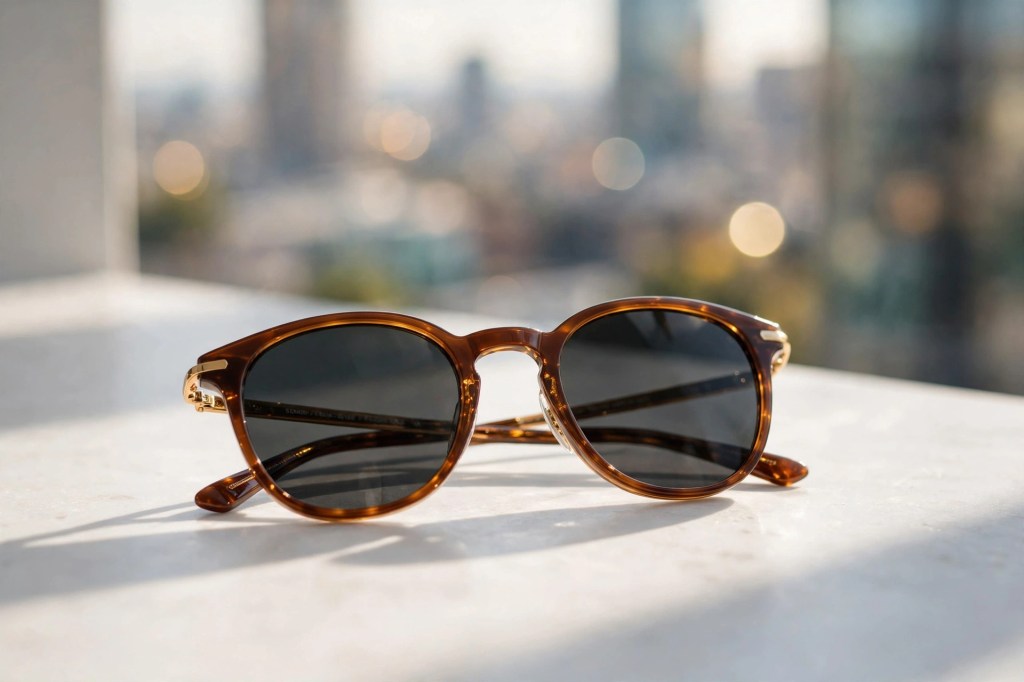
The best sunglasses for UV protection in Korea are labelled UV400 (or “100% UVA/UVB protection”), have a close-fitting or wraparound frame, and suit the activity — polarised lenses for glare when driving, fishing or near water. Polarisation reduces glare but does not by itself block UV, and a dark tint without a UV filter can be worse than none. As an eye clinic serving Guro, Gasan, Gwanak and Yeongdeungpo, we recommend UV400 sunglasses from spring through autumn — and all year after TransPRK or 2-Day LASEK.
Q. What makes the best sunglasses for UV protection in Korea?
When people search for the best sunglasses UV Korea options, they usually focus on style or lens colour. From an eye-health point of view, three things matter most: a verified UV filter (UV400 blocks all light up to 400 nm, covering both UVA and UVB), enough coverage around the sides, and a lens category that fits your activity. Korea’s UV index regularly reaches “very high” (8+) around midday from late spring to early autumn, so protection is not only a beach issue — it matters on your daily walk in Guro or along the Anyangcheon stream.
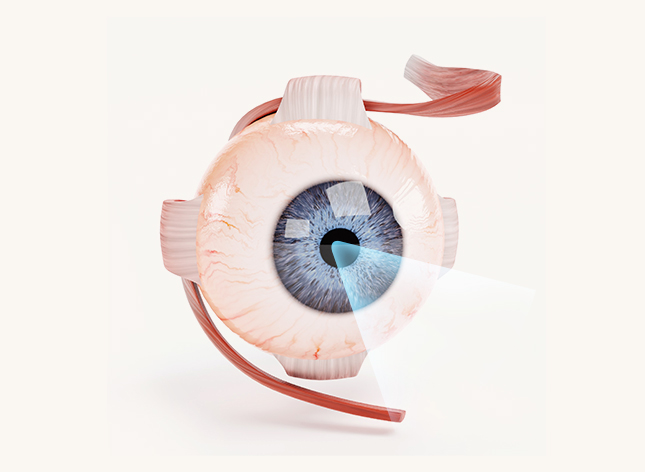
UV exposure accumulates over a lifetime. It contributes to cataract, pterygium (a fleshy growth on the white of the eye), pinguecula, photokeratitis (“sunburn” of the cornea) and eyelid skin cancers, and is thought to play a role in macular degeneration. Wearing proper sunglasses is one of the simplest preventive habits we recommend to patients in Yeongdeungpo, Gasan and Gwanak.
Q. What are the signs of UV damage to the eyes?
Short-term and long-term UV damage can show up as:
- Gritty, painful, watery eyes and light sensitivity 6–12 hours after strong sun, snow or water exposure (photokeratitis)
- A yellowish bump (pinguecula) or a wing-shaped growth creeping onto the cornea (pterygium), often with redness and irritation
- Gradually cloudy or glary vision, especially at night — early cataract
- Persistent redness, dryness and burning after outdoor activity
- New spots, lumps or non-healing sores on the eyelid skin
- Increased squinting, leading to eye strain, headaches, and fine lines around the eyes.
📊 Sun & Eyes in Korea — Key Numbers
▸ The Korea Meteorological Administration’s UV index frequently reaches “very high” (8–10) at midday from May to September.
▸ Korean national survey data (KNHANES) have reported pterygium in roughly 6–7% of adults aged 40 and older, with outdoor work a major risk factor.
▸ Cataract surgery is consistently among the most frequently performed operations in Korea in national health insurance statistics.
▸ The WHO estimates that up to 20% of cataracts worldwide may be related to UV exposure.
▸ Up to 80% of a person’s lifetime UV eye exposure occurs before age 18, making early sunglasses habits important.
▸ Studies in Korean ophthalmology journals show that consistent UV400 sunglass use reduces cumulative ocular UV dose by up to 98% compared to no eyewear.
Q. UV400 vs polarised sunglasses — what is the difference?
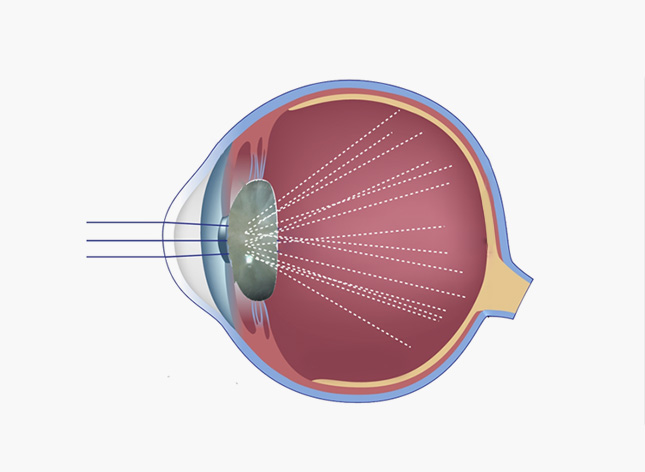
UV400 describes UV protection: the lens blocks all ultraviolet light up to 400 nm. This is the non-negotiable feature. In Korea, look for “UV400”, “UV 차단 99% 이상” or “100% UV protection” on the tag, and buy from a reputable optical shop. Clear lenses can be UV400 too — darkness and UV protection are separate properties.
Polarised lenses cut horizontally reflected glare from water, wet roads, snow and car bonnets, making vision more comfortable and safer for driving and fishing. However, polarisation alone does not guarantee UV blocking, and polarised lenses can make phone screens and car dashboard displays look dark or patchy. The ideal pair for most people in Gasan or Yeongdeungpo is UV400 + polarised.
Q. Which lens tint and frame should I choose for Korea’s sun?
Lens darkness is graded by category (0–4). Category 2–3 suits everyday city sun and driving; category 4 is only for glaciers or high-altitude snow and must not be used while driving. Grey tints keep colours natural, while brown or amber tints boost contrast. Choose a larger or wraparound frame that blocks light from the sides — much UV reaches the eye from around the edges. Children need UV-blocking sunglasses and a hat too, as their lenses transmit more UV than adults’. For drivers commuting through Guro and Gwanak, photochromic lenses are convenient, but they darken less inside a car because windscreens block the UV that activates them.
For sports and other active use, choose impact-resistant polycarbonate lenses. Green tints render colours naturally, while yellow tints suit low-light sports only and are not recommended for bright conditions.
Q. When should I see a doctor in Seoul?
See an ophthalmologist promptly if you notice any of the following:
- Severe eye pain, tearing and light sensitivity after skiing, beach days or welding (possible photokeratitis)
- A growth on the white of the eye that is enlarging or moving onto the cornea
- A new pigmented spot on the eye or a non-healing lump on the eyelid
- Sudden blurred vision, flashes or a shadow in your vision
- Persistent redness or irritation that does not improve with lubricating drops
Q. Which sunglasses suit which situation in Korea?
City & Commute
UV400, category 2–3, grey or brown tint. Polarised is a bonus for driving on sunny days in Guro or Yeongdeungpo.
Water, Beach & Fishing
UV400 + polarised, wraparound frame, category 3. Water reflects UV and glare — think Hangang parks or Busan beaches.
Snow & Mountains
UV400 wraparound goggles or category 3–4 lenses. Fresh snow can reflect up to 80% of UV — essential for ski trips to Gangwon-do.
💬 A Word from Dr. Daniel Baik
Many patients in Gasan and Gwanak are surprised to learn that dark lenses without a UV filter can actually let more UV into the eye, because the pupil widens behind them. After TransPRK or 2-Day LASEK, I ask every patient to wear UV400 sunglasses outdoors for several months to protect the healing cornea.
“I recommend UV400 polarised sunglasses to virtually every patient I see at Nunehim Eye Center — whether they are a 10-year-old getting an OK lens fitting or a 65-year-old being monitored for early cataracts. Seoul’s UV levels are genuinely high in summer, and cumulative UV exposure to the eye is irreversible. A good pair of sunglasses is one of the most cost-effective preventive measures available. Patients from Guro, Yeongdeungpo, Gasan, and Gwanak who spend time outdoors — commuting, exercising, or working — should treat quality sunglasses as standard eye care equipment, not an optional accessory.”
— Dr. Daniel Baik, board-certified ophthalmologist, Nunehim Eye Center (Guro, Seoul)
Q. When should I replace my sunglasses?
Scratched lenses scatter light and reduce protection. Replace sunglasses if the polarised coating is peeling, the frame no longer fits well, or the UV rating is unknown. Avoid leaving sunglasses in a hot car, which can warp lenses and degrade coatings. If in doubt, many eye clinics in Seoul — including Nunehim Eye Center — can check your current pair’s UV protection during a routine visit.
❓ Frequently Asked Questions
Q. Are cheap sunglasses safe for my eyes?
Price does not determine UV protection. Inexpensive sunglasses can be fully UV400, while some fashion pairs may not be. The key is a reliable UV400 or 100% UVA/UVB label from a reputable seller. If unsure, many optical shops in Korea can measure UV transmission with a simple tester.
Be especially cautious with very cheap, uncertified pairs (often under about ₩5,000–10,000) from street markets or non-specialty online sellers, and look for CE, ANSI Z80.3, or Korean KS certification marks on the label.
Q. Do polarised sunglasses block UV rays?
Not necessarily. Polarisation reduces reflected glare, but UV blocking is a separate property of the lens material or coating. Most quality polarised lenses are also UV400 — check the label to be sure.
Q. Do darker lenses mean better UV protection?
No. Darkness only reduces visible light. A very dark lens without a UV filter is harmful because your pupils dilate and let more UV reach the lens and retina.
Q. Should children wear sunglasses in Korea?
Yes. Children spend more time outdoors and their crystalline lens lets more UV through to the retina. A comfortable, shatter-resistant UV400 pair plus a wide-brimmed hat is ideal, especially during summer outdoor play.
Q. Do I need sunglasses on cloudy days?
Often, yes. A large share of UV passes through thin cloud cover, so the UV index can still be moderate or high on overcast days in Seoul. Check the daily UV index in the KMA weather app.
Q. How long should I wear sunglasses after TransPRK or LASEK?
We generally recommend UV400 sunglasses outdoors for at least 3–6 months after surface laser surgery, because UV exposure during healing can increase the risk of corneal haze. Your surgeon will give specific advice.
Q. Are blue-light glasses the same as sunglasses?
No. Blue-light filtering lenses are designed for screens and do not provide the UV blocking, tint and coverage needed outdoors. For outdoor protection, choose proper UV400 sunglasses.
Q. Do prescription glasses block UV?
Standard prescription lenses (polycarbonate and some high-index materials) offer partial UV blocking, but most do not reach UV400 standard without an additional UV coating. If you wear prescription glasses and spend time outdoors, ask your optician to add a UV400 coating — or use prescription sunglasses or clip-on UV400 lenses.
Q. Can sunglasses prevent cataracts?
Sunglasses cannot guarantee prevention, but consistent UV400 use reduces cumulative UV exposure to the lens, which is one of several factors linked to earlier cataract formation.
Q. Should I choose polarised or non-polarised lenses for driving in Seoul?
Polarised lenses are generally preferred for driving, as they cut glare from wet roads, other vehicles, and bright sun. Some drivers prefer non-polarised lenses because certain digital dashboard displays can appear distorted or dim through polarised lenses, so it’s worth testing both.

Book a Consultation
Worried about sun damage, pterygium or glare? Book an eye check with Dr. Daniel Baik in Guro — easy access from Gasan, Gwanak and Yeongdeungpo. Korean & English consultations.
or visit nunehim.com
📍 Visit Nunehim Eye Center — Guro, Seoul
Convenient access from Guro, Gasan, Gwanak & Yeongdeungpo — near Guro Digital Complex Station (Line 2). Consultations in Korean and English.
Address
551 Siheung-daero, Guro-gu, Seoul
nunehim.com
Hours
Mon–Fri 09:00–18:30 (lunch 13:00–14:00)
Sat 09:00–14:00
Languages
Korean & English
Related guides
About the author: Dr. Jinhag (Daniel) Baik, MD, is an ophthalmologist and the director of Nunehim Eye Clinic in Seoul, Korea (near Guro Digital Complex Station). A former Samsung semiconductor engineer, he welcomes English-speaking patients for vision correction, cataract, and general eye care.


Leave a comment