Cataracts Symptoms or Ageing? How to Tell the Difference in Seoul
Blurry, dim or glary vision after 50 is common — but it is not always “just age.”
Quick Answer
Normal ageing of the eye (presbyopia) mainly makes close-up reading harder, and reading glasses fix it. Cataract causes a progressive clouding of the lens that brings hazy or dim vision at all distances, glare from headlights, faded colours and frequent prescription changes — and glasses no longer restore sharp sight. If you are noticing cataracts symptoms with ageing in Seoul, a 30-minute dilated eye exam is the only reliable way to tell the difference. Nunehim Eye Center in Guro serves patients from Yeongdeungpo, Gasan and Gwanak in Korean and English.
Q. What causes cataracts, and how is that different from normal eye ageing?
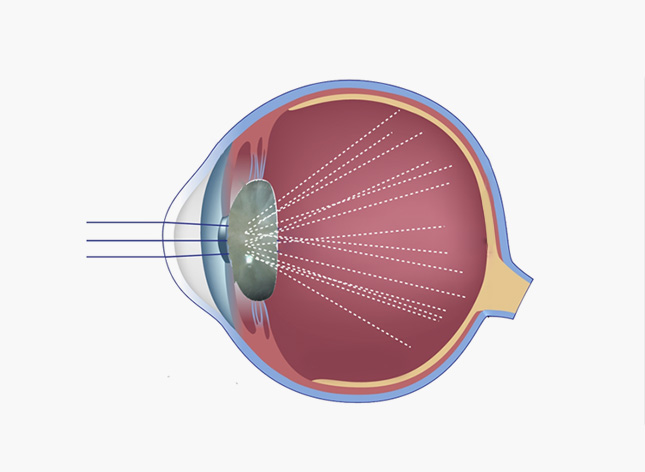
Cataracts symptoms and ageing overlap because both start around middle age, but the mechanism is different. The natural lens inside your eye is made of tightly packed, transparent proteins. Over decades, oxidative stress, UV exposure, diabetes, smoking and long-term steroid use cause these proteins to clump and yellow, turning the lens cloudy — that is a cataract. Normal ageing, by contrast, mainly stiffens the lens so it can no longer change focus for near work (presbyopia), usually from the early to mid-40s.
In other words, presbyopia is a focusing problem, while cataract is a clarity problem. Many of our patients in Guro, Gasan and Yeongdeungpo have both at once, which is why self-diagnosis is unreliable. Other age-related changes — smaller pupils, slower dark adaptation, and mild dry eye — can also mimic early cataract. Treating these as “just getting older” sometimes delays diagnosis of cataract or of more serious problems such as glaucoma or macular degeneration.
Q. What are the signs of cataracts versus normal ageing?
- Cloudy, hazy or “dirty window” vision at both near and distance — typical of cataract, not presbyopia
- Glare and halos around headlights, streetlights and sunlight — often the first complaint when driving at night
- Colours look faded or yellowish; whites appear cream-coloured
- Frequent changes in glasses prescription, sometimes a sudden improvement in near vision (“second sight”) as the lens becomes more myopic
- Double vision in one eye that does not go away when the other eye is closed
- Needing brighter light to read — common in both conditions, but worsening steadily with cataract
- Reading glasses fully fix the problem — this points to normal presbyopia rather than cataract
Cataracts in Korea — Key Numbers
▸ Cataract surgery has consistently ranked as the most frequently performed major operation in Korea in National Health Insurance Service (NHIS) surgical statistics.
▸ Korea became a “super-aged” society in late 2024, with more than 20% of the population aged 65 or older — driving a steady rise in cataract diagnoses.
▸ Some degree of lens opacity is found in the majority of Koreans over 65 in population surveys, though not all of it affects vision enough to need surgery.
▸ Early cataract changes are frequently detected in people in their 50s, and earlier in those with diabetes, high myopia or long-term steroid use.
Q. How are cataracts treated in Seoul?
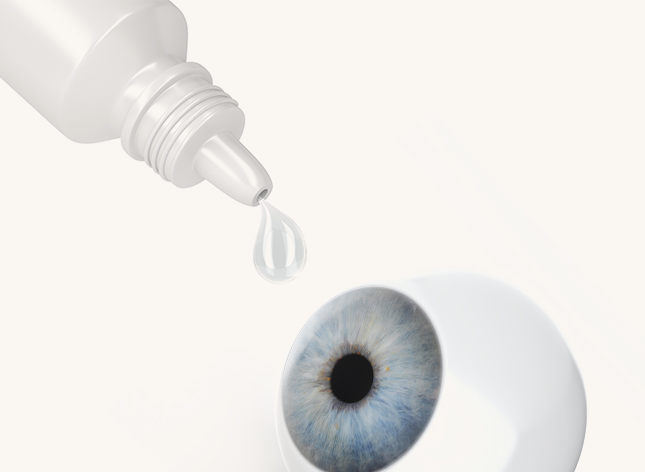
In the early stage, cataracts are managed without surgery: an updated glasses prescription, better lighting, anti-glare lenses and sunglasses outdoors. Controlling diabetes and stopping smoking may slow progression. No eye drop has been proven to dissolve a cataract, so be cautious about products that claim otherwise.
When cloudy vision starts to interfere with driving, reading, work or safety, cataract surgery is the definitive treatment. The cloudy lens is removed through a tiny incision and replaced with a clear artificial intraocular lens (IOL). It is usually a same-day procedure under local anaesthesia, and most patients in Guro, Gwanak and Yeongdeungpo return to normal daily activities within days.
Q. How do we tell cataract from ageing during an exam?
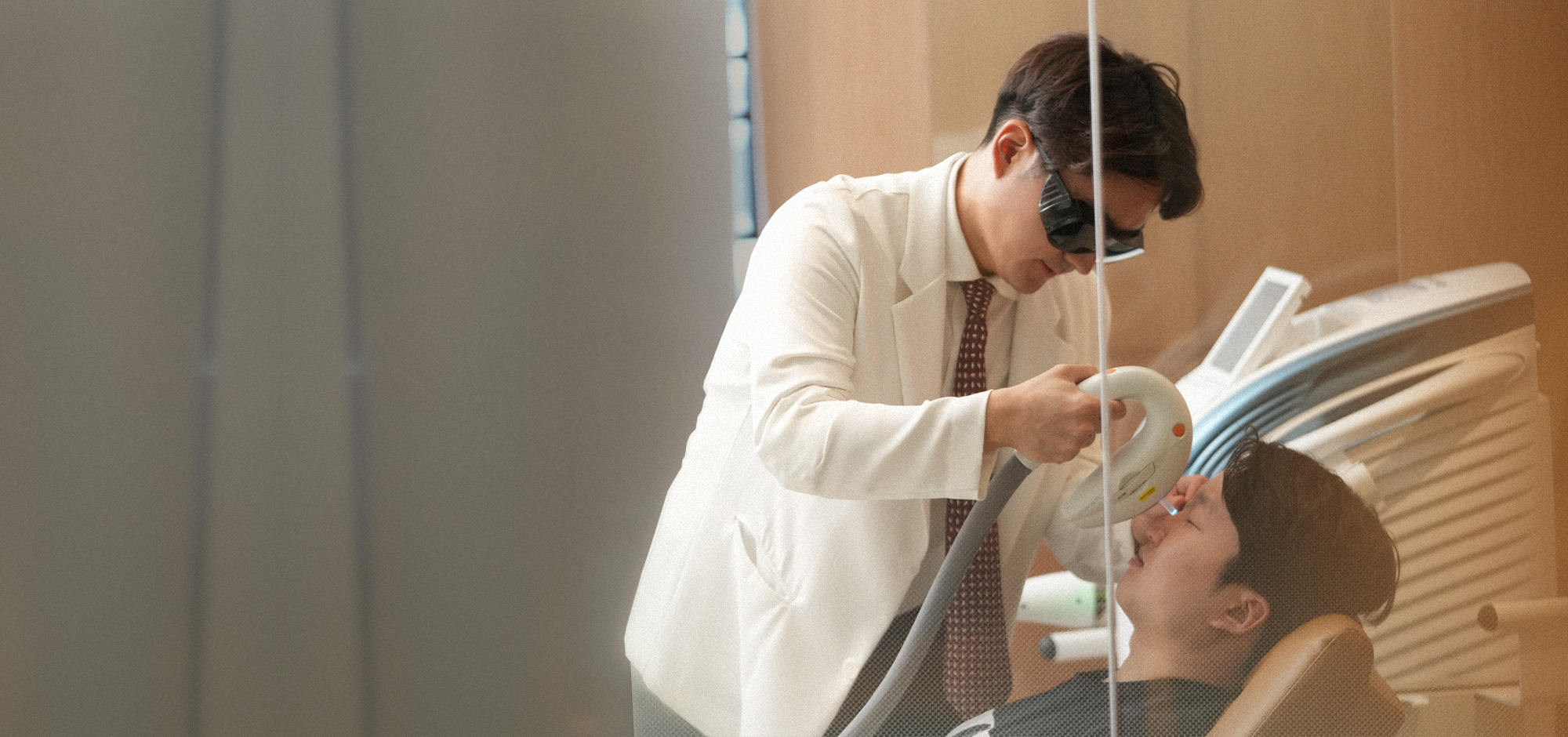
At Nunehim Eye Center we combine visual acuity and refraction testing with a slit-lamp examination through dilated pupils, which lets us see the lens directly and grade the cataract type (nuclear, cortical or posterior subcapsular). We also check eye pressure and the retina, because glaucoma and macular disease can produce similar complaints. The whole visit takes about an hour including dilation, and results are explained in plain Korean or English — a relief for many expat patients from Gasan and Gwanak.
Q. When should I see a doctor in Seoul?
Book a prompt appointment if you notice any of the following — some are not cataract at all and need urgent care:
- Sudden loss or dimming of vision in one eye (hours to days)
- New flashes of light, a shower of floaters, or a curtain over part of your vision
- Distorted or wavy straight lines
- Eye pain, redness and headache with blurred vision or halos
- Vision problems affecting safe driving or causing falls
- Rapid worsening after an eye injury or starting steroid medication
Q. What are the stages of cataract with ageing?
Early
Mild haze and glare, often unnoticed. Updated glasses, anti-glare coatings, UV protection and regular annual exams are usually enough.
Moderate
Night driving becomes difficult, colours fade and glasses help less. This is when many patients start discussing surgery timing with their ophthalmologist.
Advanced
Vision is significantly reduced and daily tasks suffer. Surgery is recommended — waiting too long can make the operation technically harder.
A Word from Dr. Daniel Baik
“Many patients tell me they assumed their blurry vision was simply age. Reading glasses fix presbyopia, but they cannot fix a cloudy lens — if your glasses stop helping, it is time for a proper dilated exam. Catching cataract, and ruling out glaucoma or macular disease at the same visit, lets us plan treatment at the right time rather than in a hurry.”
— Dr. Daniel Baik, board-certified ophthalmologist, Nunehim Eye Center
❓ Frequently Asked Questions
Q. Is cataract a normal part of ageing?
Lens clouding becomes very common with age, but it is still a medical condition. Whether it needs treatment depends on how much it affects your vision and daily life, not on age alone.
Q. Can glasses fix cataract?
Early on, an updated prescription can help. As the lens becomes cloudier, no glasses can restore clear vision, and surgery becomes the only effective option.
Q. At what age should I start checking for cataracts?
We recommend a full dilated eye exam around age 40, then every 1–2 years after 50, or annually if you have diabetes, high myopia or take steroids.
Q. Can cataracts come back after surgery?
The cataract itself cannot return, but some patients develop posterior capsule opacification months or years later. It is treated with a quick, painless YAG laser in the clinic.
Q. Does cataract affect night driving?
Yes. Glare and halos around headlights are one of the most common early cataract symptoms and a frequent reason drivers in Seoul come for an exam.
Q. Is cataract surgery covered by Korean national health insurance?
Standard cataract surgery with a monofocal lens is covered by NHIS. Premium lenses such as multifocal IOLs involve additional out-of-pocket costs; we explain options clearly before any decision.
Q. Can foreign residents get a cataract exam in English?
Yes. Dr. Daniel Baik consults in both Korean and English, and our team helps expats from Yeongdeungpo, Gasan, Gwanak and Guro with booking and insurance questions.

Book a Consultation
Not sure whether it is cataract or ageing? Get a clear answer with a dilated eye exam in Guro — convenient for Yeongdeungpo, Gasan and Gwanak.
Or visit nunehim.com
📍 Visit Nunehim Eye Center — Guro, Seoul
Convenient access from Guro, Gasan, Gwanak and Yeongdeungpo. Near Guro Digital Complex Station (Line 2), with Korean and English consultations available.
Address
551 Siheung-daero, Guro-gu, Seoul
nunehim.com
Hours
Mon–Fri 09:00–18:30
Lunch 13:00–14:00
Sat 09:00–14:00
Languages
Korean & English consultations


Leave a comment