
Epiretinal Membrane Seoul: What It Is and When Surgery Is Needed
An English-language guide for expats and residents seeking retina care in Guro, Yeongdeungpo, Gasan and Gwanak
Quick Answer
An epiretinal membrane (ERM, also called macular pucker) is a thin layer of scar-like tissue that grows on the surface of the macula and distorts central vision. If you are searching for an epiretinal membrane Seoul specialist: mild ERM with good vision is usually just monitored with OCT scans, while surgery (vitrectomy with membrane peeling) is considered when straight lines look bent or reading and daily tasks become difficult. An in-person retina exam with OCT is the only way to know which group you are in. Nunehim Eye Center in Guro-gu offers Korean and English consultations.
Q. What is an epiretinal membrane, and why does it form?
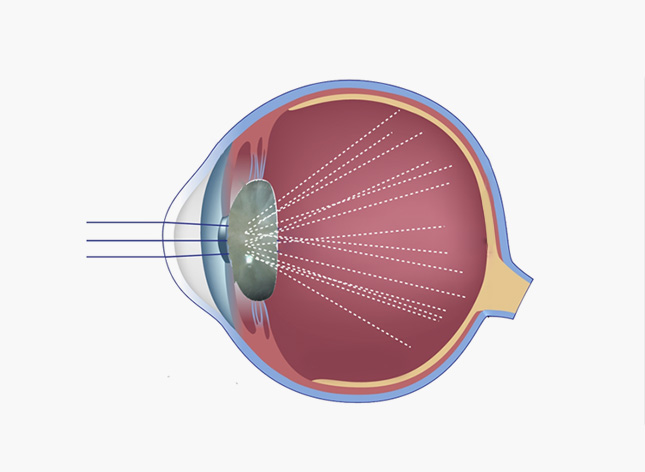
An epiretinal membrane is a translucent film of fibrous tissue that forms on the inner surface of the retina, right over the macula, the small central area responsible for reading, faces and fine detail. When the film contracts it wrinkles the retina underneath, like cellophane shrinking on a table, which is why it is also called a macular pucker or cellophane maculopathy. Many people in Guro, Yeongdeungpo, Gasan and Gwanak first hear the term after a routine OCT scan at a health check-up.
The most common form is idiopathic: it develops after posterior vitreous detachment (PVD), the normal age-related separation of the vitreous gel from the retina, which can leave tiny cells behind that grow into a membrane. Secondary ERM can follow a retinal tear or detachment repair, retinal laser or cryotherapy, eye inflammation such as uveitis, retinal vein occlusion, or diabetic retinopathy. It mainly affects people in middle age and older, and it can occur in both eyes, so the second eye deserves a check as well.
Q. What are the symptoms of an epiretinal membrane?
The classic symptom is metamorphopsia, meaning straight lines such as door frames, tiles or text lines look wavy or bent. Many early ERMs cause no symptoms at all and are found by chance.
At a Glance: Key Facts
▸ Most common cause: idiopathic ERM following age-related posterior vitreous detachment.
▸ Key test: OCT (optical coherence tomography) shows membrane thickness and macular swelling in minutes and without contact.
▸ Many cases are stable: mild ERM without distortion is often observed rather than operated on.
▸ Surgery is not urgent in most cases: the decision depends on symptoms and daily function, not on a single scan finding. Recovery of vision is gradual over months.
Q. When is surgery needed for an epiretinal membrane?
Surgery is generally recommended when distortion or blur interferes with reading, driving, work or hobbies, or when vision is clearly declining on serial exams. It is usually not advised just because a membrane is visible on OCT. The operation is a pars plana vitrectomy: the vitreous is removed through tiny ports, the membrane is gently peeled off the retina with fine forceps, and in many cases the inner limiting membrane is also peeled to reduce recurrence. A gas or air bubble may be used at the end.
Benefits usually build slowly over several months. Blur tends to improve more reliably than distortion, and some wavy vision may remain. Known risks include cataract progression after vitrectomy (which is why surgeons often discuss cataract timing in people over 60), retinal tear or detachment, bleeding, infection and, rarely, membrane recurrence. If a bubble is placed, positioning and no high-altitude flight or nitrous oxide anesthesia until it is gone are important.
Q. How is an epiretinal membrane diagnosed in Seoul?
Diagnosis takes one short visit. After a visual acuity check and a dilated fundus exam, an OCT scan produces a cross-section of the macula that shows the membrane, any traction, retinal thickening and cysts. The same scan is repeated at follow-up visits, so the doctor can compare thickness and shape over time rather than guessing. An Amsler grid or line-distortion test helps you and your doctor track how much wavy vision you actually have. Clinics across Yeongdeungpo, Guro, Gasan and Gwanak commonly offer OCT, but confirm ahead that the clinic can interpret it in English if you need that.
Q. What should I expect before and after ERM surgery?
Before surgery your surgeon will review your other eye conditions, cataract status, diabetes or blood pressure control, and any blood thinners you take. Expats who plan to travel should discuss timing, since a gas bubble prevents flying until it dissipates. After surgery you will typically use antibiotic and anti-inflammatory drops for several weeks and attend early follow-up visits, often the next day and again within the first week or two. Report increasing pain, worsening redness, a sudden drop in vision or a new curtain in your vision without waiting for the next appointment. Bring these questions to your consultation at Nunehim Eye Center in Guro-gu, where the retina plan can be explained in English.
Q. How can foreigners see an English-speaking retina doctor in Seoul?
Book directly, since Korean clinics generally do not require a referral for a first visit. Booking: use Naver Booking or contact the clinic through nunehim.com to request an English consultation. What to bring: passport or Alien Registration Card (ARC), your insurance card if you have one, current glasses, a list of eye drops and medicines, and any prior OCT, fundus photos or reports from your home country (a USB or phone photos are fine).
Insurance and cost: Korea runs a national health insurance system, and residents who are enrolled generally pay a share of covered exams, while non-enrolled visitors pay in full. Which parts of retinal imaging or surgery are covered depends on your status and the specific procedure, so ask the clinic for a current quote before you book. Typical visit flow: history, vision and pressure check, dilated retina exam, OCT scan, then a discussion of whether to observe or plan surgery. Dilation blurs near vision for several hours, so do not plan to drive afterwards. Surgery for ERM, if needed, is performed by a vitreoretinal surgeon at a hospital equipped for it, and your English-speaking doctor can coordinate the referral and follow-up.

Q. When should I see a doctor in Seoul right away?
See an eye doctor promptly, ideally the same or next day, if any of the following appear. These can signal a retinal tear or detachment, which is more urgent than an ERM.
Q. What are the stages and the usual path from diagnosis to treatment?
1. Mild / Observe
Little or no distortion and good reading vision. The doctor typically repeats OCT and an Amsler grid check at intervals and asks you to watch for change.
2. Symptomatic / Discuss
Distortion or blur affects daily tasks. Options, timing, cataract status and expected outcome are discussed in detail.
3. Surgery / Recover
Vitrectomy with membrane peeling, drops for several weeks, follow-up visits, and gradual visual recovery over months.
From Dr. Daniel Baik
“Check each eye separately every few weeks: cover one eye, look at a door frame or tiled wall, and note whether the lines bend. If the bend is the same or smaller, watching is usually fine; if it is growing or reading becomes harder, come in for an OCT before it affects your work. Also tell me if you are due for cataract surgery, because the two can be planned together.”
— Dr. Daniel Baik, board-certified ophthalmologist, Nunehim Eye Center

❓ Frequently Asked Questions
Q. Can an epiretinal membrane go away on its own?
Rarely. Most ERMs stay stable for years, some slowly progress, and only a small minority separate spontaneously. Regular OCT follow-up shows which pattern you have.
Q. Is epiretinal membrane surgery painful?
Vitrectomy is usually done under local anesthesia with sedation, so you should feel pressure rather than pain. Mild scratchiness and redness afterwards are common and are managed with drops.
Q. Can I get an epiretinal membrane checked in English in Seoul?
Yes. Nunehim Eye Center in Guro-gu offers Korean and English consultations, dilated retina exams and OCT. Bring your passport or ARC and any previous scans, and book through Naver Booking.
Q. Does ERM cause blindness?
ERM does not usually cause total blindness. It affects central vision, while side vision is preserved. The concern is progressive distortion and blur, which is why timely follow-up matters.
Q. How long does recovery take after surgery?
Early healing takes a few weeks, but visual improvement continues gradually for several months. Bubble restrictions, drop schedules and return-to-work timing are individual, so follow your surgeon’s instructions.
Q. Will I need cataract surgery after vitrectomy?
Cataract often progresses faster after vitrectomy, particularly in people over about 50 to 60. If you already have early cataract, your doctor may discuss combining the procedures or timing them close together.
Q. Is it covered by Korean health insurance?
Coverage depends on your insurance enrollment and the specific test or procedure. Ask the clinic for a current quote for the exam, OCT and any surgery planning before booking.

Related reading
Book a Consultation
Blurred or wavy central vision? Get a dilated retina exam and OCT with a board-certified ophthalmologist, in English or Korean.
📍 Visit Nunehim Eye Center — Guro, Seoul
Convenient access from Guro, Gasan, Gwanak and Yeongdeungpo. Near Guro Digital Complex Station (Line 2).
Address
551 Siheung-daero, Guro-gu, Seoul · nunehim.com
Hours
Mon–Fri 09:00–18:30 (lunch 13–14), Sat 09:00–14:00
Languages
Korean & English


Leave a comment