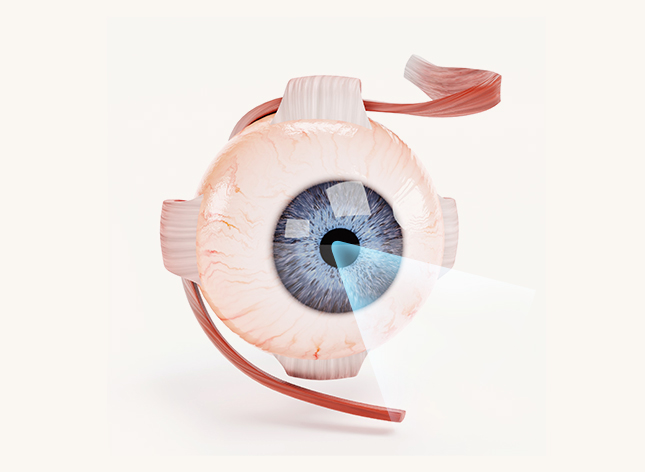
Can Adults Wear OK Lens? Orthokeratology for Adult Myopia in Seoul
A board-certified ophthalmologist’s guide to overnight corneal reshaping for expats and adults in Guro, Yeongdeungpo, Gasan and Gwanak
Quick Answer
Yes, adults can wear OK lens. Orthokeratology (OK lens) is not limited to children: healthy adults with mild to moderate myopia and low astigmatism can use overnight lenses to see clearly without glasses or contacts during the day. If you are searching for OK lens adults Seoul, the key questions are whether your cornea is suitable, whether your prescription is within range, and whether you can commit to nightly lens hygiene. A corneal topography scan at Nunehim Eye Center in Guro-gu answers the first question in a single visit, with Korean and English consultations.
| Option | Daytime vision | Main trade-off |
|---|---|---|
| OK lens | Temporary glasses-free vision after overnight wear | Nightly hygiene, follow-up and infection risk |
| Glasses | Reliable correction whenever worn | No corneal reshaping; glasses remain part of daily life |
| Laser vision correction | Long-lasting correction for suitable eyes | Surgery, recovery and permanent tissue change |
| ICL | Long-lasting correction for selected prescriptions | Intraocular surgery and its own risks |
Q. What is OK lens, and can adults really wear it?
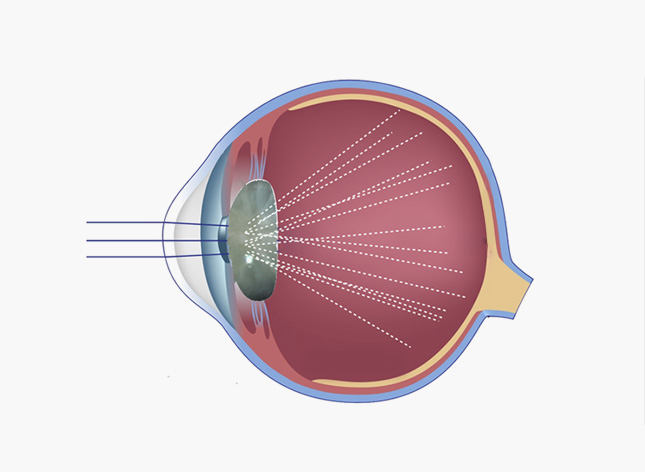
OK lens (orthokeratology) is a rigid, gas-permeable lens designed to be worn while you sleep. Its reverse-geometry shape gently flattens the central cornea overnight, which reduces myopia so that you wake up seeing well. The OK lens adults Seoul question comes up often because the treatment became famous for slowing myopia in children, but the optical principle works the same way in an adult eye. Adults in Yeongdeungpo, Guro, Gasan and Gwanak most often choose it because they play sports, work in dusty or dry environments, or simply do not want to wear glasses or daytime contact lenses.
The effect is temporary and reversible. If you stop wearing the lenses, the cornea gradually returns to its original shape over days to weeks. That is a real advantage for adults who are not yet sure about laser surgery, and also a reason to be realistic: OK lens is a nightly commitment, not a one-time fix.
Q. Who is a good adult candidate for OK lens?
Q. How is an adult fitted for OK lens, step by step?
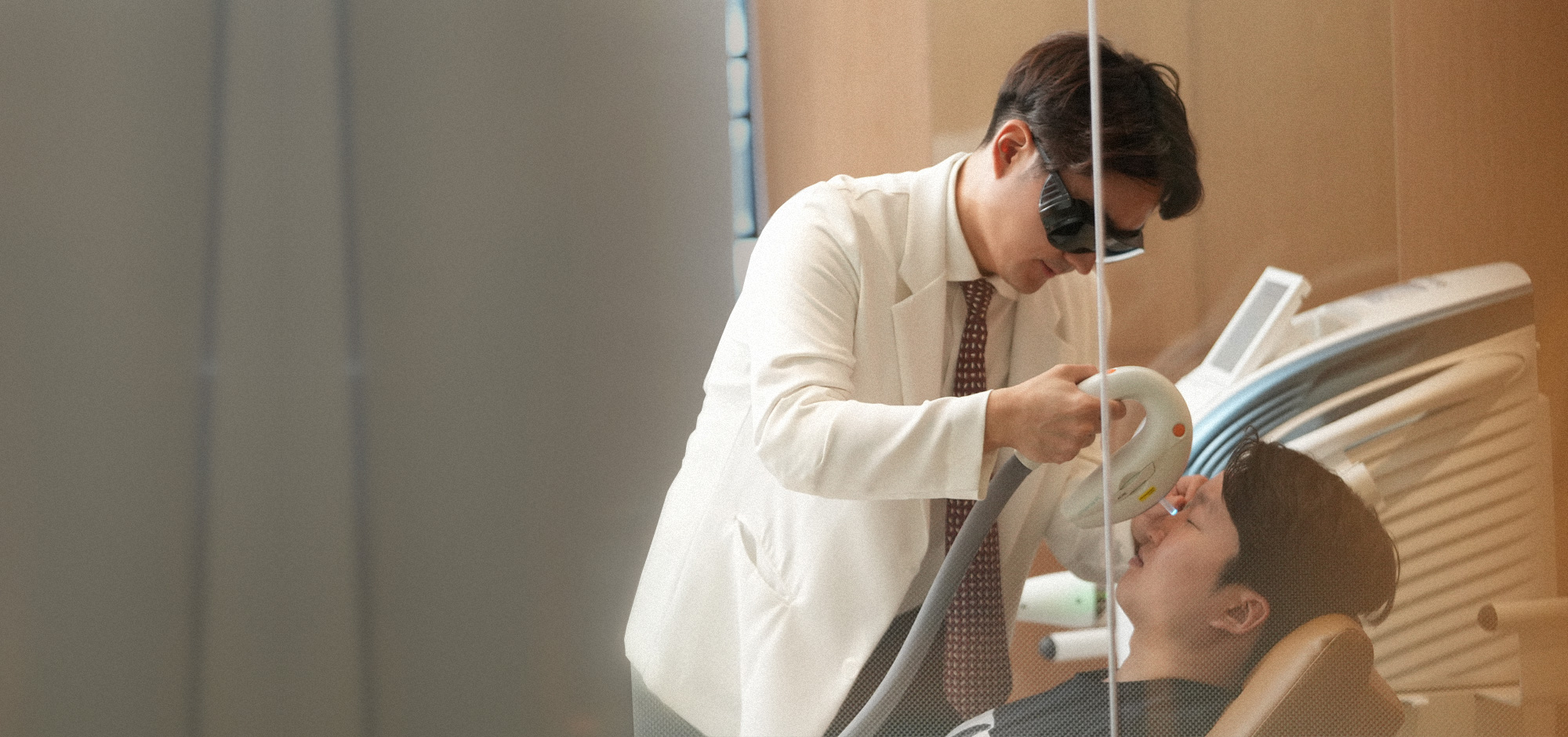
The first visit is a full eye examination rather than a lens sale. We measure your refraction, check the health of the front surface of the eye, assess tear quality and take a corneal topography map, which shows the exact curvature of your cornea. These measurements decide the lens design, because a poorly matched lens can sit off-centre and give blurry or glare-prone vision. If you currently wear soft contact lenses, we will ask you to switch to glasses for a period beforehand so that your cornea returns to its natural shape and the readings are accurate.
Once the lenses are ready, a training visit covers insertion, removal, cleaning and storage. Most adults learn this within a single session, though removal can feel awkward at first. After the first night we check how the cornea responded, and follow-up visits in the following weeks confirm that vision, comfort and corneal health are on track. If you live or work around Gasan, Gwanak or Yeongdeungpo and cannot attend daytime visits easily, mention this when booking and we will plan the schedule with you.
Q. What are the risks of OK lens, and how do I keep them low?
The main risk of any overnight contact lens is corneal infection, which is uncommon but can threaten vision if ignored. Risk is higher when lenses are not cleaned properly, when tap water is used on lenses or cases, or when follow-up visits are skipped. Other issues include temporary glare or halos at night, mild dryness and, occasionally, a lens that needs to be refitted. These are the reasons we insist on regular check-ups rather than a one-off fitting.
Adults with allergic eyes, significant dry eye or a job in very dusty settings should discuss these openly. In some cases we treat the dry eye or allergy first, or suggest ICL or TransPRK instead, so that the plan fits the eye rather than the other way around.
Key Facts at a Glance
Q. How does OK lens compare with LASEK, TransPRK and ICL for adults?
If you want freedom from glasses permanently, surgery may suit you better. At Nunehim Eye Center we specialise in TransPRK and 2-Day LASEK, and we also discuss ICL (implantable collamer lens) for higher prescriptions or thin corneas. We do not offer SMILE LASIK. OK lens is the non-surgical option: no cutting, no healing period, and it can be stopped at any time.
The trade-offs are practical. OK lens needs nightly wear and regular check-ups, and vision can fluctuate if you skip nights. Laser surgery has a recovery period but no nightly routine afterwards. Many adults start with OK lens and move to surgery later, or the reverse; a topography scan and a dilated eye exam help us explain which route fits your eyes and lifestyle.
Q. What should expats know about getting OK lens in Seoul?
You can book directly through Naver Booking, which also works for English-speaking patients, and consultations at Nunehim Eye Center are available in Korean and English. Bring your passport or Alien Registration Card (ARC), your current glasses or contact lens prescription, and any previous eye records from home. Tell us if you wear contact lenses now: soft lenses should usually be stopped for a period before measurements, and we will tell you how long. OK lens is generally a self-pay (non-reimbursed) vision-correction service in Korea rather than a standard insured treatment, so please ask the clinic for a current quote covering the lenses, solutions and follow-up visits. A typical path is: eye exam and topography, lens design and ordering, a fitting and training visit, then short follow-ups during the first weeks. Our clinic in Guro-gu is easy to reach from Gasan, Gwanak and Yeongdeungpo.

Q. When should I see a doctor in Seoul about my OK lens?
Week 1: Adaptation
Vision may be good by day but still change by evening. Expect some awareness of the lens at first. Keep every scheduled check-up.
Weeks 2–4: Stabilising
Daytime vision usually becomes more stable as the cornea settles into its new shape. We re-scan the cornea and adjust the lens if needed.
Long term: Maintenance
Nightly wear, careful cleaning, regular exams and periodic lens replacement keep the eyes healthy and the result consistent.
Dr. Daniel Baik’s Clinical Tip
Practical point: Before ordering an OK lens, a corneal topography map and tear-film examination help confirm that the cornea and its surface are suitable. If the surface is dry or inflamed, treating that first may make lens wear safer and more comfortable. Anyone who travels should carry a spare lens and case and never rinse lenses with tap water.
❓ Frequently Asked Questions
Q. Can adults wear OK lens, or is it only for children?
Adults can wear OK lens. The lens reshapes the cornea in the same way at any age, provided the eye is healthy and the prescription is in a suitable range. A corneal scan and eye exam confirm candidacy.
Q. Does OK lens slow myopia in adults?
The strongest evidence for myopia control is in children and teenagers whose eyes are still growing. In adults, the main benefit is clear daytime vision without glasses; myopia progression in adults is usually slower anyway.
Q. Is OK lens safe to sleep in?
OK lenses are designed for overnight wear and, with proper fitting and hygiene, are widely used. Infection is the main risk, so clean hands, correct lens care and regular follow-up visits matter. Report pain or redness promptly.
Q. How long until I see clearly with OK lens?
Many people notice improvement after the first nights, but full, stable correction can take one to two weeks. Your doctor will schedule follow-ups to check this.
Q. What happens if I stop wearing OK lens?
The cornea gradually returns to its original shape and your original prescription comes back. That is why OK lens is described as reversible.
Q. How much does OK lens cost in Seoul?
Costs vary by lens design and the number of follow-up visits, and OK lens is generally self-pay. Please ask Nunehim Eye Center for a current quote rather than relying on a general figure.
Q. Can I book in English as a foreigner in Korea?
Yes. You can book through Naver Booking and consult in English or Korean at Nunehim Eye Center in Guro-gu. Bring your passport or ARC and any previous prescriptions.

Evidence & Further Reading
- U.S. FDA: Types of Contact Lenses — explains orthokeratology and the need for professional fitting and follow-up.
- U.S. FDA: Contact Lens Risks — outlines warning symptoms and why contact-lens problems need prompt attention.
- Systematic review of orthokeratology safety — summarizes microbial keratitis, corneal staining and other reported complications.
- Systematic review and meta-analysis of orthokeratology — reviews benefits, limitations and the quality of available evidence.
Related reading
Book a Consultation
Find out whether OK lens suits your eyes. Korean and English consultations in Guro-gu, Seoul.
📍 Visit Nunehim Eye Center — Guro, Seoul
Convenient access from Guro, Gasan, Gwanak and Yeongdeungpo. Near Guro Digital Complex Station (Line 2).
Address
551 Siheung-daero, Guro-gu, Seoul
nunehim.com
Hours
Mon–Fri 09:00–18:30 (lunch 13–14)
Sat 09:00–14:00
Languages
Korean & English


Leave a Reply