Presbyopia Treatment Seoul Without Surgery: Progressives, Office Lenses, Multifocal Contacts or Eye Drops?
An English-language guide for expats over 40 in Guro, Gasan, Yeongdeungpo and Gwanak who are struggling with menus, phone screens and laptop work
Quick Answer
The most effective presbyopia treatment Seoul without surgery is matching the correction to the distances you actually use: progressive glasses for all-day wear, office (occupational) lenses for long desk days, multifocal or monovision contact lenses for people who dislike glasses, and pilocarpine-type eye drops as a part-time option for some people. None of these stops presbyopia from progressing. Start with a full dilated eye exam in English, because blurry near vision after 40 is not always presbyopia — Nunehim Eye Center in Guro-gu sees patients from Guro, Gasan, Yeongdeungpo and Gwanak.
Q. What is presbyopia, and why does it start around 40?
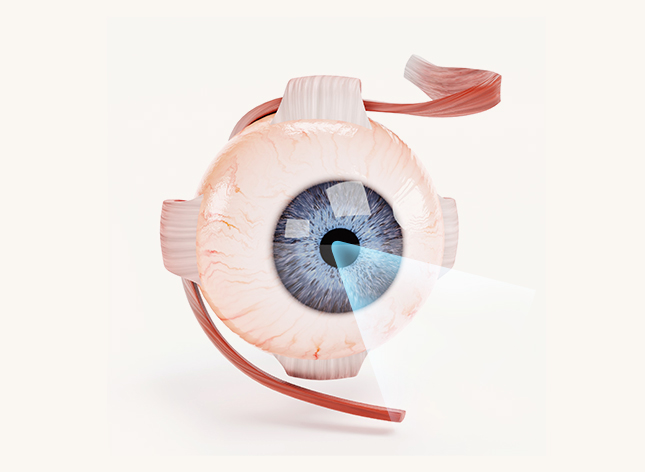
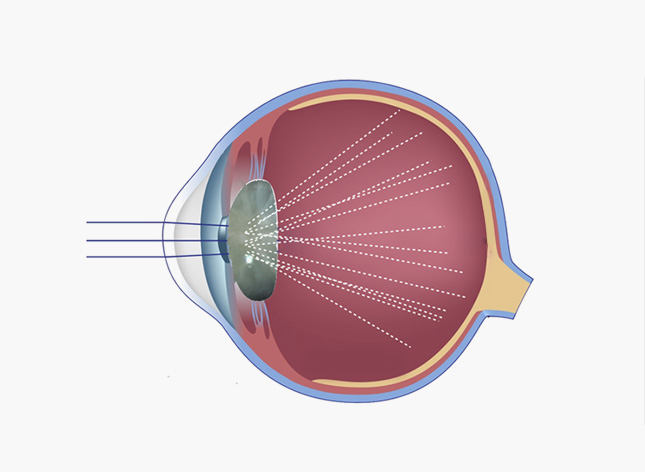
Presbyopia is the gradual, age-related loss of the eye’s ability to focus up close. The crystalline lens inside the eye stiffens over time, so the focusing muscle can no longer change its shape enough to bring near text into focus. It is not a disease and it happens to everyone, including people who have always had perfect distance vision and people who had LASIK or LASEK years ago. If you are researching presbyopia treatment Seoul as a foreigner, the key point is that you have more options than “just buy reading glasses,” and the right one depends on your job, your existing prescription and the health of your eyes.
Most people notice it between 40 and 45, often first on a dim restaurant menu or a pharmacy label printed in small Korean type. Nearsighted (myopic) people may notice it later because they can take their glasses off to read, while farsighted (hyperopic) people often notice it earlier. For a deeper look at early signs and how reading power increases with age, see our earlier guide linked below — this article focuses on choosing a non-surgical correction. More background on the clinic is at nunehim.com.
Q. What are the signs that you need presbyopia correction?
- Holding your phone or a book at arm’s length to read it
- Near blur that is worse in the evening, in dim light or when you are tired
- Headaches or eye fatigue after reading or detailed work
- Your current distance glasses or contacts suddenly feel “too strong” for the laptop
- Needing brighter light to read medicine labels, receipts or KakaoTalk messages
- Taking off myopic glasses to read — a classic sign in nearsighted people over 40
Presbyopia by the numbers
▸ About 1.8 billion people worldwide were estimated to have presbyopia in 2015 (Fricke et al., Ophthalmology, 2018).
▸ Symptoms typically begin between ages 40 and 45.
▸ The reading “add” power usually rises over the following two decades and tends to stabilise around age 60.
▸ Korea officially became a “super-aged” society in December 2024, when people aged 65+ passed 20% of the population — near-vision care is a growing need in Seoul.
Q. What are the non-surgical presbyopia treatment options in Seoul?
Progressive glasses give distance at the top, intermediate (computer) in the middle and reading at the bottom, with no visible line. They suit people who want one pair for everything, but the reading and intermediate zones are narrower than single-vision lenses, so expect one to two weeks of adaptation. Office or occupational lenses drop the far-distance zone and give a much wider intermediate-plus-near field — ideal for long days at a monitor in Gasan Digital Complex or a Yeongdeungpo office, but not for driving. Simple single-vision readers remain the cheapest, sharpest option for people who only read occasionally.
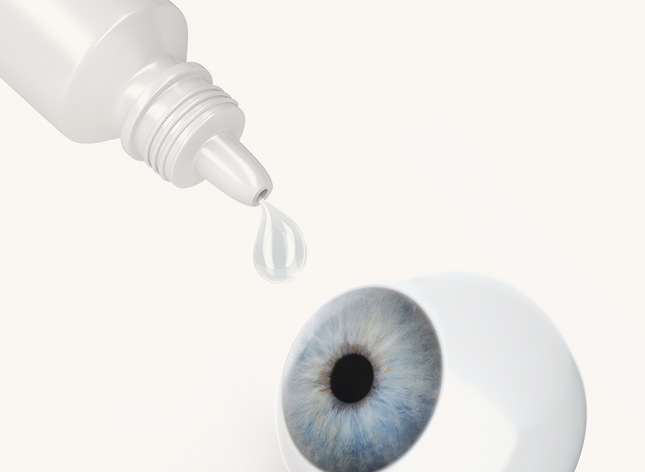
Multifocal soft contact lenses place distance and near zones on the same lens; monovision corrects one eye for distance and the other for near. Both can work well for active people, but contrast and night vision are slightly reduced. Pilocarpine-type eye drops shrink the pupil to create a “pinhole” depth-of-focus effect for several hours; they were approved in the US from 2021, but product availability in Korea varies, and they can cause headache, brow ache and dimmer vision in low light. Ask the clinic what is currently available and suitable for you.
Q. How do foreigners get an English eye exam for presbyopia in Korea?
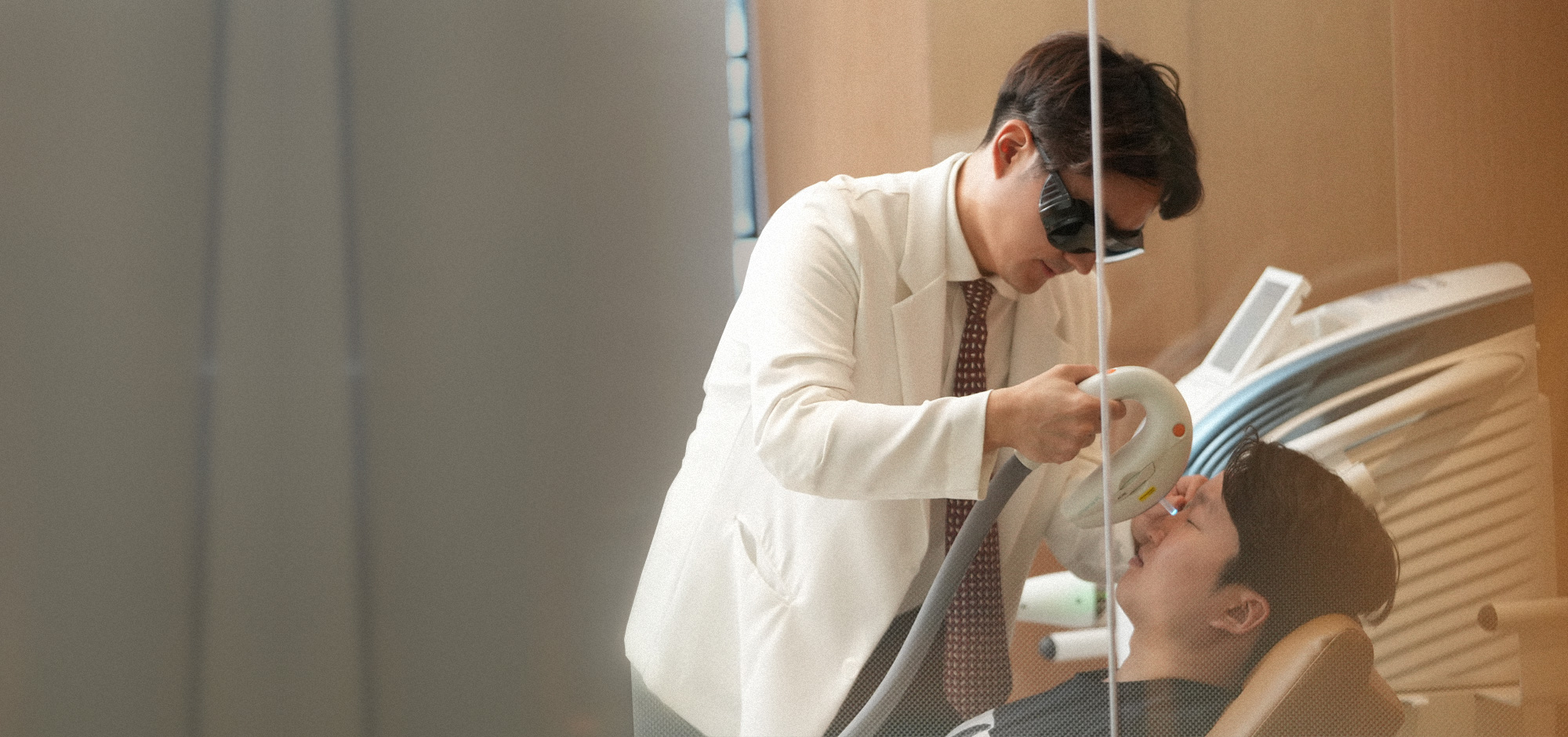
You do not need a referral to see an ophthalmologist (안과) in Korea. Book through Naver Booking or simply message the clinic on KakaoTalk in English. Bring your passport or Alien Registration Card (ARC), your current glasses or contact lens boxes, and any old prescriptions or surgery records (especially if you had LASIK/LASEK abroad). If you are enrolled in the National Health Insurance Service (NHIS), the medical examination portion of a visit is generally covered under the standard co-pay, while glasses and contact lenses themselves are bought separately at an optical shop and are usually self-pay; travellers and non-enrolled residents pay out of pocket. Ask the clinic for a current quote. A typical visit includes vision and refraction testing, eye pressure, a slit-lamp exam and, when needed, dilation — so plan for blurry near vision for a few hours afterwards and avoid driving yourself.
Q. When should I see a doctor in Seoul instead of buying readers?
- Near vision changes in only one eye
- Straight lines look wavy or bent, or there is a blank spot in the centre of vision
- New floaters, flashes of light or a shadow/curtain in your peripheral vision
- Sudden blur, eye pain, redness or haloes around lights
- Distance vision is also getting worse, or glare from headlights is increasing (possible early cataract)
- You have diabetes, high myopia, glaucoma in the family or take long-term steroids
- Your reading glasses need to get stronger every few months
Q. Which option fits which stage of presbyopia?
Early (about 40–47)
Low reading add. Over-the-counter readers, a “relaxed” near prescription, or a mild office lens often work. Contact lens wearers can trial a multifocal design. A good time for a baseline glaucoma and retina check.
Established (about 48–55)
Reading add increases. Most people do best with progressives for daily life plus an office lens for screen-heavy work. Monovision or multifocal contacts remain options if trialled first.
Advanced (55+)
Add power usually plateaus, but early lens clouding may begin. If glasses no longer give clear, bright vision, a cataract evaluation — and discussion of lens-implant options — becomes relevant.
A note from Dr. Daniel Baik
“Before ordering progressives, measure the distance you actually work at. Sit at your desk, hold a tape measure from your eyes to the monitor and to the keyboard, and bring those numbers to your exam. Most people’s screen sits 60–80 cm away, which needs a weaker add than a book at 40 cm — that is why many patients who are ‘fine with readers’ still struggle at the computer. And if you are very nearsighted and considering pilocarpine-type drops, have your peripheral retina checked first, because pupil-constricting drops are rarely associated with retinal tears. — Dr. Daniel Baik, board-certified ophthalmologist, Nunehim Eye Center”
❓ Frequently Asked Questions
Q. Can presbyopia be reversed with eye exercises?
No. Presbyopia comes from stiffening of the lens inside the eye, and exercises cannot restore its flexibility. Good lighting, larger fonts and regular breaks reduce strain, but they do not change the underlying focusing ability.
Q. Are cheap reading glasses from Daiso or a convenience store harmful?
They will not damage your eyes, but they have the same power in both lenses and a standard optical centre. If your eyes differ in prescription or you have astigmatism, they may cause headaches. They are fine as a spare pair once an eye exam has ruled out other problems.
Q. How long does it take to get used to progressive lenses?
Most people adapt within one to two weeks. Point your nose at what you want to see, lower your eyes to read, and take care on stairs at first. Persistent dizziness after a few weeks usually means the fitting height or prescription needs checking.
Q. Can I wear multifocal contact lenses if I have astigmatism?
Often yes — toric multifocal designs exist for many prescriptions, though the choice is narrower. A trial fitting is the best way to know whether the vision is sharp enough for your daily tasks.
Q. I had LASIK in my 20s. Will I still get presbyopia?
Yes. LASIK and LASEK reshape the cornea, not the lens, so presbyopia arrives on the usual schedule. Keep a copy of your original surgery records, because they help with future cataract lens calculations.
Q. Is an eye exam for presbyopia covered by Korean health insurance?
For NHIS enrollees, the medical examination at an ophthalmology clinic is generally covered with a co-pay. Glasses, contact lenses and some elective tests are typically paid separately. Ask the clinic for a current estimate before your visit.
Q. When should presbyopia make me think about surgery?
If you are over about 55 and glasses no longer give clear, bright vision, or you have early cataract, it may be worth discussing lens-implant options. For most people in their 40s, glasses or contacts remain the first choice.

Related reading
- Reading Glasses at 40? Early Presbyopia Signs and How Add Power Changes With Age
- Monovision for Presbyopia: Who Adapts and How It Compares With Multifocal Lenses
- How to Read Your Glasses Prescription in Korea: SPH, CYL, AXIS, ADD and PD
Book a Consultation
Get a full presbyopia assessment in English and a clear recommendation — glasses, contacts or drops — from a board-certified ophthalmologist serving Guro, Gasan, Yeongdeungpo and Gwanak.
Or visit nunehim.com
📍 Visit Nunehim Eye Center — Guro, Seoul
Convenient access from Guro, Gasan, Gwanak, Yeongdeungpo and Dongjak, near Guro Digital Complex Station (Line 2). Patients from Gwanak and Yeongdeungpo can reach us in a short subway ride, and you can message us on KakaoTalk in English before your visit.
Address
551 Siheung-daero, Guro-gu, Seoul
nunehim.com
Hours
Mon–Fri 09:00–18:30 (lunch 13:00–14:00)
Sat 09:00–14:00
Languages
Korean & English


Leave a Reply