Medically reviewed by Dr. Jinhag Baik, MD · Last updated September 2026
Dry Eye Syndrome in Seoul: Causes, Symptoms & Treatment
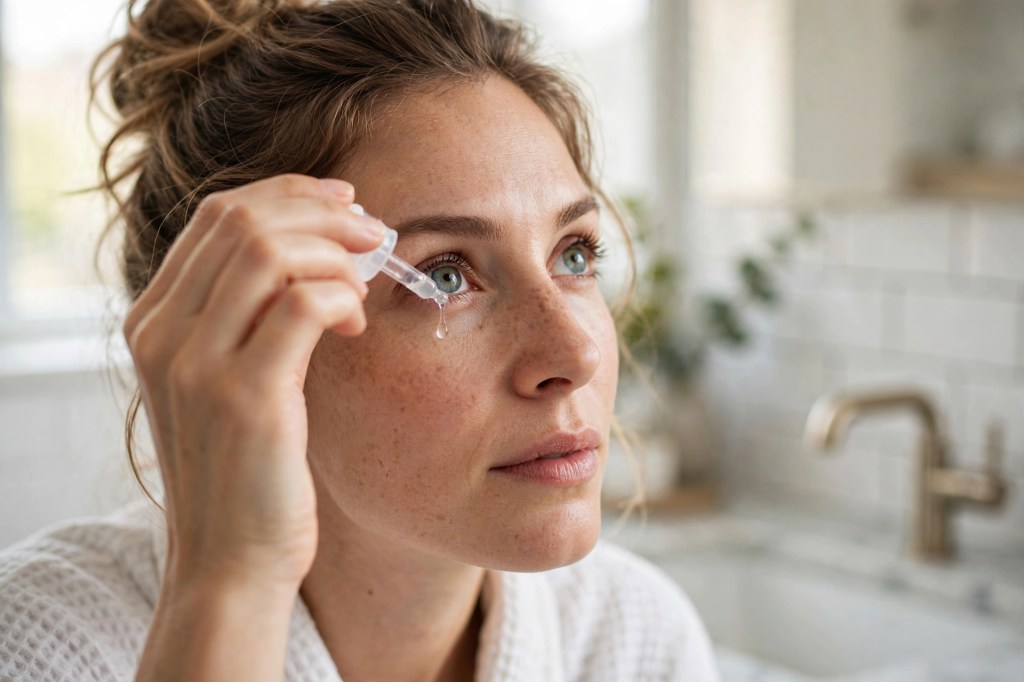
A board-certified ophthalmologist explains what’s really behind dry eye syndrome in Seoul — and how to treat it.
Quick Answer
Dry eye syndrome Seoul patients experience most often stems from meibomian gland dysfunction combined with heavy screen use, indoor heating, and fine-dust air pollution. It is highly treatable with the right combination of drops, lid care, and in-office therapy from an ophthalmologist.
Q. What is dry eye syndrome?
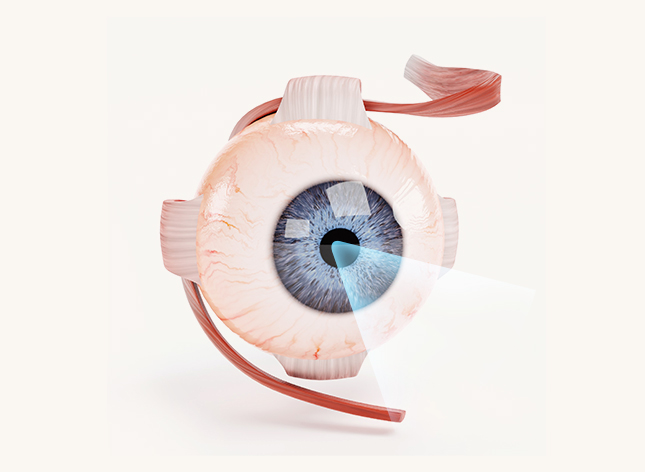
Dry eye syndrome is a chronic condition in which the eyes fail to maintain a stable, healthy tear film — either because too few tears are produced or because tears evaporate too quickly. For residents of Yeongdeungpo, Guro, and Gasan who spend long hours commuting and working at screens, evaporative dry eye linked to meibomian gland dysfunction is by far the most common form seen in clinic.
There are two main types: evaporative dry eye, where tears evaporate too quickly (often due to meibomian gland dysfunction), and aqueous-deficient dry eye, where the lacrimal glands do not produce enough tears.
Dry Eye by the Numbers
- ▸ Dry eye affects a substantial share of adults in Korea, with prevalence rising among office workers with heavy screen exposure
- ▸ Meibomian gland dysfunction is present in the majority of clinically diagnosed dry eye cases
- ▸ High fine-dust (mise-meonji) days in Seoul are associated with more dry eye clinic visits
- ▸ Contact lens wearers report symptom flare-ups at notably higher rates during long commutes
Q. What treatments are available for dry eye?
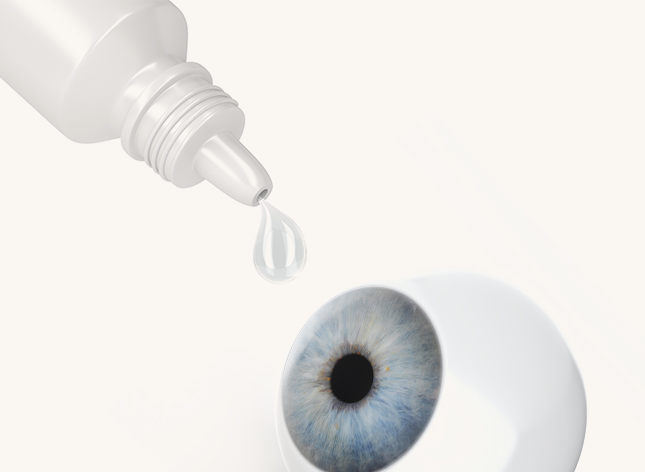
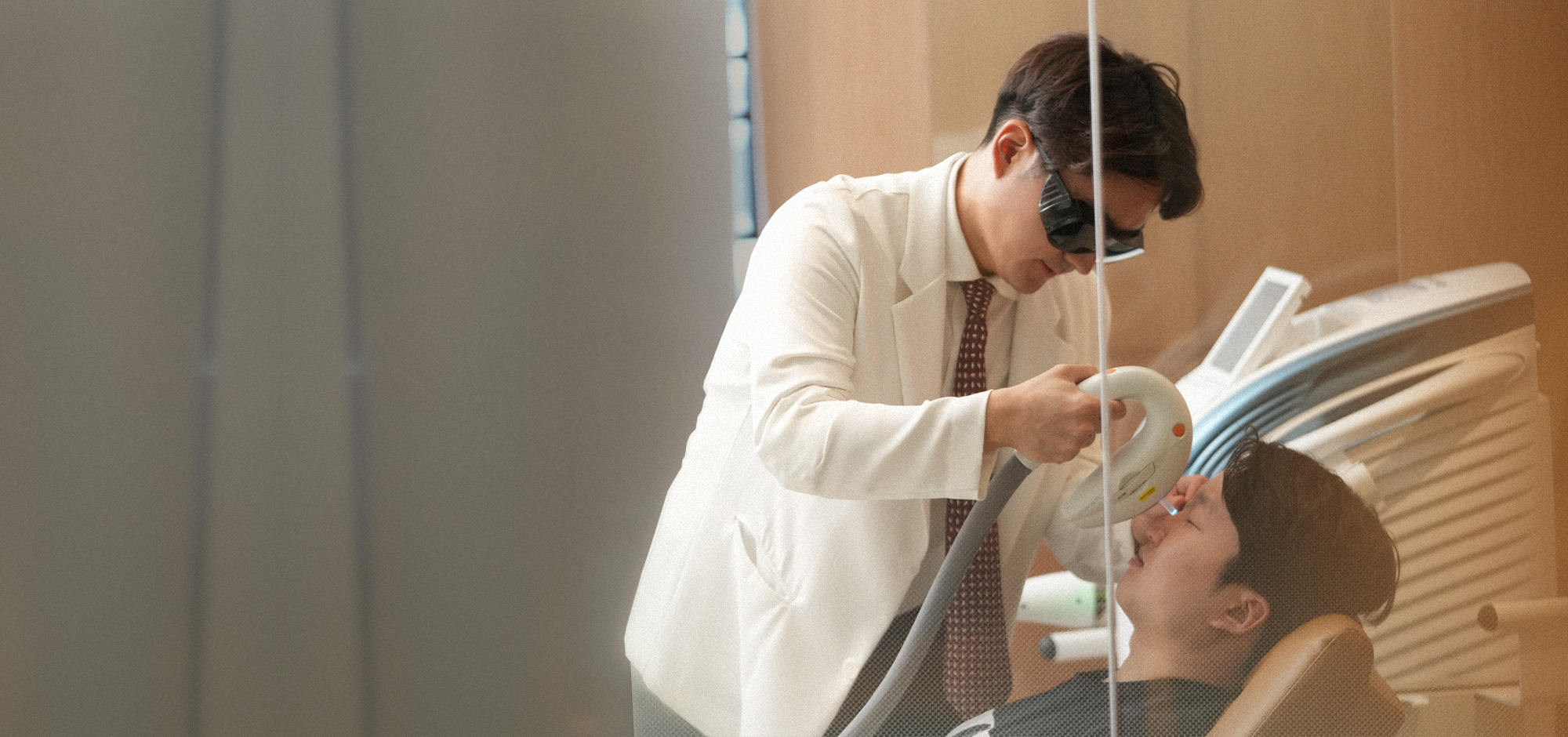
Treatment starts conservatively — preservative-free artificial tears, warm compresses, and lid hygiene — and escalates as needed to prescription anti-inflammatory drops, punctal plugs, or in-office meibomian gland expression and IPL therapy.
At Nunehim Eye Center, treatment plans are individualized after a slit-lamp exam and tear film assessment, so patients in Guro and Gwanak avoid a trial-and-error approach to relief.
Artificial tears come in several types: lubricant drops (most common, moisturize and lubricate), lipid-containing drops (prevent tear film evaporation), electrolyte-balanced drops (mimic natural tear composition), preservative-free drops (for frequent use or sensitive eyes), and omega-3-containing drops (help reduce inflammation).
Q. Why is dry eye more common for Seoul commuters?
Long subway commutes with contact lenses, dry indoor heating in winter, and continuous air conditioning in summer all strip moisture from the tear film faster than the eyes can replace it. Office workers across Yeongdeungpo and Gasan Digital Complex who spend 8+ hours facing a monitor also blink less often, compounding the problem.
Q. What are the warning signs you shouldn’t ignore?
- Persistent eye pain rather than mild irritation
- Sudden vision changes or new light sensitivity
- Redness that does not improve with lubricating drops
- Dryness severe enough to prevent contact lens wear
Mild
Occasional grittiness, worse by end of day. Managed with artificial tears and blink breaks.
Moderate
Daily symptoms, visible lid gland changes. Needs prescription drops and lid therapy.
Severe
Constant discomfort, corneal staining. Requires in-office procedures and close follow-up.
A Note from Dr. Daniel Baik
“Most patients I see with dry eye in Guro and Yeongdeungpo have gone months treating only the surface symptoms. As a board-certified ophthalmologist, my first step is always identifying whether the root cause is gland dysfunction, environment, or both — that’s what makes treatment actually last.”
❓ Frequently Asked Questions
Q. What causes dry eye syndrome?
Dry eye syndrome develops when the eyes don’t produce enough quality tears, or when tears evaporate too quickly. Common causes include meibomian gland dysfunction (blocked oil glands in the eyelids), prolonged screen use that reduces blink rate, air conditioning and heating, contact lens wear, hormonal changes, and certain medications such as antihistamines. In Seoul, indoor heating in winter and heavy air conditioning in summer both accelerate tear evaporation.
Q. What are the most common symptoms of dry eye?
Typical symptoms include a gritty or sandy sensation, burning, redness, blurred vision that improves with blinking, sensitivity to light, and — paradoxically — watery eyes as the eye overproduces reflex tears to compensate for dryness. Symptoms often worsen by the end of the workday, especially after long hours at a computer.
Q. Is dry eye syndrome more common in Seoul due to pollution and screen time?
Yes. Seoul’s high fine-dust (mise-meonji) days, dry indoor heating in winter, and long average screen-time hours among office workers in Yeongdeungpo, Guro, and Gasan business districts all increase evaporative dry eye. Commuters who wear contact lenses on Line 2 or Line 7 for long periods are especially prone to symptom flare-ups.
Q. Can dry eye syndrome be cured, or only managed?
Dry eye is usually a chronic condition that is managed rather than cured outright, though many patients achieve long, symptom-free periods with consistent treatment. Because the underlying causes (gland dysfunction, environment, screen habits) tend to persist, ongoing maintenance — drops, lid hygiene, and periodic in-office treatment — keeps symptoms controlled.
Q. What treatments are available for dry eye syndrome?
Treatment is tailored to severity and includes preservative-free artificial tears, warm compresses and lid massage, prescription anti-inflammatory drops, punctal plugs to retain natural tears, and in-office procedures such as meibomian gland expression or IPL (intense pulsed light) therapy for moderate-to-severe meibomian gland dysfunction.
Q. How is meibomian gland dysfunction related to dry eye?
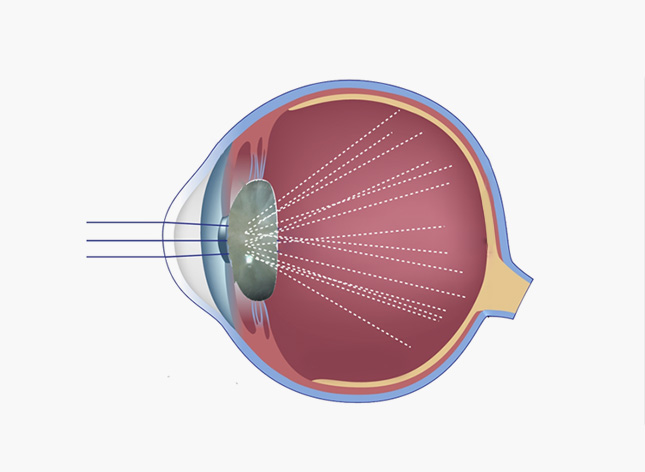
The meibomian glands along the eyelid margins secrete the oily layer that prevents tears from evaporating too quickly. When these glands become blocked or produce poor-quality oil — a condition called meibomian gland dysfunction (MGD) — the tear film breaks down rapidly, and evaporative dry eye follows. MGD is the leading cause of dry eye in most clinical studies.
Q. When should I see an ophthalmologist for dry eye in Seoul?
See an ophthalmologist if symptoms persist more than a few weeks despite over-the-counter drops, if you have eye pain, significant light sensitivity, sudden vision changes, or if dryness is affecting your ability to wear contact lenses or work at a screen. A slit-lamp exam and tear film assessment can identify the underlying cause and guide targeted treatment.

Book a Consultation
Same-week appointments available for dry eye evaluation at Nunehim Eye Center, Guro-gu.
📍 Visit Nunehim Eye Center — Guro, Seoul
Convenient access from Guro, Gasan, Gwanak & Dongjak. Near Guro Digital Complex Station (Line 2).
Address:
551 Siheung-daero, Guro-gu, Seoul
nunehim.com
Hours:
Mon–Fri 09:00–18:30 (lunch 13–14)
Sat 09:00–14:00
Languages:
Korean & English
Related guides
- TransPRK vs LASEK vs LASIK: which vision correction is right for you?
- ICL eye surgery in Seoul: who is a candidate for an implantable collamer lens?
About the author: Dr. Jinhag (Daniel) Baik, MD, is an ophthalmologist and the director of Nunehim Eye Clinic in Seoul, Korea (near Guro Digital Complex Station). A former Samsung semiconductor engineer, he welcomes English-speaking patients for vision correction, cataract, and general eye care.


Leave a comment