Medically reviewed by Dr. Jinhag Baik, MD · Last updated September 2026
TransPRK (2-Day LASEK) Consultation: What to Expect at Nunehim Eye Center
Your first TransPRK consultation in Seoul, step by step — Nunehim Eye Center, Guro-gu
Quick Answer
A TransPRK consultation in Seoul at Nunehim Eye Center includes corneal topography, pupil and tear film testing, a detailed refraction, and a candidacy discussion — TransPRK (2-Day LASEK) is a flap-free, no-touch laser correction we perform instead of SMILE LASIK, and most healthy adults with stable prescriptions are candidates, though final eligibility depends on your individual corneal and eye health results.
Q. What is a TransPRK consultation in Seoul?
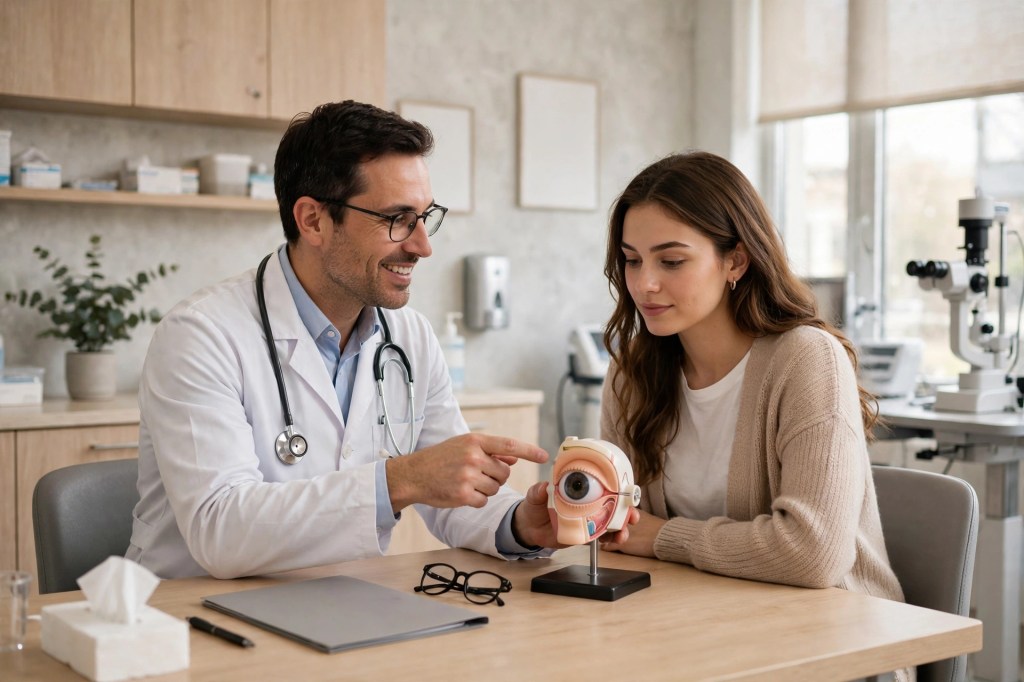
A TransPRK consultation in Seoul is a comprehensive diagnostic visit — not just a quick screening — that determines whether you are a safe, suitable candidate for flap-free laser vision correction. At Nunehim Eye Center in Guro-gu, this includes corneal mapping, tear film testing, pupil measurement, and a detailed discussion with Dr. Daniel Baik about your lifestyle and vision goals before any surgery date is scheduled.
Q. What tests are done during the consultation?
- Corneal topography — maps the surface shape and detects irregularities
- Corneal thickness (pachymetry) — confirms enough tissue for safe correction
- Pupil size measurement in dim light
- Tear film and dry eye assessment
- Cycloplegic refraction to confirm a stable, accurate prescription
Refractive Surgery in Korea: The Numbers
- ▸ Korea has one of the highest rates of myopia in the world, driving strong demand for vision correction
- ▸ TransPRK/surface ablation techniques avoid the flap-related risks associated with traditional LASIK
- ▸ A meaningful share of consultation candidates are found unsuitable for surgery and referred to alternatives like OK lens or glasses
- ▸ Thorough pre-operative screening is the single biggest factor in long-term patient satisfaction
Q. Why choose TransPRK over other procedures?
TransPRK is flap-free, which removes the risk of flap dislocation and may better suit patients with thinner corneas, active lifestyles, or contact sports. Because Nunehim Eye Center focuses on TransPRK (2-Day LASEK) and OK lens rather than offering every procedure on the market, our team has deep, focused experience in managing the recovery process well.
We are direct with patients in Guro, Gasan, and Yeongdeungpo about whether TransPRK, OK lens, or simply updated glasses is the right fit — not every patient needs surgery.
Q. What happens after the consultation if I am a candidate?
If you are a suitable candidate, we schedule the procedure and walk through pre-operative instructions, including stopping contact lens wear for a period beforehand so the cornea returns to its natural shape for accurate measurements. We also review recovery expectations, follow-up visit timing, and driving/work restrictions for the days after surgery.
Q. What should I bring to my TransPRK consultation in Seoul?
- A list of current medications and any eye conditions
- Your current glasses prescription, if available
- Contact lens wearers: stop soft lenses at least 1–2 weeks before, longer for rigid lenses (we will advise specifics)
- Questions about your lifestyle — sports, screen work, night driving — so we can tailor advice
- Time for pupil dilation, which can temporarily blur near vision for a few hours
Step 1: Consultation
Full diagnostic testing and candidacy review.
Step 2: Procedure
Same-day, flap-free TransPRK laser correction.
Step 3: Recovery
Follow-up visits over the following weeks to confirm healing.
From Dr. Daniel Baik
“The consultation is the most important part of the whole process. I would rather spend extra time on testing and tell a patient TransPRK isn’t right for them than rush anyone into surgery.”
❓ Frequently Asked Questions
Q. What is TransPRK and how is it different from LASIK?
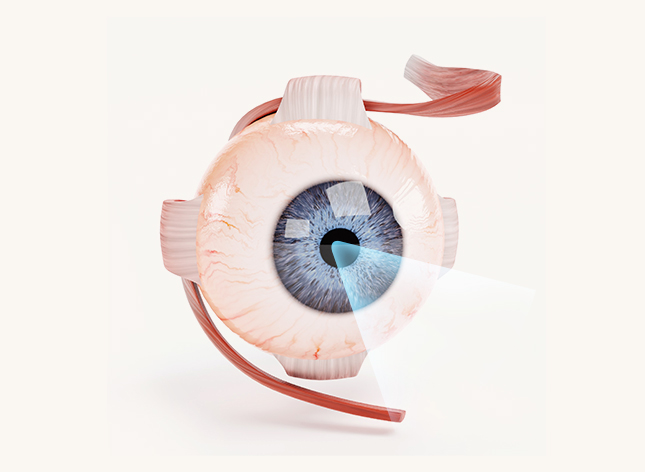
TransPRK (Trans-epithelial Photorefractive Keratectomy), performed as 2-Day LASEK at our clinic, reshapes the cornea’s surface without cutting a corneal flap, unlike traditional LASIK. Because there is no flap, TransPRK avoids flap-related complications and may suit patients with thinner corneas or higher-risk lifestyles, such as contact sports.
Q. Does Nunehim Eye Center offer SMILE LASIK?
No — we specialize in TransPRK (2-Day LASEK) and OK lens (orthokeratology) rather than SMILE LASIK. We chose this focus because it lets us build deep expertise in flap-free correction and a fast, well-managed recovery protocol for our patients.
Q. What happens during a TransPRK consultation?
Your consultation includes corneal topography (mapping the cornea’s shape and thickness), pupil size measurement, dry eye and tear film assessment, a cycloplegic refraction, and a detailed review of your eye health history. Dr. Baik reviews all results with you and explains candidacy honestly, including if TransPRK is not the best fit.
Q. Who is not a good candidate for TransPRK?
Patients with unstable prescriptions in the past year, certain corneal conditions like keratoconus, significant dry eye disease, or corneas that are too thin for the planned correction may not be candidates. This is exactly why a thorough consultation — not just a quick screening — matters before scheduling surgery.
Q. Why is it called ‘2-Day LASEK’ and what does recovery involve?
The name reflects the typical initial recovery window before vision starts noticeably clearing, though full stabilization takes several weeks. Most patients experience some light sensitivity and mild discomfort for the first 2–3 days, managed with prescribed drops and a bandage contact lens.
Q. How much does a TransPRK consultation cost in Seoul?
The initial consultation fee covers all diagnostic testing; exact pricing is best confirmed directly with our clinic, since it can depend on the specific tests needed for your case. We recommend booking a consultation to get an accurate, personalized quote rather than relying on general estimates.
Q. How do I book a TransPRK consultation at Nunehim Eye Center?
Patients from Yeongdeungpo, Guro, Gasan, and Gwanak can book directly through our Naver Booking page in Korean, or contact us via nunehim.com; English-language consultations are available with Dr. Daniel Baik.


Book a Consultation
Curious if TransPRK is right for you? Schedule a full consultation at Nunehim Eye Center in Guro-gu, Seoul.
Or visit nunehim.com
📍 Visit Nunehim Eye Center — Guro, Seoul
Convenient access from Guro, Gasan, Gwanak & Yeongdeungpo. Near Guro Digital Complex Station (Line 2).
Address
551 Siheung-daero, Guro-gu, Seoul · nunehim.com
Hours
Mon–Fri 09:00–18:30 (lunch 13:00–14:00), Sat 09:00–14:00
Languages
Korean & English
Related guides
About the author: Dr. Jinhag (Daniel) Baik, MD, is an ophthalmologist and the director of Nunehim Eye Clinic in Seoul, Korea (near Guro Digital Complex Station). A former Samsung semiconductor engineer, he welcomes English-speaking patients for vision correction, cataract, and general eye care.


Leave a comment