Glaucoma Screening in Korea: Who Needs It and How Often
Most Korean glaucoma has normal eye pressure — here is who should be screened, which tests matter, and how often to repeat them
Quick Answer
Glaucoma screening in Korea is recommended for everyone from age 40, and earlier (from the 20s–30s) if you are highly myopic, have a family history of glaucoma, use long-term steroids, or have diabetes. A proper screen is not just an eye-pressure check: because most glaucoma in Korea is normal-tension glaucoma, it must include an optic nerve exam and OCT, with a visual field test if anything looks suspicious. Low-risk adults should be screened every 1–2 years; glaucoma suspects every 6–12 months. Nunehim Eye Center in Guro provides same-visit screening for patients from Yeongdeungpo, Gasan and Gwanak.
Q. Why is glaucoma screening in Korea different from other countries?
Glaucoma screening in Korea has to account for one key fact: the majority of Korean patients with open-angle glaucoma have normal eye pressure. In the landmark Namil population study, roughly three-quarters of open-angle glaucoma cases were normal-tension glaucoma (NTG), with intraocular pressure (IOP) of 21 mmHg or lower. A screening that relies only on the “air-puff” pressure test will therefore miss most cases.
Glaucoma damages the optic nerve slowly and painlessly. Peripheral vision is lost first, and the brain fills in the gaps, so most people notice nothing until the damage is advanced — and that lost vision cannot be restored. Early detection with modern imaging allows us to start drops or laser early and keep most patients seeing well for life.
We regularly see office workers from Gasan Digital Complex and students from Gwanak whose “just check my glasses” visit reveals a thin nerve-fibre layer on OCT — often linked to high myopia, which is extremely common in Seoul. Older patients in Guro and Yeongdeungpo more often have angle-closure risk from a crowded anterior chamber.
Q. Who needs glaucoma screening in Korea?
- All adults aged 40 and over — baseline exam, then regular follow-up
- High myopia (−6.00 D or more), even in your 20s and 30s
- Family history of glaucoma in a parent or sibling
- Long-term steroid use — eye drops, inhalers, creams or tablets
- Diabetes, high or very low blood pressure, migraine, or sleep apnoea — linked with NTG risk
- Previous eye injury or a narrow drainage angle noted by an eye doctor
Glaucoma in Korea — key numbers
▸ National survey data (KNHANES) put open-angle glaucoma prevalence at roughly 3–4% of Koreans aged 40 and over.
▸ In the Namil study, about 77% of open-angle glaucoma was normal-tension glaucoma — pressure alone misses most cases.
▸ More than half of people with glaucoma in population surveys were unaware they had it before being examined.
▸ Glaucoma patient numbers treated under Korean health insurance have grown steadily, passing one million annually in recent years.
Q. What tests are included in glaucoma screening?
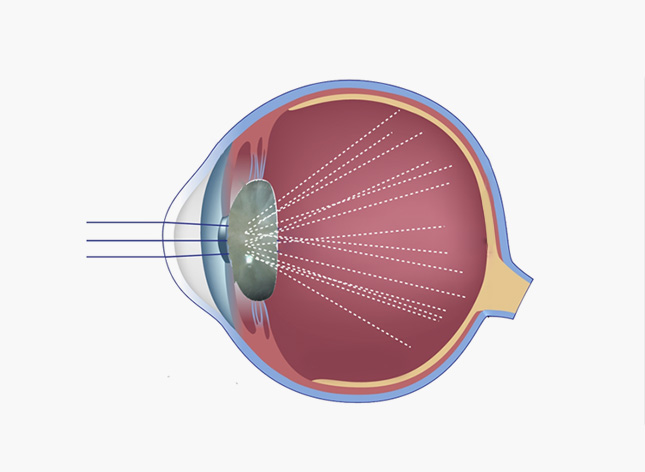
A complete screen at Nunehim Eye Center in Guro includes: tonometry (eye pressure), dilated or non-dilated optic disc examination, OCT of the retinal nerve fibre layer and ganglion cell layer, fundus photography for a baseline record, and gonioscopy or anterior-segment imaging to check whether the drainage angle is open or narrow. Corneal thickness is measured because thin corneas can make pressure readings look falsely low.
If any result is borderline, we add an automated visual field test (Humphrey 24-2 or 10-2). Most of the screening visit takes under an hour, and results are explained in English or Korean on the same day — convenient for working patients from Gasan and Yeongdeungpo.
Q. How often should I have glaucoma screening in Korea?
General guide: age 40–54 every 2 years if low risk; 55 and over every 1–2 years; high-risk or glaucoma suspect every 6–12 months with OCT comparison. Patients on steroids should be checked within a few weeks of starting and then periodically.
If glaucoma is diagnosed, treatment usually begins with pressure-lowering eye drops or selective laser trabeculoplasty (SLT), with regular OCT and visual field monitoring every 4–6 months to confirm stability. Even in normal-tension glaucoma, lowering pressure by around 30% slows progression.
Q. When should I see a doctor in Seoul?
Most glaucoma has no symptoms — but seek same-day care if you notice these signs of acute angle-closure:
- Sudden severe eye pain with a red eye
- Blurred vision with haloes around lights
- Headache, nausea or vomiting together with eye pain
- A mid-dilated pupil that does not react to light
- Rapid loss of vision in one eye
Q. What are the stages of glaucoma?
Suspect
Optic nerve looks suspicious or pressure is high, but no functional damage. Monitor every 6–12 months with OCT and fields.
Early glaucoma
Thinning on OCT and subtle field defects that you do not notice. Treatment now preserves nearly all useful vision.
Advanced glaucoma
Large peripheral or central field loss affecting driving and reading. Treatment aims to protect the remaining vision.
“Normal pressure does not mean normal nerve.”
In Korea, most of the glaucoma I diagnose has completely normal eye pressure — so a pressure check alone gives false reassurance. A ten-minute OCT scan can pick up damage years before a patient notices anything. For anyone over 40 in Guro, Gwanak or Yeongdeungpo, or anyone highly myopic, I strongly recommend a proper baseline exam.
— Dr. Daniel Baik, board-certified ophthalmologist, Nunehim Eye Center
❓ Frequently Asked Questions
Q. Is glaucoma screening covered by Korean National Health Insurance?
Diagnostic tests ordered for a medical reason — such as a suspicious optic disc or high pressure — are generally covered by NHIS. Pure check-up screening without findings may be partly self-paid; we explain costs before testing.
Q. Does the national health check-up in Korea include glaucoma screening?
The standard National Health Screening includes visual acuity but not a full optic nerve assessment or OCT, so it cannot reliably detect glaucoma.
Q. Can young people get glaucoma?
Yes. Highly myopic young adults in Korea have a higher risk of normal-tension glaucoma, and some congenital or juvenile forms occur in children and teenagers.
Q. Is the glaucoma test painful?
No. Pressure measurement uses a brief puff or a gentle probe after numbing drops. OCT and photography are non-contact. The visual field test simply requires pressing a button when you see lights.
Q. Can I have TransPRK or LASEK if I am a glaucoma suspect?
Often yes, after careful evaluation. Corneal thinning affects pressure readings, so we record your baseline OCT and pressure before surgery and adjust future readings.
Q. If glaucoma is found, will I go blind?
With early diagnosis and consistent treatment, the vast majority of patients keep useful vision for life. The main risk is late detection or stopping drops.
Q. Is English-speaking glaucoma care available near Gasan and Gwanak?
Yes. Dr. Daniel Baik provides glaucoma screening and follow-up in both English and Korean at Nunehim Eye Center in Guro-gu.

Book a Consultation
Over 40, highly myopic or have a family history? Book glaucoma screening in Korea with a board-certified ophthalmologist in Guro — close to Gasan, Gwanak and Yeongdeungpo.
Or visit nunehim.com
📍 Visit Nunehim Eye Center — Guro, Seoul
Convenient access from Guro, Gasan, Gwanak, Yeongdeungpo & Dongjak. Near Guro Digital Complex Station (Line 2).
Address
551 Siheung-daero, Guro-gu, Seoul
nunehim.com
Hours
Mon–Fri 09:00–18:30 (lunch 13:00–14:00)
Sat 09:00–14:00
Languages
Korean & English consultations


Leave a comment