Retinal Tear vs Detachment in Seoul: Key Differences to Know
Flashes, floaters and a shadow in your vision — how to tell a retinal tear from a retinal detachment, and why timing matters
Quick Answer
A retinal tear is a break in the retina, usually caused by the vitreous gel pulling away from it; a retinal detachment happens when fluid passes through that break and lifts the retina off the back wall of the eye. A tear can often be sealed with an in-office laser in minutes, while a detachment needs urgent surgery. If you are searching “retinal tear vs detachment Seoul” because you have new flashes or floaters, book a dilated retinal exam within 24 hours — at Nunehim Eye Center in Guro we see patients from Yeongdeungpo, Gasan and Gwanak on the same day.
Q. What is the difference between a retinal tear vs detachment in Seoul patients?
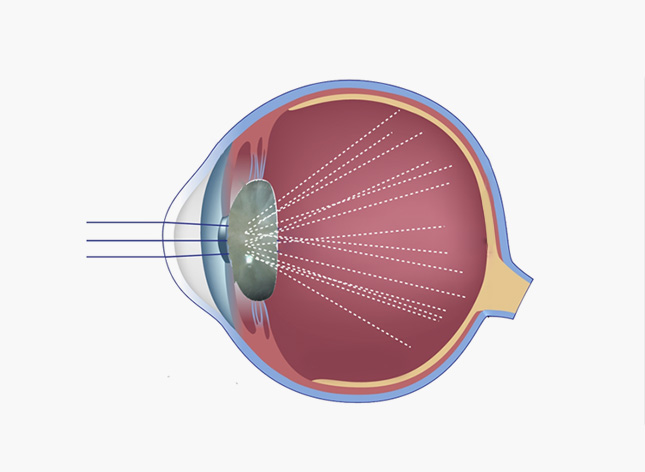
When patients in Seoul ask about retinal tear vs detachment, the simplest answer is that one usually leads to the other. The retina is the thin, light-sensitive layer lining the inside of the eye. As we age — or earlier in highly myopic eyes — the vitreous gel liquefies and separates from the retina, a process called posterior vitreous detachment (PVD). In most people PVD is harmless, but where the vitreous is firmly stuck, it can tear the retina, creating a horseshoe-shaped flap.
A tear alone does not usually reduce vision much. The danger is that liquid vitreous can seep through the tear and peel the retina away, just like wallpaper lifting off a damp wall. That is a rhegmatogenous retinal detachment, and once it reaches the macula (the centre of vision), permanent loss of sharp reading vision becomes much more likely. This is why ophthalmologists treat a new tear as an emergency-in-waiting rather than something to watch.
Korea has one of the highest rates of myopia in the world, and myopic eyes are longer with thinner peripheral retina. That is one reason we see retinal tears in younger office workers from Gasan Digital Complex and students from Gwanak, not only in older adults in Guro and Yeongdeungpo.
Q. What are the symptoms of a retinal tear vs detachment?
- Sudden new floaters — dots, cobwebs or a “swarm of flies” (both tear and detachment)
- Flashes of light in the side of your vision, often more noticeable in dim rooms (both)
- A dark curtain or shadow spreading in from one side — typical of detachment
- Blurred or wavy central vision — suggests the detachment is involving the macula
- No pain and no red eye — retinal problems are painless, which is why people delay
Retinal detachment in Korea — key numbers
▸ A nationwide Korean study found rhegmatogenous retinal detachment requiring surgery occurs in roughly 10 per 100,000 people per year, with a peak in the 50s–60s and a smaller peak in young myopes.
▸ Around 1 in 7 patients who present with acute symptomatic PVD (new flashes and floaters) has a retinal tear on dilated examination.
▸ Untreated symptomatic horseshoe tears progress to detachment in a large proportion of cases — up to about half in classic series — whereas prophylactic laser reduces that risk dramatically.
▸ Studies of Korean young adults have reported myopia in over 80% and high myopia in roughly 1 in 5 — a key risk factor for retinal tears in Seoul.
Q. How is a retinal tear treated compared with a detachment?
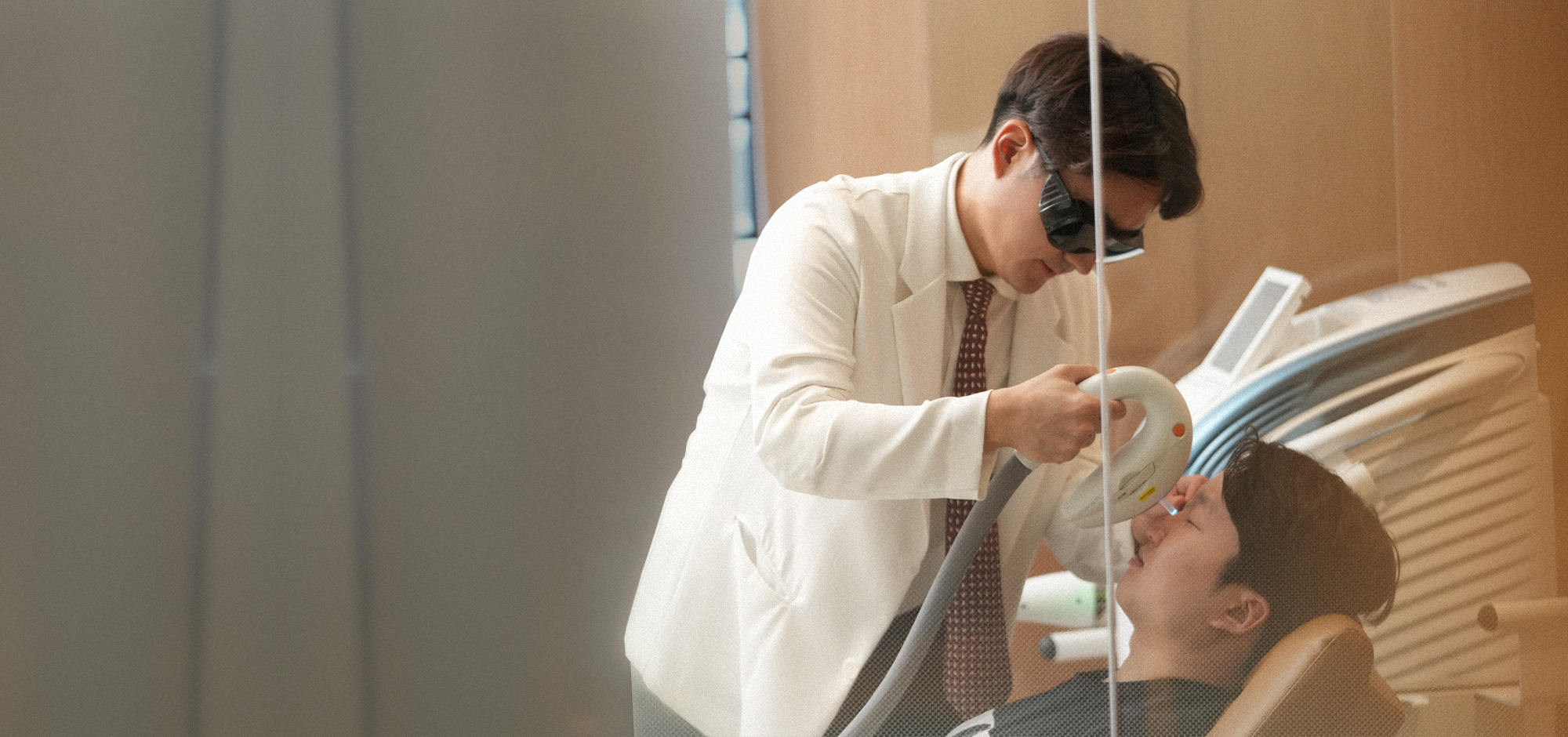
A retinal tear is usually treated with barrier laser photocoagulation (laser retinopexy). Laser spots are placed around the tear; over 10–14 days they form a scar that “welds” the retina down. It takes about 10–15 minutes, is done in the clinic with eye drops for anaesthesia, and patients from Guro, Gasan or Yeongdeungpo can usually return to desk work the next day. Some tears in hard-to-reach areas are treated with cryotherapy instead.
A retinal detachment needs surgery in an operating room: vitrectomy, scleral buckle or pneumatic retinopexy, depending on the tear location, age and lens status. Single-operation success rates are generally around 85–90%, and visual outcome depends heavily on whether the macula was still attached at the time of surgery. At Nunehim Eye Center we diagnose, laser eligible tears and arrange same-day referral to a vitreoretinal surgical team when a detachment is found.
Q. Who is at higher risk of a retinal tear in Seoul?
Risk is higher if you are highly myopic (−6.00 D or more), have had cataract surgery, a previous tear or detachment in either eye, blunt eye trauma (sports, falls), lattice degeneration, or a family history of retinal detachment. Refractive surgery such as TransPRK does not remove the underlying myopic retinal risk, so we perform a full dilated retinal check before any laser vision correction.
If you fall into one of these groups and live or work in Gwanak, Gasan or Guro, a baseline dilated fundus exam — and knowing the warning symptoms — is the single best protection.

Q. When should I see a doctor in Seoul?
Seek same-day care — do not wait for a routine appointment — if you notice:
- A sudden shower of new floaters, especially with flashes
- A grey or black curtain moving across part of your vision
- Any sudden loss of vision in one eye
- New flashes after a blow to the eye or head
- Floaters that suddenly increase in an eye that has had cataract surgery
Q. How does a retinal tear progress to detachment?
Stage 1 · PVD
The vitreous separates from the retina. New floaters and brief flashes are common. Most PVDs are harmless, but every symptomatic PVD needs a dilated exam.
Stage 2 · Retinal tear
The vitreous pulls a flap in the retina. Vision may be near-normal. Laser retinopexy now can usually prevent detachment.
Stage 3 · Detachment
Fluid lifts the retina — a shadow or curtain appears. Urgent surgery is needed, ideally before the macula detaches.
“Flashes and floaters deserve a same-day look.”
Many patients from Yeongdeungpo and Gasan tell me they waited a week because the eye did not hurt. A retinal tear found early is often a 15-minute laser treatment; the same tear found after it has become a detachment means surgery and a much less certain recovery. If something new appears in your vision, please come in the same day.
— Dr. Daniel Baik, board-certified ophthalmologist, Nunehim Eye Center
❓ Frequently Asked Questions
Q. Can a retinal tear heal on its own?
Small tears without traction sometimes remain stable, but symptomatic horseshoe tears carry a high risk of detachment and are usually treated with laser. Only a dilated examination can tell which type you have.
Q. Is laser treatment for a retinal tear painful?
Most patients feel only mild discomfort or an ache with bright flashes. Anaesthetic drops are used, and the procedure takes about 10–15 minutes in the clinic.
Q. How long after a PVD can a tear still occur?
Most tears occur within the first 6 weeks after symptoms start. We often recheck patients at around 4–6 weeks, or sooner if symptoms change.
Q. Can I fly or exercise after laser for a retinal tear?
Flying is generally fine after laser alone. We usually advise avoiding contact sports and heavy lifting for about 1–2 weeks while the laser scar forms. After detachment surgery with a gas bubble, flying is not allowed until the gas has absorbed.
Q. Does TransPRK or LASEK increase the risk of retinal detachment?
Surface laser procedures act on the cornea, not the retina, and are not considered a direct cause. However, the myopic retina remains at risk, so we examine the peripheral retina before surgery.
Q. Is retinal tear treatment covered by Korean National Health Insurance?
Yes. Diagnostic retinal examination and medically indicated laser retinopexy are covered by NHIS for enrolled residents, including most expats in Guro, Gwanak and Yeongdeungpo with health insurance.
Q. Can I get an English-speaking exam for flashes and floaters?
Yes. Dr. Daniel Baik provides consultations in both Korean and English at Nunehim Eye Center in Guro-gu, Seoul.

Book a Consultation
New flashes, floaters or a shadow in your vision? Get a dilated retinal exam with a board-certified ophthalmologist in Guro — convenient for Gasan, Gwanak and Yeongdeungpo.
Or visit nunehim.com
📍 Visit Nunehim Eye Center — Guro, Seoul
Convenient access from Guro, Gasan, Gwanak, Yeongdeungpo & Dongjak. Near Guro Digital Complex Station (Line 2).
Address
551 Siheung-daero, Guro-gu, Seoul
nunehim.com
Hours
Mon–Fri 09:00–18:30 (lunch 13:00–14:00)
Sat 09:00–14:00
Languages
Korean & English consultations


Leave a comment