Contact Lens Prescription Korea: An English-Speaking Eye Doctor’s Guide for Foreigners
Optical shop or eye clinic? What your home prescription means here, what to bring, and how to get fitted in English near Guro, Gasan, Yeongdeungpo & Gwanak
Quick Answer
You do not legally need a doctor’s contact lens prescription in Korea to buy standard soft lenses: licensed opticians (안경사) at optical shops (안경원) can measure your eyes and sell lenses, and contact lenses cannot legally be sold online here. But a reliable contact lens prescription Korea answer still starts with a medical eye exam, because an optical shop cannot examine your cornea, tear film or eye health. See an ophthalmologist if you are new to lenses, need toric, multifocal, RGP or ortho-k lenses, have dry or red eyes, or are fitting a child. Nunehim Eye Center in Guro offers English consultations for patients from Gasan, Yeongdeungpo and Gwanak.
Q. Contact lens prescription Korea: what is it, and do you actually need one?
A contact lens prescription is a set of fitting parameters, not just a vision number. It lists the lens brand or material, base curve (BC), diameter (DIA), power (sphere, plus cylinder and axis for toric lenses) and the replacement schedule. For expats searching “contact lens prescription Korea”, the key difference from home is legal: in the United States, for example, sellers must verify a valid prescription and the FTC Contact Lens Rule sets a minimum expiry of one year. In Korea, standard lenses are usually dispensed directly by licensed opticians without a doctor’s prescription. That makes buying lenses easy, but it also means nobody may have checked whether your eyes are healthy enough for lens wear. At Nunehim Eye Center (nunehim.com), a board-certified ophthalmologist performs that medical check in Korean or English.
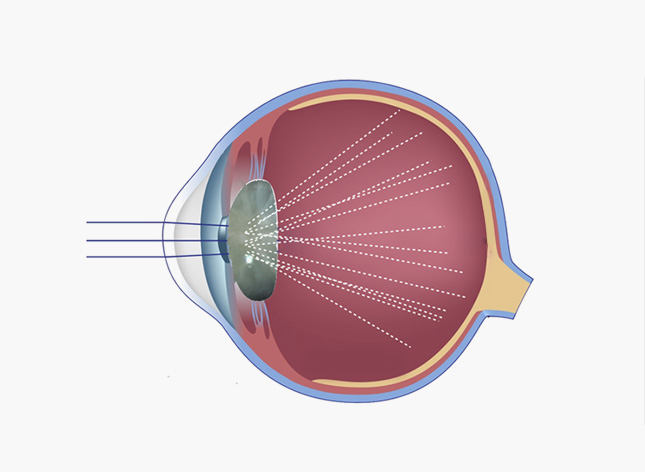
Your glasses prescription cannot simply be copied into a contact lens order. Glasses sit about 12 mm in front of the eye, while a contact lens sits on the cornea, so for powers stronger than roughly ±4.00 D the numbers change: a −6.00 D glasses prescription usually corresponds to about −5.50 D in a contact lens. Low astigmatism is often managed with a spherical lens, but higher astigmatism needs a toric lens whose axis must stay stable on the eye. Base curve and diameter determine whether the lens centres and moves correctly, which only a trial fit can confirm.
Q. What are the signs your contact lenses need a proper fitting or a check-up?
- Lenses feel fine in the morning but dry, scratchy or “sticky” by mid-afternoon, especially in heated Seoul offices in winter.
- Redness that persists after you remove your lenses, or tiny blood vessels growing toward the edge of the cornea.
- Vision that blurs and clears with each blink, a typical sign of toric lens rotation or an unstable tear film.
- A lens that slides off-centre, folds, or falls out, which often means the base curve or diameter does not suit your cornea.
- Your comfortable wearing time has shrunk from a full day to a few hours.
- Headaches or eye strain with new lenses, which can be caused by over-corrected power.
- You have been rebuying the same box for years without anyone looking at your eyes under a microscope.
Key facts at a glance
▸ Myopia is extremely common in Korea: about 96.5% of 19-year-old men examined in Seoul were myopic (Jung et al., Investigative Ophthalmology & Visual Science, 2012).
▸ Sleeping in soft contact lenses raises the risk of microbial keratitis, a sight-threatening corneal infection, many times over compared with daily wear (Stapleton et al., Ophthalmology, 2008).
▸ In the US, a contact lens prescription must be valid for at least one year under the FTC Contact Lens Rule, which is why many expats arrive with an expiry date on their paperwork.
▸ In Korea, refraction for children aged 6 and under falls outside an optician’s scope of practice and is performed by a doctor.
Q. Optical shop or eye clinic: where should foreigners get fitted in Korea?
An optical shop is reasonable if you are an experienced, symptom-free wearer of simple spherical soft lenses and only need a refill: the optician can check your vision and hand over a box the same day. Choose an ophthalmology clinic (안과) instead if you are a first-time wearer, need toric or multifocal lenses, wear rigid gas-permeable (RGP) lenses, have keratoconus or a history of eye surgery, suffer from dry eye or allergies, or want ortho-k (OK lens) myopia control for a child. Ortho-k in particular requires corneal topography and doctor follow-up.
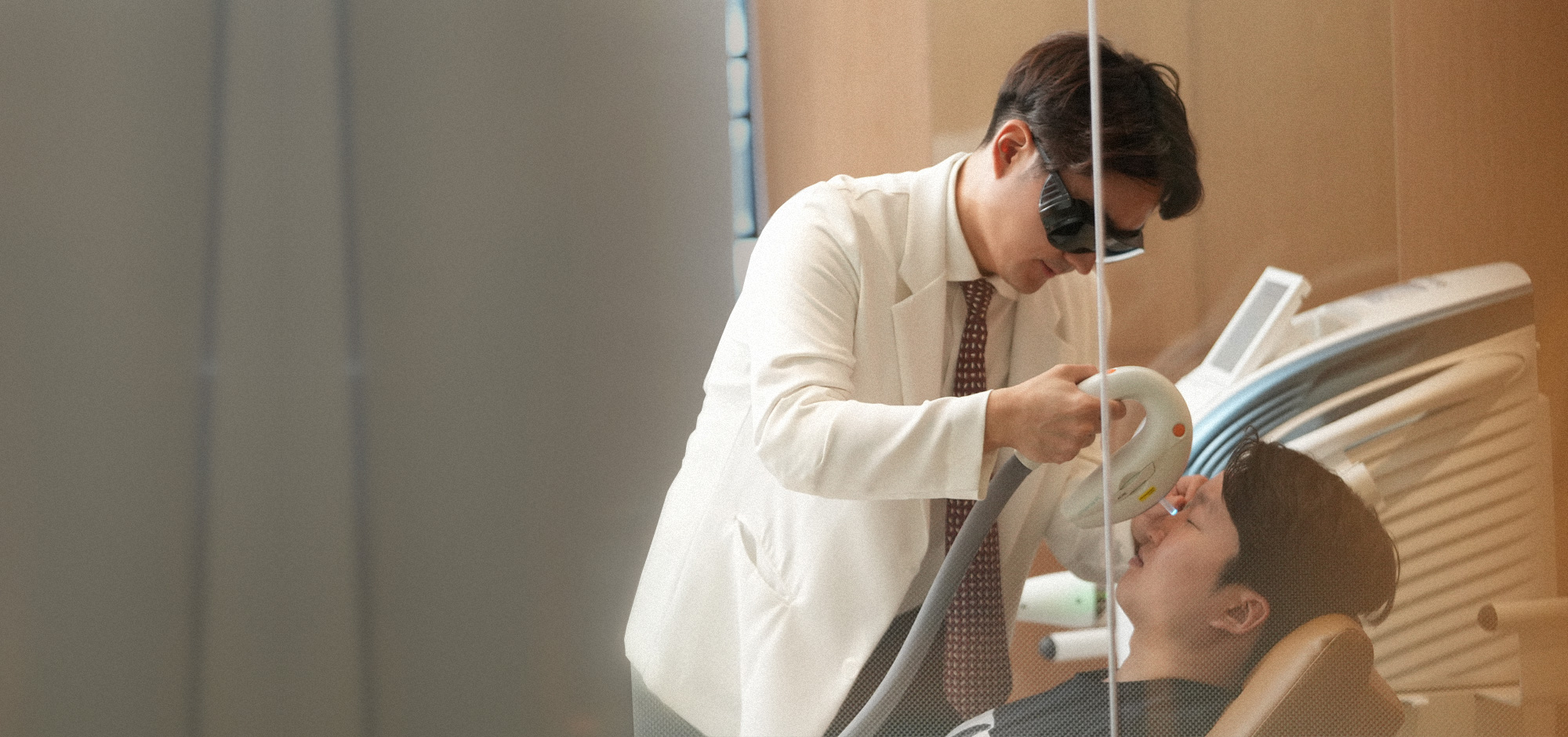
At Nunehim Eye Center the fitting combines a slit-lamp examination of the cornea and eyelids, a tear-film assessment, corneal measurements, and a trial lens checked for centration, movement and vision. You leave with written lens parameters, so you can refill at any optical shop near home in Guro, Gasan, Yeongdeungpo or Gwanak, and return for a check whenever something feels wrong.
Q. How do foreigners get a contact lens exam in Seoul? (Expat checklist)
Booking: reserve on Naver Booking, or message the clinic on KakaoTalk in English to ask about availability; English consultations are available. What to bring: your passport or Alien Registration Card (ARC); a photo of your lens box or blister foil showing brand, BC, DIA and power; your current glasses; any prescription from your home country; and your lens case. If you already wear lenses comfortably, arrive wearing them for at least a few hours so the fit can be judged, and bring your glasses so you can take them out.
Insurance: Korean National Health Insurance (NHIS) helps cover medically necessary eye examinations for enrolled residents, while routine contact lens fitting for vision correction or cosmetic reasons is generally self-pay. Short-term visitors without NHIS pay self-pay rates, so ask the clinic for a current quote. Visit flow: registration, vision and refraction tests, the doctor’s microscope exam, trial lens fitting, and a final check of vision and lens position.
Q. When should I see a doctor in Seoul?
Remove your lenses and see an ophthalmologist the same day if you notice any of the following. Do not patch the eye, and bring the lenses and case with you.
- Eye pain, especially pain that continues after the lens is out.
- A red eye with light sensitivity or watering.
- A white or grey spot on the clear cornea.
- Discharge, or eyelids stuck together in the morning.
- Sudden blurred vision that does not clear with blinking or glasses.
- Symptoms after swimming, showering or using a hot tub with lenses in, a known risk for Acanthamoeba infection.
Step 1 · Medical exam
Vision and refraction, slit-lamp check of the cornea, lids and tear film, and corneal measurements. Problems such as blepharitis or dry eye are treated first, because they are a common reason lenses fail.
Step 2 · Trial fit
A trial lens settles for several minutes before centration, movement, toric axis and visual clarity are checked. Parameters are adjusted until comfort and vision both pass.
Step 3 · Follow-up
New wearers, toric and RGP wearers are usually rechecked after a short adaptation period, then yearly. Ortho-k patients follow a closer schedule set by the doctor.
Dr. Daniel Baik’s practical tip
“Before your appointment, photograph the label on your lens box or blister foil and bring your glasses. If your glasses are stronger than about −4.00, don’t copy that number straight into a contact lens order: the lens sits on the cornea, so the effective power is lower, and over-minused lenses are a common cause of the eye strain and headaches I see. For toric lenses, I check where the axis mark sits after the lens has settled for several minutes. If it rotates, a different lens design fixes the blur, not a stronger power.” — Dr. Daniel Baik, board-certified ophthalmologist, Nunehim Eye Center
❓ Frequently Asked Questions
Q. Can I buy contact lenses in Korea without a prescription?
Yes. Licensed opticians at Korean optical shops can measure your vision and sell standard contact lenses without a doctor’s prescription. Legal access is not the same as a health check, though: an optician does not examine the cornea under a slit lamp, so first-time wearers and anyone with symptoms should see an ophthalmologist.
Q. Will a Korean optical shop or clinic accept my prescription from home?
It is usually used as a starting point. Brands sold in your country may not be available in Korea, and base curves differ between brands, so expect your vision and fit to be re-checked. Bringing the lens box or foil makes switching to an equivalent lens much faster.
Q. Can I order contact lenses online in Korea?
Korean law does not allow contact lenses to be sold through online shopping. Lenses are handed over in person at an optical shop or clinic. Importing lenses from abroad for personal use may be possible, but you lose the fit check and the local follow-up if a problem appears.
Q. Are coloured or circle lenses safe to wear?
They are medical devices like any other contact lens. The tinted layer and a larger diameter can affect oxygen supply and fit, so buy them only from a licensed optical shop, never share them, never sleep in them, and stop wearing them if your eyes become red or painful.
Q. Does Korean national health insurance cover a contact lens fitting?
Routine fitting for vision correction or cosmetic purposes is generally self-pay. An examination for eye symptoms or disease may be covered for NHIS-enrolled patients. Because fees vary with the lens type and tests needed, ask the clinic for a current quote when you book.
Q. How often should contact lens wearers have an eye exam?
A yearly eye exam is a sensible routine for healthy adult wearers, with an earlier visit whenever you notice redness, pain or blurred vision. Children in ortho-k or myopia-control programmes are seen more often, on a schedule set by their doctor.
Q. Can I sleep or shower in my contact lenses?
Avoid it. Sleeping in lenses increases the risk of corneal infection, and tap water, pools and hot tubs can carry Acanthamoeba, a rare but serious cause of keratitis. Only lenses specifically approved for overnight wear should be slept in, and only after your doctor has agreed.

📚 Related reading
- Contact Lens Care Seoul: The Complete Daily-Wear Guide for Expats
- Buying Glasses in Korea as a Foreigner: Prescription, Eye Exam and What an Optical Shop Cannot Check
- Eye Exam Cost Korea Guide for Foreigners: NHIS vs Self-Pay
Book a Consultation
Need a contact lens exam or fitting in English? Patients from Guro, Gasan, Yeongdeungpo and Gwanak can book online or message us on KakaoTalk.
📍 Visit Nunehim Eye Center — Guro, Seoul
Convenient access from Guro, Gasan, Gwanak, Yeongdeungpo & Dongjak. Near Guro Digital Complex Station (Line 2). English consultations are available, and you can message us on KakaoTalk in English.
Address
551 Siheung-daero, Guro-gu, Seoul
nunehim.com
Hours
Mon–Fri 09:00–18:30 (lunch 13:00–14:00)
Sat 09:00–14:00
Languages
Korean & English


Leave a Reply