Medically reviewed by Dr. Jinhag Baik, MD · Last updated September 2026
ICL Eye Surgery in Seoul: Who Is a Candidate for an Implantable Collamer Lens?
High myopia or thin corneas? A board-certified ophthalmologist in Guro explains how ICL works, who qualifies, and how it compares with TransPRK.
Quick Answer
ICL eye surgery in Seoul places a thin, flexible collamer lens inside the eye — between the iris and your natural lens — to correct nearsightedness without removing corneal tissue. The best candidates are adults aged about 21–45 with stable moderate-to-high myopia (often −6.00 D or more), corneas too thin or irregular for laser surgery, and enough space in the front of the eye (anterior chamber depth). A detailed pre-operative assessment, like the one we perform in Guro for patients from Yeongdeungpo, Gasan and Gwanak, decides whether ICL, TransPRK or another option is safest for you.
Q. What is ICL eye surgery in Seoul, and how does it work?
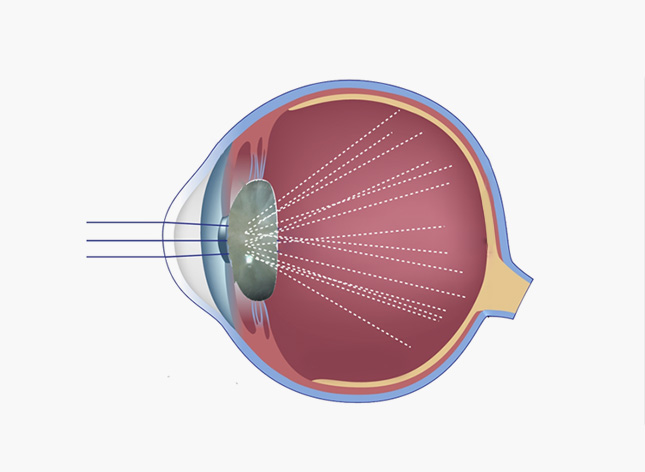
ICL stands for Implantable Collamer Lens — a phakic intraocular lens, meaning it is added to the eye while your own natural lens stays in place. If you are researching ICL eye surgery in Seoul, you have probably been told your prescription is high or your corneas are thin. Unlike laser vision correction, which reshapes the cornea by removing tissue, ICL works like a permanent internal contact lens: it is folded, inserted through a tiny incision of about 3 mm, and unfolds behind the iris.
The lens material, collamer, is a biocompatible copolymer containing a small amount of collagen. Modern designs such as the EVO ICL include a tiny central port that lets fluid circulate naturally, which has largely removed the need for the preventive laser hole in the iris (peripheral iridotomy) that older models required. Toric versions also correct astigmatism. Because no corneal tissue is removed, the procedure is additive and, if needed, the lens can be removed or exchanged.
Korea has one of the highest rates of high myopia in the world, so ICL is a frequent question among office workers in Yeongdeungpo and Gasan whose prescriptions have ruled out LASIK-type procedures.
Q. Who is a good candidate for ICL eye surgery in Seoul?
- Age roughly 21–45, with a stable prescription (less than 0.50 D change over at least 12 months)
- Moderate to high myopia — commonly −6.00 D and above, up to about −18.00 D depending on the lens model — with or without astigmatism
- Thin, irregular or borderline corneas that make TransPRK or LASIK unsafe
- Adequate anterior chamber depth (typically at least 2.8–3.0 mm) and a healthy corneal endothelial cell count
- No active eye disease — e.g. uncontrolled glaucoma, uveitis, cataract or significant retinal disease
- Realistic expectations and willingness to attend lifelong follow-up visits
📊 Myopia & ICL in Numbers
▸ A Seoul study of 19-year-old men found about 96% were myopic and over 20% had high myopia (−6.00 D or worse) — among the highest rates reported worldwide.
▸ Roughly two in three Korean school-age children are already myopic, so many reach adulthood with prescriptions too high for comfortable laser correction.
▸ More than 2 million ICLs have been implanted worldwide since the lens was introduced in the 1990s.
▸ Laser procedures remove corneal tissue in proportion to the prescription; for very high myopia the remaining cornea may fall below safe limits — the key reason ICL exists.
▸ ICL surgery has been performed safely in Korea for over two decades, with high patient satisfaction.
Q. How does ICL compare with TransPRK and 2-Day LASEK?
For low-to-moderate myopia with healthy, thick corneas, surface laser procedures such as TransPRK and 2-Day LASEK — our specialty at Nunehim Eye Center — are excellent, well-established options with no incision and no implanted device. They reshape the corneal surface and are often the first choice when the measurements allow.
ICL becomes attractive when laser correction would remove too much tissue: very high myopia, thin corneas, or significant dry-eye concerns. The trade-offs are that ICL is an intraocular procedure, carries small risks such as raised eye pressure, cataract formation over time and endothelial cell loss, and needs lifelong eye check-ups. Our role in Guro is to measure your eyes thoroughly and give you an honest recommendation, then explain the options and next steps clearly.
Q. What tests are done before ICL eye surgery?
A thorough ICL assessment takes about 1.5–2 hours and includes refraction with and without dilating drops, corneal topography and tomography, anterior chamber depth and angle measurement, white-to-white or sulcus sizing to choose the lens length, specular microscopy to count endothelial cells, eye-pressure measurement and a dilated retinal exam (high myopes carry a higher risk of retinal tears). Stop soft contact lenses for about a week, and hard lenses longer, before testing. Patients from Gwanak and Gasan often combine the assessment with a half-day off work.
Q. When should I see a doctor in Seoul?
Whether you are considering ICL or have already had it, contact an ophthalmologist urgently if you notice:
- Severe eye pain, headache or nausea — possible acute rise in eye pressure
- A sudden drop in vision or increasing blur
- Increasing redness, discharge or light sensitivity in the first weeks after surgery — possible infection or inflammation
- New flashes of light, a shower of floaters or a curtain over your vision — possible retinal detachment
- Haloes or glare that are getting worse rather than settling
Our Guro clinic sees vision-correction and general eye concerns for residents of Yeongdeungpo, Gasan and Gwanak, in Korean or English.
Q. What is recovery like after ICL?
Day 0–1
The procedure takes about 15–20 minutes per eye under anaesthetic drops. Many patients notice clearer vision within hours. A next-day check confirms eye pressure and lens position.
Weeks 1–4
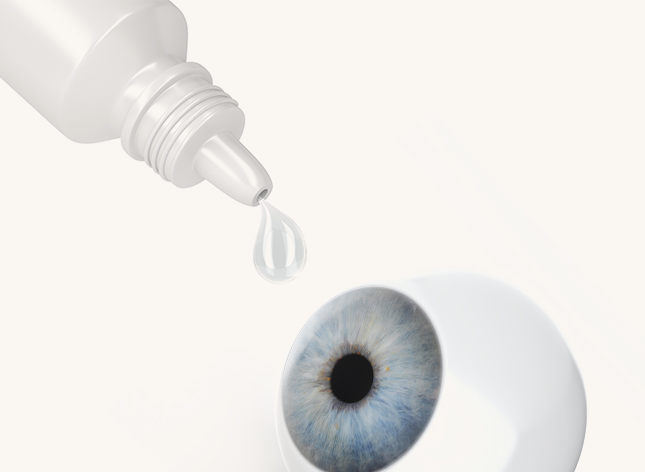
Antibiotic and anti-inflammatory drops are used for several weeks. Most people return to desk work within a few days; avoid eye rubbing, swimming and contact sports for about a month.
Month 1 onward
Vision stabilises over the first few weeks. Annual eye checks are recommended for life to monitor eye pressure, lens vault, endothelial cells and retinal health.
“The right procedure is the one your eyes can safely support.”
Many patients come to me asking for a specific surgery they read about online. My job is to measure first and recommend second. For thick corneas and moderate myopia, TransPRK is often ideal; for very high myopia or thin corneas, a lens-based option like ICL may be safer. What matters is that the decision is based on your own measurements, not marketing.
— Dr. Daniel Baik, board-certified ophthalmologist, Nunehim Eye Center

❓ Frequently Asked Questions
Q. Is ICL permanent?
ICL is designed to stay in the eye long term, but unlike laser surgery it is reversible — the lens can be removed or exchanged if needed, for example at the time of future cataract surgery.
Q. Is ICL better than LASIK or TransPRK?
Neither is universally better. For moderate myopia with healthy corneas, laser correction such as TransPRK is simple and effective. For very high myopia or thin corneas, ICL often gives sharper, more stable results without removing corneal tissue. Your measurements decide.
Q. What are the risks of ICL eye surgery?
Serious complications are uncommon but include raised eye pressure, early cataract, loss of corneal endothelial cells, infection and, rarely, retinal detachment. Central-port lens designs have reduced some risks, and lifelong annual check-ups catch problems early.
Q. Can I get ICL if I have astigmatism?
Yes. Toric ICLs correct myopia and astigmatism together. Precise alignment matters, so accurate pre-operative measurement is essential.
Q. Am I too old for ICL?
ICL is generally offered up to about age 45. After that, presbyopia and early lens changes make lens-replacement or other options more appropriate, which can be discussed at your consultation.
Q. How much does ICL eye surgery cost in Seoul?
ICL is not covered by National Health Insurance, and prices vary by lens type (standard or toric) and clinic. Ask for a full written quote that includes pre-operative tests, both eyes and follow-up visits before deciding.
Q. Can I have my vision correction assessment in English near Guro?
Yes. Dr. Daniel Baik consults in English and Korean at Nunehim Eye Center in Guro, easily reached from Gasan, Yeongdeungpo and Gwanak. You can book directly through Naver.
Q. Am I a candidate for ICL if I was already rejected for LASIK?
Often, yes. ICL is specifically designed for patients who are not suitable for laser correction due to thin corneas, very high myopia, or dry eye. A thorough assessment will confirm if your anterior chamber depth and endothelial cell count meet the criteria.

Book a Consultation
Not sure whether ICL, TransPRK or 2-Day LASEK suits your eyes? Get a detailed vision correction assessment in Guro — minutes from Yeongdeungpo, Gasan and Gwanak.
📍 Visit Nunehim Eye Center — Guro, Seoul
Nunehim Eye Center is in Guro-gu, a short trip from Gasan Digital Complex, Yeongdeungpo, Gwanak and Dongjak. Near Guro Digital Complex Station (Line 2). English consultations available.
📌 Address
551 Siheung-daero, Guro-gu, Seoul
nunehim.com
🕘 Hours
Mon–Fri 09:00–18:30
(lunch 13:00–14:00)
Sat 09:00–14:00
🌐 Languages
Korean & English consultations
About the author: Dr. Jinhag (Daniel) Baik, MD, is an ophthalmologist and the director of Nunehim Eye Clinic in Seoul, Korea (near Guro Digital Complex Station). A former Samsung semiconductor engineer, he welcomes English-speaking patients for vision correction, cataract, and general eye care.


Leave a comment