High Myopia Risks in Seoul: Why Being Very Nearsighted Is a Medical Concern
Retinal, glaucoma and cataract risks explained — a guide for expats and locals in Guro, Yeongdeungpo, Gasan and Gwanak
Quick Answer
High myopia risks in Seoul are the same as anywhere: when nearsightedness reaches about -6.00 diopters or an axial length of 26 mm or more, the eye is stretched, and the chance of retinal thinning, retinal detachment, glaucoma, early cataract and myopic macular degeneration rises. It is a medical condition, not only a glasses problem. If you are very nearsighted, a yearly dilated retinal exam is the single most useful habit; Nunehim Eye Center offers these in English and Korean.
Q. What is high myopia, and why is it more than a strong prescription?
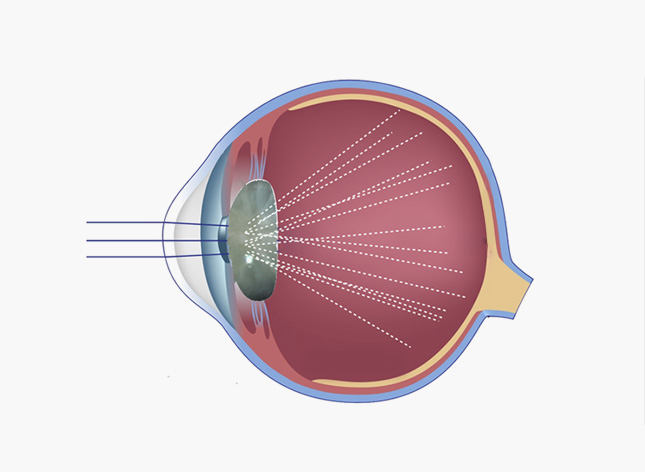
High myopia means the eye is too long for its focusing power, so distant objects blur. Most definitions start at about -6.00 diopters. The key issue is mechanical: as the eyeball elongates, the sclera, choroid and retina are stretched. Thinned tissue is more fragile, which is why the high myopia risks Seoul patients ask about are mostly about the retina and optic nerve rather than about thick lenses.
Myopia is very common across East Asia, including Korea, and the high-myopia group is growing in step with it. Many people in Yeongdeungpo, Guro, Gasan and Gwanak have lived with strong glasses since adolescence and have never had their retinal periphery examined with dilated pupils, which is the gap this article is meant to close.
Q. What are the main complications of high myopia?
- Retinal tears and detachment: a stretched, thin peripheral retina is more likely to tear; a tear can progress to detachment.
- Myopic maculopathy: progressive thinning and atrophy of the central retina, which can reduce reading and face-recognition vision.
- Myopic choroidal neovascularization: abnormal vessels under the macula that cause sudden distortion and need prompt injection treatment.
- Glaucoma: the optic nerve of a long eye is structurally more vulnerable, and glaucoma can be harder to spot on routine screening.
- Early cataract: particularly nuclear and posterior subcapsular types, often appearing earlier than in the general population.
Key facts to know
- ▸ High myopia is generally defined as about -6.00 D or more, or axial length around 26 mm or longer.
- ▸ A widely cited 2016 global projection estimated that about half of the world population would be myopic by 2050, with roughly 10% having high myopia.
- ▸ Risk of myopic complications rises with every additional diopter and with every additional millimetre of axial length, so even small slowing of progression in childhood matters.
- ▸ Laser surgery or contact lenses correct focus only; they do not remove the structural risk, so retinal follow-up continues for life.
Q. How is high myopia monitored and managed?
Management has two parts: protect the eye and protect the vision. Protection means a yearly dilated fundus exam, OCT of the macula, optic nerve assessment and, where indicated, axial length measurement and wide-field retinal imaging. Dilated examination of the periphery is what finds lattice degeneration or small retinal tears before they cause symptoms; some tears can be sealed with an office laser.
For children and teenagers, the priority is slowing progression: OK lens (orthokeratology), myopia-control lenses, low-dose atropine and outdoor time. For adults who want less dependence on glasses, options include TransPRK or 2-Day LASEK when corneal thickness and shape allow, or an implantable lens for very high prescriptions. Nunehim Eye Center does not offer SMILE LASIK; the right option is decided after corneal mapping and a retinal check.
Q. How can expats in Seoul get a high myopia check?
Book through Naver Booking or ask for an English consultation. Bring your passport or Alien Registration Card, your current glasses or contact lenses, and any prior prescriptions or retinal reports from your home country. The visit usually includes refraction, pressure measurement, corneal mapping if laser is being considered, and a dilated retinal exam, so allow extra time and avoid driving right after dilation. Whether Korean national health insurance covers a given test depends on your enrolment and the indication; many vision-correction services are self-pay, so ask the clinic for a current quote before you start.
Q. Why do glaucoma and cataract show up differently in very nearsighted eyes?
In a long eye the optic nerve head is often tilted and the disc looks unusual, so the usual cup-to-disc impression can be misleading. That is why a patient with high myopia may need optic nerve OCT and visual field testing rather than a pressure check alone, and why glaucoma can sit unnoticed for years. Cataract, meanwhile, tends to arrive earlier, and a myopic eye needs careful lens power planning at surgery because of its length. If you live in Gasan or Gwanak and commute through Yeongdeungpo, it is worth arranging these tests in one visit rather than spreading them over several.
Q. What everyday habits help protect a highly myopic eye?
- Keep the yearly dilated exam even when your vision feels stable; retinal changes are usually painless.
- Learn the warning signs (floaters, flashes, shadows, wavy lines) and act the same day.
- Ask about high-impact or head-jarring activity if your doctor has found peripheral retinal weakness; find out what is safe for you.
- Do not smoke; it adds to retinal and cataract risk.
- Children: encourage daily outdoor time and see an ophthalmologist for a myopia-control plan before the prescription climbs.
None of these replaces examination, but together they keep a high myopia diagnosis a managed condition rather than a surprise. Families in Guro and Yeongdeungpo often bring parents and children to the same appointment so the whole household is checked, and the clinic can plan follow-ups accordingly.
Q. Is surgery or a lens implant a good idea for high myopia?
It can be, but the decision starts with the retina and the cornea, not with the prescription. Thin or irregular corneas may rule out laser; very high prescriptions may be better served by an implantable lens. Whichever route you choose, remember that correcting focus is separate from reducing structural risk, so the retinal follow-up schedule continues unchanged after surgery. Ask the clinic for a written plan and a current quote for each step.
Q. When should I see a doctor in Seoul urgently?
- New floaters or a sudden shower of floaters
- Flashes of light, especially in one eye
- A curtain, shadow or dark area spreading across your vision
- Straight lines suddenly looking wavy or bent
- Sudden drop in central vision in one eye
Any of these in a highly myopic eye should be examined the same day.
Q. How do the risk levels differ by degree of myopia?
Moderate (-3 to -6 D)
Lower structural risk, but progression should still be tracked, especially in teenagers and young adults.
High (-6 to -10 D)
Annual dilated retinal exam, OCT and optic nerve check are recommended; discuss warning symptoms.
Very high (beyond -10 D)
Higher risk of maculopathy and detachment; closer follow-up and individualized surgical planning.
Dr. Daniel Baik, board-certified ophthalmologist
“If you are above -6 diopters, do not rely on a quick screening: ask for a dilated exam that looks at the far periphery of the retina at least once a year, and come in the same day if you notice new floaters or flashes. Measuring axial length also helps, because it tells us whether your eye is still growing.”
❓ Frequently Asked Questions
Q. What counts as high myopia?
High myopia is usually defined as nearsightedness of about -6.00 diopters or more, or an eye that has grown to an axial length of roughly 26 mm or longer. Because the extra length stretches the retina and the sclera, the concern is less the thick glasses and more the long-term health of the back of the eye.
Q. Can high myopia cause blindness?
It can contribute to permanent vision loss through complications such as myopic maculopathy, retinal detachment, glaucoma and myopic choroidal neovascularization. Most people with high myopia keep good vision for life, but regular dilated retinal exams are how problems are caught while they are still treatable.
Q. Does LASIK or LASEK remove the risks of high myopia?
No. Laser vision correction reshapes the cornea so you need less or no glasses, but it does not shorten the eye or change the stretched retina. You still need regular retinal checks after surgery, and very high prescriptions or thin corneas may make an ICL or a different approach more suitable than laser.
Q. How often should someone with high myopia have an eye exam?
Many ophthalmologists recommend a full dilated exam at least once a year, and sooner whenever symptoms appear. Your own interval depends on your prescription, retinal findings and age, so ask your doctor for a personal schedule.
Q. What symptoms mean I should be seen urgently?
New floaters, flashes of light, a curtain or shadow over part of your vision, or sudden distortion of straight lines need same-day evaluation, because retinal tears and detachments are time-sensitive. Do not wait for a routine appointment.
Q. Can children with high myopia be treated to slow progression?
Yes. Options such as OK lens (orthokeratology), specially designed myopia-control spectacle or contact lenses, and low-dose atropine drops are used to slow axial growth. The earlier they start, the lower the final prescription is likely to be, which directly lowers lifetime risk.
Q. Can foreigners get a high myopia check at Nunehim Eye Center?
Yes. Dr. Daniel Baik is a board-certified ophthalmologist and consultations are available in Korean and English. Bring your passport or ARC and any previous glasses prescriptions or eye reports, and book through Naver Booking. Ask the clinic for current fees, since cost depends on which tests you need.

Related reading
- Myopia Control for Children in Seoul: Glasses vs Ortho-K vs Low-Dose Atropine
- Can Adults Wear OK Lens? Orthokeratology for Adult Myopia in Seoul
- Is 18 Old Enough for LASIK or LASEK? Myopia Stability and Corneal Screening
Book a Consultation
Dilated retinal exam and high myopia check in Guro, Seoul — Korean and English.
📍 Visit Nunehim Eye Center — Guro, Seoul
Easy access from Guro, Gasan, Gwanak and Yeongdeungpo, near Guro Digital Complex Station (Line 2).
Address
551 Siheung-daero, Guro-gu, Seoul
nunehim.com
Hours
Mon–Fri 09:00–18:30 (lunch 13:00–14:00)
Sat 09:00–14:00
Languages
Korean & English


Leave a Reply